Group A Final Boss - a Historical & Technical Appraisal of the Nissan R32 Skyline GT-R Gr.A
/
BACKGROUND
When work began on the eighth generation Skyline, type R32, of key consideration was the flagship GT-R which Nissan developed in order to create the most effective Group A Touring Car possible.
To qualify for Group A, a manufacturer first had to build 5000 copies of the base car. However, the story did not end there because, from the initial point of homologation and then every twelve months thereafter, additional developments could be introduced so long as said upgrades were rubber stamped via the production of an additional 500 Evolution variants every time.
The manufacturers that had thus far managed to exploit the Evolution rule best had been Ford and BMW whose Group A racing versions of the Sierra RS Cosworth and E30 M3 had benefitted enormously from upgrades ushered in through batches of 500 road-going specials.
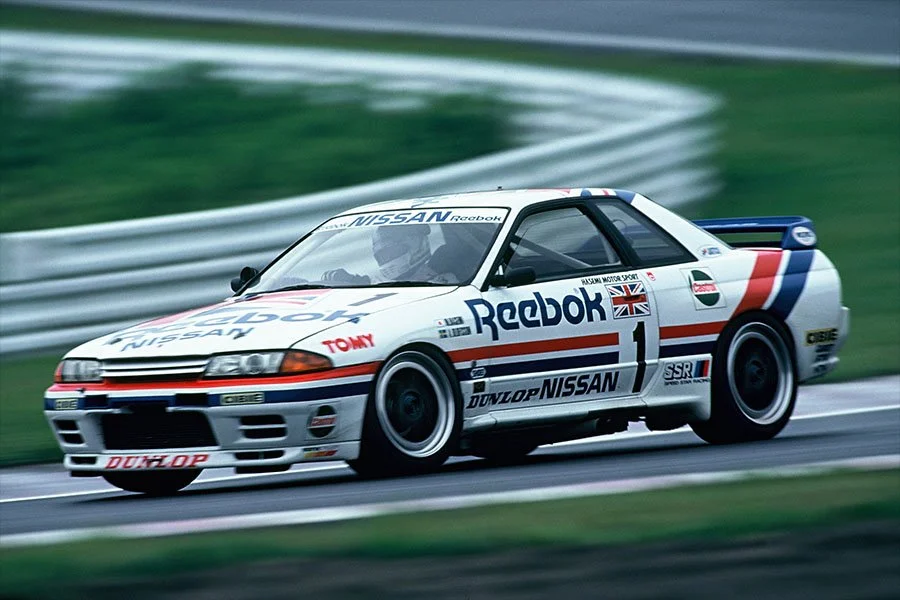
In a similar vein, to coincide with the base GT-R’s homologation application, Nissan came up with a trick Nismo version (the RA) which would serve as the basis for its Group A circuit racer. Unveiled in February 1990, the GT-R Nismo featured enhanced cooling and aero, uprated turbos, cross-drilled brake discs without ABS and various weight-saving measures. It was homologated alongside the base GT-R on March 1st 1990 and the full fat Group A version made its debut two-and-a-half weeks later at the Japanese Touring Car Championship season opener: the Mine 300km.
In addition to the Japanese Touring Car Championship (where two Nissan-supported teams initially ran the new Skyline), the Group A R32 GT-R’s inaugural campaign would see a brace of cars entered in a handful of Australian events ahead of a full ATCC campaign in 1991.
CHASSIS
Each Group A GT-R was based around a reinforced and seam-welded two-door E-BNR32 bodyshell. Rigidity was further enhanced by way of a 40mm diameter steel rollcage and a front strut brace. All told, the Group A version came out some 200% stiffer than a regular R32 GT-R.
Air jacks were also installed and, instead of the standard car’s 72-litre fuel tank, a 120-litre quick-fill safety cell was fitted in the trunk.
As usual, suspension was independent all round with double wishbones and a third link at the outer end of the upper wishbone up front and a multi-link arrangement at the rear.
For the Group A version, the front suspension member and transverse link mounting holes were relocated as were the upper link mounting bracket and mounting holes. The upper links, transverse link and tension rod, knuckle and knuckle extension were all reinforced. It was a similar story at the back where the linked rear suspension member was repositioned while the upper link, lower link and upright assembly were reinforced.
To this, Nissan added stiffer springs plus heavy duty adjustable dampers and upper mounting brackets.
Anti-roll bars were fully adjustable. A choice of two different types was available for the front axle.
Stopping came courtesy of 355mm front and 375mm rear vented discs running off separate brake master cylinders. Brembo, AP and Alcon brake calipers were variously used. Uprated pads, uprated mounting bells and superior cooling solutions were also added (intakes front and venting rear).
No ABS actuator was fitted.
Centre lock 10 x 18-inch two-piece Impul or BBS wheels were shod with Bridgestone Potenza 265/680 R18 tyres.
Track was widened by 130mm at the front and 50mm at the rear.
Group A cars came with a quicker steering rack and a reinforced steering column. Heavy duty items replaced the standard steering box, side rods, steering knuckles, power steering pump and power steering pump bracket along with the original Super HICAS hydraulic cylinder.
ENGINE / TRANSMISSION
Even in standard trim, Nissan’s RB26DETT dual overhead cam straight six was a technical tour de force.
Based around a freshly developed cast-iron engine block topped by a light alloy 24 valve head, it displaced 2568cc thanks to a bore and stroke of 86mm and 73.7mm respectively.
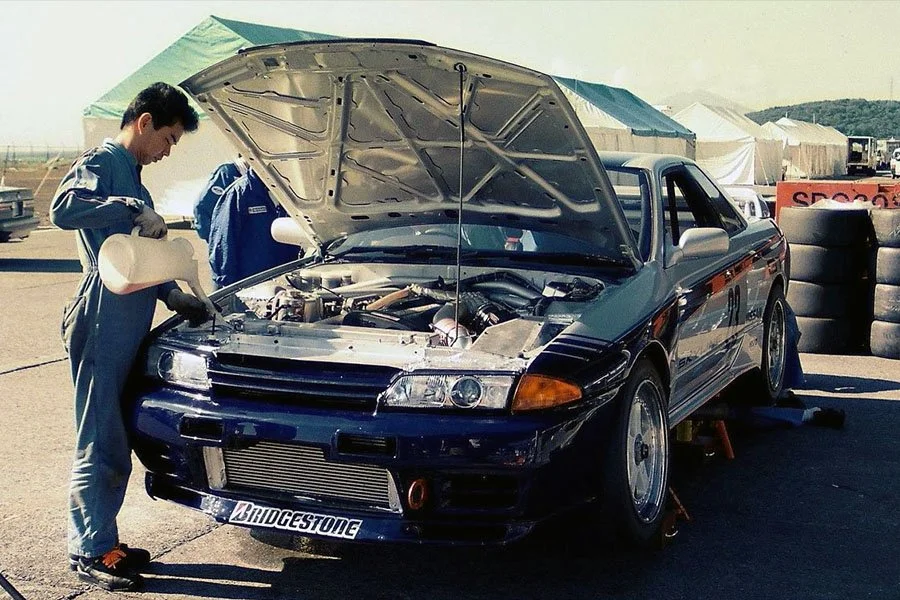
Whereas the base GT-R featured a pair of Garrett T03 turbochargers with ceramic wheels, the Nismo version upon which the Group A motor was derived came with T04B units with steel turbo wheels sacrificing faster spool up for the enhanced reliability. The Nismo version also came without a protective honeycomb mesh to improve airflow to the air-to-air intercooler.
Group A engines were developed by Nissan subsidiary Reinik (Racing Engineering Incorporated Nissan Kohki). They came with a stiffer block, a specially honed and balanced crankshaft, uprated pistons with thinner rings to reduce friction, stronger connecting rods and rod bolts, reworked lightweight camshaft pulleys with additional adjustment holes, enlarged intake ports and exhaust valves, aluminium high-pressure intake pipes, an aluminium airbox, two Garrett TE2701 turbochargers and a Reinik fuel rail.
As per Group A regulations, the stock intake manifold and intercooler were retained.
Other upgrades included installation of a larger radiator, larger catch tanks and a dual pipe stainless steel / titanium exhaust system that exited underneath the left-hand door.
To improve cylinder head ventilation, the ignition coil cover was often removed.
Engine management was re-mapped and the redline was raised from 8000rpm to 8500rpm.
Compression was typically reduced from the standard car’s 8.5:1 to between 7.3:1 and 7.9:1.
Lubrication was improved thanks to a more durable high-flow oil pump and an extended baffled oil pan. Nissan also added a high-flow water pump with reduced cavitation. Larger fuel injectors and multiple fuel pumps were fitted as well.
At the start of the 1990 season (running 1.4 bar turbo pressure), Nissan quoted a peak output of 542bhp at 7600rpm and 361lb-ft at 6000rpm. However, in high compression trim with the boost turned up to 1.6 bar for qualifying, somewhere in the region of 630bhp could be extracted.
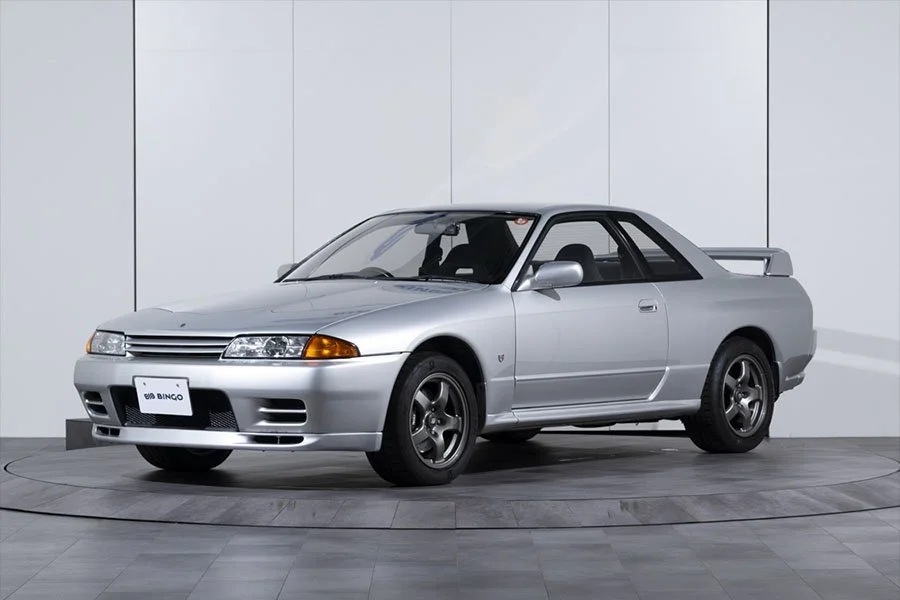
For comparison the stock R32 GT-R ‘officially’ produced 276bhp at 6800rpm and 260lb-ft at 4400rpm.
As per the base R32 GT-R, transmission was via Nissan’s ATTESSA E-TS permanent four-wheel drive system, a five-speed manual gearbox, multi-plate hydraulic clutch and limited-slip differential.
Developed specifically for the GT-R, the ATTESSA E-TS torque-sensitive electronic four-wheel drive system used a microprocessor to sense lateral G, throttle opening and engine speed. Upon sensing oversteer or broken traction at the rear, it sent torque the rear wheels couldn’t handle up to the front axle.
For the Group A programme, Nissan developed a selection of gearbox and final drive ratios to keep the engine in the boost and torque window at any given circuit. The dog-engagement five-speed racing gearbox with AP triple-plate clutch was later superceded by a Holinger-developed six-speed unit. The front and rear differential casings, transfer casing, rear prop shaft and driveshafts were all reinforced. Oil coolers were added for nearly every drivetrain component.
BODYWORK
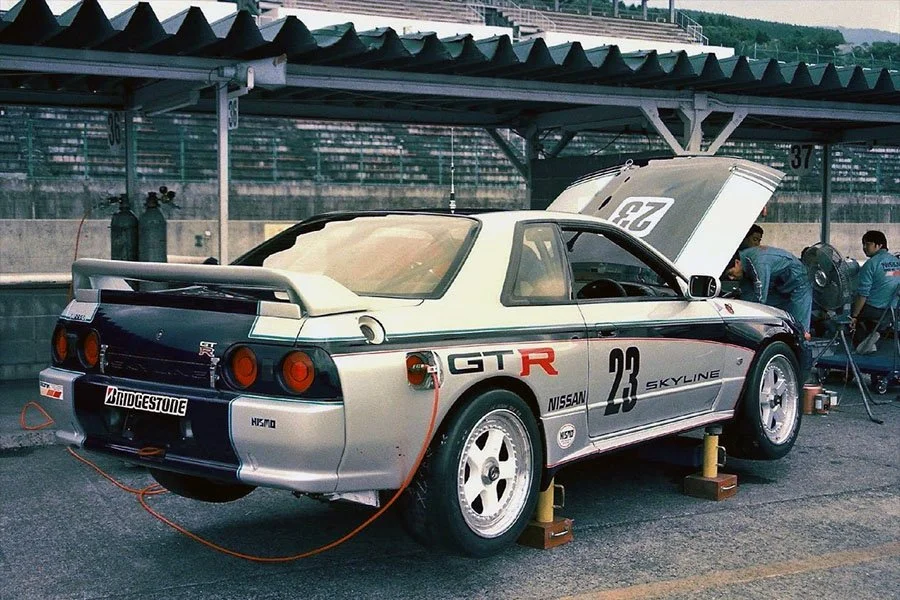
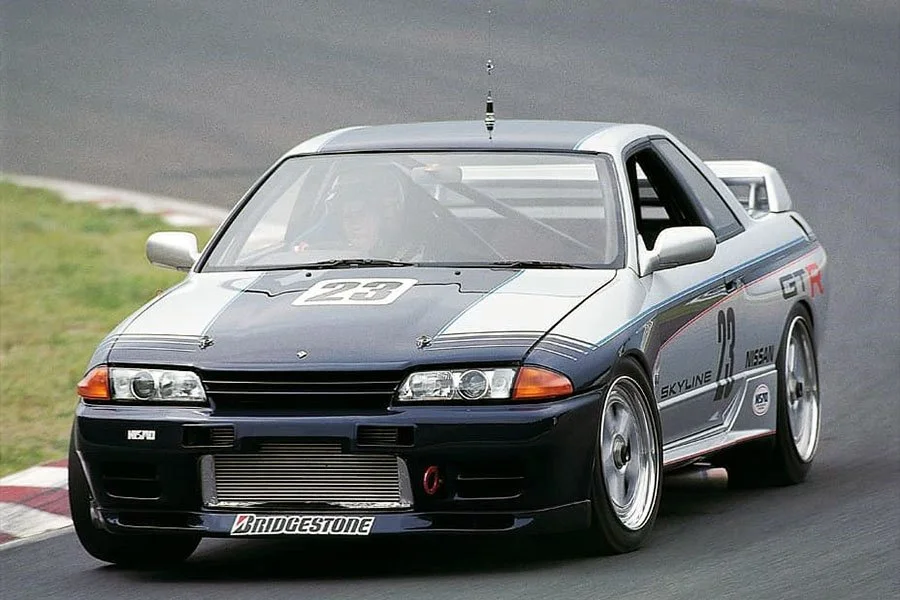
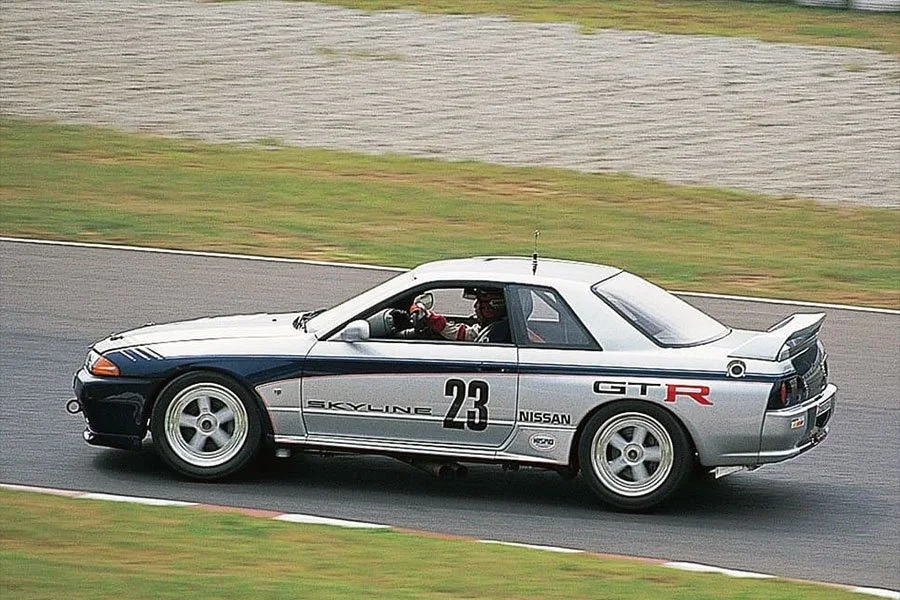
In line with Group A regulations, few modifications were made to the R32 GT-R’s bodywork in its transition to racing trim.
At the leading edge of the hood, a discrete lip was added above the original pair of intake vanes which directed more air towards the radiator.
Special headlights weighed a little less than the standard road car items.
New exterior mirrors were housed in aerodynamically-profiled casings.
As per the Nismo RA, Group A cars used that version’s front bumper intercooler ducts, engine air deflector (inboard of the headlights), secondary trunk lid spoiler and fairing-style rear wheel air deflectors.
As usual, the hood and front fenders were fashioned from lightweight aluminium. The bumpers, side skirts and rear spoiler were a mix of polypropylene and fibreglass. Everything else was steel.
INTERIOR
Aside from the base GT-R’s dash assembly, central control panel fore section, door trim and rear quarter sidewall panels, all of the normal road car fixtures and fittings were discarded.
The standard seats made way for just a driver’s bucket which was moved back to optimise weight distribution.
New Nismo racing instrumentation housed in the primary binnacle comprised a large 10,000rpm rev counter flanked by smaller read outs for turbo pressure, oil pressure and water temperature. Additional gauges for fuel pressure and oil temperature were located on a custom centre console-mounted switchgear panel.
Digital displays gave read outs for everything to include temperatures for the gearbox oil, differential oil and transfer case along with other system warnings.
Brake balance was adjustable from within the cockpit as was the torque split controller which allowed detailed adjustment of ATTESA response time and torque distribution. The E-TS computer and engine control unit were located behind the driver’s seat.
WEIGHT / PERFORMANCE
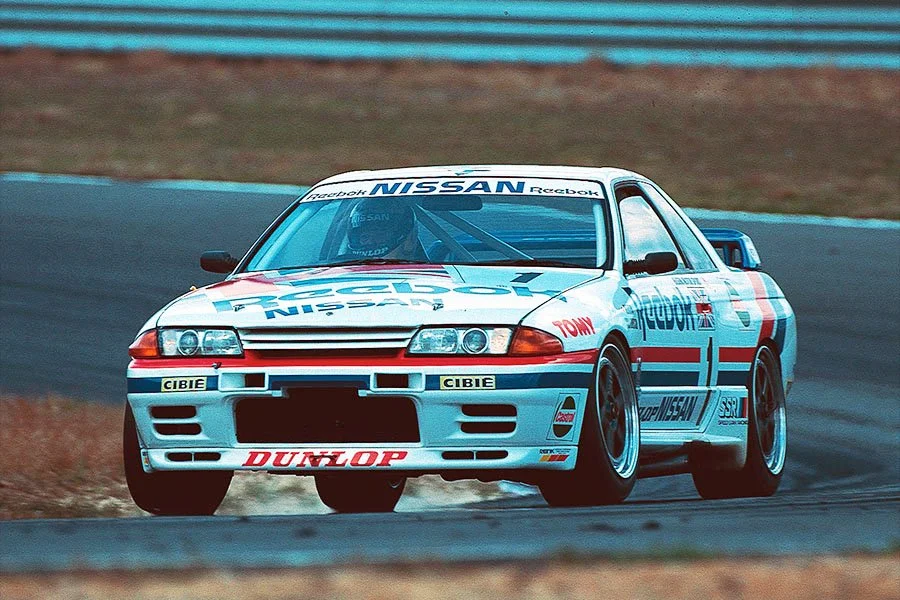
Nissan quoted the Group A R32 GT-R at 1260kg and capable of 186mph flat out. With the shortest gearbox ratios, a 0-62mph of circa two seconds would have been possible.
For comparison, the GT-R Nismo RA weighed 1400kg, had a de-restricted top speed of 165mph and 0-62mph time of 5.6 seconds.
PRODUCTION
Although to serve as a stock of competition cars, Nissan produced 60 GT-R Nismo RA bodyshells more than the 500 needed for homologatio, the number actually built up to Group A racing trim in period is much lower.
PRODUCTION CHANGES
The first updates to Nissan’s Group A application were homologated on April 1st 1990 when new gearbox and final drive ratios, new driveshafts, a thicker rear anti-roll bar and updated brake cooling intakes were rubber stamped.
On July 1st 1990, the FIA homologated an updated roll cage, front brake mounting bell, front suspension knuckle, rear upright, rear propshaft and rear brake outlet along with more new gearbox and final drive gear ratios.
The last updates for 1990 were passed on November 1st: a full water-cooled brake system along with new discs.
Three more tranches of improved parts were homologated during 1991.
On January 1st, a new cockpit-adjustable brake bias system got the green light along with larger AP brake calipers, new front brake mounting bells, a thicker front anti-roll bar, a heavy duty rear shock absorber upper mounting bracket and a revised rear brake cooling outlet.
The updates for August 1st 1991 included a reinforced rear driveshaft, front differential casing and dust shield, revisions to the front brake intakes and rear brake vents, new brake and clutch master cylinder reservoir tanks and more new brake mounting bells and gearbox ratios.
On October 1st 1991, the GT-R was approved to run revised brake cooling intakes on the front spoiler, an updated water-cooled brake system, repositioned rear suspension mounting points, revised underfloor rear brake intakes and further reinforced rear drive shafts.
During 1992, uprated discs and calipers were approved from April 1st, a second caliper update arrived from July 1st and new gearbox ratios from August 1st.
COMPETITION HISTORY
As expected with such a technical advantage, Nissan’s Group A Skyline GT-R dominated the Japanese Touring Car Championship between 1990 to 1993 along with the Australian Touring Car Championship between 1990 and 1992. Its other most notable performances came in back-to-back appearances at the Spa 24 Hours (when it won first time out in 1991).
1990 SEASON
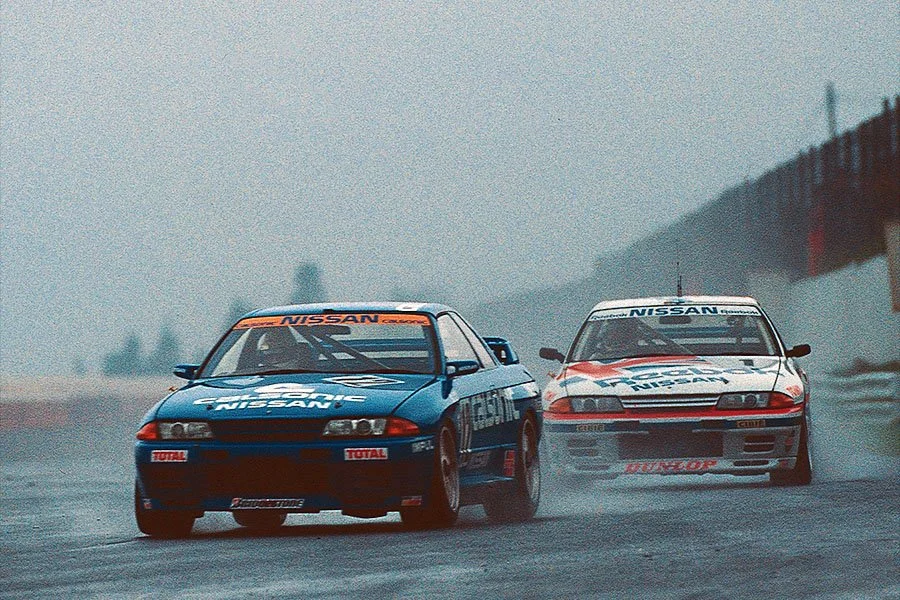
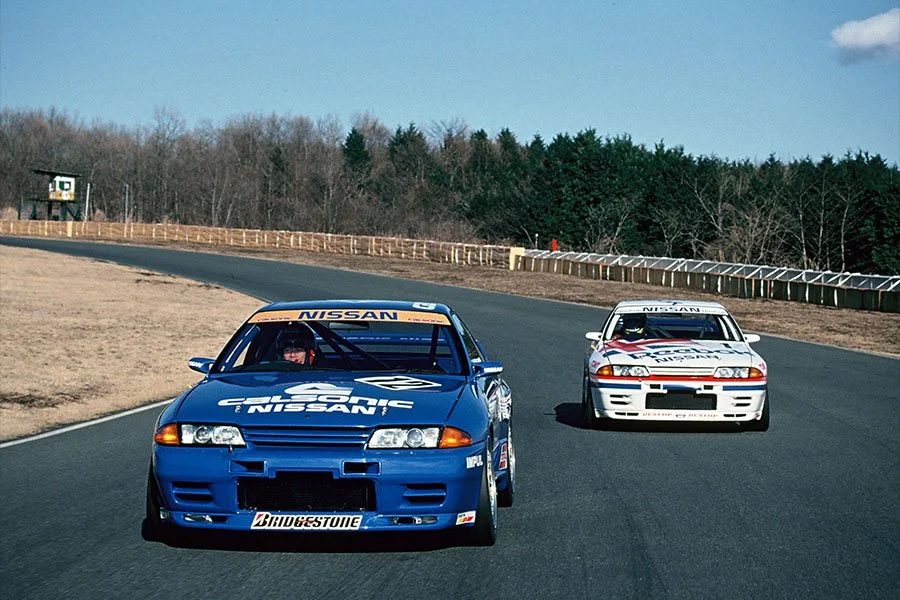
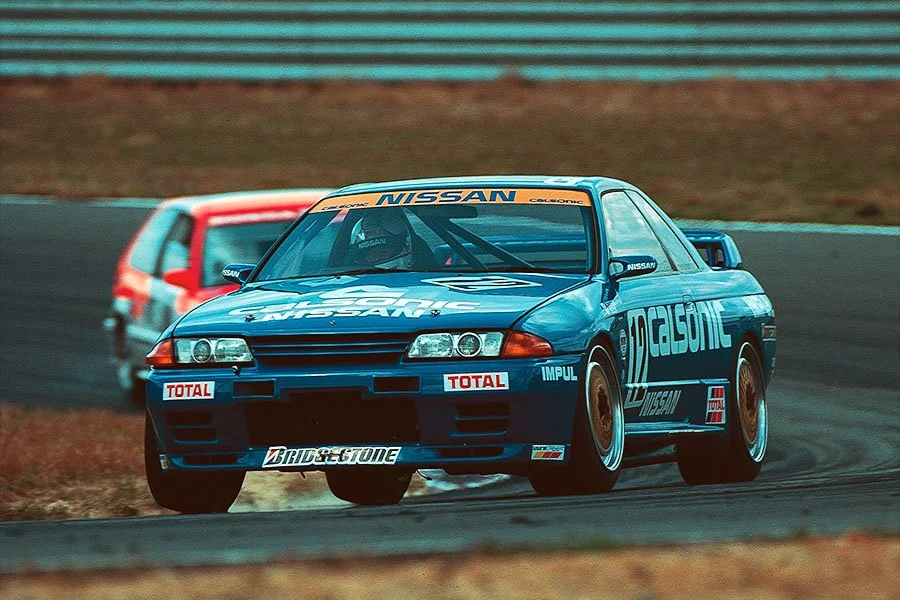
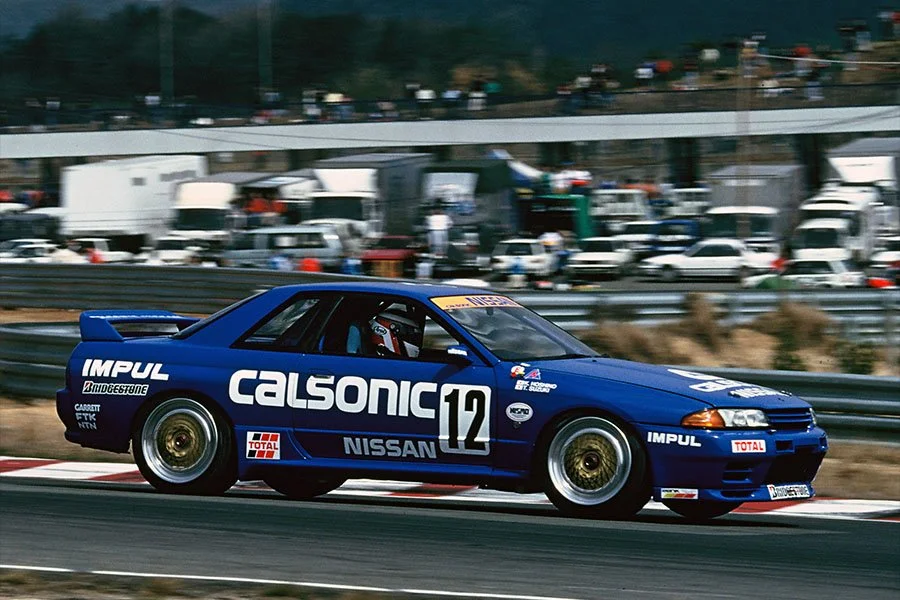
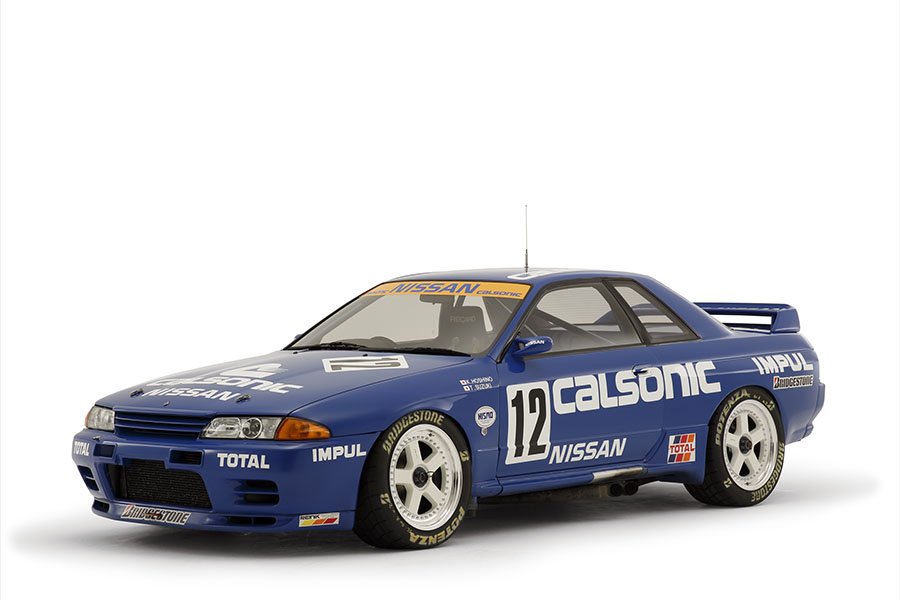
In 1990, the R32 Skyline GT-R won all six rounds of the Japanese Touring Car Championship. Having secured victory in five of those events (at Mine, Sugo, Tsukuba, Sendai and Fuji), the Calsonic-backed Team Impul / Hoshino Racing partnership of Kazuyoshi Hoshino and Toshio Suzuki placed first and second with Suzuki taking the runner up spot on account of driving less distance than his team-mate during the course of the season.
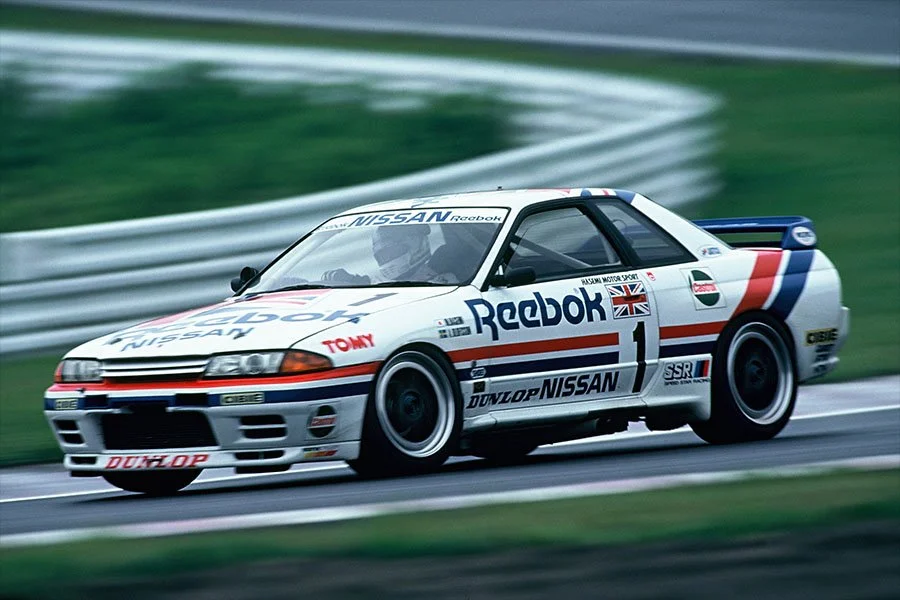
Thanks to victory at Suzuka and four second place finishes, the Reebok-backed Hasemi Motorsport pairing of Masahiro Hasemi and Anders Olofsson took third and fourth in the final standings. Both the Hoshino and Hasemi cars were works supported.
Outside of Japan, Nissan Motorsport Australia entered seven domestic races with the R32 GT-R. This programme delivered a brace of victories for Jim Richards with wins at Oran Park and Race 1 of the Australian Formula 1 Grand Prix Support contest around Adelaide’s street circuit. Richards (who also drove an HR31 GTS-R during part of the season) was crowned Australian Touring Car champion for 1990 ahead of a half dozen Sierra Cosworth RS500 drivers.
On November 25th, Masahiro Hasemi won the big money end-of-season Macau Grand Prix street race driving his Reebok-backed GT-R, this time with additional sponsorship from Castrol.
1991 SEASON
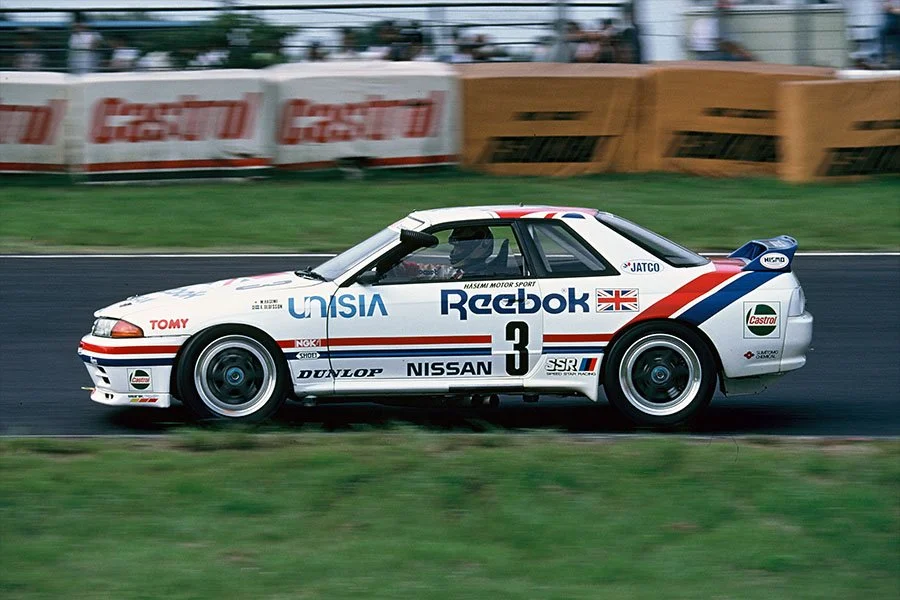
As had been the case in 1990, the 1991 Japanese Touring Car Championship was a complete walkover for the R32 Skyline GT-R which again won all six races. Having finished third and fourth the previous year, Masahiro Hasemi and Anders Olofsson bagged first and second spots in their Reebok-backed Hasemi Motorsport entry. Thanks to three wins (at Suzuka, Tsukuba and Autopolis), a brace of second place finishes and a fourth, they beat 1990’s lead pairing of Kazuyoshi Hoshino and Toshio Suzuki by 26 points.
Driving the Calsonic-backed Team Impul / Hoshino Racing GT-R, Hoshino and Suzuki also won three events (Sugo, Sendai and Fuji) but, despite two further podium finishes, a DNF in round two at Suzuka ultimately cost them dearly in the final standings.
After a trio of Group N GT-Rs had appeared at the standalone Spa 24 Hour race in 1990 (where they finished second, third and fourth in class), Nismo sent a Zexel-backed Group A entry over to Belgium for the 1991 event. Allocated to Anders Olofsson, David Brabham and Naoki Hattori, the GT-R went on to crush the opposition, winning by 21 laps from the second place Porsche Belgium-entered 911 Carrera 2.
Following on from a partial year with the R32 GT-R in 1990, Nissan Motorsport Australia undertook a full ATCC season with two cars in 1991. Jim Richards won four times en route to the ‘91 title (Sandown Park, Launceston, Lakeside and Winton) while team-mate and runner up Mark Skaife took the chequered flag on three occasions (Perth, Mallala and Oran Park). The only non-Skyline driver to win that season was Tony Longhurst who took a brace of victories in his BMW M3.
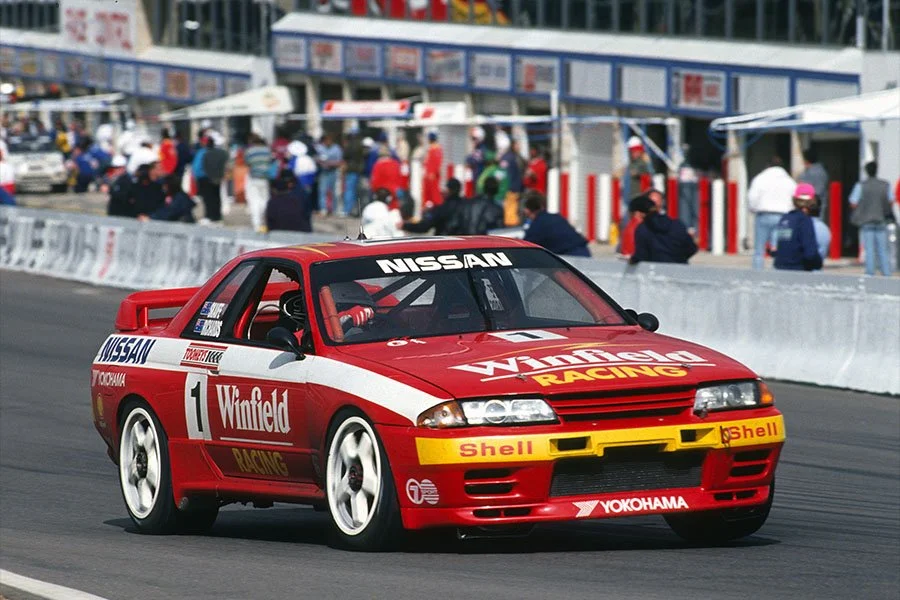
R32 GT-Rs also contested both rounds of the 1991 Australian Endurance Championship. Driving the GIO Insurance-backed Bob Forbes Corporation entry (the only GT-R in the race), Marks Gibbs and Rohan Onslow won the Sandown Park 500km. Four weeks later, Jim Richards and Mark Skaife won the Bathurst 1000km for Nissan Motorsport Australia while Gibbs and Onslow placed third. Richards then went on to win both contests that formed the Australian Formula 1 Grand Prix Support Race double header in Adelaide.
At the end-of-season Macua GP, the three GT-R’s in attendance were hit with massive weight penalties and fuel restrictions to even the playing field. 1991 winner Masahiro Hasemi was best of the Nissan finishers driving his Unisia-backed Hasemi Motorsports entry to fourth overall.
1992 SEASON
For 1992, the Japanese Touring Car Championship was expanded from six to eight rounds and, once again, the R32 GT-R reined supreme.
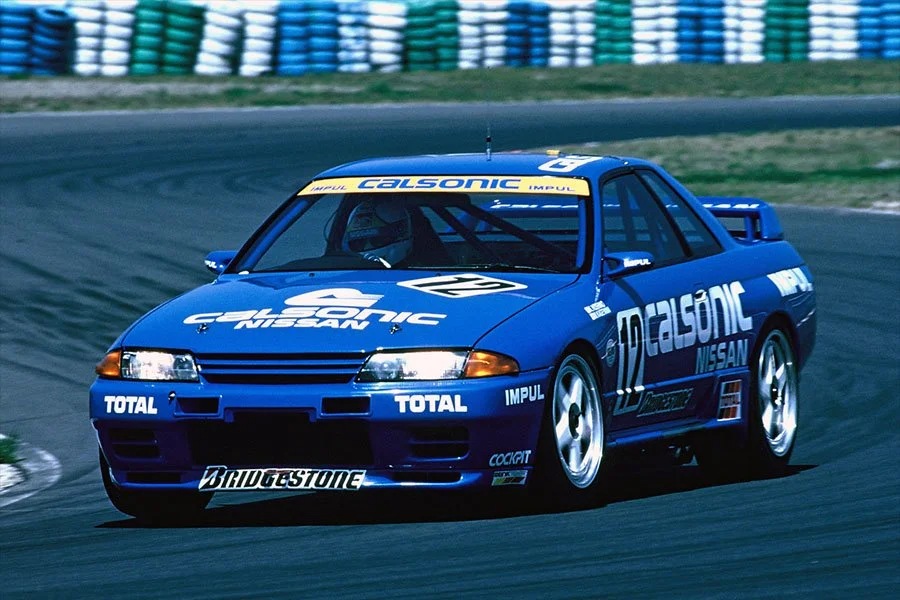
Despite winning more races than any other pairing (three: Autopolis, Tsukuba and Sendai), three DNFs for Kazuyoshi Hoshino and his new co-driver, Masahiko Kageyama, meant the 1990 championship-winning Calsonic-backed Team Impul / Hoshino Racing outfit bagged just seventh and eighth in the standings. Instead, driving the now Unisia Jecs-backed Hasemi Motorsport entry, it was 1991 champion, Masahiro Hasemi, who retained his title. On account of completing greater mileage, Hasemi finished ahead of his new team-mate, Hideo Kukuyama. Their 100% finish rate included two victories (Aida and Mine) plus a trio of other podium finishes.
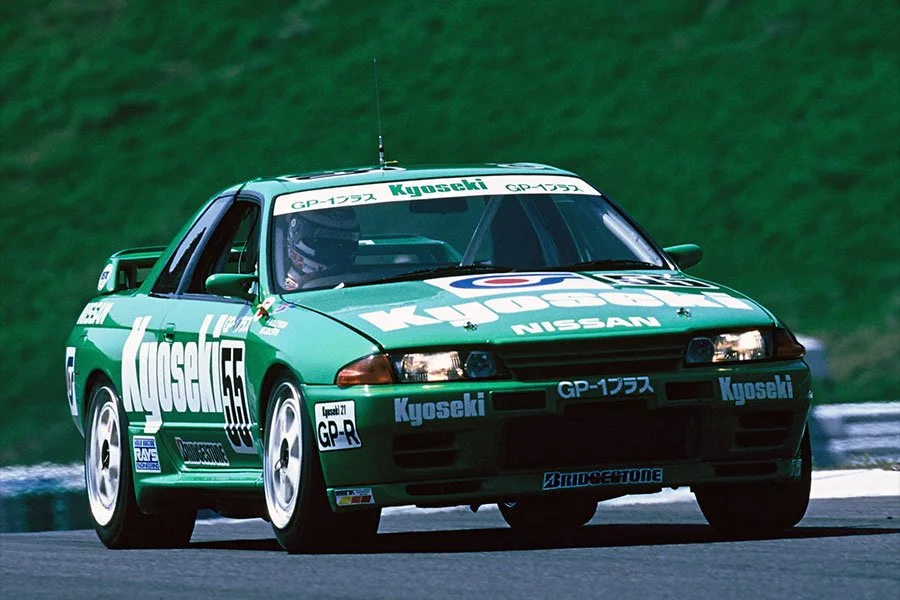
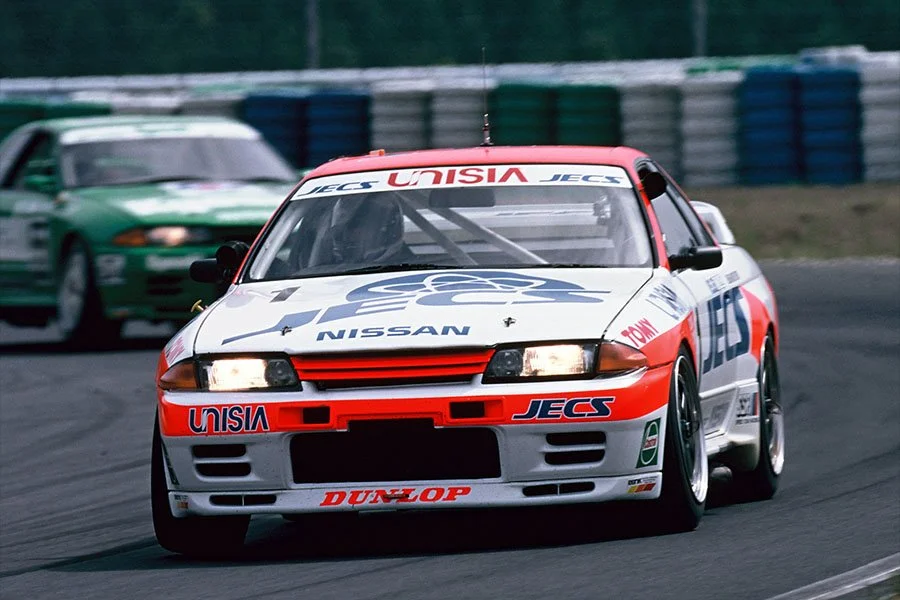
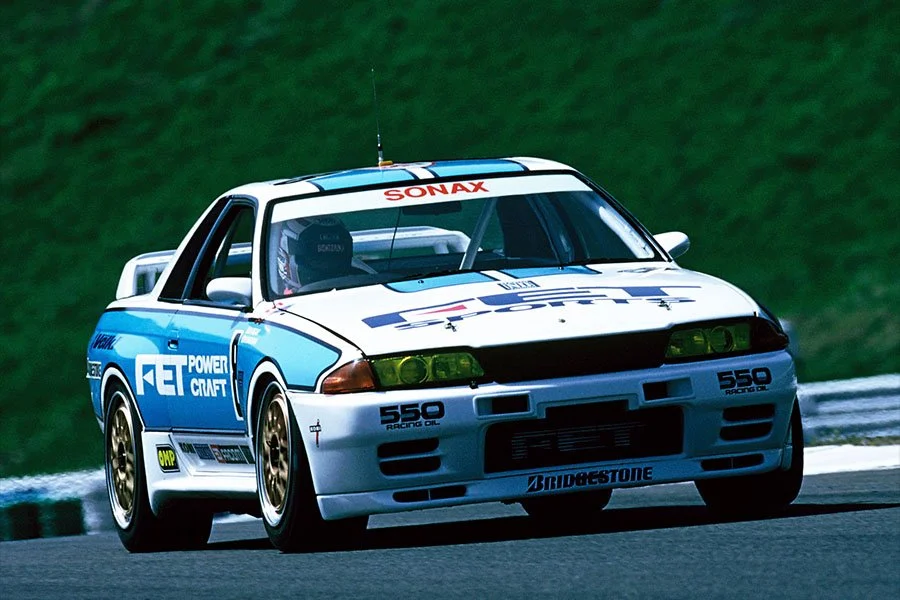
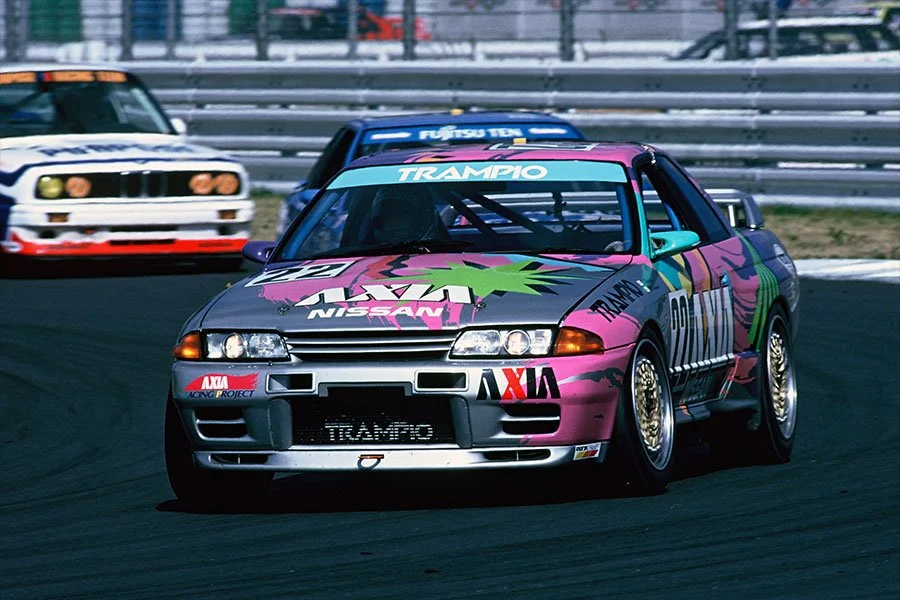
The Axia / BP-sponsored Object-T pairing of Tom Kristensen and Kazuo Shimizu took a single win (at Suzuka) plus four other podiums to bag third and fourth in the standings. The other GT-R combination to take a JTTC victory in 1992 were Anders Olofsson and Takayuki Kinoshita who won at Autopolis and respectively placed fifth and sixth in the standings driving the Kyoseki-backed Nismo R32.
Across the Pacific, the Australian Touring Car Championship again raced at nine circuits but took on a new format with two heats at each location. Final positions were determined by applying the same points structure to each of the two heats and ranking the drivers by their total. Significantly, the GT-Rs were forced to run an extra 40kg of ballast along with pop-off valves on the turbos to restrict their power.
Ultimately, Mark Skaife was crowned ‘92 champion having accrued sufficient points to emerge as the winner at Amaroo Park, Winton, Mallala and Oran Park. Skaife also collected a trio of second place finishes which meant he finished 20 points clear of team-mate, Jim Richards, who failed to win an ATCC race all year in the other Winfield Team Nissan entry. Tony Longhurst (BMW E30 M3), John Bowe and Glenn Seton (both Ford Sierra Cosworth RS500) were the other drivers to take the chequered flag during 1992.
In the big non-championship Bathurst 1000km, Skaife and Richards teamed up to make it back-to-back wins in the Tooheys 1000. Richards further banished memories of a disappointing ATCC campaign by winning both of the season-ending Australian Formula 1 Grand Prix Support races. Richards’ victories around the Adelaide street circuit gave the R32 GT-R a successful Antipodean sign off as, for 1993, new regulations came into effect that banned four-wheel drive thus making the all-conquering Nissan obsolete.
In Europe, Nismo-entered a Zexel-backed GT-R for David Brabham, Anders Olofsson and Masahiro Hasemi to race in the 1992 Spa 24 Hours. Brabham and Olofsson had of course won this event back in ‘91 with Naoki Hattori, however, there was to be no repeat as, during the a nighttime pit stop, the Skyline was involved in a spectacular fire that put it out of the race and injured three team personnel.
The GT-R would not race at Spa again. The model’s final appearance at the Macau GP also ended in disappointment with a DNF for the sole Nissan representative, Masahiro Hasemi, who had won it back in 1990.
1993 SEASON
Back home, 1993 would be the last year for Group A regulations in the JTCC before the Japanese Automobile Federation switched the championship to a Class II Super Touring framework.
Once again, the R32 GT-R won every race and thus continued its 100% success rate.
1993 saw the GT-R’s nine wins split across six different teams, but the only outfit to record more than one victory was the Calsonic-backed Team Impul / Hoshino Racing outfit which bagged four. Because team boss Kazuyoshi Hoshino missed round three at Sugo (when Anders Olofsson deputised to bring the car home in second position), Hoshino’s team-mate, Masahiro Kageyama, emerged as clear 1993 champion having recorded an extra 16 points. Kageyama and Hoshino won at Mine, Suzuka, Tokachi and Sendai and, aside from a DNF at the season ending Fuji race, the Calsonic Skyline finished on the podium at every round.
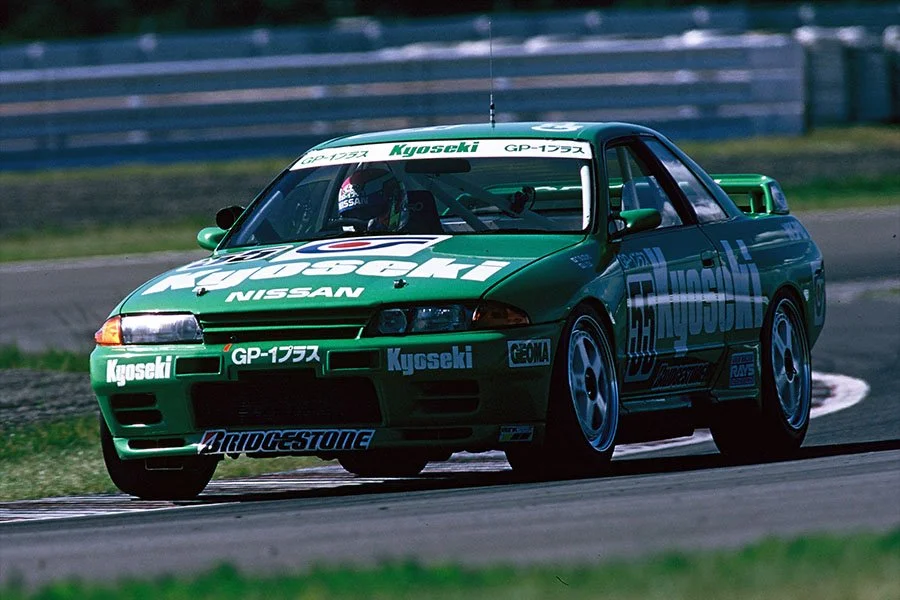
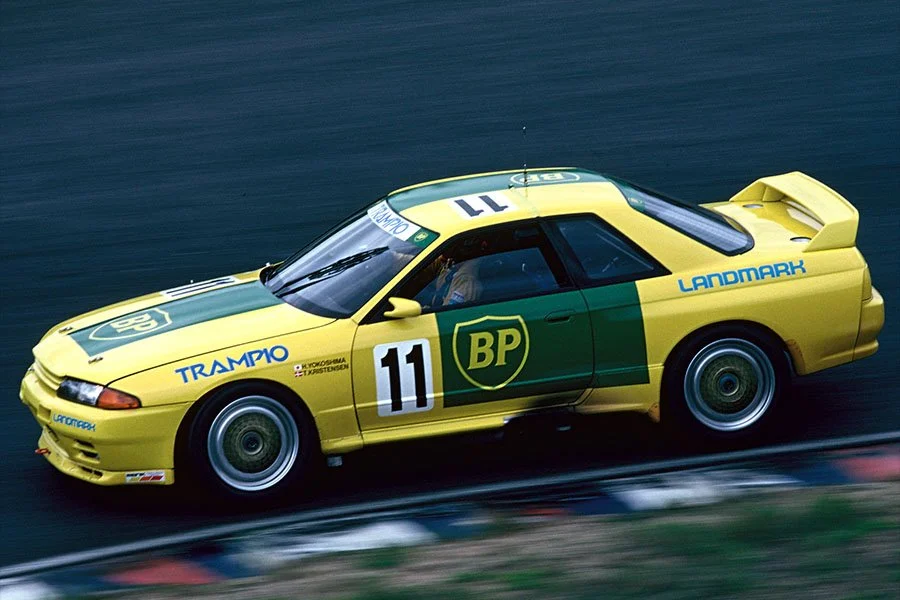
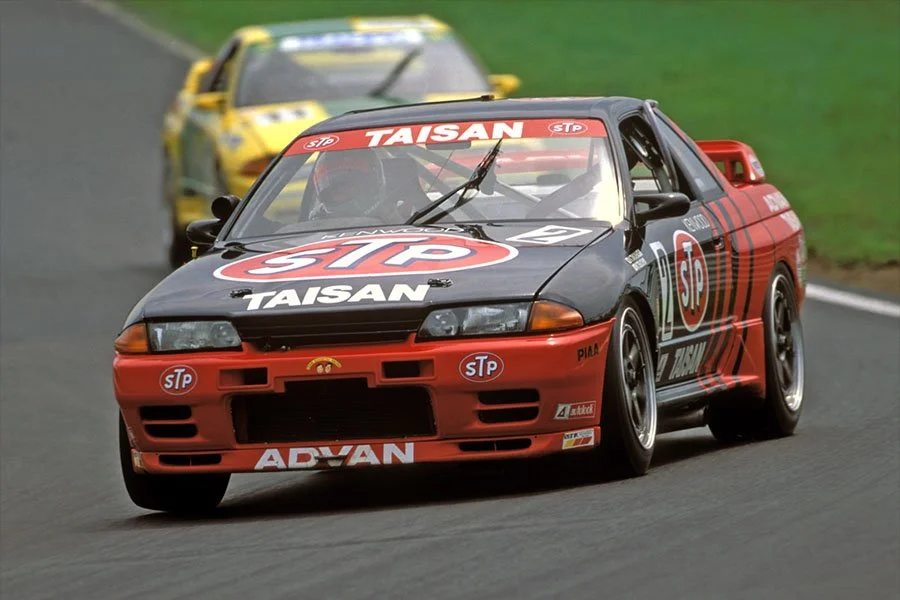
Next best in the 1993 season final standings were Toshio Suzuki and Akira Iida who won at Tsukuba in their Kyoseki-backed Nismo GT-R. The BP-sponsored Object-T pairing of Hisashi Yokoshima and Tom Kristensen placed fifth and sixth after winning the Fuji finale. Three-time JTTC champ Masahiro Hasemi ended the year seventh while his team-mate in the Unisia Jecs-liveried Hasemi Motorsport R32, Hideo Fukuyama, finished eighth.
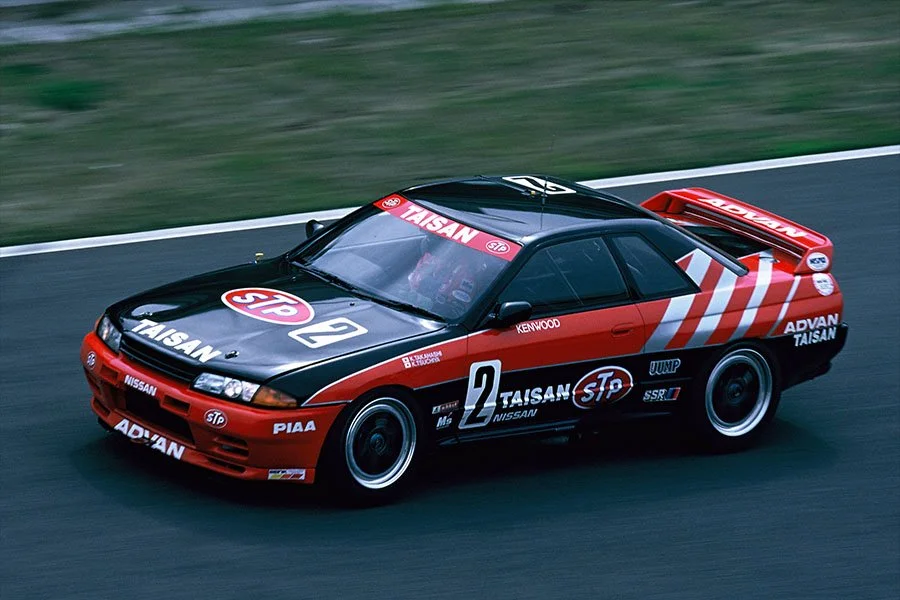
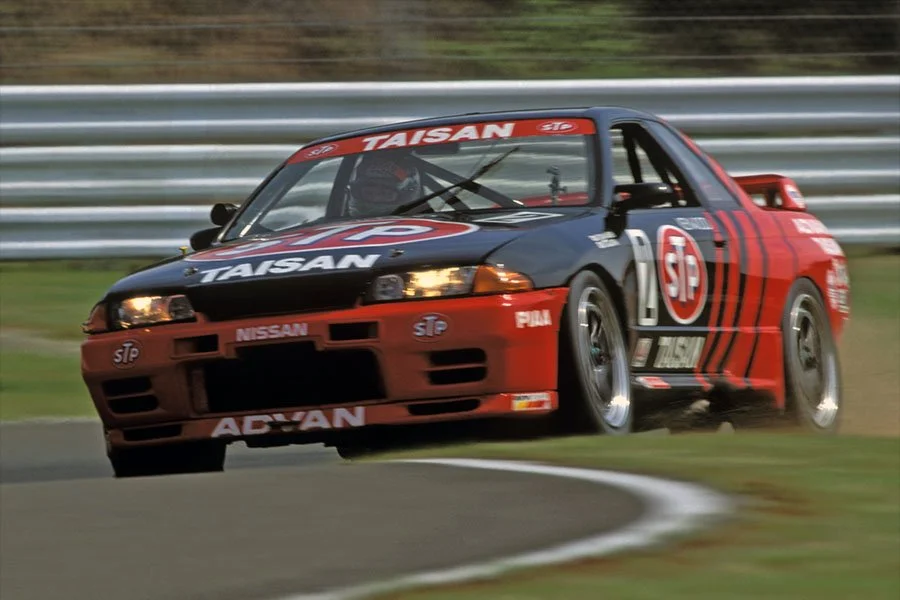
Other GT-Rs to win during 1993 were the HKS Racing example of Osamu Hagiwara / Yukihiro Hane (which took victory at Sugo) and the STP-backed Team Taisan entry of Kunimitsu Takahashi / Keiichi Tsuchiya (which won at Autopolis).
Text copyright: Supercar Nostalgia
Photo copyright: Nissan - https://www.nissan-global.com