Radical G - a Historical & Technical Appraisal of the Lamborghini Gallardo Concept S
/
BACKGROUND
After a 15 year wait, during which hopes of an entry level Lamborghini were raised and dashed on multiple occasions, such a machine finally emerged when the highly anticipated Gallardo was unveiled at 2003’s Geneva Motor Show.
By this time, Automobili Lamborghini had been acquired by the Volkswagen Audi Group which, unlike previous owners Chrysler and Megatech, had the wherewithal to see a properly developed junior Bull through to fruition.
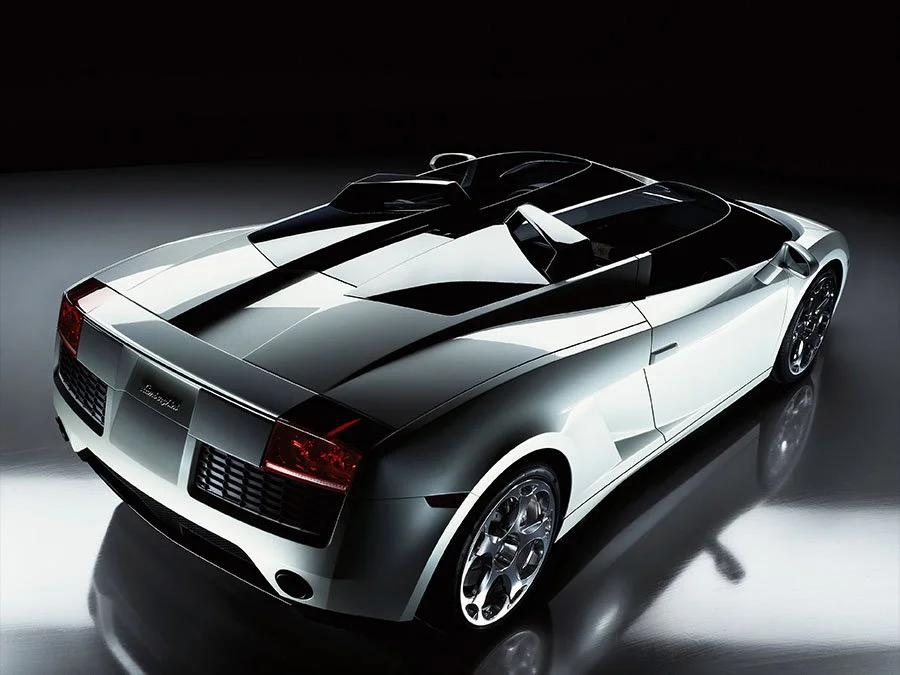
Having initially been unveiled in Coupe trim, there was an expectation that a Gallardo Spider would follow to take advantage of the lucrative market for open top sports cars. However, six months before the Gallardo Spider officially broke cover, Lamborghini presented an outrageous roof-less styling concept based on its critically acclaimed V10-powered model.
Dubbed Concept S, this radical non-running design study made its debut at the Geneva Motor Show in March 2005 precisely two years after the original Gallardo’s premiere.
Like all the products that emerged from Centro Stile Lamborghini around this period, the Concept S was the work of Luc Donckerwolke who created arguably the most extreme looking product to come out of Sant’Agata since the original Diablo Roadster concept from 1992.
Unsurprisingly, despite its impractical configuration with no roof of any kind, interest surrounding the Concept S proved sufficient that Lamborghini went on to create a fully homologated example as part of a planned 100-car production run.
BODYWORK
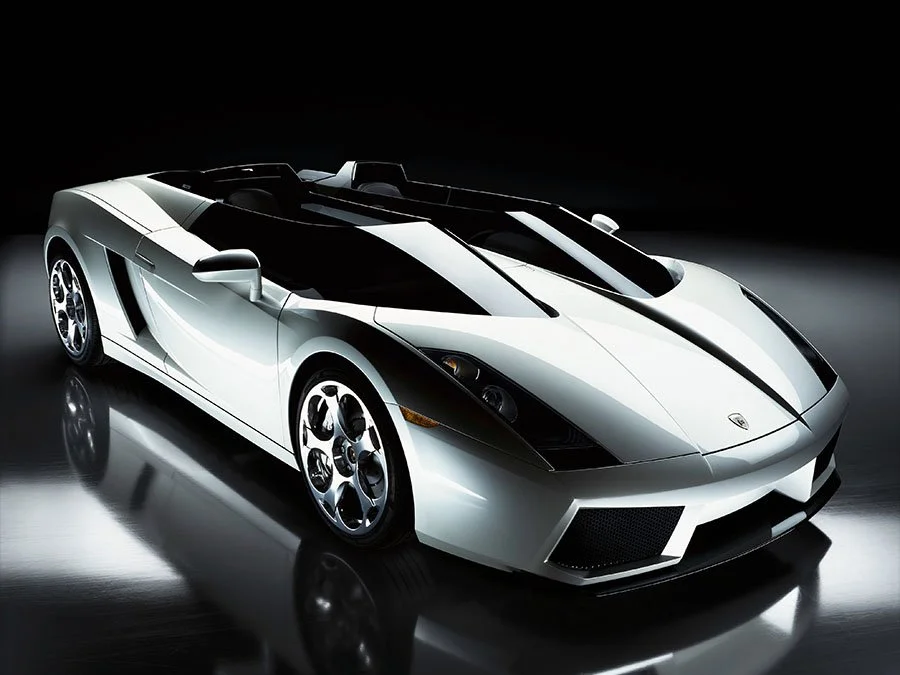
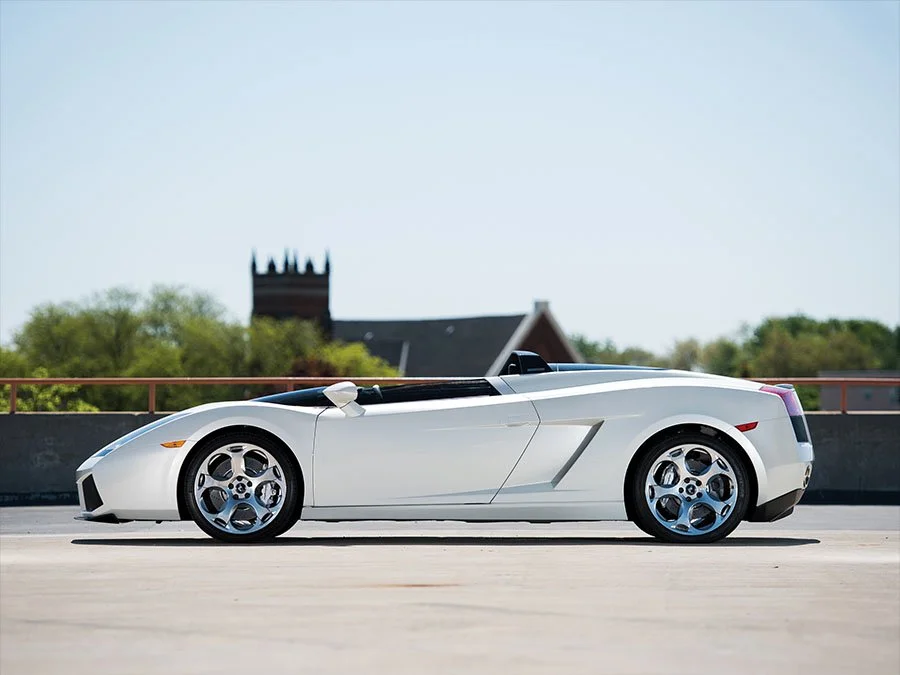
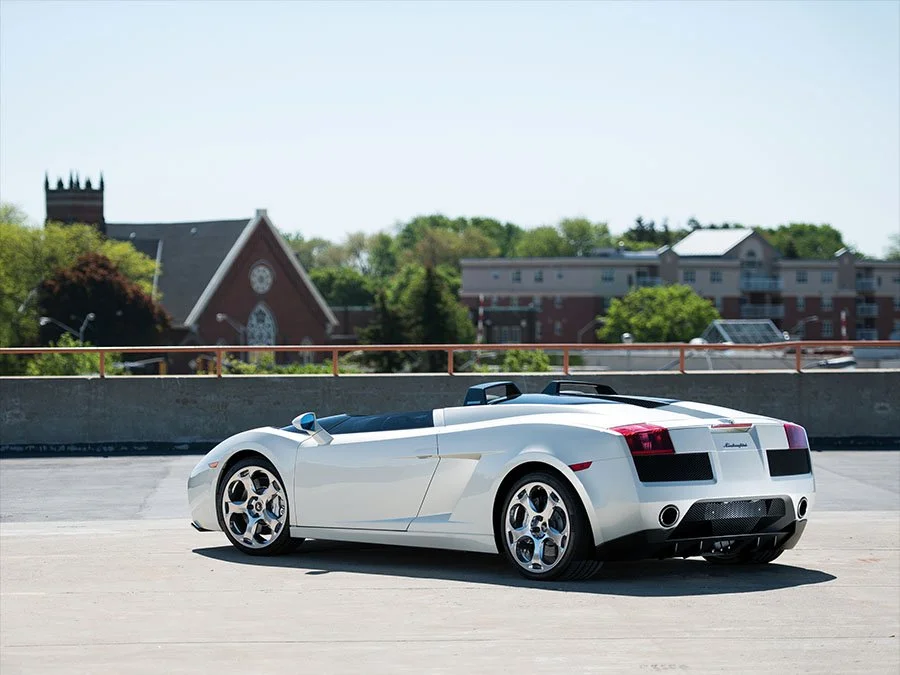
Externally, the Concept S retained the standard Gallardo’s lights, fenders, doors, sills and mirrors, but the rest of the car was substantially redesigned.
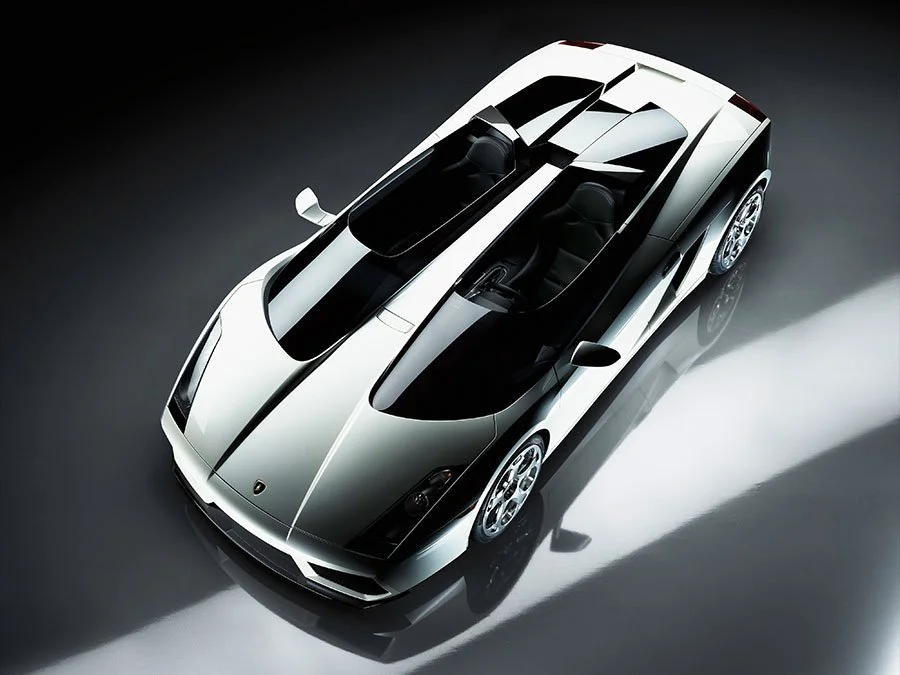
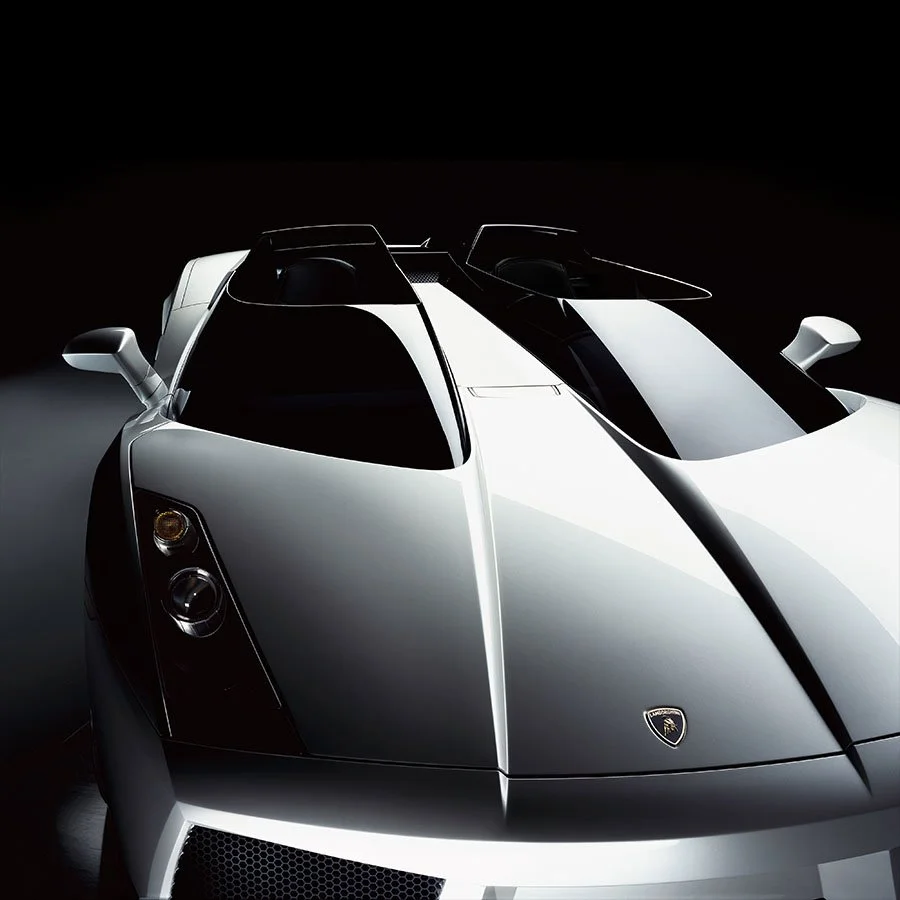
Undoubtedly the most striking feature was a pair of topless windscreens that wrapped around the driver and passenger zones. Inboard of these was a channelled body coloured spine formed at the leading edge of the nose which swept all the way back to the rear apron. Incorporated to the spine was an electronically-controlled rear view mirror and a discrete engine cooling intake.
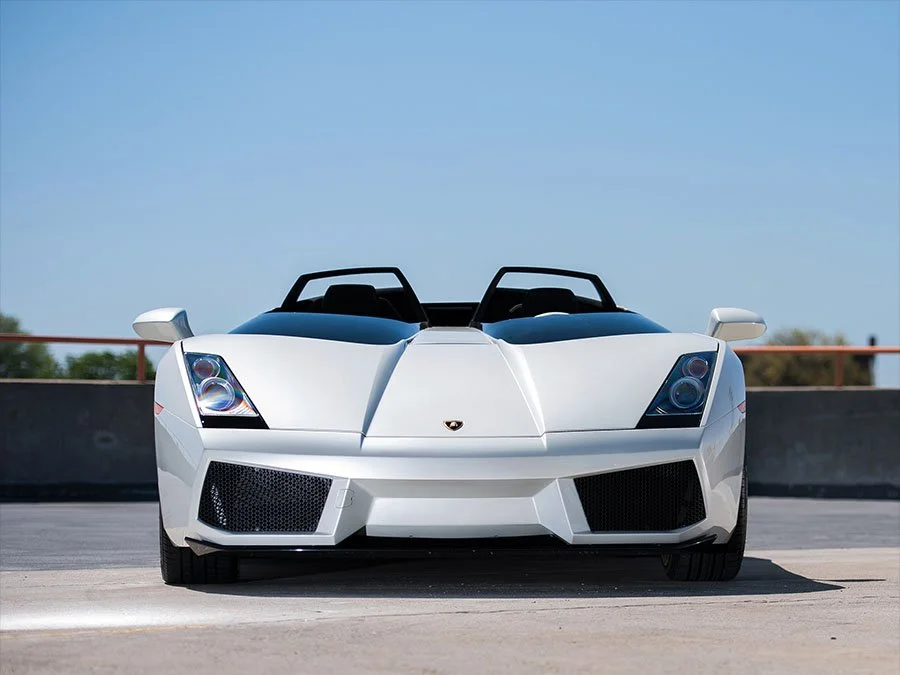
A custom front bumper featured a new supplementary central intake and full width exposed carbonfibre chin spoiler.
As for the rear deck, this was completely redesigned. Angular roll hoops were installed behind each seat and painted gloss black to match the fore section of the engine cover thus providing harmonious integration with the dark tinted cockpit glass.
In a similar fashion, the tail fascia was heavily revised. Instead of the standard Coupe’s trio of cooling vents, just a pair of enlarged openings were carved out from either side of the channelled centre. There was also new rear apron with updated diffuser and fully shrouded exhausts that exited through circular cavities.
INTERIOR
Inside, although Lamborghini had originally planned to create driver and passenger zones which each featured angular new infotainment pods housed on the dash, pragmatism ultimately prevailed and relatively few changes were made in the transition to Concept S trim.
The car displayed at Geneva in ‘05 featured a pair of new single piece bucket seats while the dash was modified to accommodate the channelled central spine. This meant the trio of gauges normally found at the top of the central control panel (for oil pressure, oil temperature and battery voltage) had to be deleted.
On the driver’s side of the dash was an instrument binnacle imported from the stock Gallardo that housed four analogue gauges split by a digital read out for supplementary information. Large dials for road and engine speed were flanked by smaller dials for water temperature and fuel. A three-spoke steering wheel had a flat bottom as per the production Gallardo.
Aside from the aforementioned removal of the three gauges that topped the central control panel, the main console which housed air vents, the audio system, ventilation controls and remaining switchgear was unchanged.
CHASSIS
Like every Gallardo, the Concept S was based on an extruded aluminium spaceframe designed by Audi and assembled at the German firm’s Neckarsulm plant. It had a 2560mm wheelbase with short overhangs and weighed in at less than 250kg.
Suspension was via aluminium double wishbones, coil springs and adaptive Koni FSD dampers that automatically adjusted according to driving conditions. Anti-roll bars were installed along with anti-dive and anti-squat geometry.
Vented discs of 365mm with eight-piston aluminium calipers were fitted up front. At the rear were 335mm diameter discs with four-piston calipers.
Driver aids included ABS, ESP, ABD and ASR.
19-inch diameter Cassiopea design wheels came shod with Pirelli P Zero Rosso tyres. The fronts measured 8.5-inches wide and the rears were 11-inches.
Twin fuel tanks with a combined 80-litre capacity were mounted low down on either side of the engine.
ENGINE / TRANSMISSION
In the engine bay was a 90° V10 derived from Audi’s existing 4.2-litre V8.
The Lamborghini version was extensively reworked in conjunction with Cosworth Engineering in England (another Volkswagen Audi Group company). It featured an aluminium-alloy block and heads, dual overhead camshafts with four valves per cylinder, dry-sump lubrication and was longitudinally mounted in the chassis.
Standard hi-tech equipment of the time included variable length induction manifolds and continuously variable intake and exhaust valve timing.
Displacement was 4961cc thanks to a bore and stroke of 82.5mm and 92.8mm respectively.
Engine management was via Lamborghini’s LIE system with individual static ignition, multipoint fuel-injection, a fly-by-wire throttle and onboard diagnostics.
The compression ratio was set at 11.0:1.
In this configuration peak output was 493bhp at 7800rpm and 376lb-ft at 4500rpm.
The block and heads were built at Cosworth and shipped to Audi’s Gyor plant in Hungary for assembly.
Transmission was through a rear-mounted six-speed gearbox, twin-plate clutch and permanent four-wheel drive system with mechanical torque-sensing viscous coupling that split the power 30:70 in normal conditions. An electronically-controlled brake-activated front axle differential was employed (ABD) along with a rear-mounted mechanical limited-slip diff with 45% locking ratio.
In standard trim, the Gallardo came with a conventional six-speed manual gearbox. The prototype Concept S featured Magnetti Marelli’s F1-style transmission that Lamborghini called E-Gear and offered as an expensive option on the regular Gallardo. Shifts were executed via paddles mounted behind the steering wheel. In manual trim, E-Gear offered a choice of four operating modes (Normal, Sport, Automatic and Winter). There was also a fully automatic mode.
Both types of gearbox were built on Lamborghini’s behalf by Graziano Trasmissioni in Turin.
WEIGHT / PERFORMANCE
It’s probably safe to assume that the Concept S would have weighed in at somewhere between a stock Gallardo Coupe (1430kg) and the Spider version that came on stream later in 2005 (1570kg).
Top speed would likely have been in the region of 180mph with a 0-62mph time of 4.3 seconds.
PRODUCTION VERSION
Lamborghini unveiled a production version of the Concept S at the Concorso Italiano in Monterey during August 2006.
Changes from the prototype displayed at Geneva included lowered windscreens (necessary for homologation), a modified rear diffuser, new hex-type rear grilles and standard seats. In addition, the oil pressure, oil temperature and battery voltage gauges deleted from the top of the centre console were now incorporated to the retractable panel where the electronic rear view mirror had originally been housed. A camera was fitted for rearward vision instead.
Unfortunately, owing to the vast cost that would have been incurred building a 100-car production run, only one operational Concept S was ever completed (chassis ZHWGE32T86LA00001). This vehicle was supplied to a customer who had placed his order prior to cancellation of the production version.
Text copyright: Supercar Nostalgia
Photo copyright: Lamborghini - https://www.lamborghini.com