Guide: Gran Turismo Competizione - a Historical & Technical Appraisal of the Ferrari 250 GT Berlinetta 'Pre-Serie'
/
BACKGROUND
With the gap between the fastest, most expensive road cars to the kind of machinery capable of winning at international level wider than ever, separate classes for tuned versions of genuine production offerings began to appear in long-distance Italian road races during 1953.
1954 saw the Mille Miglia, Giro di Sicilia, Coppa della Toscana and Targa Florio all embrace what came to be dubbed the Gran Turismo class as the GTs added an interesting sub-lot to the out-and-out Sports Prototype classes.
Before long, manufacturers began to introduce tuned and sometimes even special bodied GTs specifically for their customers to race.
The summer of 1954 saw the first of Ferrari’s new 250 GT Europas emerge using a new Tipo 508 tubular steel chassis and the first three-litre ‘250’ iteration of Gioacchino Colombo’s already legendary short-block V12 for road use.
Initially coachwork was an evolution of the existing Europa line. However, less then twelve months later, and with half a year of Europa production still to run, Pinin Farina began to produce a variety of new body styles from which a fresh line of 250 GTs would ultimately be derived with a body style to suit every requirement.
Ahead of a final decision on the precise details of future ‘250’ production offerings, between the spring and winter of 1955, Pinin Farina completed four Competition-inspired Berlinettas, three elaborately detailed Berlinetta-derived Coupe Speciales, seven copies of the ‘base’ Coupe and four 250-engined versions of the high-end Superamerica Coupe. One further chassis was completed by Boano as a Convertible.
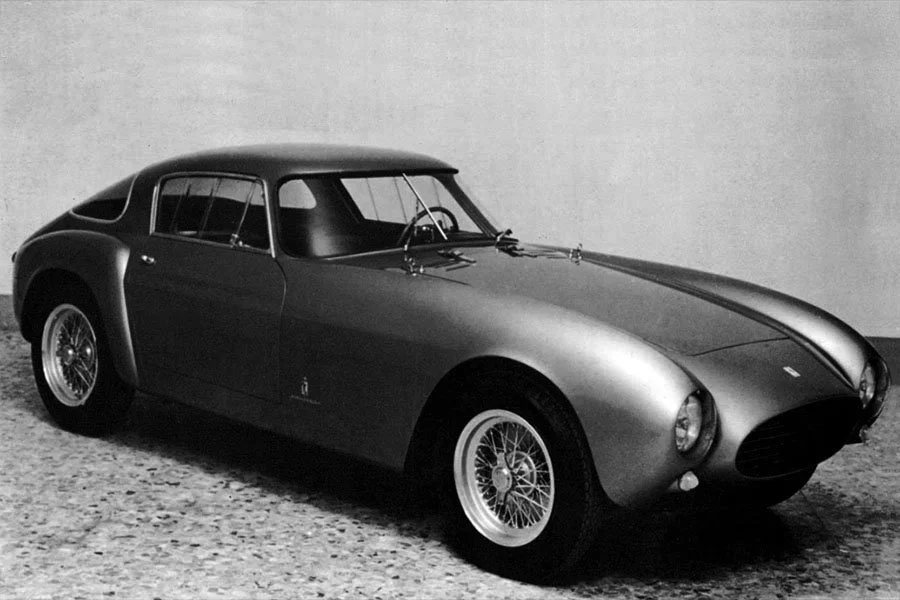
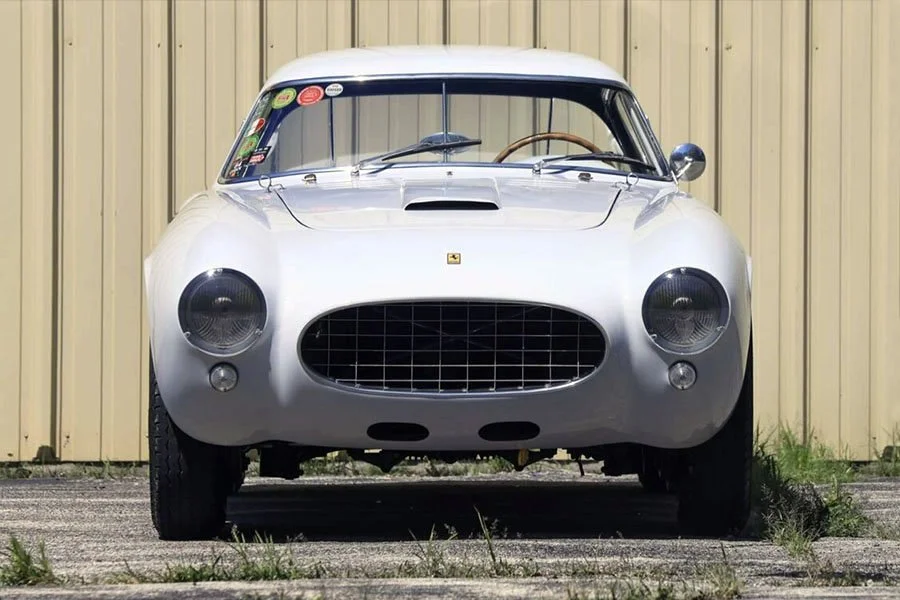
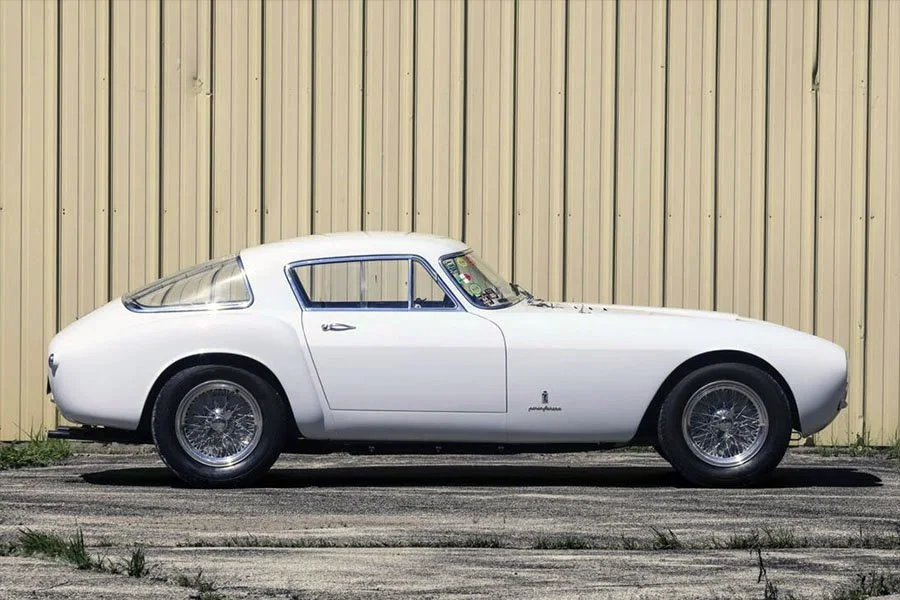
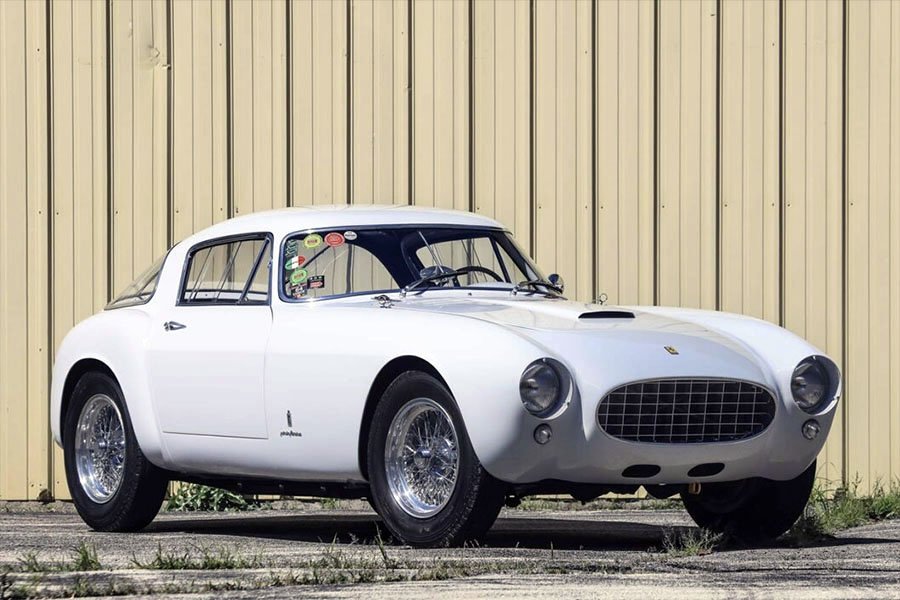
The first 250 GT Berlinetta made its debut at the Turin Motor Show in April 1955. This silver car (chassis 0385 GT) was followed by a grey example in May (chassis 0369 GT) and a blue copy in July (0383 GT). The fourth and final 250 GT Berlinetta from this first ‘pre-series’ (the white chassis 0415 GT) wasn’t completed until November ‘55 and incorporated a number of updates.
CHASSIS
The Tipo 508 chassis was the latest in Ferrari’s line of traditional tubular steel frames. The first three Berlinettas used a chassis with a 2600mm wheelbase chassis while on the fourth copy this was shortened to 2480mm.
Independent front suspension was via unequal-length wishbones, a transverse leaf spring and hydraulic shock absorbers. It had been anticipated that the Tipo 508 chassis would exclusively come with coil sprung front suspension (instead of the ageing leaf- spring arrangement). However, a number of these early 250 GT ‘pre-series’ creations continued with the old configuration to include the aforementioned original trio of Berlinettas while the fourth and final example got the updated coil spring front end.
All four cars used the familiar live rear axle with single radius arm, semi-elliptic springs and hydraulic shocks.
Houdaille shocks were fitted all round along with drum brakes that ran off a twin circuit hydraulic system.
6 x 16-inch centre-locking Borrani wire wheels were originally shod with Pirelli tyres.
Steering was unassisted. Trunk-mounted fuel tanks of varying sizes could be specified and fed by either an exposed or concealed tail-mounted filler cap.
ENGINE / TRANSMISSION
In the engine bay was a Tipo 112 (later Tipo 112A) version of the Gioacchino Colombo-designed 60° V12 tuned to somewhere between that of the 250 GT Coupe road car and the 250 Mille Miglia racer.
These were all-alloy single overhead cam V12s that displaced 2953cc thanks to a bore and stroke of 73mm and 58.8mm respectively. Ignition was via a single spark plug per cylinder and two coils. Wet-sump lubrication was employed.
Thanks to their high-lift camshafts and uprated trio of twin choke Weber 36 DCF or DCL carburettors, peak output was typically between 230bhp and 240bhp at 7000rpm compared to 220bhp at the same engine speed for the Coupe.
Un-silenced free-flow exhausts were also fitted to the Berlinettas but the Coupe’s 8.5:1 compression ratio was understood to have been carried over for reasons of reliability.
Transmission was through a four-speed all-synchromesh gearbox and twin-plate clutch sourced from the big-block Lampredi-engined 342 America.
BODYWORK
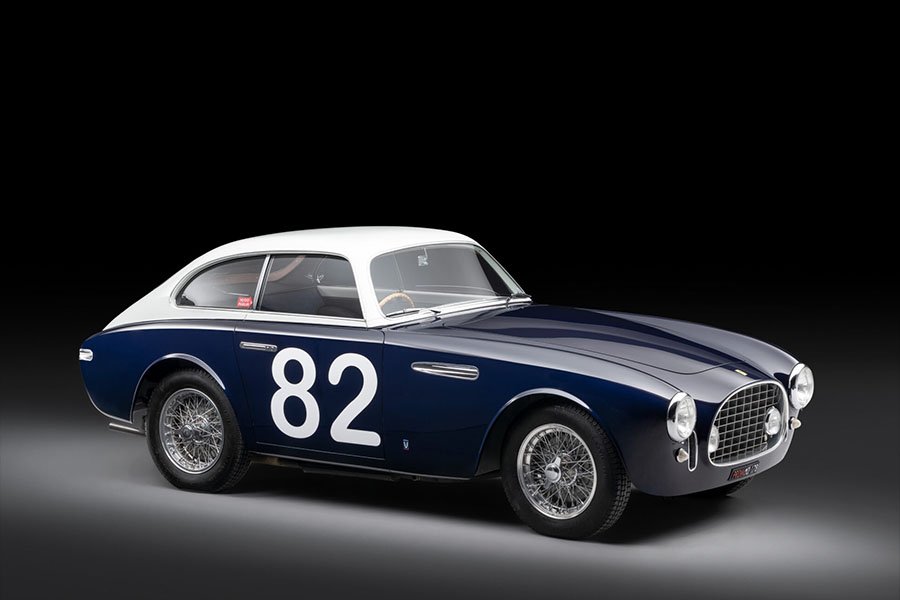
For the bodywork, Pinin Farina created a straightforward evolution of the Berlinetta shell that had appeared on the 250 Mille Miglia and 375 Mille Miglia.
Although none of the four cars built were identical, they did share several key characteristics.
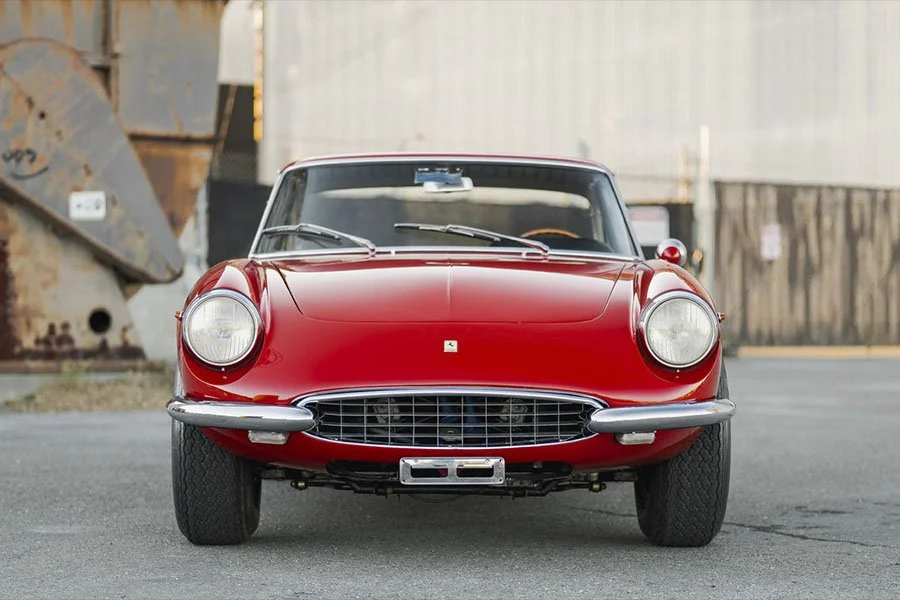
To improve aerodynamics, the headlights were now mounted behind shallow Plexiglas cowls while the primary nose intake became more oval in shape. Increased curvature was added ahead of the front axle to lend a more air piercing profile.
The hood now opened at the trailing instead of leading edge and was fastened in place with leather retaining straps.
The cockpit comprised expansive single-piece wraparound front and rear screens that provided excellent visibility. Each door featured an opening quarterlight.
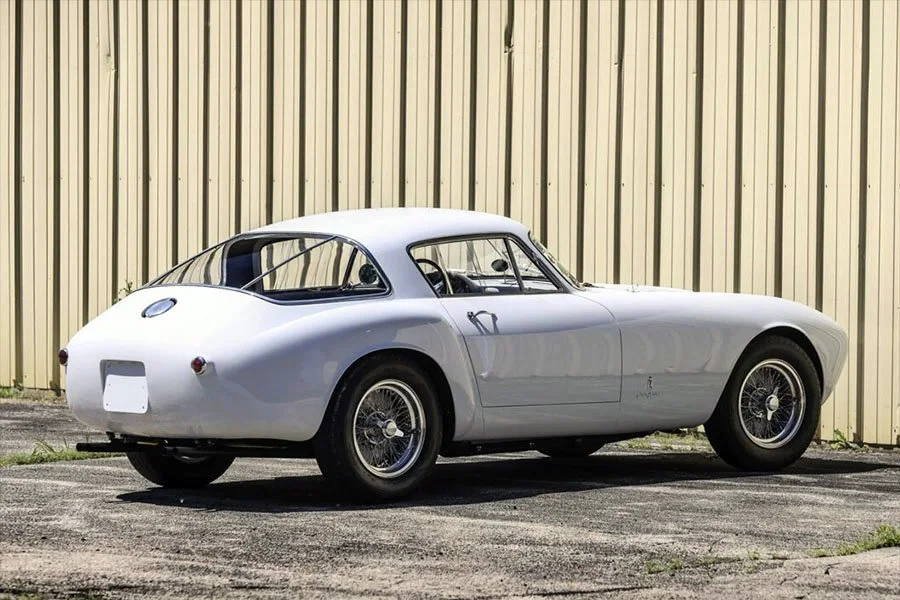
Elaborately profiled swollen rear fenders lent the back end a muscular look and were neatly integrated with the rounded tail.
As you would expect from experimental coachbuilt cars of the era, none of the four Berlinettas were identical. Significant differences could be found in terms of the front and rear fender profile, the shape of the front apron and hood and the type of cooling solutions (or lack thereof).
Some cars came with horizontally-sliding competition-style sub-windows while others had a conventional type that dropped into the doors. An opening trunk lid was occasionally adopted along with auxiliary lighting, spot lights and bumperettes. If no opening trunk lid was present, the back end house an exposed fuel filler cap.
Body panels were fashioned exclusively from aluminium.
INTERIOR
Inside, the four Berlinettas were also a long way from having been created to a standard specification.
Some cars came with a crackle black dash while others were painted body colour. The precise shape of the instrument binnacle also differed slightly – some chassis got three large gauges with a combined oil pressure / water temperature and fuel gauge while others came with individual read outs. A 300kmh speedometer and 7000rpm tacho were ever present.
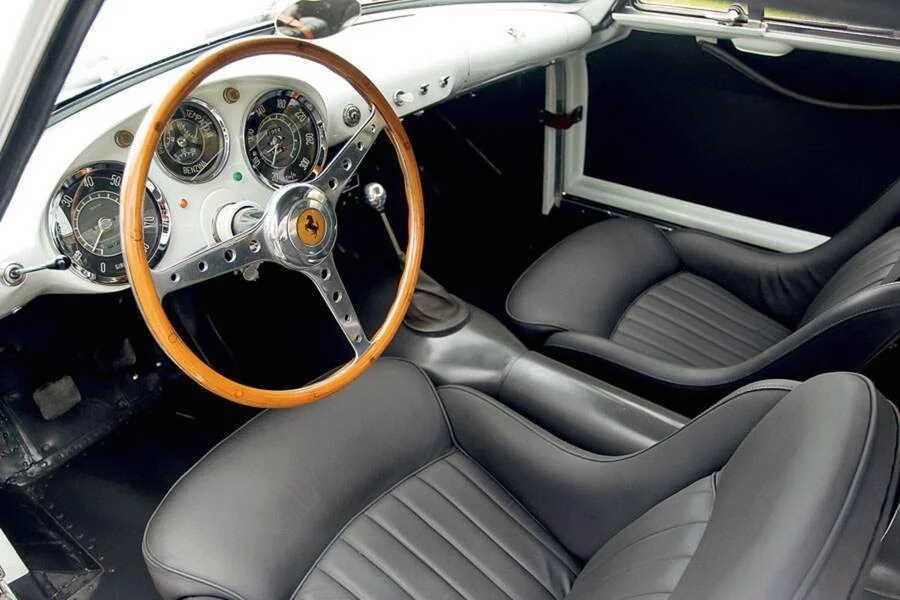
Leather-trimmed bucket seats held driver and passenger firmly in place. On occasion this was practically the only upholstery to be found while at other times a slightly a higher degree of trim was adopted in order to insulate the cabin from noise.
OPTIONS
Although no official options list was ever published, practically any degree of customisation would have been possible with the only limiting factory having been the depths of a customer’s pockets.
WEIGHT / PERFORMANCE
Each of the four pre-series Berlinettas built would have weighed in around the 1050kg mark.
A top speed in the region of 150mph placed these cars among the fastest of the day while 0-62mph would likely have required a little under six seconds.
COMPETITION HISTORY
Despite having been conceived with competition in mind, only two of the four Berlinettas were originally used for that purpose.
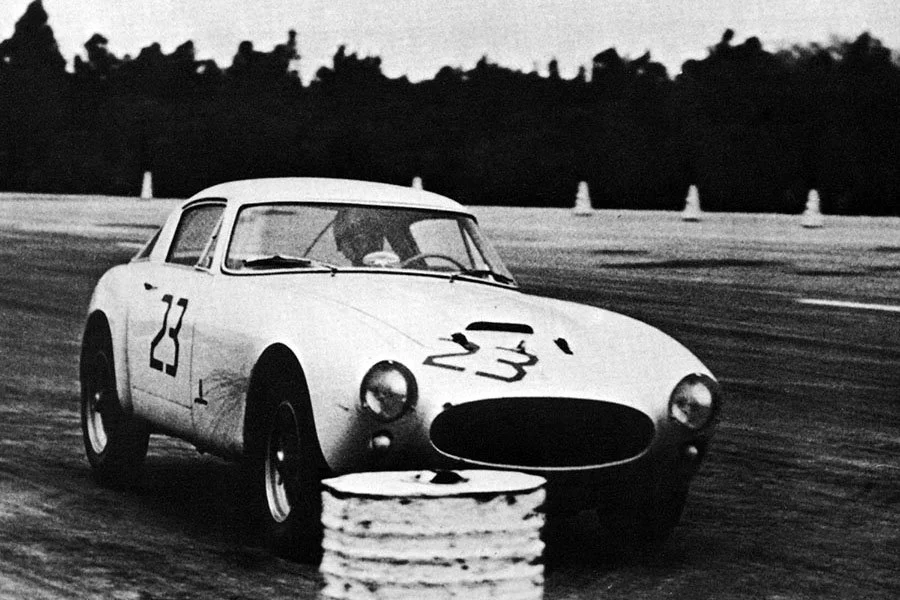
First to take to the track was the last car built, chassis 0415 GT, which was shipped out to Nassau for the end-of-season 1955 Bahamas Speed Week. Alfonso de Portago drove 0415 GT in the five lap over two-litre Nassau Production Race and finished fourth behind a trio of Jaguar D-types.
The car was then taken over by its owner, renowned fashion photographer and occasional amateur racer, Gleb Derujinski. Derujinksi failed to finish the 30 lap Governor’s Trophy owing to a minor off and then came home 17th overall (seventh in class) in the 60 lap Nassau Trophy.
0415 GT was not raced again.
The other pre-series 250 GT Berlinetta that appeared on track was the third example completed: chassis 0383 GT.
Having originally been supplied to machine tool industrialist Francesco Marchesi in 1955, a few months later the car passed on to Paolo Lena who in 1956 entered the Tour de France (DNF) and the Serravelle-San Marino Hillclimb (third overall, second in class). Lena had arguably his best result in the ‘56 Coppa Inter Europa one hour race at Monza where he finished third behind winner Armando Zampiero’s Mercedes-Benz 300 SL Gullwing and Camillo Luglio’s Zagato-bodied 250 GT Berlinetta.
Having crossed the Atlantic in 1957, chassis 0383 GT was successfully raced by new owner Frank Adams in SCCA competition throughout 1958.
SUBSEQUENT VERSIONS
The Gran Turismo class saw an explosion in popularity during 1956 when Ferrari officially introduced the 250 GT Berlinetta as an off-the-peg solution for drivers wanting to compete. However, the model also appealed to those customers that wanted the most focused closed cockpit Ferrari for street use.
Thanks to Alfonso de Portago and Ed Nelson’s victory driving one of these 250 GT Berlinettas in the 1956 Tour de France, the model unofficially acquired the Tour de France moniker until production ended in 1959.
Text copyright: Supercar Nostalgia
Photo copyright: Ferrari - https://www.ferrari.com & Gooding Christie’s - https://www.goodingco.com/