Added Punch - a Historical & Technical Appraisal of the Aston Martin V8 Vantage V580
/
BACKGROUND
Having experienced a period of relative stability under the stewardship of renowned British industrialist David Brown between 1947 and 1972, Aston Martin Lagonda (AML) found itself in disarray during the years that followed.
1972 saw the firm sold to Company Developments which had a diverse portfolio of investments but no prior experience with car manufacturing.
When an already depressed economic climate worsened following an Oil Crisis caused by war in the Middle East over the winter of 1973-1974, demand for high end motor cars dropped to a trickle and, on December 31st 1974, AML was placed into administration. Although the still profitable Customer Service Department remained open, production of new vehicles stopped there and then.
Fortunately, in June 1975, an offer for the firm was accepted from a multinational consortium led by American Peter Sprague and Canadian George Minden, both of whom were Aston Martin Owners Club members. Sprage and Minden were subsequently joined by Brits Alan Curtis and Denis Flather.
Soon, an optimistic new era began evidenced by a gradually expanded model line up.
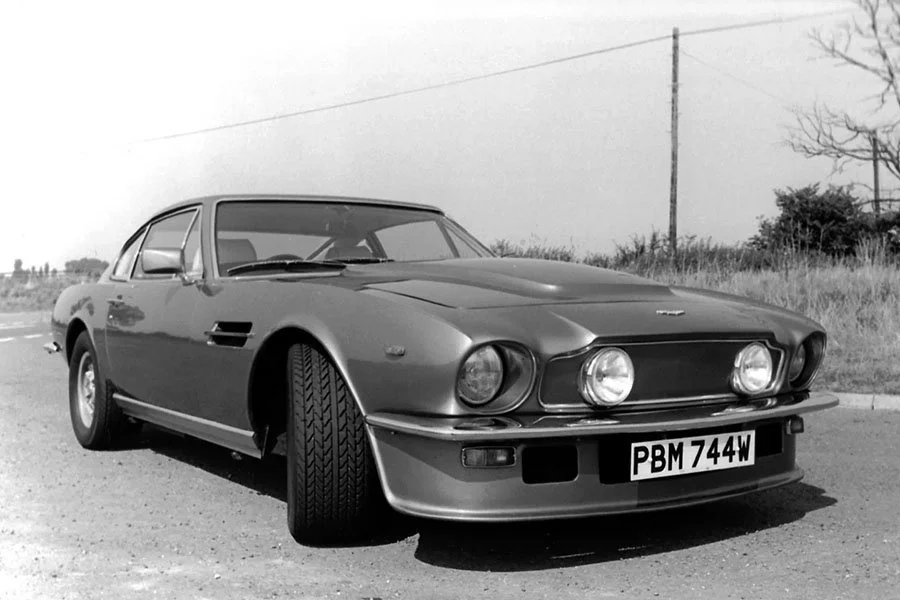
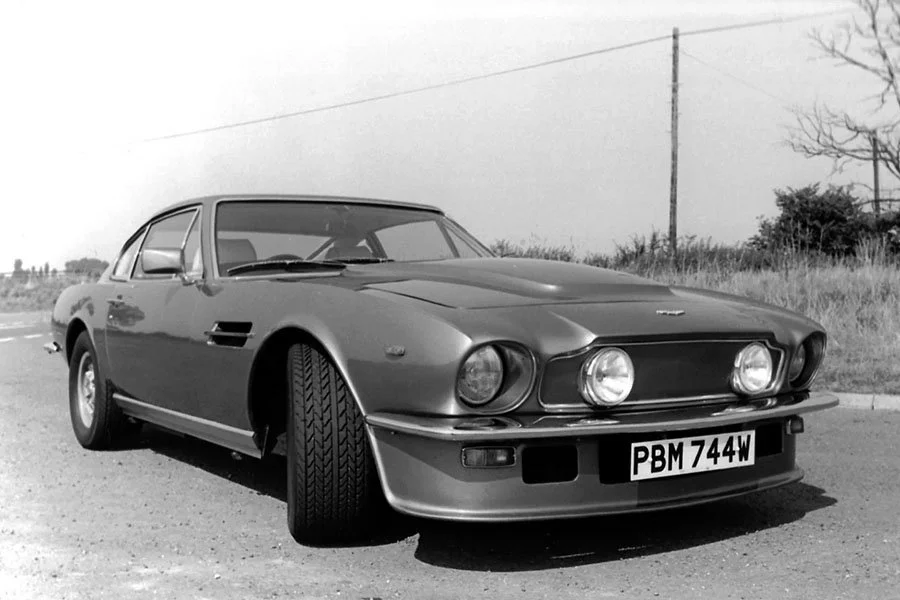
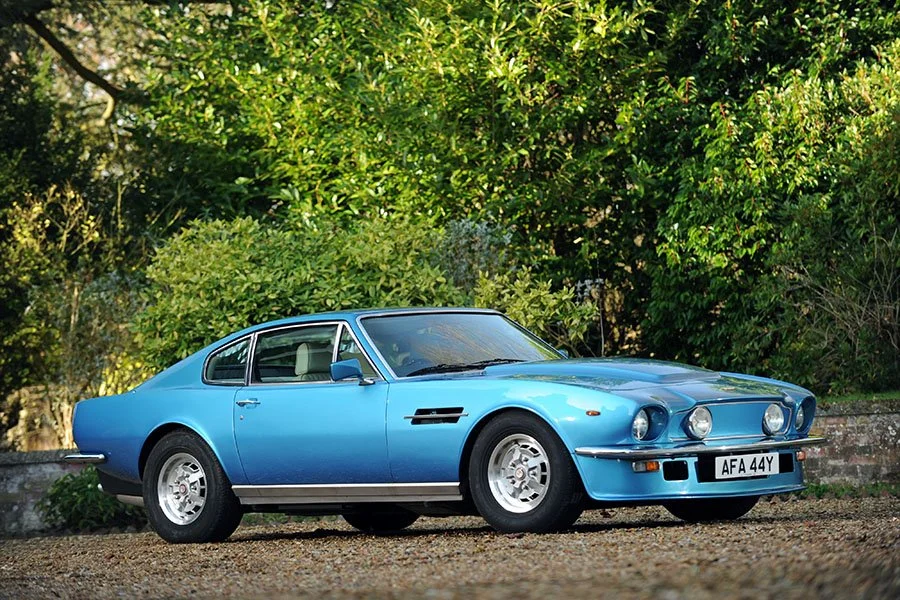
The first new model to arrive was the sensational four-door Lagonda which Aston Martin followed with a brutish Vantage iteration of the familiar V8 Coupe. Boasting a 375bhp motor and a few special cosmetic tweaks, the V8 Vantage was Britain’s answer to the Ferrari Berlinetta Boxed and Lamborghini Countach. With a top speed of 173mph and 0-62mph time of just 5.3 seconds, the new Aston was considered the fastest production car available at that time.
Initially conceived as an after-market upgrade that would be carried out by the Customer Service department at Newport Pagnell, the decision was made to offer the Vantage as a standalone flagship following completion of two examples.
Production of the V540 V8 Vantage ran from May 1977 until March 1980 at which point the revised V580 iteration was introduced.
ENGINE / TRANSMISSION
The concept behind Aston Martin’s switch to the V580 engine was simple: it would enable the company to adopt a common base specification across its range of models which meant it was only a matter of selecting the appropriate camshafts and carburettors to build a V8, Vantage or Lagonda engine.
Most notably, the V580 power unit came with a new Lagonda-style cylinder head that featured bigger valves, uprated camshafts, revised porting, new pistons and a higher compression ratio (9.3:1 as opposed to 9.0:1). Although output figures were officially unchanged (375bhp at 5800rpm and 380lb-ft at 4000rpm), these latest generation motors were noticeably quieter than before and offered improved mid-range punch.
As usual, the engine itself was an all-alloy 90° V8 with dual overhead camshafts, two valves per cylinder, wet-sump lubrication, four Weber 42 DCNF carburettors and Lucas electronic ignition. Displacement was an unchanged 5340cc thanks to a bore and stroke of 100mm and 85mm respectively.
Transmission was via the familiar ZF five-speed manual gearbox, a Borg & Beck single dry-plate clutch and Powr-Lok limited-slip differential. At this stage, an automatic gearbox option was not officially offered.
CHASSIS
Aside from the revised V580 power unit, under the skin little was changed.
The Vantage was based on the same steel platform chassis as the standard V8 to which handcrafted aluminium body panels were attached. A 2610mm wheelbase ensured there was plenty of space to accommodate four passengers in comfort.
Vantage-specific suspension featured stiffer adjustable Koni dampers, shorter springs that lowered the ride height and a thicker front anti-roll bar.
As per the standard V8, the suspension layout comprised independent double wishbones at the front with a De Dion rear axle located by parallel trailing arms and a Watts linkage.
Ventilated 10.75-inch front and 10.38-inch rear discs brakes were carried over (inboard at the rear).
Power-assisted steering was fitted as standard. Increased castor angles for the Vantage gave better feel.
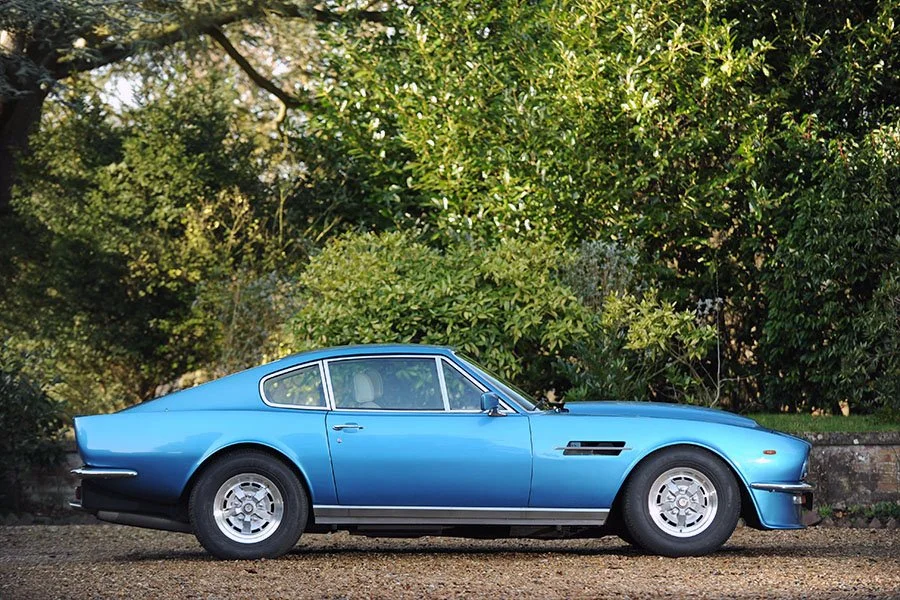
Pirelli tyres were fitted to the familiar five-bolt GKN Kent 15 x 7 light alloy wheels. Spacers widened the front track by 20mm over a regular V8.
Fuel tank capacity was 113.6-litres.
BODYWORK
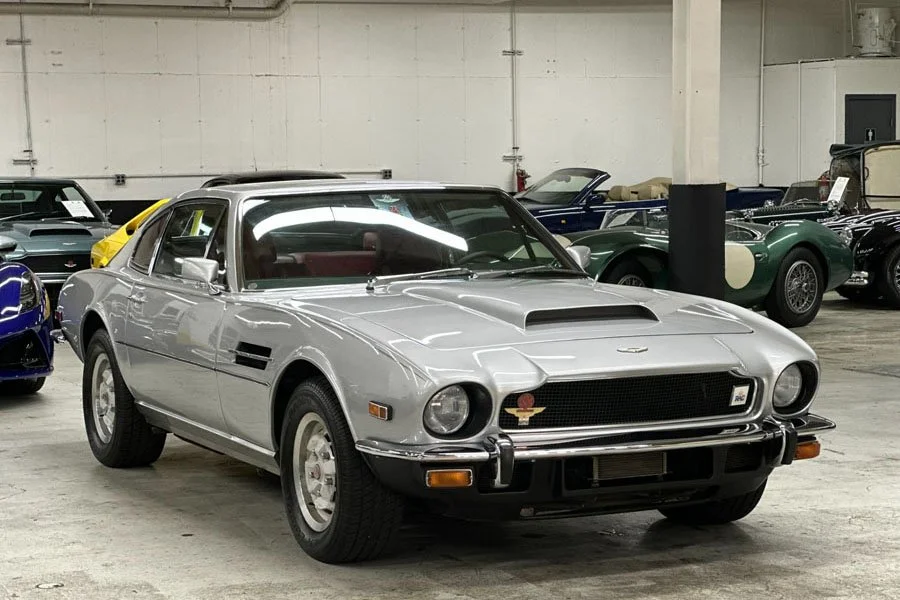
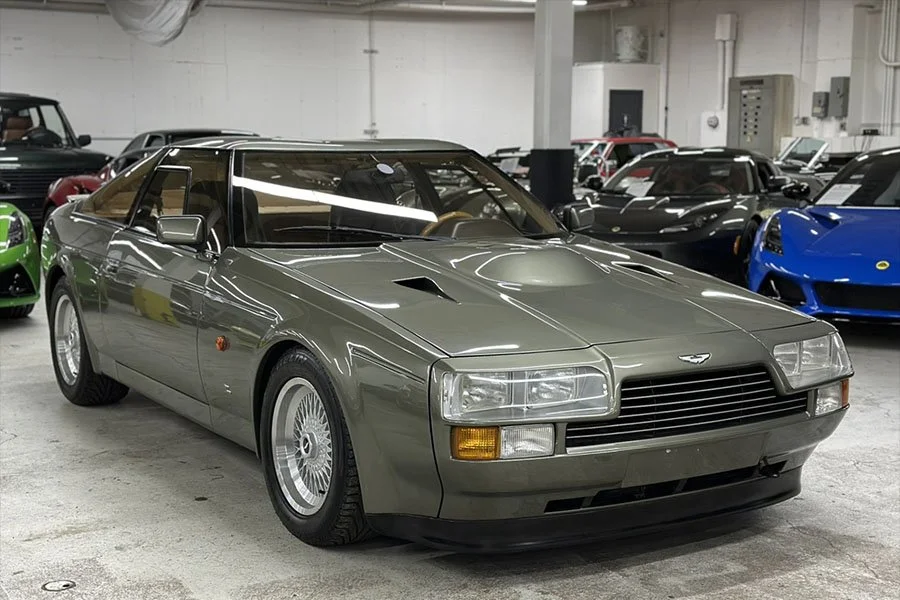
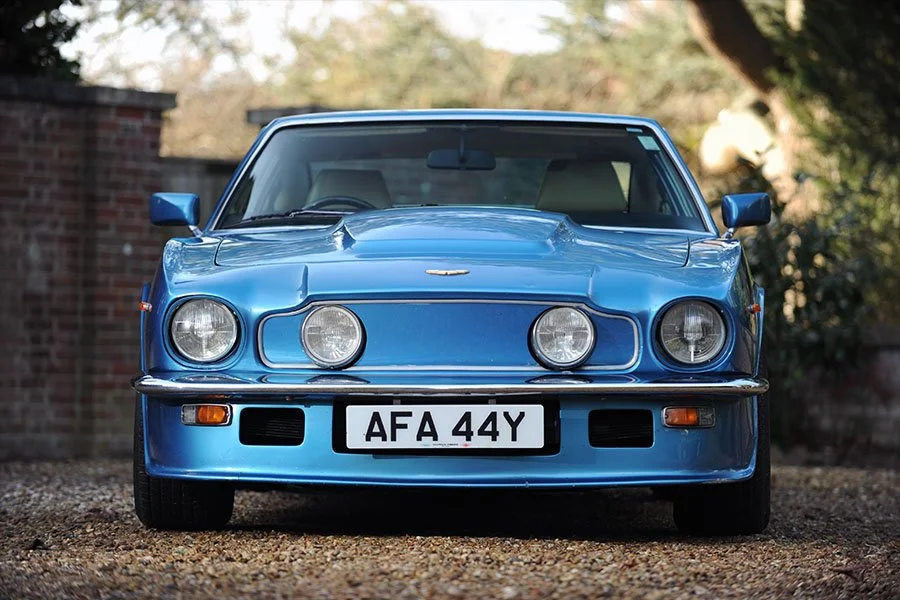
Externally, this V580 Vantage incorporated the same trademark features as the last iteration of its V540 predecessor which had itself evolved through three different iterations between 1977 and 1980.
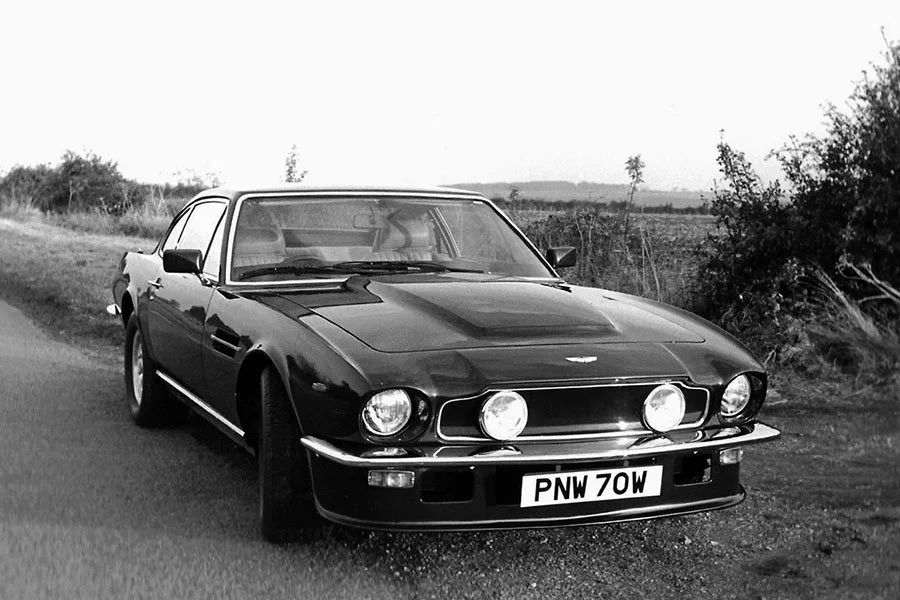
Initially, the Vantage had come with a bolt-on aero kit that comprised pronounced front and rear spoilers along with a three-piece blanking plate for the grille. Other Vantage-specific details had included Cibie spot lights mounted within the blanked-off grille aperture and a bigger open-fronted power bulge on the hood to cover the larger airbox.
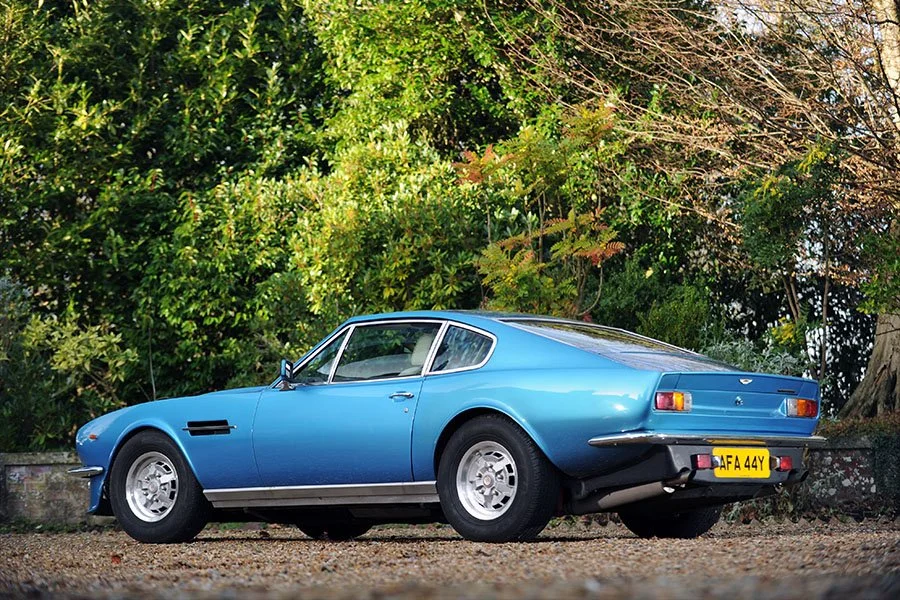
Overall, these wind tunnel-refined enhancements had cut drag by 10% and, with the car now generating almost zero lift, handling was noticeably more controllable at very high speeds.
From December 1977, the Vantage had come with a more smoothly integrated rear spoiler and a hood scoop that was welded shut during the fabrication process. Further changes were afoot in October 1978 when the Vantage adopted the same less pronounced rear spoiler and neater, smoothed out hood that had been introduced on the revamped base V8 which arrived at the same time. It was this updated configuration that was subsequently carried over for the V580.
INTERIOR
Like previous iterations of Aston Martin’s flagship high performance model, inside, this latest Vantage was more or less identical to the standard V8.
Directly behind the leather covered three-spoke steering wheel were large read outs for engine and road speed with a small oil pressure gauge positioned in between. Off to either side were more small read outs for oil pressure, water temperature, fuel and battery amps.
A clock was housed in a central cowl between the electric window switches.
The front seats tilted forward for easy access to the rear quarters.
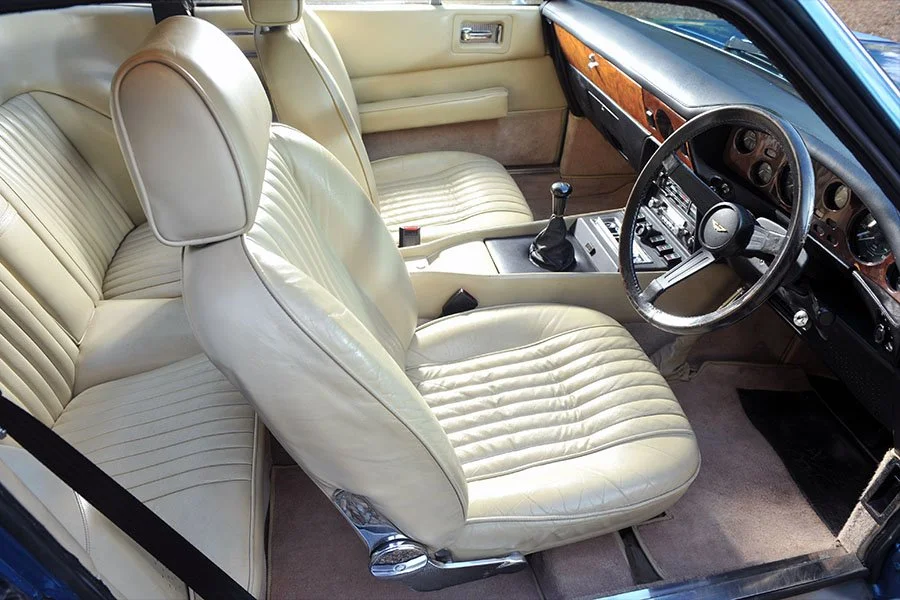
Air-conditioning was standard along with full leather upholstery.
As per the final iteration of the V540 Vantage (introduced late in 1978), leather was used to upholster the dash. Similarly, the headliner was leather instead of cloth, a longer centre console was used than on earlier variants and an improved air-conditioning system was fitted.
OPTIONS
Optional extras included an electric sunroof, a standard mesh front grille, headrests, contrast piping, a wood-rimmed Nardi steering wheel, fabric upholstery and leather instead of wood cockpit surfaces. Various wood finishes, rear axle ratios and audio systems were also offered.
WEIGHT / PERFORMANCE
For this latest V8 Vantage, Aston Martin claimed a 5.2 second 0-62mph time which was a tenth quicker than prior versions.
Quoted top speed and weight figures were unchanged at 173mph and 1727kg respectively.
VICTOR GAUNTLETT & CH INDUSTRIES TAKE CONTROL
Having initially each acquired a 10% stake in Aston Martin during 1980, petrochemicals magnate Victor Gauntlett and Tim Hearley of CH Industries took full control of the company as joint 50:50 owners at the beginning of 1981.
V8 VANTAGE VOLANTE PRE PRODUCTION
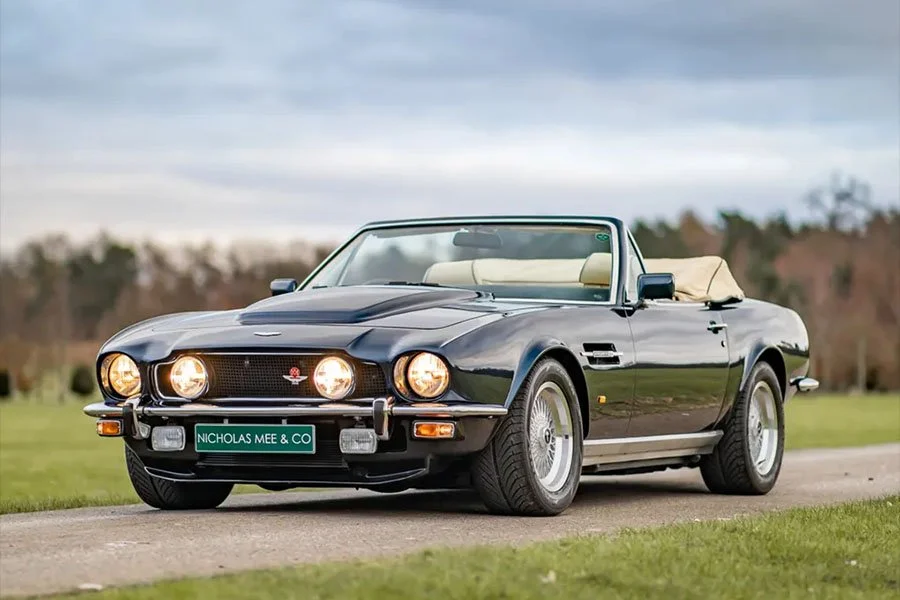
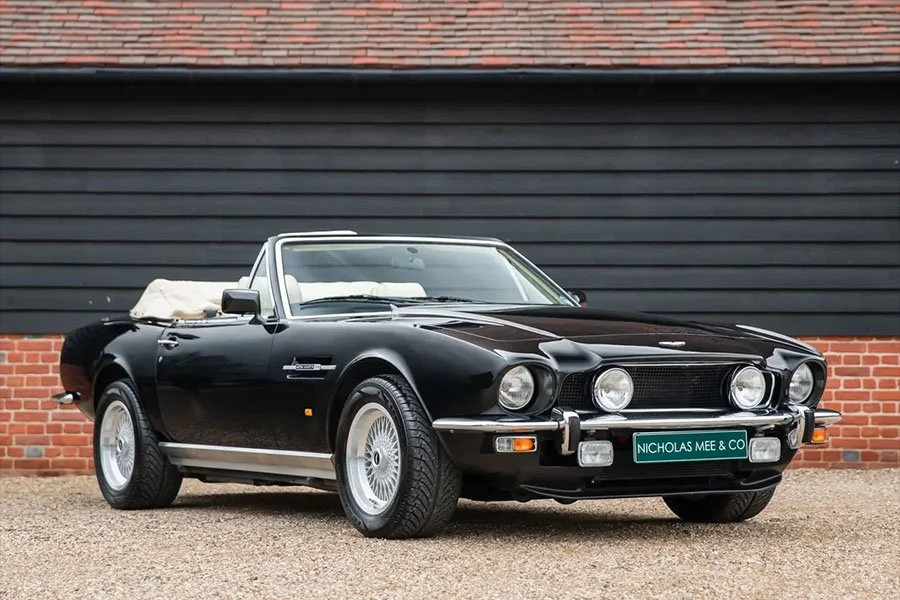
Although not openly offered to the public, five pre-production V8 Vantage Volantes were manufactured by special request between 1981 and 1985.
The first example rolled out of Aston Martin’s Newport Pagnell factory in February 1981. It was commissioned by a VIP customer from the Middle East who was also able to order his car with an automatic gearbox.
A second copy then followed in August 1982 destined for the Brunei Royal Family. This vehicle was also dispatched with an automatic gearbox and came with flared fenders.
The third and fourth pre-production V8 Vantage Volantes were both manual transmission cars delivered to South Africa. The first of these (completed in April 1983) featured the subsequent X-Pack engine devised for high altitude markets.
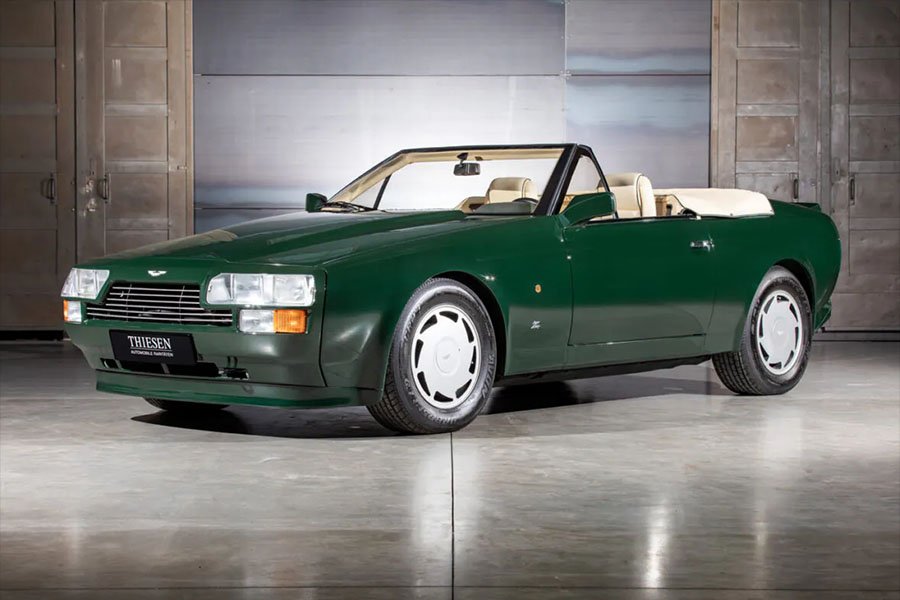
The fifth copy was another automatic transmission car bound for the Middle East. Delivered in June 1985 with the X Pack engine, it previewed the subsequent Vantage Volante production model with broadly similar flared arches, deep side skirts and a matching front spoiler.
EARLY PRODUCTION CHANGES
During early 1981, Aston Martin updated the V8 and V8 Vantage with central locking, electric mirrors, electric trunk and filler cap switches and gas struts for the hood.
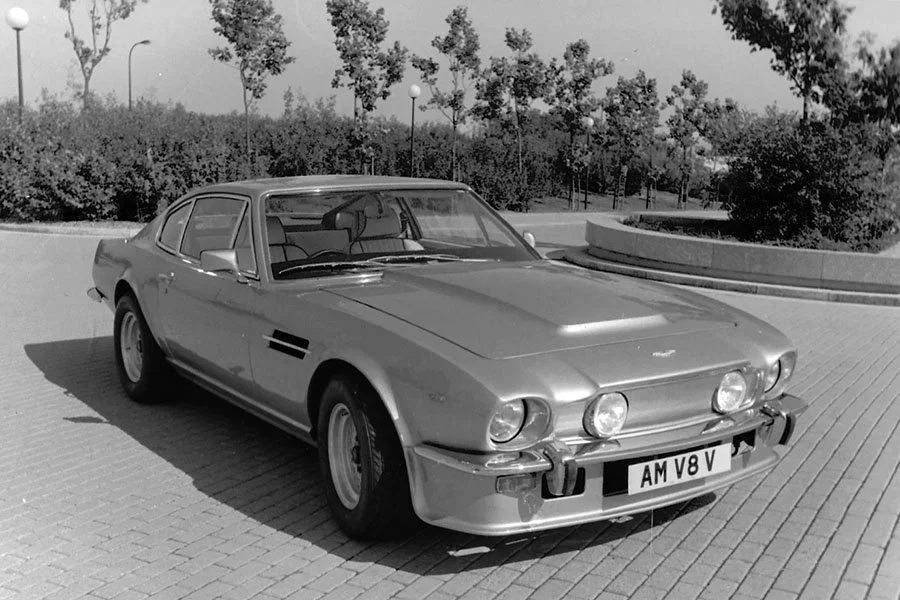
In January 1983, Aston Martin dropped the original 15 x 7-inch GKN wheels in favour of 15 x 8-inch BBS cross-spoke items shod with the latest Pirelli P7 tyres. To accommodate this wider wheel and tyre combination, discrete lips were added to the wheelarches.
At the same time, Burr walnut wood trim became standard equipment for the cockpit and a superior air-conditioning system was introduced along with new badges for the fender vent trims and some new audio systems.
PETER LIVANOS COMES ON BOARD
In September 1983, and with Aston Martin needing a greater level of investment in order to bring an all-new model to market, Victor Gauntlett sold his 50% stake in the company to Greek shipping magnate, Peter Livanos. Livanos invested via his venture company ALL Inc. (co-owned by brothers Nick and John Papanicolaou) which also purchased 5% of CH Industries’ stake to become Aston Martin’s majority shareholder.
Victor Gauntlett remained as Chairman of Aston Martin Lagonda.
LATER PRODUCTION CHANGES
During 1984, the original three-spoke steering wheel was switched to a two-spoke item completely covered in leather. The handsome new wheel was mounted on a revised GM-supplied steering column with tilt adjustment and revised control stalks.
A little later, metal-bodied exterior mirrors with black bases replaced the earlier plastic-bodied type with chrome bases.
END OF PRODUCTION
In total, Aston Martin completed 136 copies of the V580 V8 Vantage by the time production was discontinued in December 1985.
This figure comprised 42 copies built with the original GKN wheels between March 1980 and December 1982 (27 right-hand drive and 15 left-hand drive).
A further 94 copies were then manufactured with the later BBS wheels between January 1983 and December 1985 (53 right-hand drive and 41 left-hand drive). Two of these BBS-equipped variants were fitted with an automatic transmission at special request.
The V580 made way for the revised V580X launched in January 1986 which combined the more powerful X Pack engine with new wheels and an array of cosmetic enhancements.
Text copyright: Supercar Nostalgia
Photo copyright: Aston Martin - https://www.astonmartin.com & Bonhams - https://cars.bonhams.com/