Briefly Brilliant - a Historical & Technical Appraisal of the Lamborghini Islero S
/
BACKGROUND
Ferruccio Lamborghini established his car building operation to manufacture the type of conservatively styled Grand Tourers that generally appealed to industrialists like him.
Not wanting flashy street racers, these were men who desired discrete, superbly engineered cars with world class build quality, decent practicality and sufficient performance to hit over 160mph on the autostrada.
In order to create something better than anything Ferrari, Maserati or Aston Martin had to offer, Ferruccio Lamborghini recruited arguably the best team of young engineers in the business. However, before long, that gifted crew wanted to shock the world with a pioneering machine that incorporated all the latest design features and illustrate just what they were capable of.
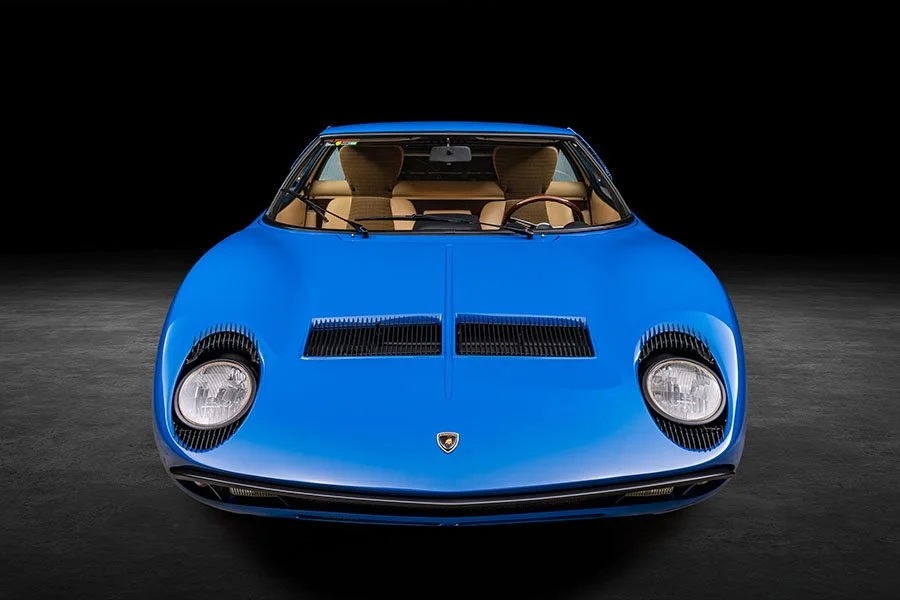
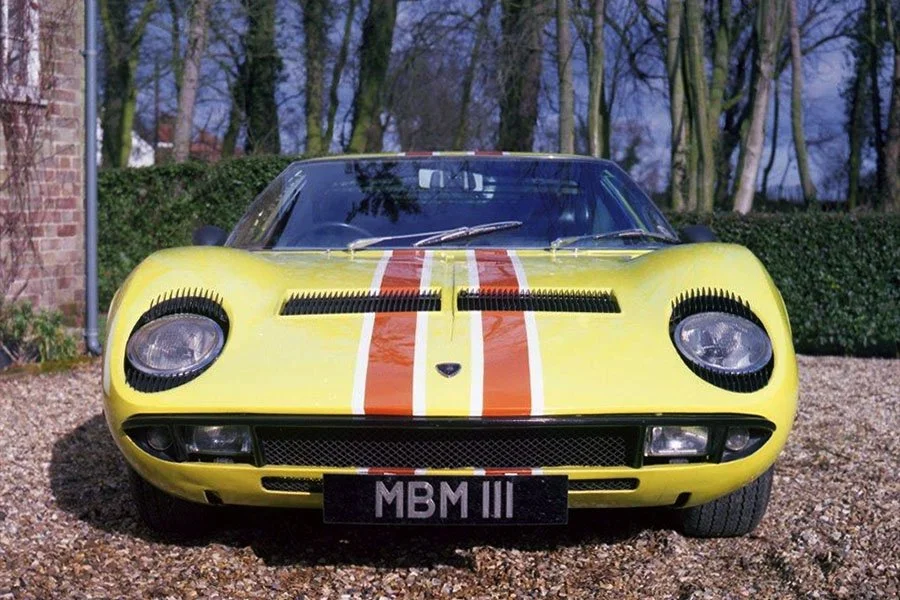
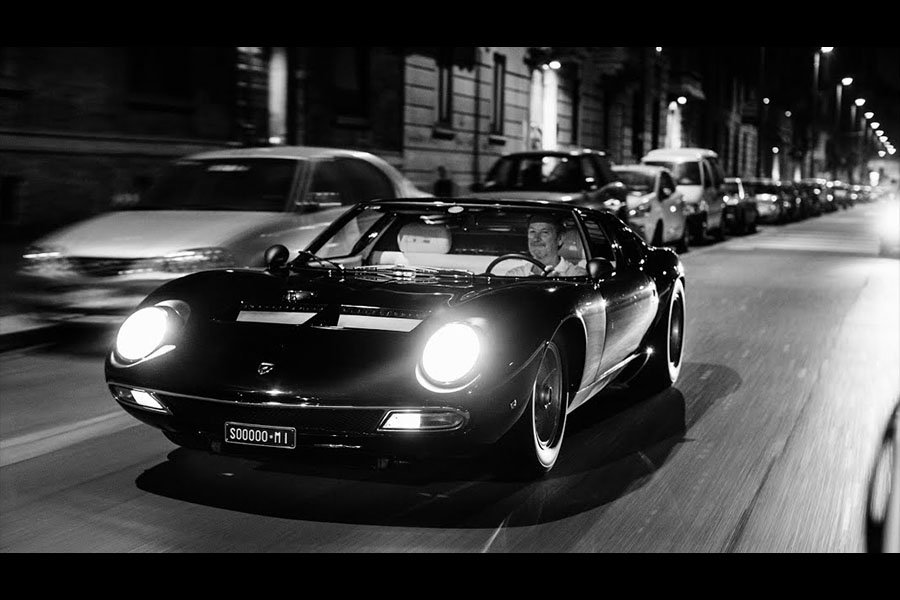
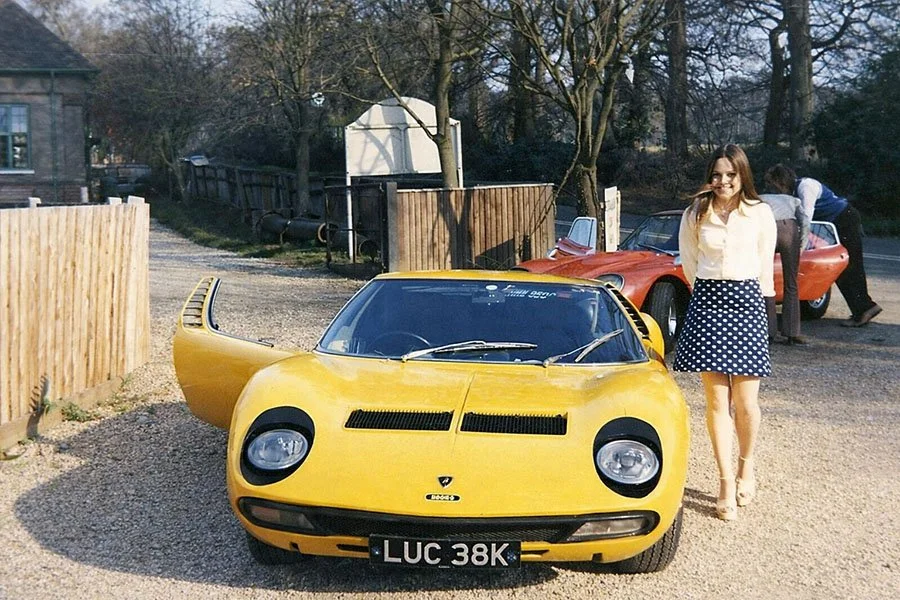
That car, developed without the boss’s knowledge, was the Lamborghini Miura which broke cover in completed form at the Geneva Motor Show in 1966.
Having witnessed the world’s reaction and realised what a money spinner it could be, Ferruccio Lamborghini gave the green light for production. Ultimately, the Miura set the blueprint for what Lamborghini quickly became: manufacturer of the most outrageous high end super sports cars in the world.
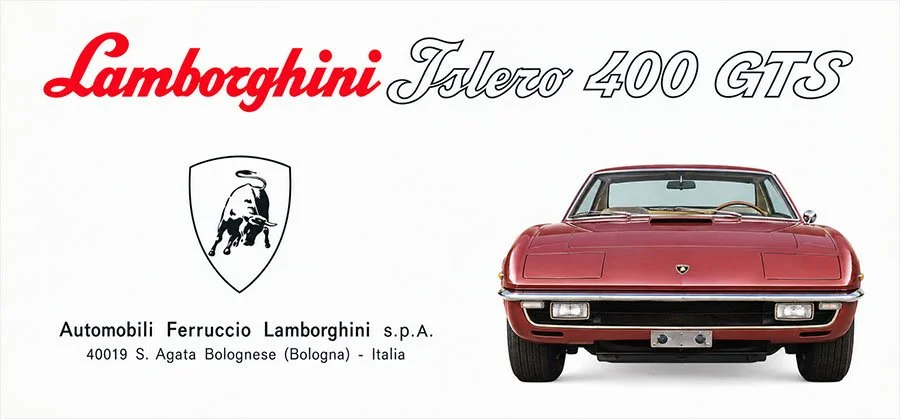
Initially, Automobili Lamborghini continued to manufacture discretely styled Grand Tourers alongside its radical mid V12-engined Miura and, at the Geneva Motor Show in 1968, the original 350 GT / 400 GT line was replaced with a broadly similar type of car dubbed the Islero.
However, the Islero’s introduction was completely overshadowed by another far more flamboyant machine also making its debut: the four-seat Espada.
Like the Miura, the Espada was a dramatic, almost other worldly offering styled by Carrozzeria Bertone. Quite unlike anything else available at the time, it cemented the trend for Automobili Lamborghini’s new direction.
By contrast, the Islero was very much in the original Lamborghini mould as defined by its founder.
Instead of a Bertone product, the Islero body was designed and built by Carrozzeria Marazzi in Milan. Born from the ashes of the by now bankrupted Touring operation, Marazzi was made up primarily of ex-Touring employees.
Unfortunately, the fledgling outfit was beset with quality control issues and, after 14 months in production, the first generation Islero was replaced with an updated variant that most notably ushered in much-improved craftsmanship, a heavily revised interior and a more powerful engine.
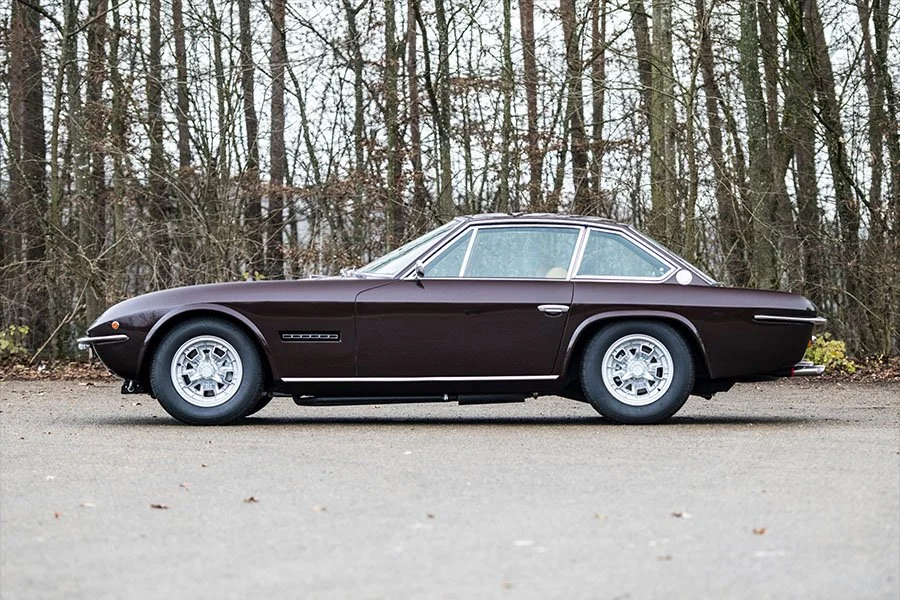
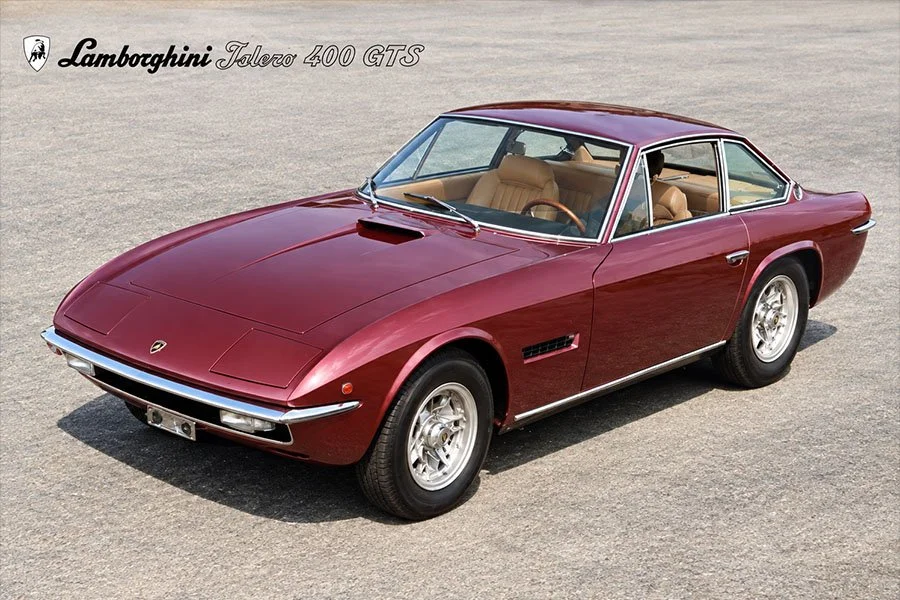
Production of the Islero S (also sometimes known as the Islero 400 GTS) began in May 1969. It joined a Lamborghini product line up that included the Miura S and Espada.
ENGINE / TRANSMISSION
Designed by renowned engineer, Giotto Bizzarrini, Lamborghini’s all-alloy dual overhead camshaft 60° V12 was widely considered the ultimate high performance road car engine of its day.
For the original Islero, Lamborghini had fitted an identical power unit to the Espada.
Slightly different from Miura V12s, these front-engined models most notably ran with a reduced compression ratio (9.5:1 instead of 9.8:1) and sidedraught instead of downdraught carburettors (40 DCOE instead of 40 IDL). Sidedraught carburettors were fitted to allow the lowest engine profile (not an issue for the mid-engine Miura).
All of Lamborghini’s production engines from this period displaced 3929cc thanks to a bore and stroke of 82mm and 62mm respectively.
As per the Espada, peak output for the first generation Islero was 325bhp at 6500rpm and 276lb-ft at 4500rpm. This compared to 350bhp at 7000rpm and 262lb-ft at 5000rpm for the Miura.
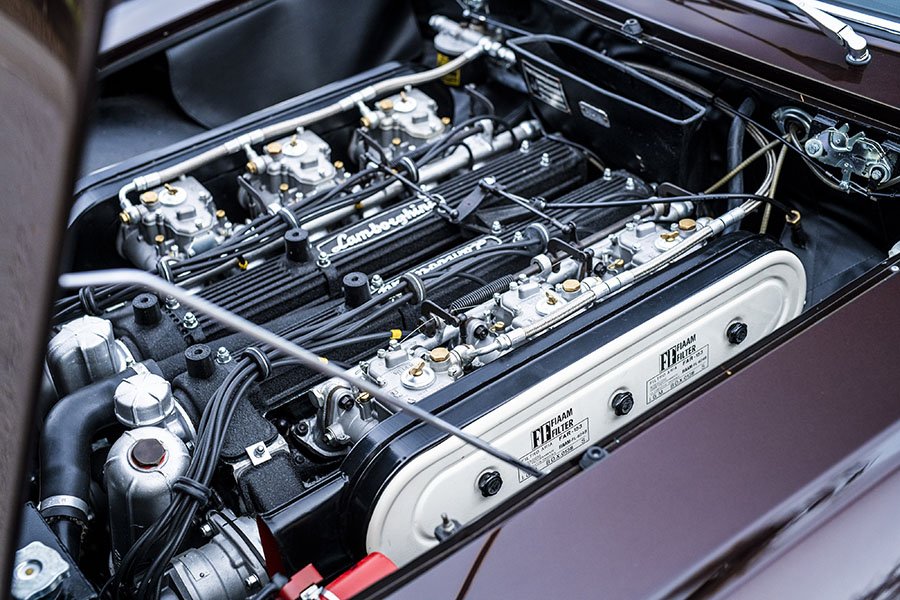
In order to provide the Islero S with a little extra punch, Lamborghini added Miura S camshafts and increased the compression ratio to 10.8:1 (also as per the latest Miura). Carburettor jetting was modified along with distributor advance curve and static ignition timing. A more powerful 660 watt alternator replaced the 450 watt item used before to provide higher capacity for the electrical current.
In this configuration, Lamborghini quoted a peak output of 350bhp at 7500rpm and 290lb-ft at 5500rpm.
An all-synchromesh five-speed Lamborghini gearbox was mounted in unit with the engine. Transmission was via a Borg & Beck single dry-plate clutch and limited-slip differential.
CHASSIS
Aside from some minor suspension tweaks at the rear to improve stability, nothing was changed to the Islero’s running gear in the transition to S trim.
As per the 400 GT 2+2 that it replaced, the Islero employed a tubular steel chassis with 2550mm wheelbase manufactured by Neri & Bonacini in Modena. Like Lamborghini’s original GT line, the base chassis was equipped with a structural framework of small diameter steel tubes that conformed to the body shape. Located under the trunk floor was an 85-litre fuel tank.
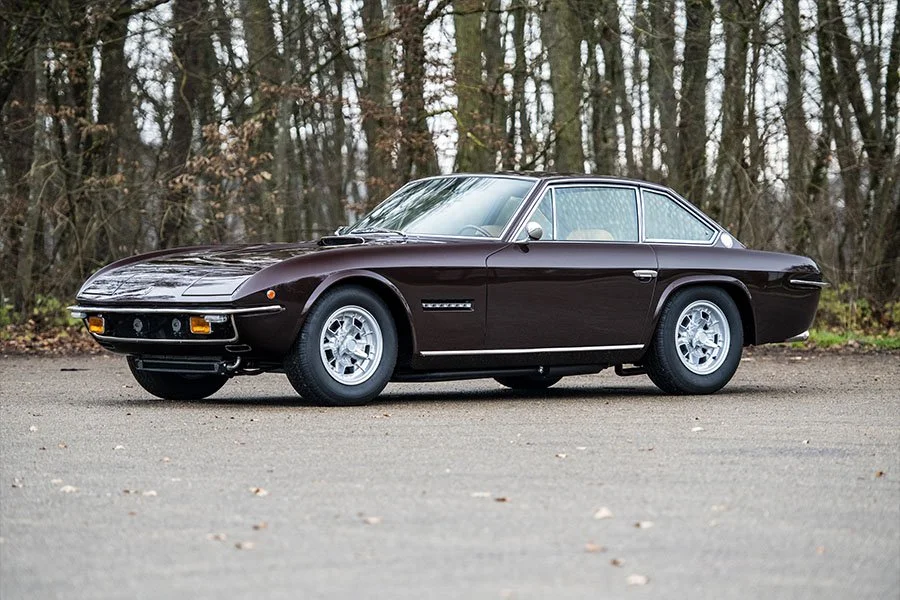
Suspension was via double wishbones with coil springs and telescopic shocks all round plus an anti-roll bar at either end.
The servo-assisted twin-circuit brake system comprised Girling discs of 300mm diameter at the front and 280mm at the rear.
7 x 15-inch Campagnolo cast magnesium wheels as fitted to the Miura and Espada were shod with Pirelli Cinturato HS 205 VR15 CN72 tyres.
BODYWORK
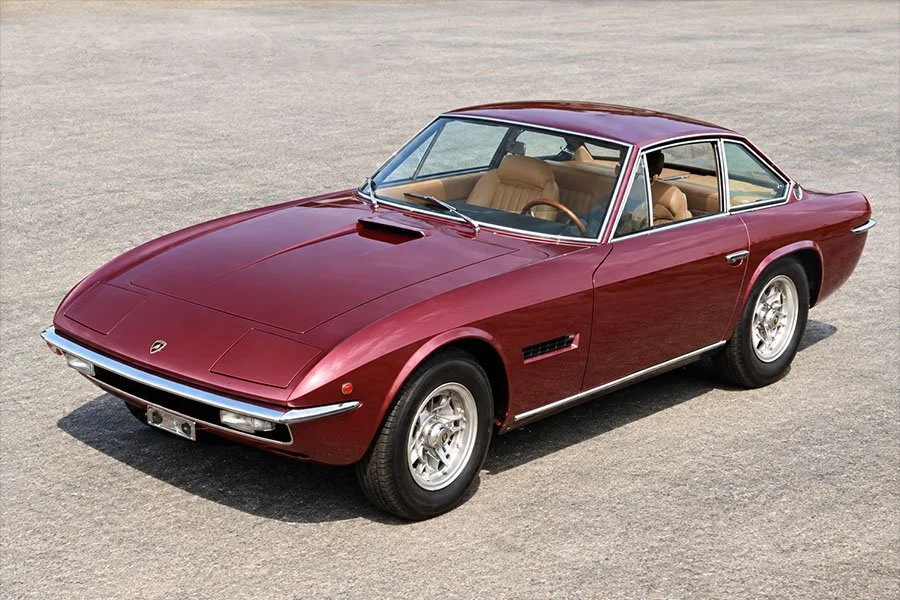
Although it was definitely the most discrete looking model in Lamborghini’s line up, the Islero’s mix of flat surfaces and sharply creased details were arguably more in line with how automotive design was heading than the outlandish Miura and Espada.
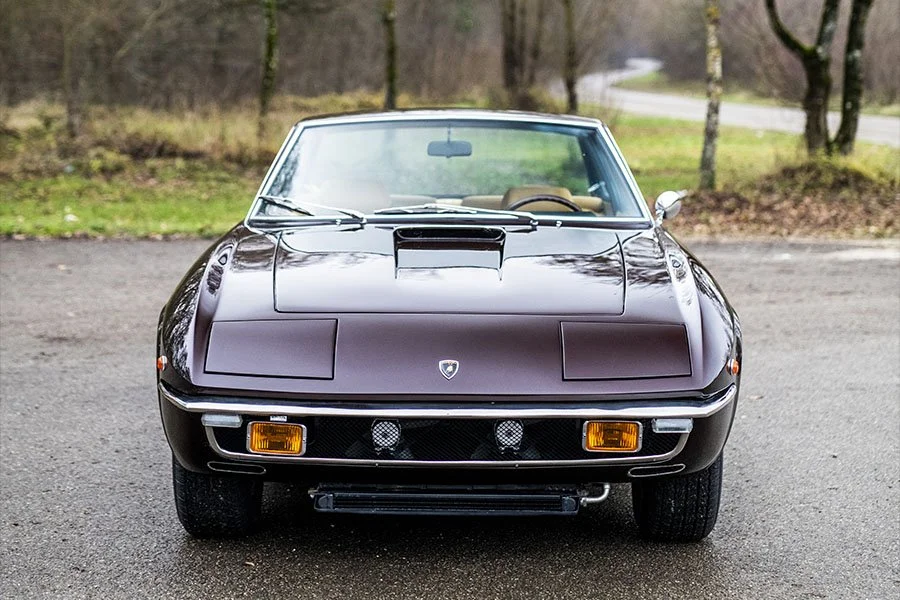
The Islero’s leading edge was home to a drooping nose, retractable headlights, a single piece bumper and full width intake aperture. Further back was an angular five window cockpit. Slab-sided flanks tapered inwards at the base.
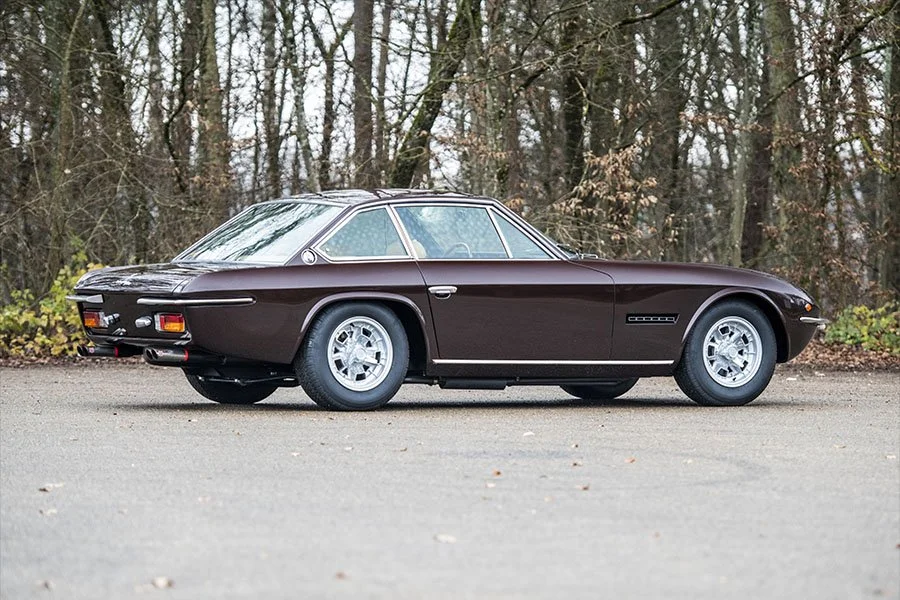
Easily most distinctive was the car’s back end where quarter bumpers were unusually mounted above the tail lights. Two banks of purposeful twin exhausts poked out from underneath a satin black apron.
Despite only having been in production for a 14 month run that saw 125 cars built, the first generation Islero had undergone some changes to the bodywork, all of which were carried over to this latest iteration. These updates included a recessed hood scoop and circular instead of teardrop indicator lenses on the front fenders.
In addition, the Islero S came with a number of new exterior details.
The front indicators (still hung from the underside of the bumper) were moved outwards.
Auxiliary driving lights were now fitted as standard.
To assist with engine ventilation, a slim rectangular cooling slut was cut from the side of each front fender.
All four wheelarches were given subtly flared lips.
The original single-piece door glass was dropped in favour of a two-piece arrangement that featured fixed quarterlights.
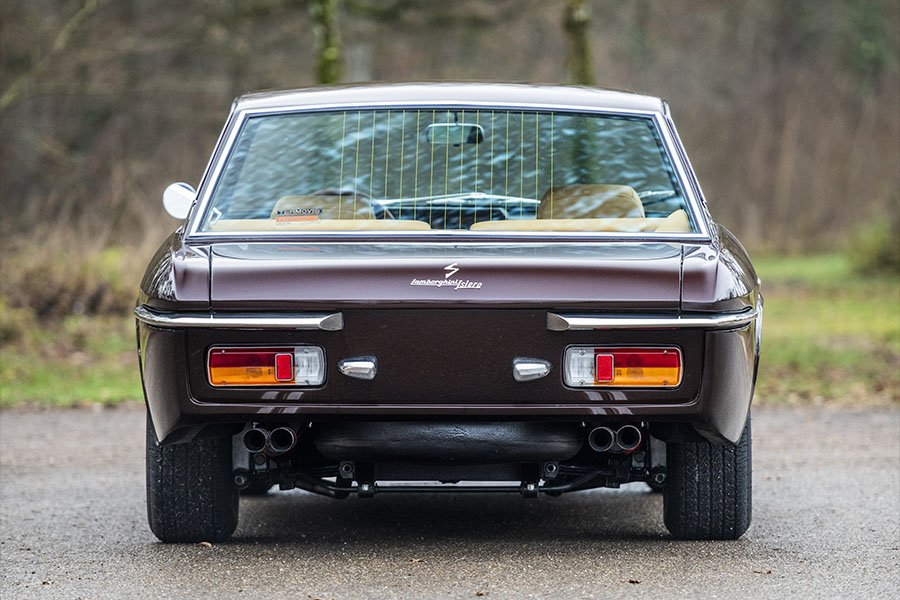
An ‘S’ script was added above the Lamborghini Islero badge mounted on the trunk lid.
As before, body panels were manufactured entirely from steel.
INTERIOR
By far the most dramatic changes were found inside with the Islero S receiving a completely redesigned dash assembly, central control panel and seats.
The brand new dash was more modern than before. It featured a wider, re-shaped instrument binnacle with a wooden inlay that housed eight gauges and a bank of five rocker switches. Previously, flick-type switches had resided on the central control panel. Now located in front of the passenger was a lockable glovebox.
The instrument binnacle itself housed large read outs for road and engine speed plus six smaller gauges (oil pressure, oil, temperature, water temperature, fuel, battery voltage and, for the first time, a clock).
Also of a more modern design was the clean new central control panel that housed either a Lamborghini Islero script or audio system plus a cigar lighter and ashtray ahead of the gear lever. The electric window switches were moved to behind the gear lever. Further back, Lamborghini added a lid for the oddments tray and an ashtray for occupants in the rear.
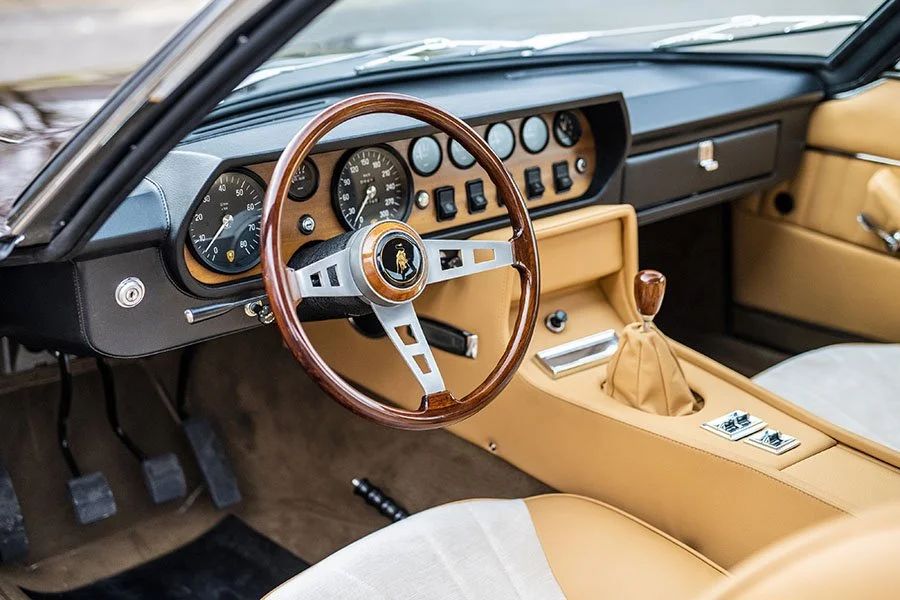
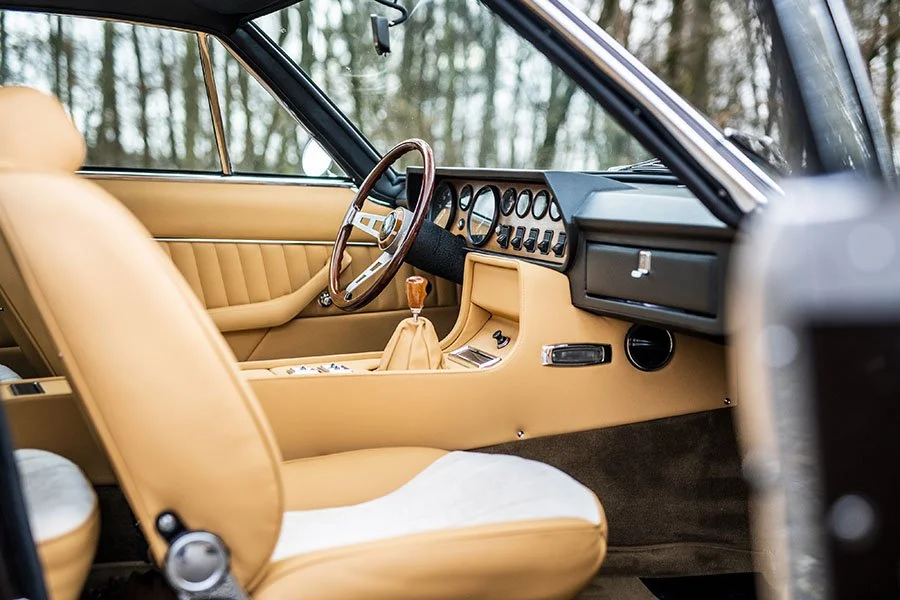
Islero S-specific high-backed front seats came with integrated adjustable headrests. The rear seats were new as well and featured a more prominent central armrest.
A heated rear window was added to the list of standard equipment.
OPTIONS
Customers could order their Islero S with full or partial leather upholstery. If the latter was specified, velour inserts were added to the seats and door cards.
An audio system could also be requested along with an uprated engine and Borrani wire wheels.
WEIGHT / PERFORMANCE
At 1240kg, the Islero S weighed the same as its predecessor.
Thanks to that additional 30bhp, top speed went from 154mph to 161mph and the 0-62mph time dropped from 6.4 to 6.2 seconds.
END OF PRODUCTION
Islero S production ran from May 1969 until April 1970. 100 copies were built in that time, five of which were right-hand drive.
Lamborghini replaced the Islero S with the Bertone-designed Jarama unveiled at the Geneva Motor Show in March 1970.
Text copyright: Supercar Nostalgia
Photo copyright: Lamborghini - https://www.lamborghini.com & RM Sotheby’s - https://rmsothebys.com/