Meister-Special: a Historical & Technical Appraisal of the Audi Quattro Treser
/
BACKGROUND
In his early twenties, German-born Walter Treser graduated with an engineering degree from a Swiss university and, over the course of the 1963-64 seasons, took in a number of races and hillclimbs driving a DKW Formula Junior.
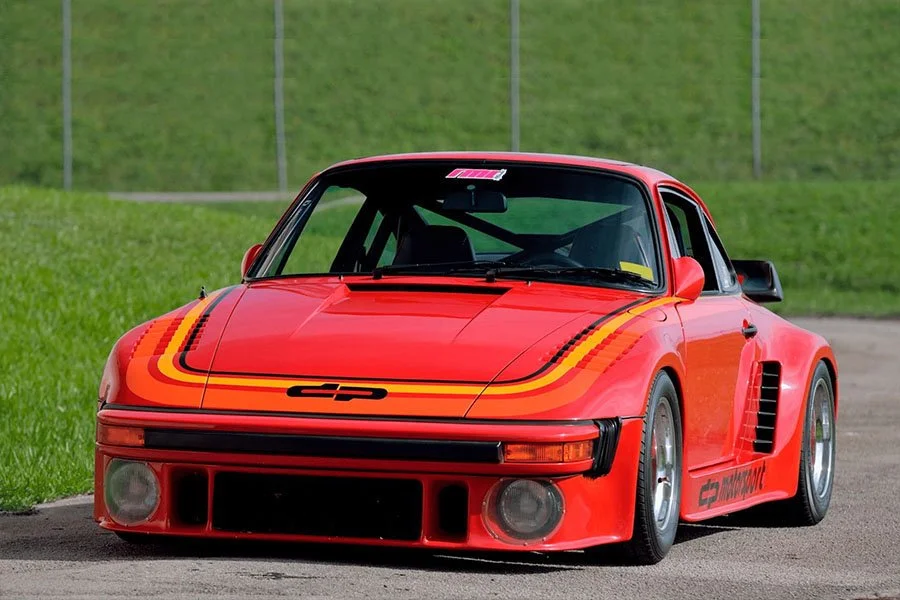
By the late 1960s, Treser’s career had flourished; having picked up an engineering job with Alpina, one of the perks of which was some track time in Group 2 1602s and 2002s. Between 1968 and 1971, Treser collected a number of decent results and went particularly well in the 2002 with which he placed fifth overall (third in class) at the 1969 Brands Hatch 6 Hour European Touring Car Championship race. Earlier in 1969, Treser had already bagged fourth overall in the ETCC race at Aspern and he went on to match that result in the 1970 ETCC race at Zandvoort.
Having departed for a development engineer role at Pirelli, Treser became a key player in the firm’s low profile tyre revolution.
In 1977 Treser made the move that would ultimately define his career: to Audi as manager of advanced development. At Ingolstadt he oversaw creation of the all-wheel drive Quattro and in 1980 became head of the Audi Sport division. Treser masterminded the Quattro’s transformation into all-conquering rally car and, despite not having been conceived for the new Group B ‘supercar’ era, it ultimately secured World Rally Championship titles for Audi in 1982 (Manufacturers) and ‘83 (Drivers).
Unfortunately, having put everything in place for this remarkable success, Treser was not at Audi to bask in the glory.
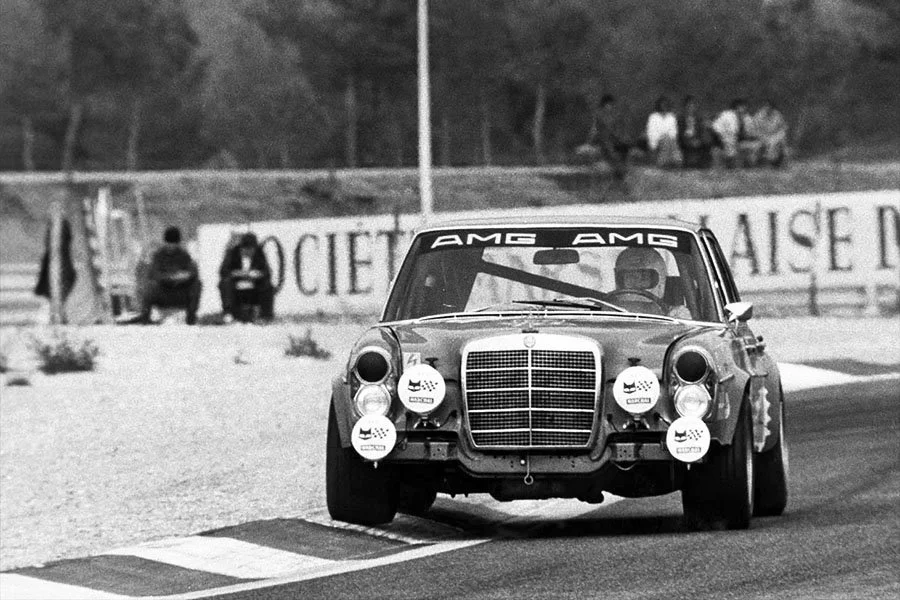
Initially, Treser had returned to an R&D role in July 1981 after Audi’s disqualification from the Acropolis Rally for running illegal flexible airflow equipment earlier in the month. The disqualification had followed the breakout of a major fire earlier in the event that had seen Treser and another team member hospitalised for burns. However, Treser ultimately decided to leave Audi and, in early 1982, set up his own company to exploit the booming, big money super tuner market with a range of products in the Alpina BMW and AMG Mercedes mould for the otherwise un-catered for Quattro.
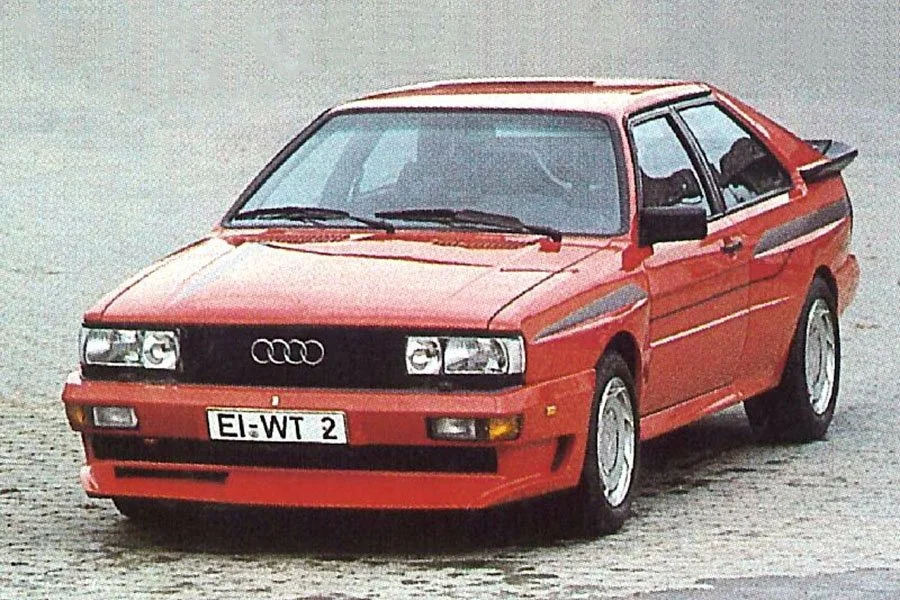
In summer 1982, Treser Automobiltechnic und Design launched its Quattro line which, if a customer was to specify a full but entry level conversion, added slightly over 30% to the price of a base Quattro.
40% of the cost was accounted for by Treser’s engine pack that took power from 200bhp to 240bhp. The rest went on a chassis tuning pack and wheels (25%) plus an aero kit and interior enhancements (35%).
Based in a converted Hofstetten, Walter Treser Automobiltechnic und Design retained a close working relation with Audi which gave full blessing to Treser’s specially engineered products. Treser Audi’s were offered direct as well as through a number of domestic Audi dealers in Germany and, before long, various international agents.
ENGINE / TRANSMISSION
Treser started with the base Quattro engine: a 2.2-litre inline ‘five’ with turbocharger and intercooler, cast iron block and aluminium alloy single overhead camshaft head with two valves per cylinder. It displaced 2144cc thanks to a bore and stroke of 79.5mm and 86.4mm respectively.
In standard trim, the KKK K26 turbo ran at 0.68 bar and engine compression was 7.0:1. Equipment included Bosch K-Jetronic fuel-injection and first of its type electronic engine management. Supplied by Hitachi, the Quattro’s groundbreaking Engine Control Unit (ECU) recorded boost levels, inlet air temperature and crank position. A set of internal maps then generated timing information.
Peak output direct from Audi was 200bhp at 5500rpm and 210lb-ft at 3500rpm.
While Treser left the bottom end of the Quattro engine standard and retained the original 7.0:1 compression ratio, the head was switched for an uprated eight-port item with larger, lighter inlet and exhaust valves and re-worked ducting. A high lift camshaft was fitted, boost pressure was raised and a much larger intercooler (fed by a new front air dam) offered a capacity increase of 87%.
As the Quattro’s standard fuel-injection system could not operate at the capacity Treser required, uprated fuel distributors and airflow meters were imported from the Porsche 928.
Instead of the standard Quattro exhaust, Treser fitted its own in-house system.
The net effect was an additional 40bhp on tap 300rpm further up the rev range with 240bhp at 5800rpm.
The 17lb-ft torque gain came at the same engine speed as before with 227lb-ft at at 3500rpm
All Quattros left Ingolstadt with a five speed manual gearbox and hydraulically operated single dry plate clutch. At extra cost, Treser could fit a longer fifth gear to enable a higher top speed.
The Quattro’s permanent four-wheel drive system was light in weight and featured a central differential to eradicate low-speed jumpiness. Diff locks activated by switches either side of the handbrake were added to the rear and centre differentials. Torque split was 50:50 front to rear.
CHASSIS
From a handling persepctive, Treser re-tuned the Quattro chassis to make it more precise and reduce understeer. Ride height was lowered by 20mm thanks to the addition of new springs with sportier Bilstein dampers. Special suspension joints were also used.
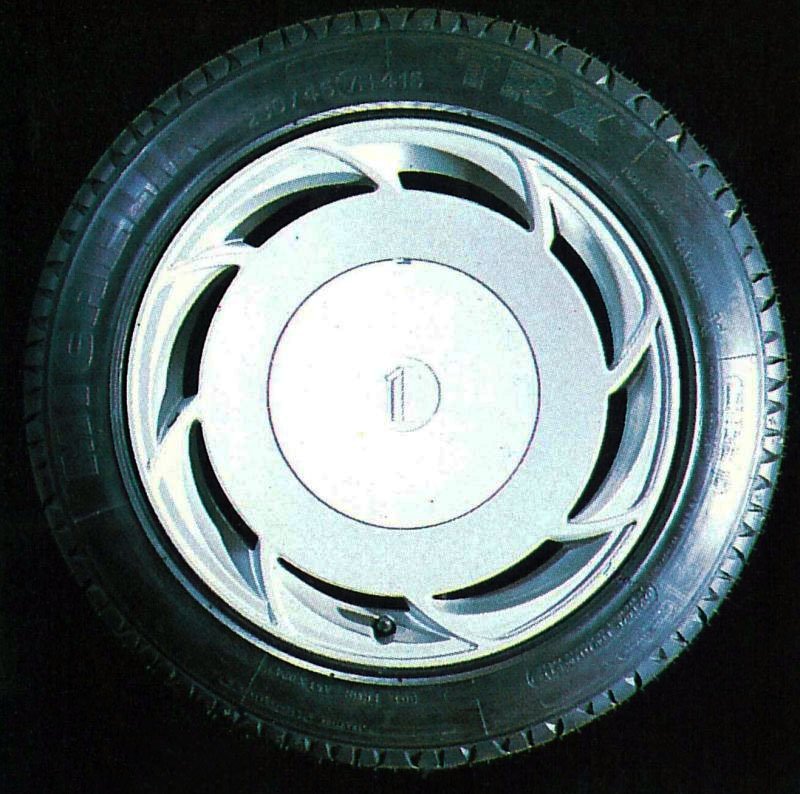
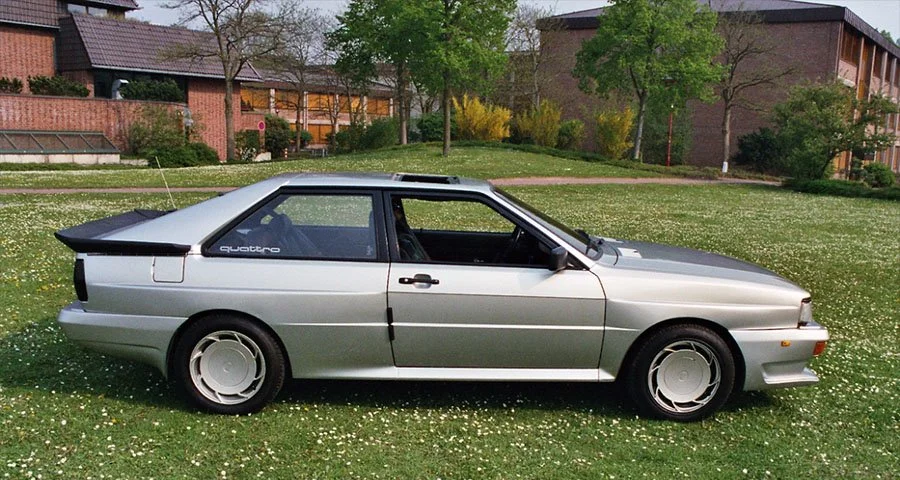
The standard Quattro’s 15 x 6-inch Ronal 15-spoke wheels were switched for Treser’s own turbine design with stylised vanes that channelled air to the brakes. These were shod with Michelin’s latest TRX tyres (230/45 VR390) instead of the usual Goodyears.
The rest of the Quattro underpinnings were left standard.
Like the visually similar Audi Coupe GT, the Quattro was based on Audi’s B2 pressed steel bodyshell with 2524mm wheelbase.
Fully independent suspension was via a MacPherson strut, lower wishbone and a coil sprung gas-filled telescopic damper at each corner.
Hydraulically assisted disc brakes were ventilated at the front (280mm diameter) and solid at the rear (245mm diameter).
Power steering was fitted as standard and a 90-litre fuel tank was installed above the rear axle.
BODYWORK
To improve airflow, increase downforce and lend the Quattro an even sportier look, Treser developed completely new bumper assemblies and a dramatic wraparound rear spoiler.
Immediately noticeable was the subtly re-profiled front bumper assembly, under which was a completely redesigned apron that incorporated a dramatically enlarged full-width intake, a deep vented chin spoiler and brake cooling slots down each flank
In a similar vein, Treser also created a slender rear bumper assembly, its sleek new look accentuated by integral splash guards.
To replace the standard car’s rear spoiler which sat atop the trunk lid, Treser came up with a larger, more aggressive wing that wrapped all the way around the sail panels.
INTERIOR
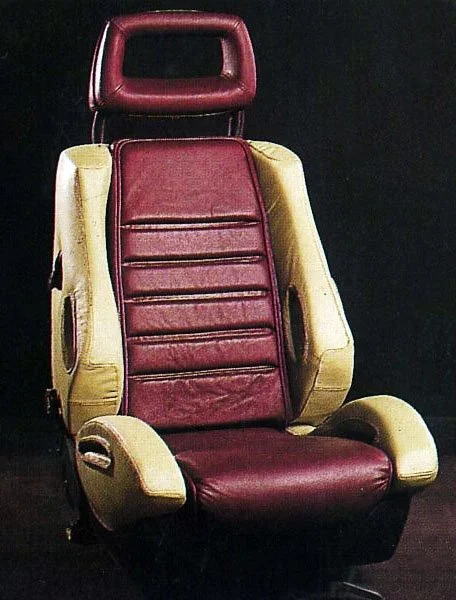
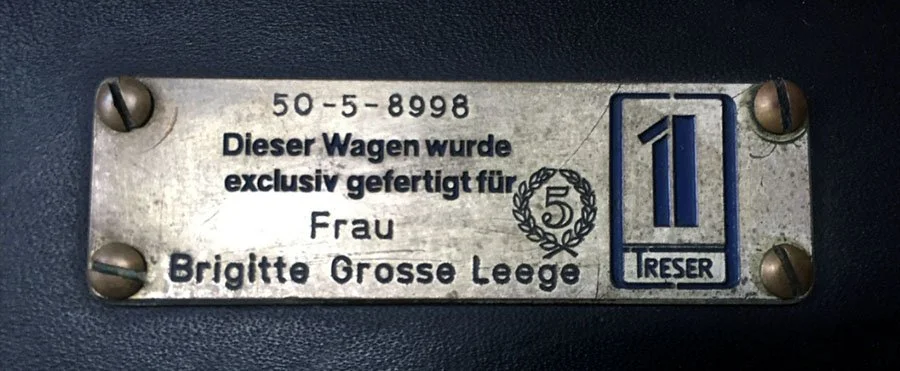
The full Treser conversion for the Quattro included installation of specially designed Audi-derived Treser sports seats with vented bolsters, an ergonomically-designed Treser four-spoke leather sports steering wheel, a wooden gear knob with leather boot and leather front seat, rear seat and side panel upholstery. A numbered plaque bearing the first owner’s name would normally adorn the glovebox cover.
As per the regular Quattro, the instrument binnacle housed two main dials (a speedo and tach) plus smaller gauges for turbo boost and fuel plus a clock. Warning lights were located in the centre of the binnacle and various control switches were mounted down each flank.
The central console was home to the ventilation controls, a stereo and a display indicator for the differential locks.
Straight from Audi, electric windows, central locking, a Blaupunkt stereo, headlight washers, front and rear fog lights and a tinted windscreen were fitted as standard.
OPTIONS
At further cost, Treser offered upgraded audio systems, special mixed leather and velour upholstery and the aforementioned modified transmission with longer fifth gear. Practically anything was possible given sufficiently deep pockets and almost everything from the Treser parts list could be ordered in isolation.
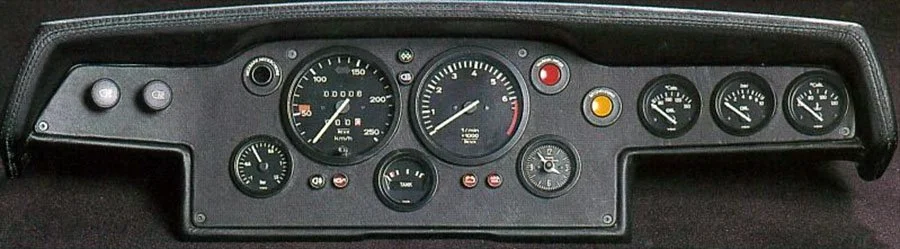
Soon after launch, the options list was expanded to include a very expensive eight-gauge full custom leather-trimmed dash assembly, leather headliner, extended velour carpeting and a decal kit in one of four colours (silver, grey, anthracite and dark blue).
Slightly later, Treser began to offer a 250bhp conversion and a body coloured trim panel emblazoned with the company’s ‘1’ logo to replace the normal car’s flat Audi-branded grille inboard of the headlights.
WEIGHT / PERFORMANCE
As expected given its higher specification, a fully equipped Treser Quattro came in a little heavier than a base Quattro: 1354kg compared to 1300kg for a no-options OEM example.
Performance gains were impressive: the 0-62mph time was cut from 7.1 to 6.6 seconds and top speed went from 137mph to 142mph.
TRESER QUATTRO ROADSTER
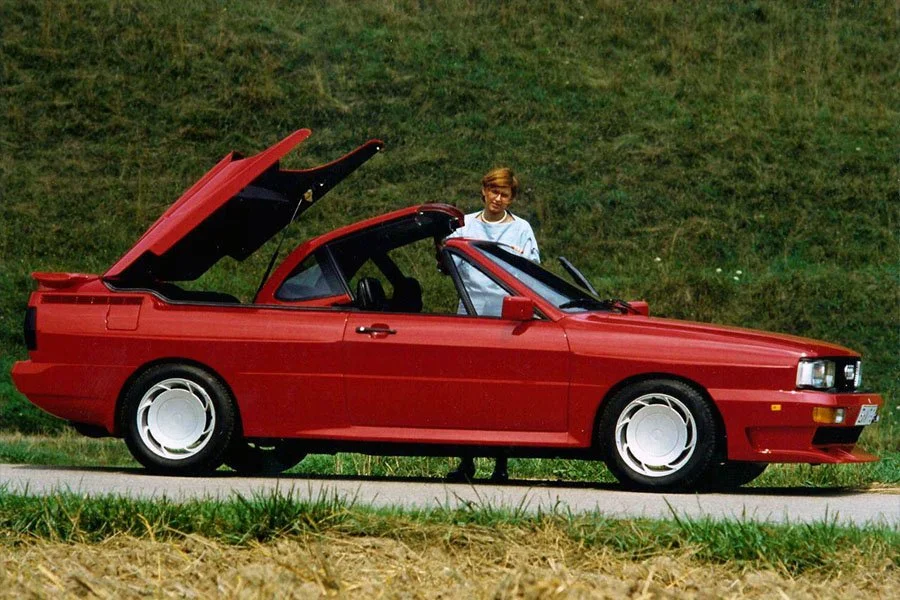
At the Frankfurt Motor Show in September 1983, Treser displayed the car for which it would become best known. The Quattro Roadster (covered separately) featured an innovative folding hardtop that set the trend for a new era of similar cars.
END OF PRODUCTION
Production came to a halt following Treser’s bankruptcy in 1988.
By this time the number of Quattros to have passed through the company’s hands most likely exceed 100 units with varying degrees of modification having been carried out.
Text copyright: Supercar Nostalgia
Photo Copyright: Treser