VIN: the works Aston Martin DP212 chassis DP212/1
/ Ben Tyer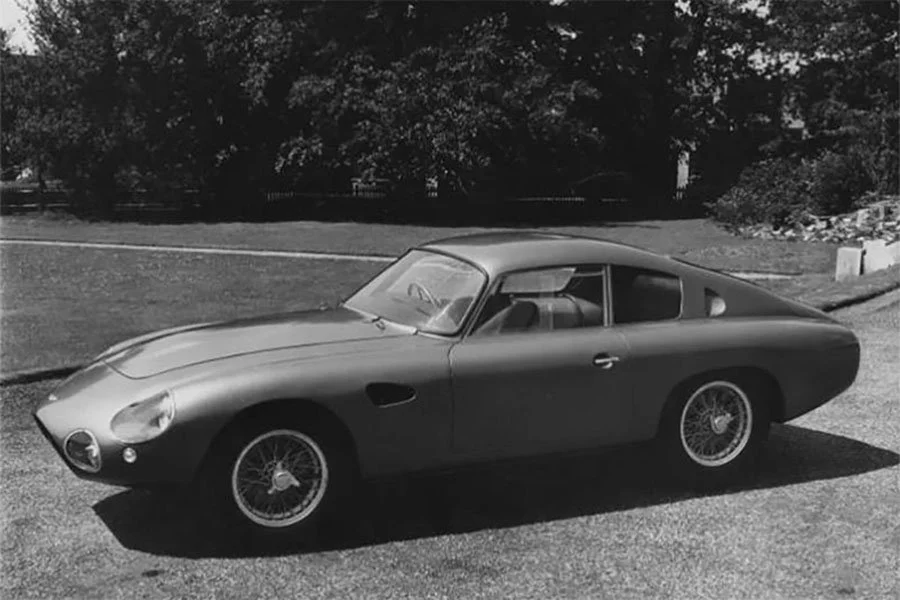
HISTORY OF CHASSIS DP212/1
Chassis DP212/1 was the first of four experimental DP Aston Martins built to contest the 1962 and 1963 Le Mans 24 Hour races.
The three subsequent examples (a brace of DP214s and a solitary DP215) were manufactured for the 1963 race while the unique DP212 got the programme rolling at the 1962 event.
Based on uprated DB4 GT components, DP212/1 would run in the four-litre Experimental class devised specially for the 1962 Le Mans race. It variously received a lightened chassis, uprated suspension and brakes, an engine enlarged from 3.7 to 4-litres, a special five-speed gearbox and streamlined magnesium-alloy bodywork.
The car made its debut at the annual Le Mans Test weekend held over April 7th and 8th 1962. It was driven by the French Aston Martin distributor, Jean Kerguen, and his fellow countryman, Jacques Dewez, who raced under the pseudonym ‘Franc’.
Kerguen (the owner of Garage Mirabeau in Paris) had been instrumental in persuading David Brown to return to Le Mans.
Dewez went second fastest on the Saturday (dry) but dropped to seventh on Sunday (wet) by which time the delayed Scuderia Ferrari had arrived. The DP212 ended up with fourth fastest time overall which was good enough for second in the four-litre Prototype class behind the works Ferrari 330 TRI/LM.
For the 24 Hour race (June 23rd and 24th), Kerguen and Dewez reverted to a DB4 GT Zagato. Taking the reins in the DP212 were BRM Formula 1 team-mates, Graham Hill and Richie Ginther.
Hill posted fourth fastest time in practice but, at this stage, grid slots were still allocated according to engine size.
The opening lap saw Hill take the lead from Tony Settember’s fast starting Corvette on the approach to the Dunlop Bridge.
Hill and Olivier Gendebien (Ferrari 330 TRI/LM – another four-litre Le Mans special) then began to pull away from the rest of the field.
Gendebien went past on lap two but the Aston was back in front during the second hour after the Ferrari made an early stop.
The DP212 dropped to fourth when Hill came in for Ginther to take over but it had soon recovered back to second. By this stage, however, the dynamo had ceased to charge.
The decision was taken to try and fix the dynamo before darkness fell. With the repair complete, Hill resumed in 14th position.
The DP212 had risen to ninth overall when a piston failure struck; it transpired an oil pipe had been fractured during the dynamo repair which meant the team’s gallant effort was over.
The DP212 subsequently underwent further wind tunnel testing at MIRA to improve its high speed stability. It was then modified with a Kamm tail, a layout copied for the DP214 and DP215.
As the new DP215 was not ready in time for the 1963 Le Mans Test weekend (April 6th and 7th), DP212/1 was called into action. Driven by Bruce McLaren, Jo Schlesser, Lucien Bianchi and Bill Kimberly, it went fifth fastest overall and third quickest in the over three-litre Prototype class.
Aston Martin quit sportscar racing at the end of 1963 and, in 1964, the DP212 (along with both DP214s) were sold to John Dawnay who became Viscount Downe on the death of his father in December 1965.
Prior to sale, DP212/1 had been rebuilt by Aston Martin with a 4.2-litre 349bhp engine and road registered AYN 212B.
Dawnay kept DP212/1 until 1975 during which time it contested a few minor sprint type events before entering the world of historic racing.
Notable History
David Brown / Aston Martin Lagonda
08/04/1962 IND Le Mans Test (J. Dewez / J. Kerguen) 4th oa, 2nd P4.0 class (#5)
24/06/1962 WSC Le Mans 24 Hours (G. Hill / R. Ginther) DNF (#11)
Modified with Kamm tail
07/04/1963 IND Le Mans Test (B. McLaren / J. Schlesser / L. Bianchi / B. Kimberly) 5th oa, 3rd P3.0+ class (#15)
1964 rebuilt with a 4.2-litre engine and road registered AYN 212B
Sold to John Dawnay (Viscount Downe)
Text copyright: Supercar Nostalgia
Photo copyright: Aston Martin - https://www.astonmartin.com
Originally designed by Tadek Marek, Aston Martin’s legendary V8 engine had a remarkable career that saw it used in an array of iconic models between 1967 and 2001. For its final fling, during 1992…
Because the DB7 Zagato Coupe launched in late 2002 was not type approved for sale in the lucrative US market, Aston Martin created a spectacular roof-less limited edition dubbed the DB AR1.
Although Aston Martin had quietly built around half a dozen open top examples of its formidable V8 Vantage for VIP clients during the first half of the 1980s, such a machine was not officially added to…
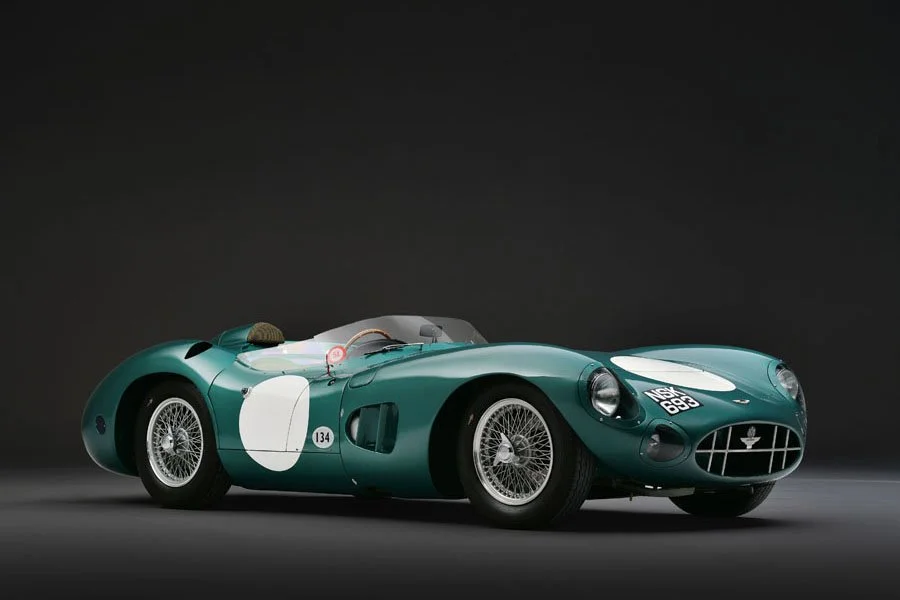
Despite the passing of almost 70 years, Aston Martin’s most impressive on-track achievement remains that famous 1-2 finish at the Le Mans 24 Hours in 1959 with the DBR1. Of almost equal…
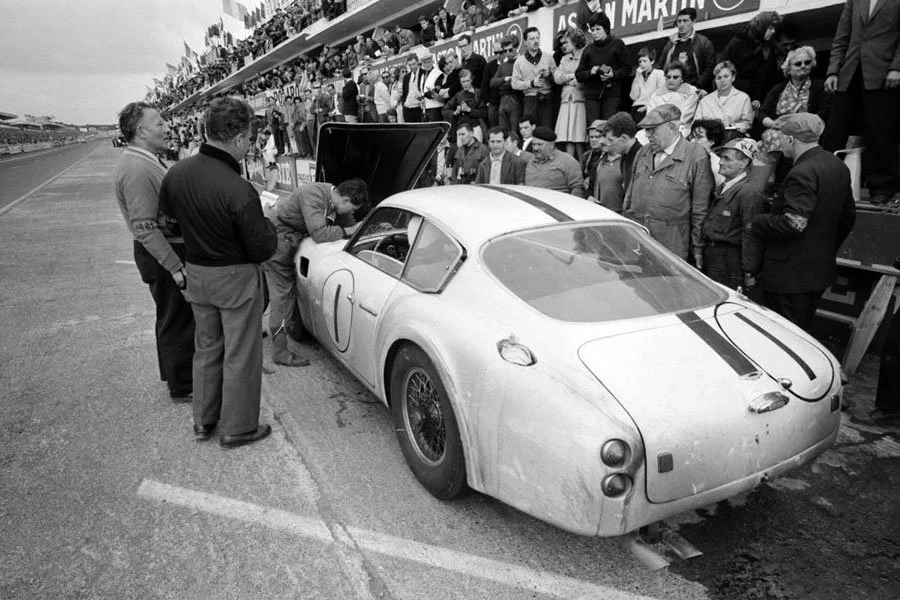
Chassis 0180/L was the first of two GTZs originally painted white although the Australian-bound second example (0186/R) was described as Desert White and came with red upholstery while 0180/L…
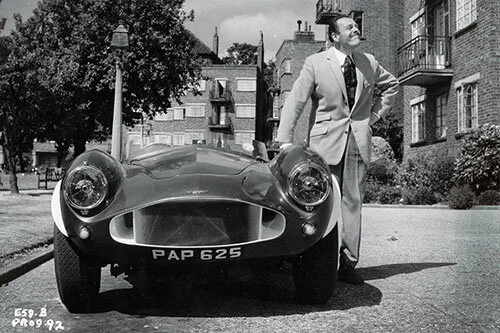
Aston Martin chassis DB3S/5 was one of five DB3S constructed in 1953. Built to contest a domestic and World Sportscar Championship programme, the new DB3S wore a beautiful Frank Feeley…
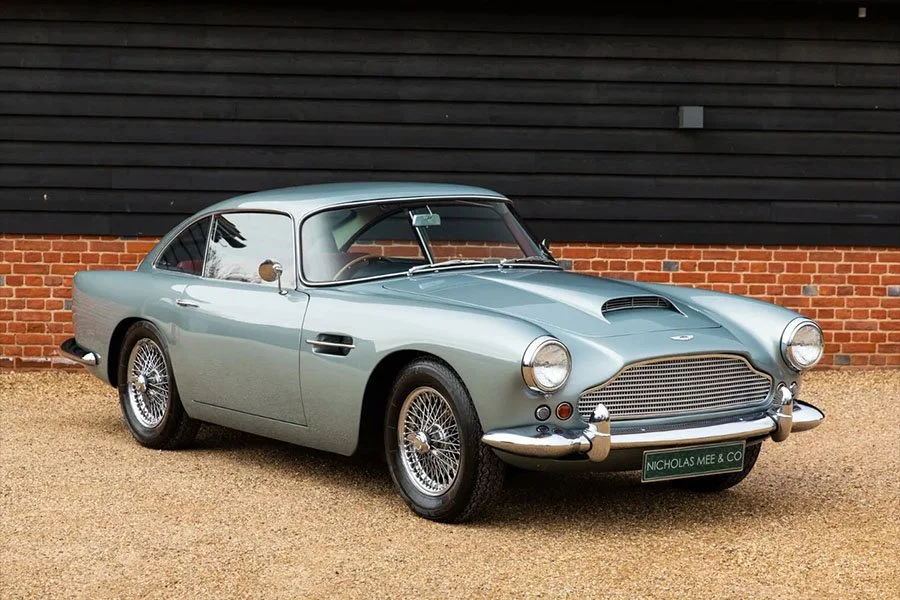
Aston Martin launched the DB4 in late 1958 to replace the ageing DB MkIII which could trace its origins back to 1949. In addition to handsome new Touring of Milan coachwork, the DB4 ushered in a…
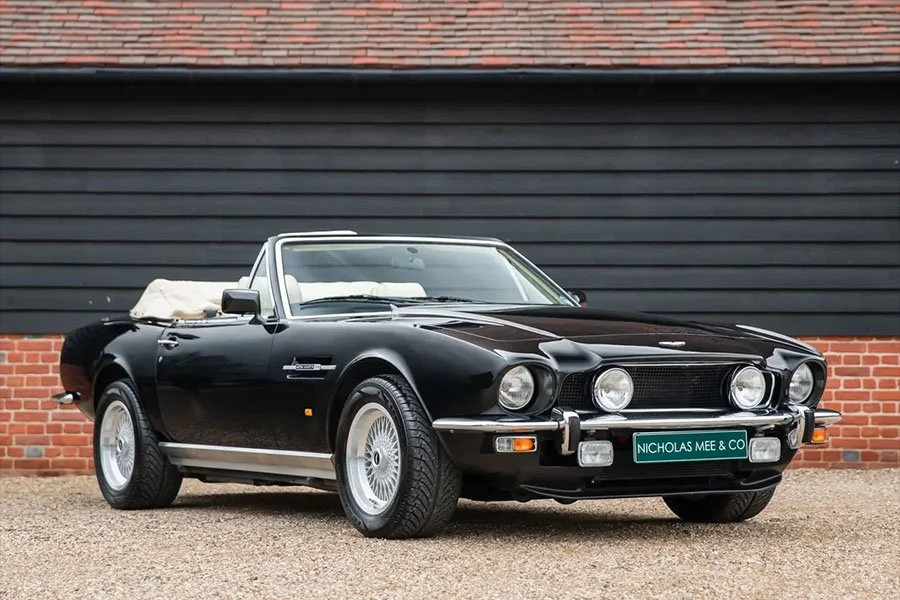
By the mid 1980s, the super high end front-engined GT had become something of an endangered species, especially in open-bodied form. Ferrari’s 412 along with the much less expensive Porsche…
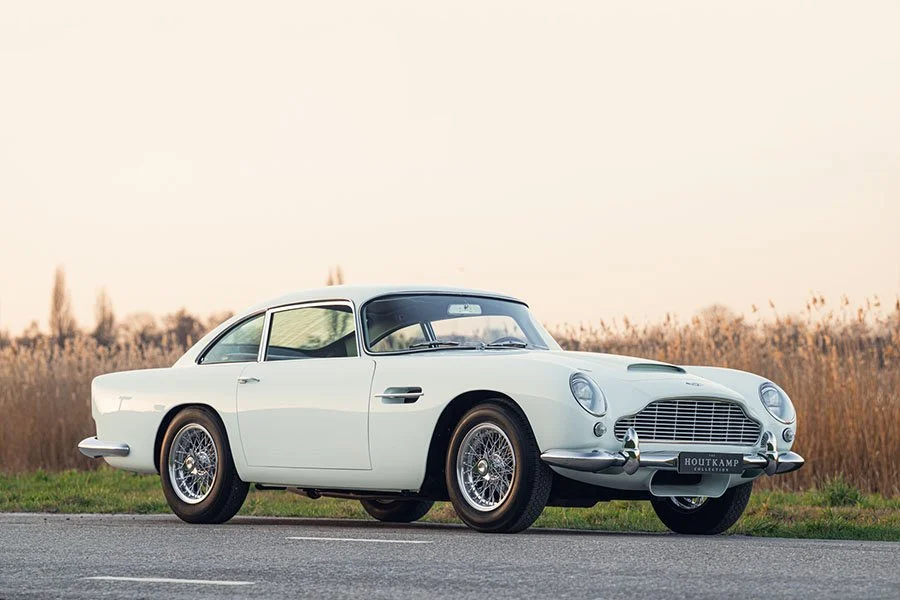
Two years after Aston Martin had launched its souped up, short wheelbase, more aerodynamically efficient DB4 GT, the company introduced a visually similar iteration of the regular DB4 with an…
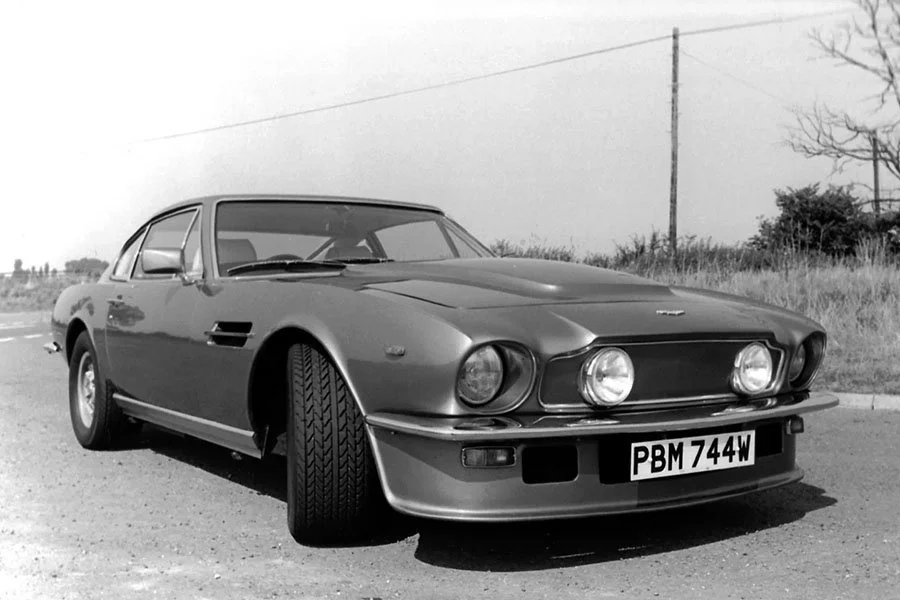
Having experienced a period of relative stability under the stewardship of renowned British industrialist David Brown between 1947 and 1972, Aston Martin Lagonda (AML) found itself in disarray…
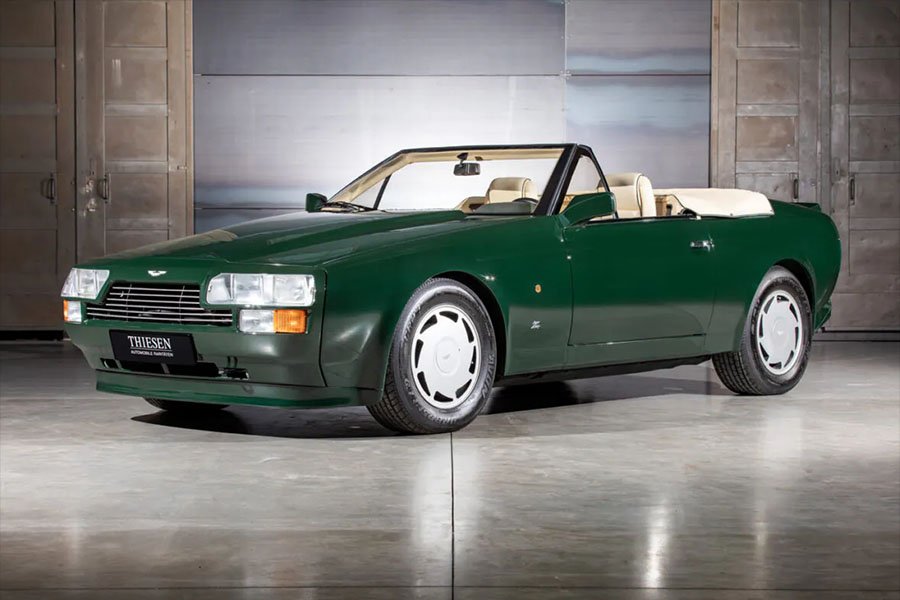
Because demand for the V8 Vantage Zagato exceeded the limited run of 50 cars promised by Aston Martin, the British firm was left with a dilemma about how best to satisfy those customers who had…
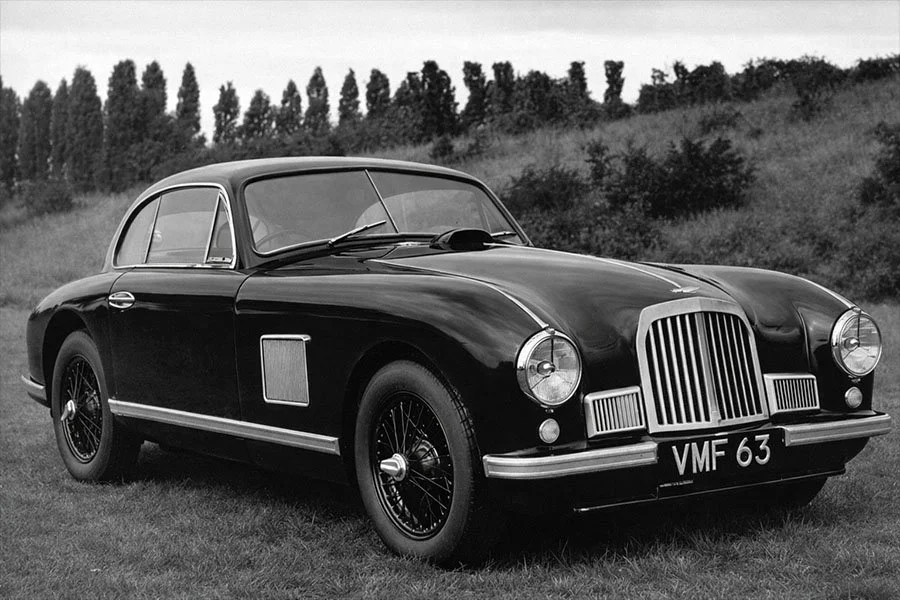
Chassis LML/50/7 was one of three DB2 team cars produced in 1950. First registered VMF 63 in May 1950, its Cadillac Green sister cars were consecutively registered VMF 64 and VMF 65. For their…
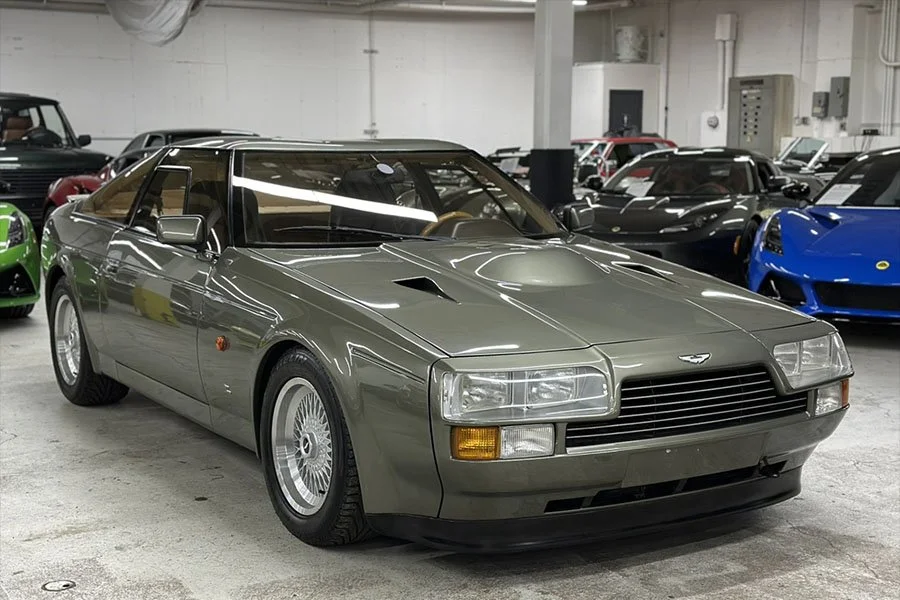
When Aston Martin boss David Brown wanted to create the ultimate low drag super light DB4 GT, he commissioned Zagato of Milan to come up with an air piercing featherweight body. With its…
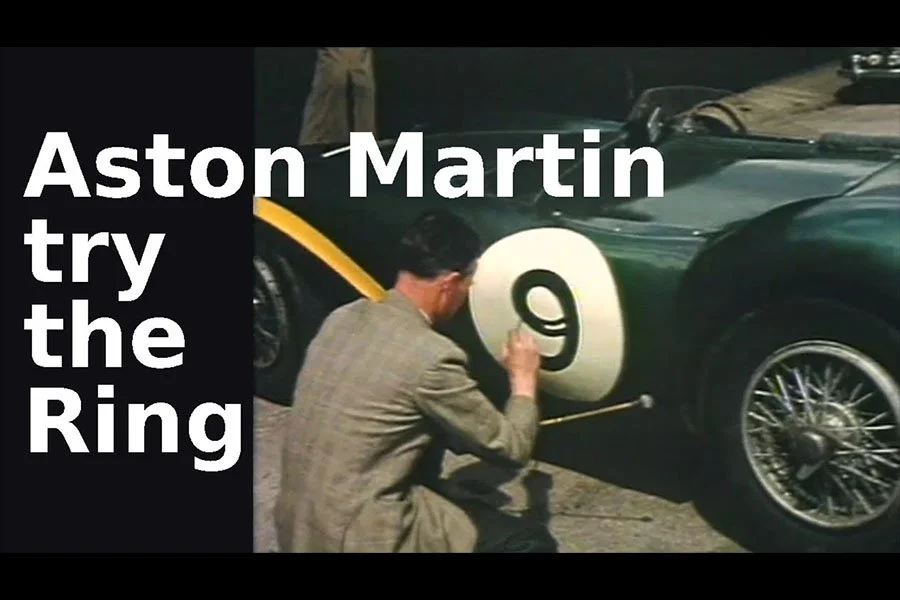
Amazing period footage from the Aston Martin team’s trip to the 1956 Nurburgring 1000km which was the penultimate round of that year’s World Sportscar Championship.

Although Aston Martin had not planned to make an open top version of its range-topping V8 Vantage, the early 1980s began to see a handful of special order cars built to such a configuration…

When Ferrari returned to the front-engined Gran Turismo market with the critically-acclaimed 550 Maranello in 1996, Aston Martin suddenly found itself with a big budget rival in a sector it had ruled…

Unveiled at the Paris Motor Show in October 1965 as the successor to Aston Martin’s iconic DB5, the DB6 most notably offered a more spacious cockpit that was the result of switching to a longer…

Although prior years had seen some spectacular attempts to bring F1 performance to the street, arguably nothing has come closer to achieving that feat than Aston Martin’s radical Valkyrie.

In addition to Kensington’s Radford coachworks, FLM Panelcraft based two miles across London in Battersea also offered a Shooting Break conversion for Aston Martin’s DB6. In a similar vein to…

Having seen how quickly Ferrari shifted over 200 examples of its premium priced 288 GTO, Aston Martin decided to get in on the act with their own low volume special: a short wheelbase Zagato…

During the late 1980s, nothing in class could match Aston Martin’s formidable X-pack-equipped V8 Vantage. Whereas the likes of Ferrari and Lamborghini only offered models with north of 400bhp in…

During the 1990s, Aston Martin produced a litany of low volume specials for VIP customers, many of which still remain little known today. One such model is the spectacular Vantage V550 / V600…

Chassis 30036 was one of 37 Aston Martin V8 Volantes built with coachwork by Zagato and one of nine completed during the final year of production: 1989. It was configured in Litchfield Black with…

The 1970s was a tumultuous time for Aston Martin which, owing to the effects of multiple ownership changes, poor trading conditions and labour reforms, seemed to lurch from one crisis to another.

Chassis 30015 was one of 37 Aston Martin V8 Volantes built with coachwork by Zagato and one of 27 completed in 1988. It was configured in Vulcan Black with Black upholstery, right-hand drive and…

Chassis 20021 was one of three V8 Vantage Zagatos supplied new to the Brunei Royal Family, the others having been chassis 20023 (a manual 1986 example finished in Lightning Silver with Blue…

Twelve months after the base DB4 had made its highly anticipated debut, Aston Martin displayed a high performance, short wheelbase version generally supplied without rear seats aimed at those…

Three years after the original V8 Vantage had been launched (the V540), Aston Martin introduced an updated version variously known as the V580 and Oscar India. Most significantly, the V580…

Having been announced at the Geneva Motor Show in March 2002, Aston Martin’s Zagato-bodied DB7 V12 Vantage (officially dubbed the DB7 Zagato) was subsequently given a public launch at the…

It’s no secret that here at Supercar Nostalgia we think, of all the high end machinery produced this century, the Aston Martin Valkyrie is far and away the most impressive. In addition to a…