Special Order - a Historical & Technical Appraisal of the Porsche 911 3.0 Carrera RSR IROC
/
BACKGROUND
During the 1973 season, renowned American industrialist and race team owner, Roger Penske, began to develop plans for a one make series that would pitch the world’s top Formula 1, NASCAR and Indy car drivers against one another in identical machinery.
Dubbed the International Race Of Champions (IROC), Penske ultimately teamed up with Riverside track promoters Mike Phelps and Les Richter in addition to the ABC television network who agreed to broadcast the contest live throughout the nation.
The inaugural IROC series was scheduled for the winter of 1973-1974. It kicked off with three heats at Riverside in late October 1973 followed by a Daytona finale during mid February of 1974.
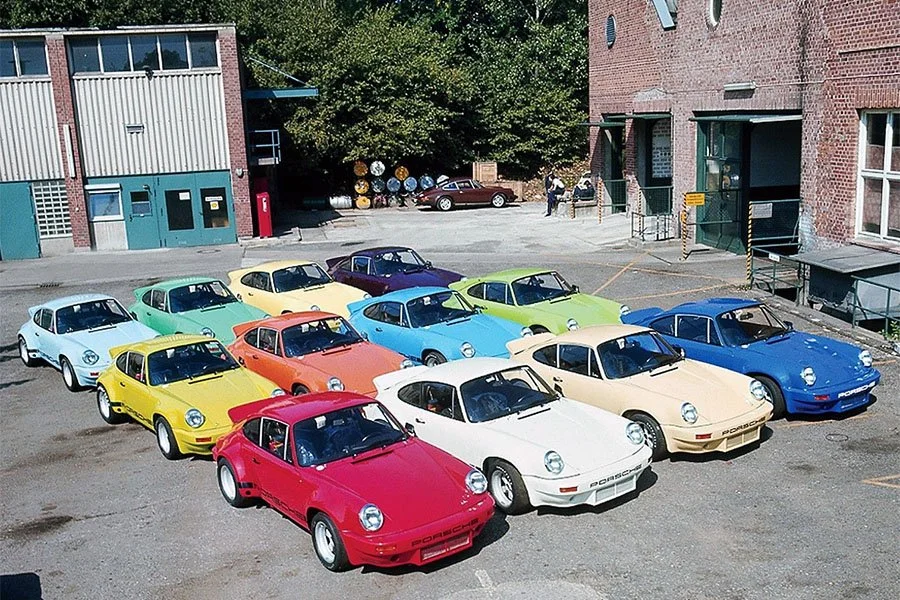
As a consequence of his long-standing relationship with Porsche (which included a number of dealerships and a factory-backed Can-Am programme with the 917), Penske went on to place an order for a batch of 15 special 911s at $25,000 apiece.
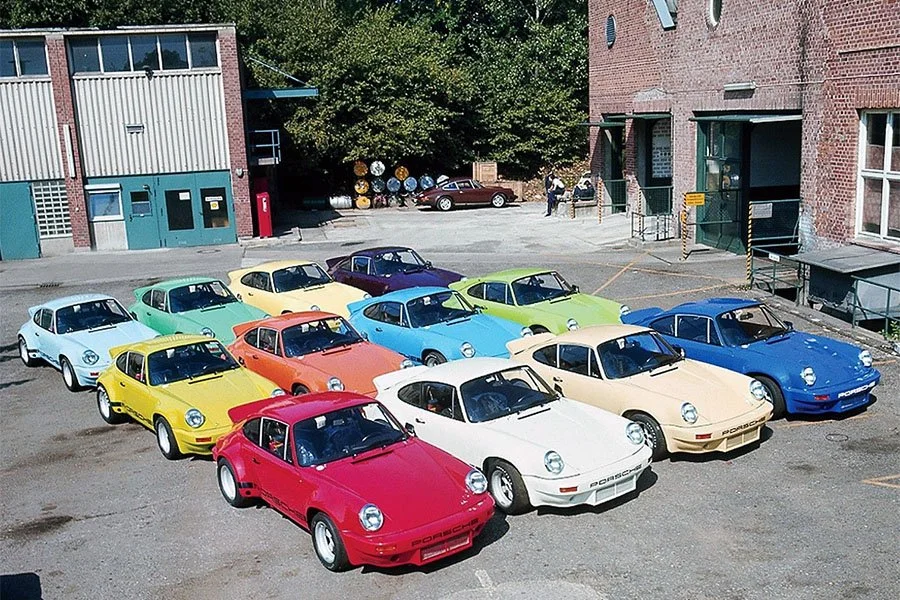
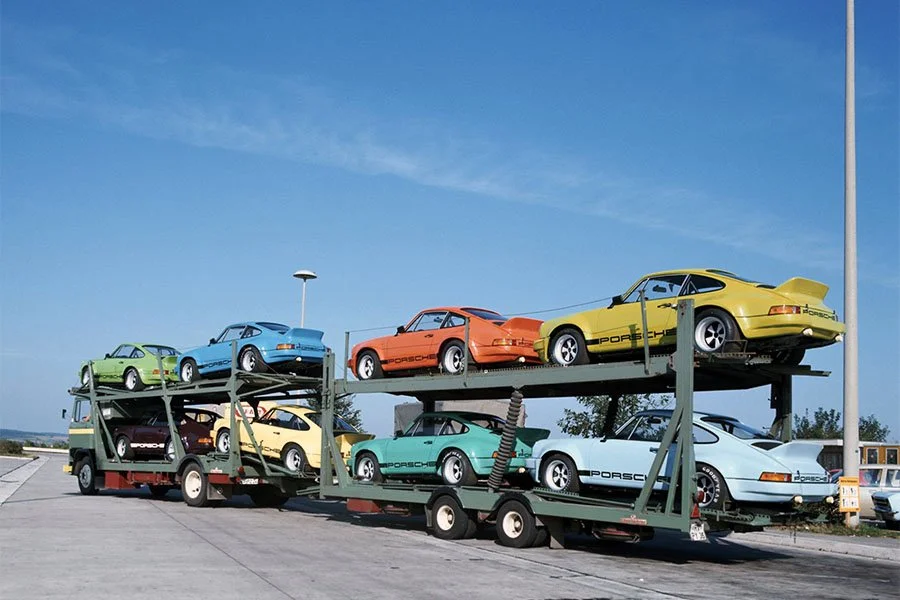
Each was to be painted a unique colour with twelve of the cars allocated for racing and three as practice hacks / spares.
Aside from the $375,000 influx of cash, Porsche was happy to oblige as the new championship was expected to significantly raise the company’s profile in what was their most important export market.
Meanwhile, thanks to his excellent connections and a massive prize fund, Penske was able to attract a glittering array of drivers to the IROC series. From the world of Formula 1, Emerson Fittipaldi, Denny Hulme and Peter Revson signed up. NASCAR legends Richard Petty, Bobby Allison and David Pearson also took part along with Indy car drivers Bobby Unser, AJ Foyt, Gordon Johncock and Roger McCluskey. Mark Donohue and George Follmer arrived from Can-Am.
Between them, these drivers had won 32 major championships, the Indy 500 six times, the F1 World Championship twice, the Can-Am Challenge Cup five times and the NASCAR Grand National on seven separate occasions.
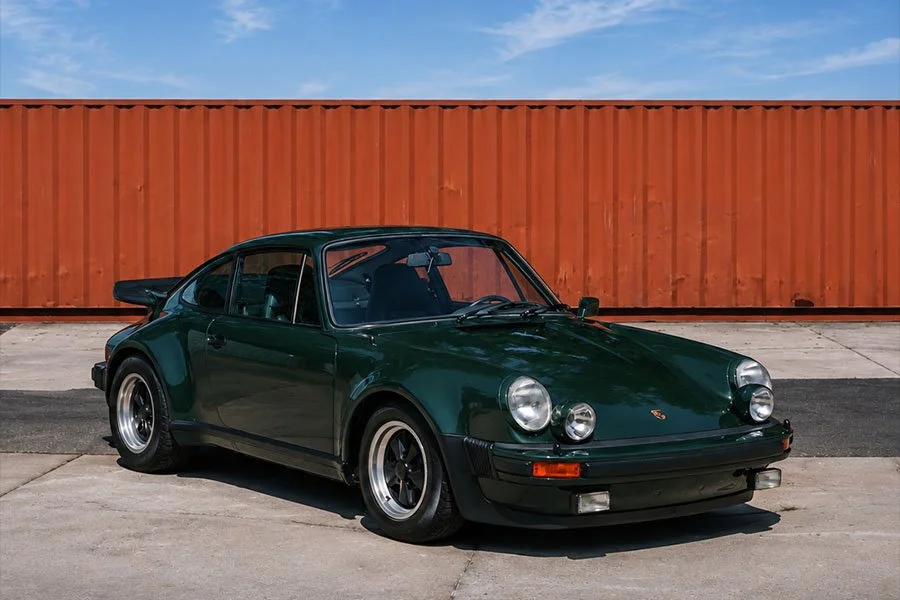
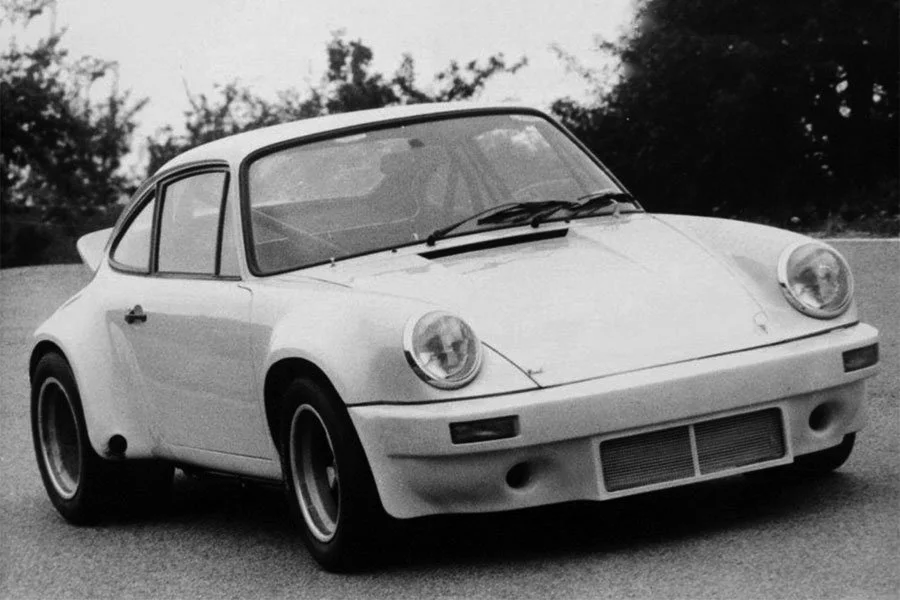
The 15 cars that Porsche produced for Penske mixed an array of components from the forthcoming 911 3.0 Carrera RS and RSR, but were built by the competition department to full racing trim. Known as 911 3.0 Carrera RSR IROC, the entire batch was completed in September 1973 and immediately dispatched to Los Angeles.
CHASSIS
IROC RSRs were based on the new-for-1974 G-series 911 bodyshell albeit with the normal impact-absorbing bumper assemblies, rustproofing and sound deadening deleted. Welded bodyshell reinforcements, beefier rear shock towers and a front strut brace stiffened everything up as did solid drivetrain mountings.
A 110-litre competition-grade plastic fuel tank was mounted under the front lid.
Suspension was fully independent with torsion bars and telescopic shocks. The front end used a compact MacPherson strut arrangement with a single lower wishbone. Semi-trailing arms were installed at the rear. RSR enhancements included stiffer Bilstein dampers, thicker adjustable anti-roll bars and hard plastic bushings for many of the suspension mounts.
The brake system comprised 917 / RSR-style cross drilled and ventilated 300mm discs, finned four-piston calipers and dual brake master cylinders.
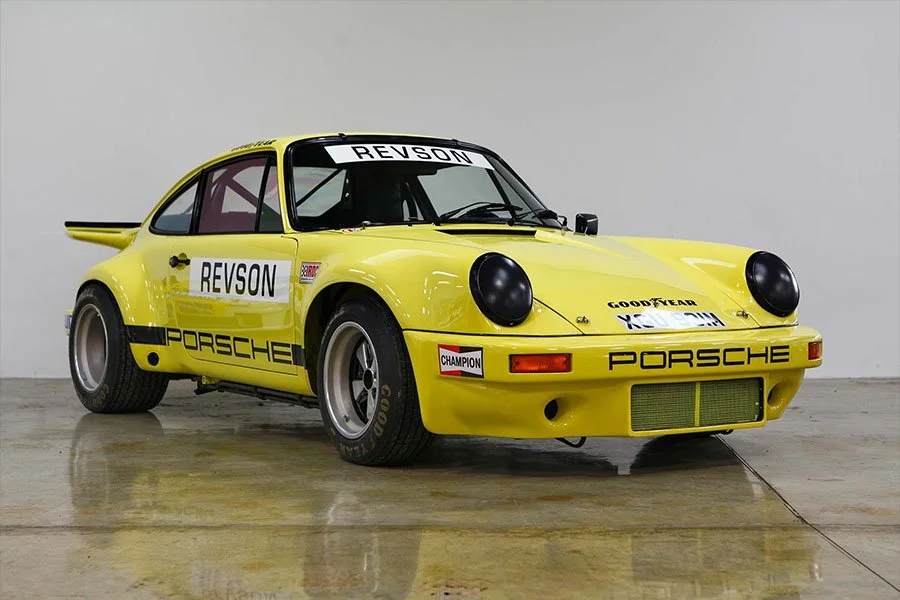
15-inch diameter five-bolt Fuchs forged alloy wheels were specific to the IROC RSR. They measured 9-inches wide up front, 11 at the rear and were shod with Goodyear Customgard GT tyres.
ENGINE / TRANSMISSION
Whereas the 3.0 Carrera RSR ran a Type 911/75 engine, the IROC version came with its own specially developed Type 911/74 unit. As usual, this was another dry-sumped Flat 6 with cast-iron block and light alloy single overhead cam twelve valve heads.
Like the 3.0 RS, cylinder bores were enlarged from 90mm to 95mm compared to the old 2.7-litre engines. Capacity went from 2687cc to 2993cc (a gain of 306cc). Stroke travel was kept at 70.4mm which ensured the new engine was no less responsive than before.
Because these enlarged cylinder bores would not have left enough magnesium to safely run with over 300bhp, Porsche elected to fit the RS and RSRs with a stronger die-cast aluminium crankcase. Aluminium cylinders were Nikasil-plated. Additional cooling came by way of a large engine oil radiator mounted under the front bumper.
Instead of a slide valve fuel-injection system from the 3.0 Carrera RS, these IROC cars came with six individual butterfly-type throttle bodies as per the RSR. Twin-plug ignition was another RSR feature adopted for the IROC models along with an increased 10.3:1 compression (up from 9.8:1). A competition exhaust system was also fitted.
Peak output was quoted as 316bhp at 8000rpm and 229lb-ft at 6100 rpm.
For comparison, the 3.0 RS developed 230bhp at 6200rpm and 203lb-ft at 5000rpm while the full fat RSR produced 330bhp at 8000rpm and 232lb-ft at 6500rpm.
Transmission was through a five-speed 915 gearbox, a dry-plate Fichtel & Sachs sintered clutch and limited-slip differential with 80% locking factory. As per the RSR, a transmission oil cooler was installed complete with integrated pump built into the gearbox end cover.
BODYWORK
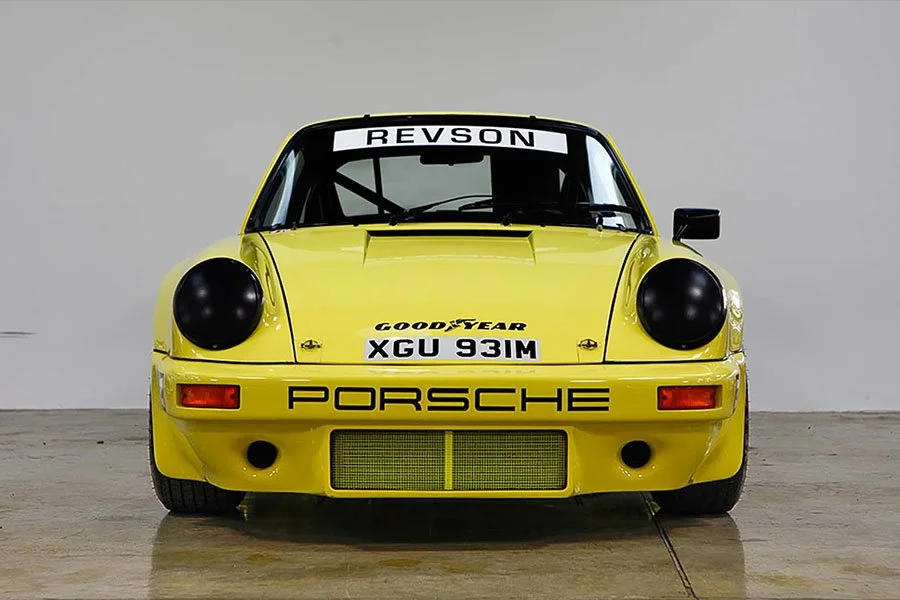
With weight-saving the order of the day, the IROC RSR ditched Porsche’s impressively engineered impact-absorbing bumpers in favour of single-piece fibreglass assemblies.
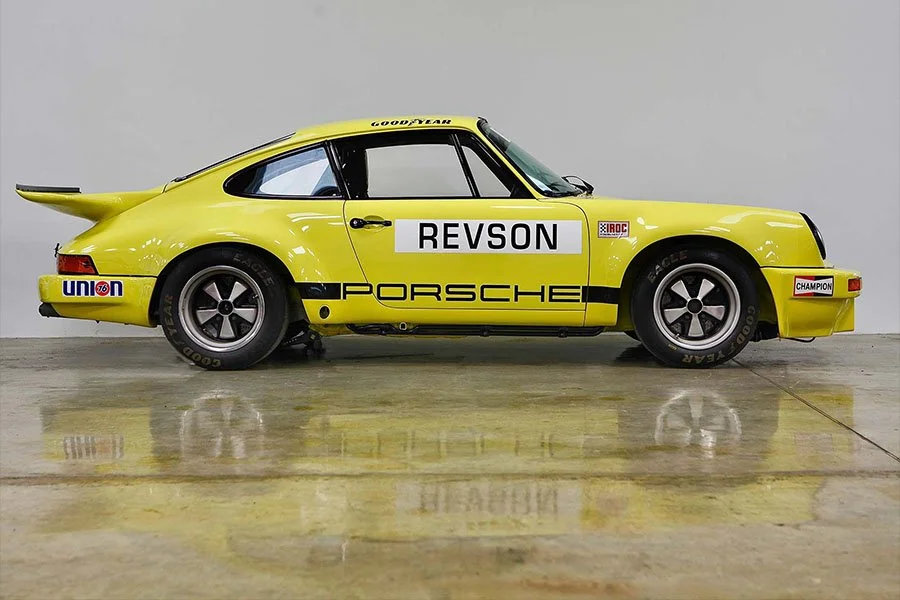
The front bumper unit featured an apron with a large rectangular intake for the aforementioned engine oil cooler. This was flanked by circular ducts that fed fresh air to the brakes. The unadorned rear bumper housed cutaways for two megaphone exhausts.
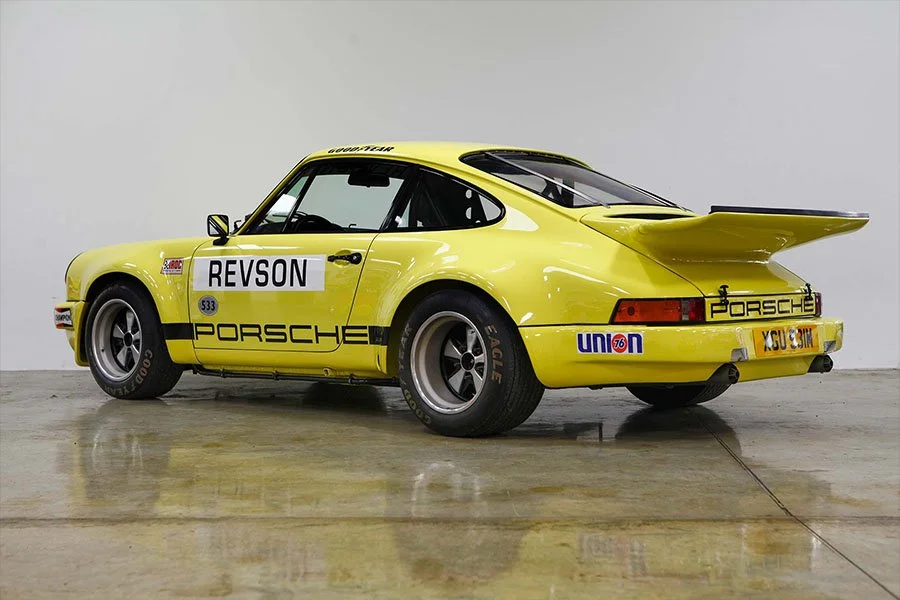
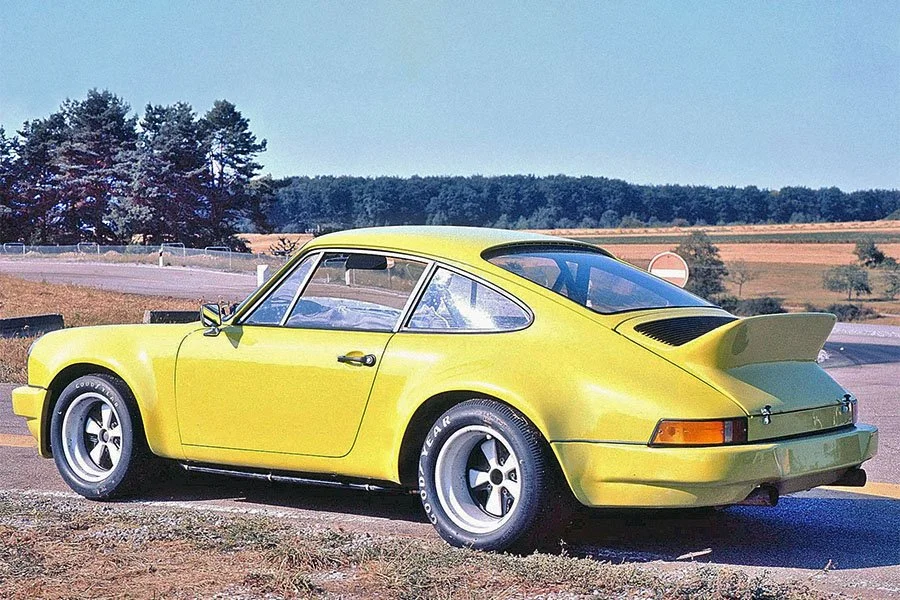
Other body panels fashioned from fibreglass included the pin-fastened and balsa wood-reinforced front lid and the engine lid with its Ducktail spoiler and rubber retaining straps.
Instead of the regular RSR’s dramatic fibreglass fenders, the IROC version ran custom steel panels. Plexiglas was used for the side windows and rear screen.
Other IROC RSR features included a wide Porsche script on the front bumper, Porsche instead of Carrera graphics down each flank, a Porsche-branded body coloured blanking plate between the tail lights and a single unpainted black plastic exterior mirror.
INTERIOR
Inside, fabric Recaro bucket seats were fitted along with racing harnesses.
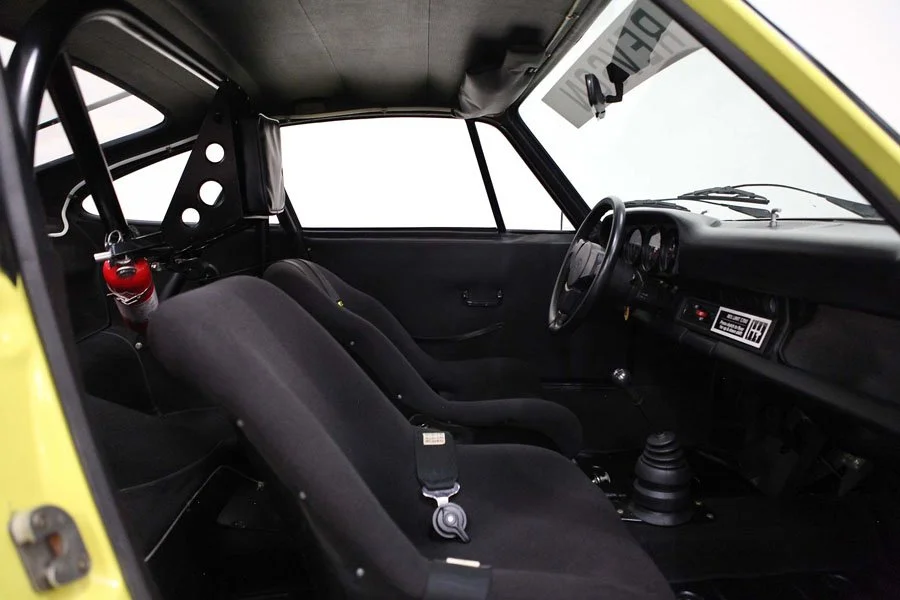
Directly behind the small diameter three-spoke steering wheel was a centrally mounted 10,000rpm tachometer flanked to the right by a 300kph speedometer. Off to the left were combined read outs for oil pressure / oil temperature and fuel / oil level. Blanking plates were installed where the clock and audio system would normally have resided and no glovebox lid was installed.
As Porsche’s 915 gearbox was known to be the 911’s weak spot, each car came fitted with a decal on the radio blanking plate that read:
‘REV LIMIT 7,700
Press clutch to floor for up & down shift’
Thin black felt was glued in place instead of proper carpet and there was a simple black fabric headliner. Door trim panels were the same simplified type fitted to the 1973 model year RS Sport and the windows were manually operated.
There were no rear seats and, to save even more weight, even the passenger-side sun visor was left off. A Heinzmann fire extinguishing system was fitted as standard.
WEIGHT / PERFORMANCE
Each IROC RSR weighed in at 900kg which was the same as the 3.0 Carrera RS and slightly heavier than the fully fledged RSR.
Top speed was likely in the region of 165mph while 0-62mph would have taken a little under five seconds.
PRODUCTION
15 examples of the IROC RSR were built, all of which were left-hand drive.
Each had a 911460 chassis prefix followed by a four digit number.
The 15 cars were: 9114600016 (Light Yellow), 0025 (Grand Prix White), 0035 (Gulf Blue), 0037 (Pistachio Green), 0040 (Light Green), 0042 (Bright Green), 0050 (Aubergine), 0059 (Acid Blue), 0075 (Mexico Blue), 0085 (India Red), 0090 (Orange), 0100 (Sahara Beige), 0111 (Strawberry Pink), 0116 (Carmen Red) and 0124 (Black).
PRODUCTION CHANGES
Soon after delivery, Porsche sent over a batch of their new Tea-tray rear spoilers of broadly similar type to that which was in development for the 1974 model year 911 3.0 Carrera RS and RSR. With its larger and flatter profile than the original Ducktail, the Tea-tray resulted in much-improved rear grip.
Ahead of the first Riverside heat, satin black covers were installed to protect the chrome-rimmed headlights.
Between the last Riverside heat and the Daytona finale, seven of the cars were put up for sale (at $21,500 each) while the remaining eight were sent back to Germany for a few updates.
Stiffer dampers were installed, the brakes were adjusted to provide more rearward bias, a brace was added to help the drivers deal with the centrifugal forces expected from Daytona’s banking and an aluminium Gurney-style lip was added to the trailing edge of the rear spoilers.
By January, the cars were on their way back across the Atlantic and, upon arrival, Penske had all eight cars fitted with the latest Goodyear Exten tyres.
COMPETITION HSITORY
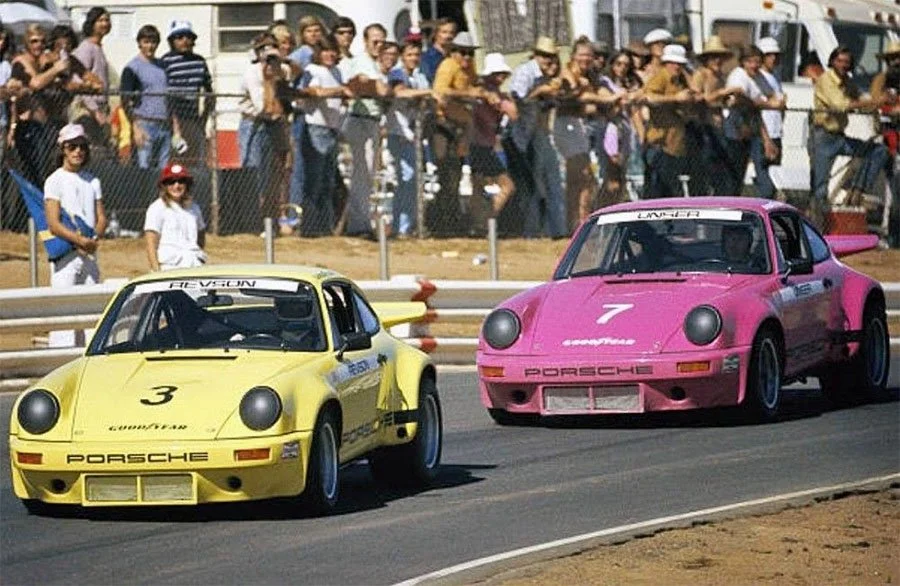
The inaugural IROC series kicked off on October 27th after two days of practice. Heat one saw Mark Donohue start from pole after Emerson Fittipaldi (who had been fastest in qualifying) was demoted to the back of the grid as he missed the pre-race drivers’ meeting. Donohue drove a well-judged race to take the win followed by Unser, Revson, Follmer and Hulme.
Heat two took place later that day with a reverse grid which meant Fittipaldi was on pole having been the first retirement during the opening event. On this occasion it was George Follmer who emerged victorious from Pearson, Fittipaldi, Revson and Foyt.
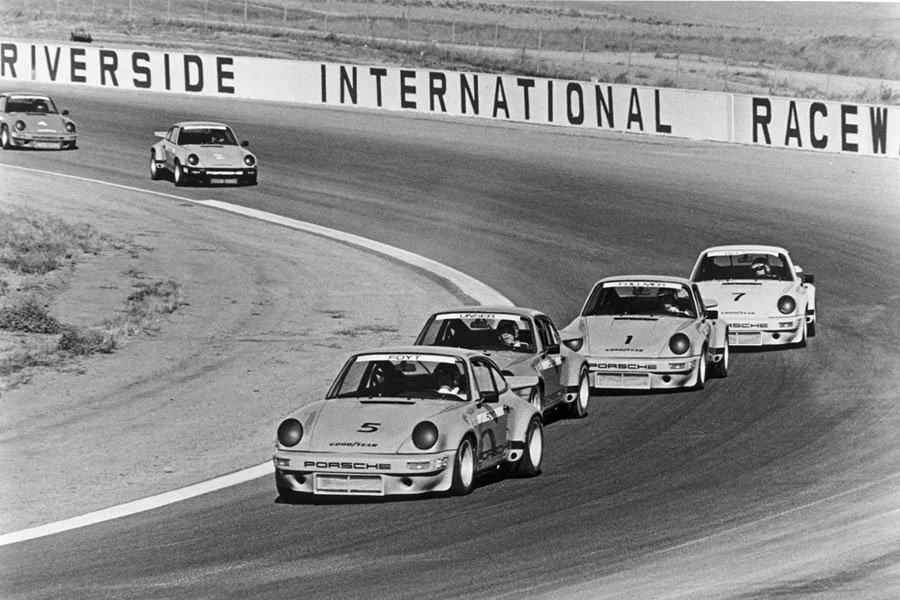
The third 30 lap heat took place the next day with another reverse grid that saw Donohue back on pole as he had stopped with a sticking throttle during heat two and had been unable to get out of last place. Donohue went on to take his second victory with Unser, Fittipaldi, Pearson and Follmer closing out the top five.
Follmer, Unser, Donohue, Revson, Pearson and Foyt were the six drivers that went through to the Daytona finale eleven weeks later.
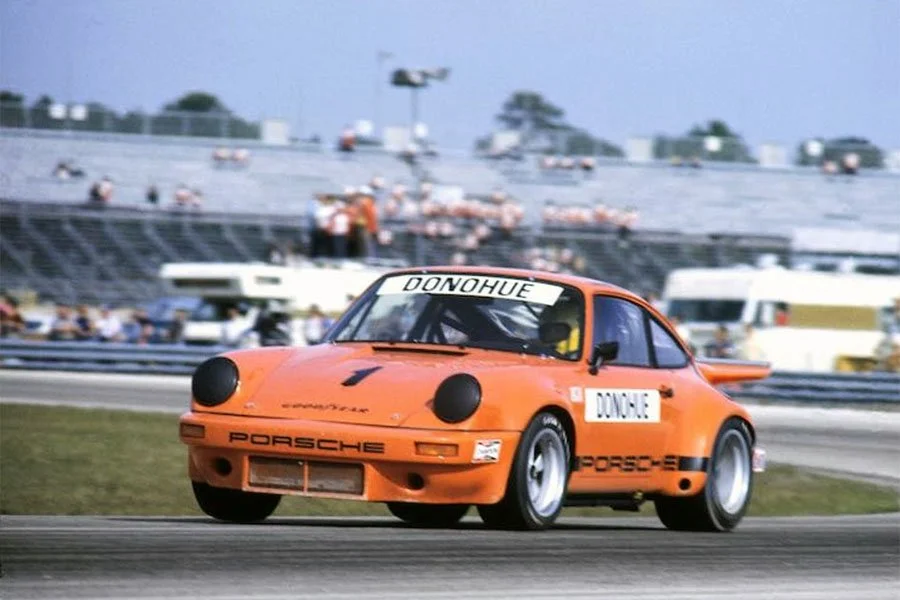
Donohue emerged as the quickest driver at Daytona and started on pole from Revson, Pearson, Follmer, Unser and Foyt.
Although Follmer took and early lead in the 25 lap race, it was Donohue that went on to take the chequered flag from Revson, Unser and Pearson while Follmer and Foyt both failed to finish.
Afterwards, the IROC Porsches were sold off. Most continued to race for the next few seasons, predominantly in IMSA and Trans-Am.
Penske subsequently elected to run less expensive Chevrolet Camaros for the second IROC series over the winter of 1974-1975.
Text copyright: Supercar Nostalgia
Photo copyright: IROC, Porsche - https://www.porsche.com & Maxted-Page - https://www.maxted-page.com/