Fuhrmann Four Cam - a Historical & Technical Appraisal of the Porsche 550/2
/
BACKGROUND
Although the fast and tough 356 had proven itself a formidable competitor in every discipline of motor sport, Porsche knew that a purpose-built machine, something designed from the ground up purely for racing, would be required to compete at the top level.
Having got itself on a sound financial footing in the aftermath of World War 2, just such a car emerged in late May of 1953: the 550.
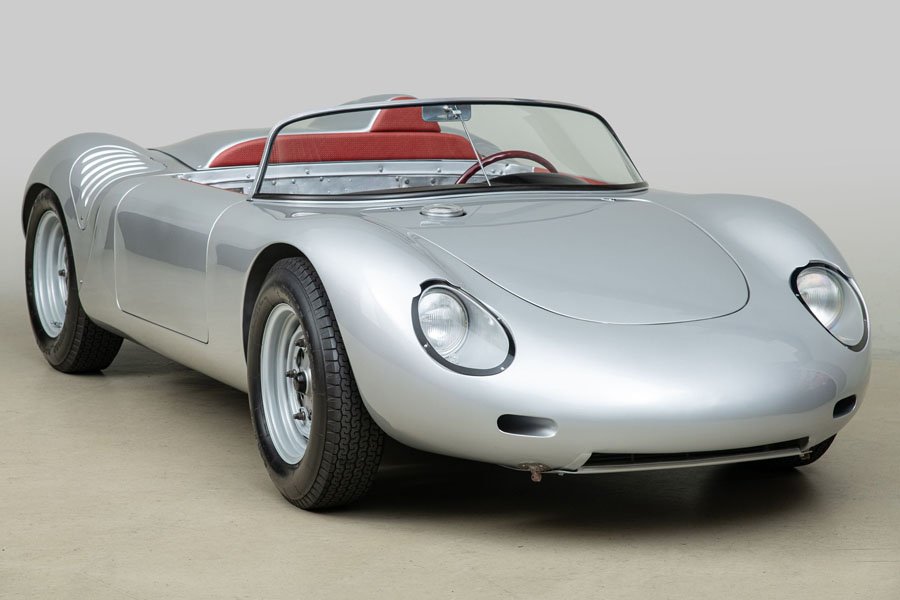
Based around a brand new tubular steel chassis and powered by Porsche’s most highly tuned 1.5-litre four cylinder engine, the 550 was draped in a skimpy wind-cheating aluminium body and immediately established itself as Germany’s premier small displacement Sports racing car.
Two weeks after having taken a debut victory at the Nurburgring Eifelrennen German Sportscar Championship race on May 31st, the 550 achieved international fame when the brace of machines entered for Porsche’s inaugural attack on the Le Mans 24 Hours yielded first and second in class by finishing 15th and 16th overall.
Despite this outstanding start for the 550 programme, Porsche already had some significant upgrades in the pipeline, developments it hoped would nullify a fierce and fast-improving opposition from the likes of OSCA, Gordini, Lotus, Kieft, EMW and Borgward.
At the heart of this second generation 550 was a radical new dual overhead cam engine that, aside from sharing a Flat 4 layout and air cooling, had practically nothing in common with Porsche’s existing Volkswagen-derived unit with its pushrod-operated overhead valve configuration.
Designed by renowned engineer, Ernst Fuhrmann, the complex Type 547 engine offered a number of benefits, most notably its ability to rev much higher (and thus produce more horsepower) along with improvements to both cooling and efficiency.
In addition to this highly anticipated ‘four cam’ engine, Porsche made changes to the 550’s chassis and bodywork, both of which were now produced by Karosserie Weinsberg after Karosserie Weidenhausen had handled fabrication of the first two cars (which we refer to as the 550/1). Later, Karosserie Wendler were brought on board so Porsche could assess their capabilities ahead of production getting underway for 1955 when the 550 would be supplied to customers.
As for the 550/2, Porsche secretly debuted the revised car with its four cam Fuhrmann engine during practice for the Nurburgring Rheinland German Sportscar Championship race which took place on August 2nd 1953. The car then made its competition debut a week later in the Freiburg-Schauinsland Hillclimb (also a round of Germany’s national Sports car series). It subsequently underwent continual on-track development for the remainder of 1953 and throughout the ‘54 season.
CHASSIS
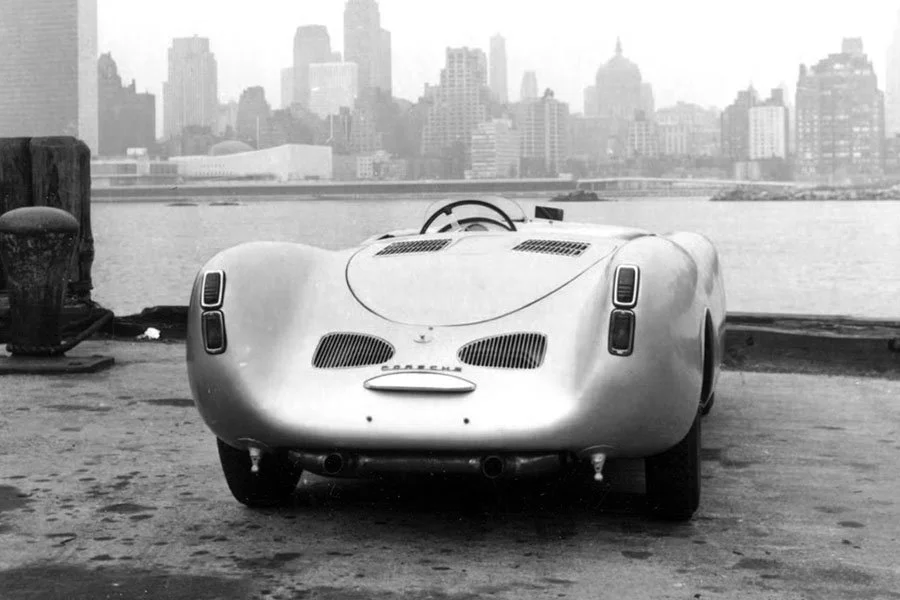
Like the 550/1, the 550/2 was based around a ladder-type tubular steel chassis with mid-engined layout, fully independent suspension and a 2100mm wheelbase. However, the 550/2’s frame was now manufactured by Weinsburg (as opposed to Weidenhausen) and featured an array of updates.
The most notable changes were made at the back where the frame was arched over rear axles and a bow-shaped downward extending engine mounting crossmember was bolted instead of welded in place to make removal of the power unit easier. Ongoing experimentation was also being carried out to increase torsional stiffness.
Suspension changes were ushered in too. Once again, twin parallel arms with transverse torsion bars were used up front while at the back were swing axles, torsion bars and telescopic shocks. Now though, the rear torsion bars were moved ahead of the engine as opposed to behind the transaxle and the rear trailing arms were lengthened.
As before, hydraulically-activated drum brakes were fitted all round along with pressed steel 16-inch diameter wheels available in a variety of widths. five-bolt and centre-lock wheels were variously used.
An aluminium fuel tank was housed ahead of the front bulkhead.
ENGINE / TRANSMISSION
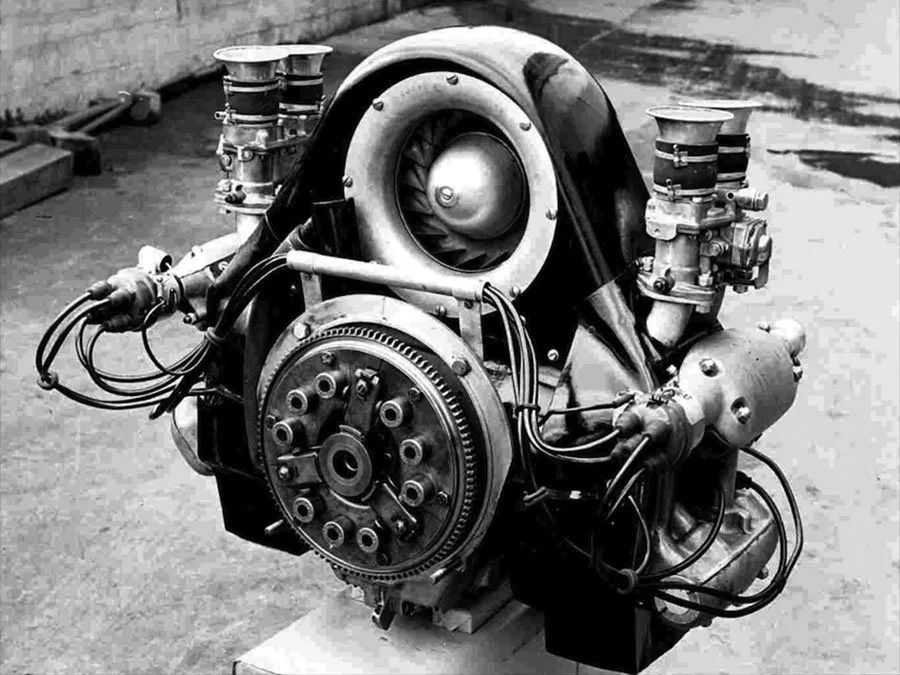
Undoubtedly the most significant detail in the transition to 550/2 trim was the highly anticipated arrival of Ernst Fuhrmann’s dual overhead cam Type 547 engine which replaced the old Type 528 units with their pushrod-operated overhead valves.
The Fuhrmann engine was an elaborately engineered clean sheet design that required both meticulous assembly and servicing.
It adopted a radically oversquare layout with 85mm bore and 66mm stroke for an overall displacement of 1498cc. The short stroke resulted in a particularly responsive, free revving engine designed for power as opposed to torque.
Near hemispherical combustion chambers were fed by intake and exhaust valves operated by a complex set of shafts and gears.
A half-speed shaft that ran below the Hirth roller bearing crankshaft was driven at the flywheel end. At the opposing end, this countershaft drove light, hollow shafts that extended out to the centre of the cylinder head from where the exhaust cam was driven. The intake cam was operated via another vertical shaft. Both these shafts were geared to turn at crank speed (twice as fast as the cams). Thanks to their hollow construction, they also doubled as oil pressure lines for the heads.
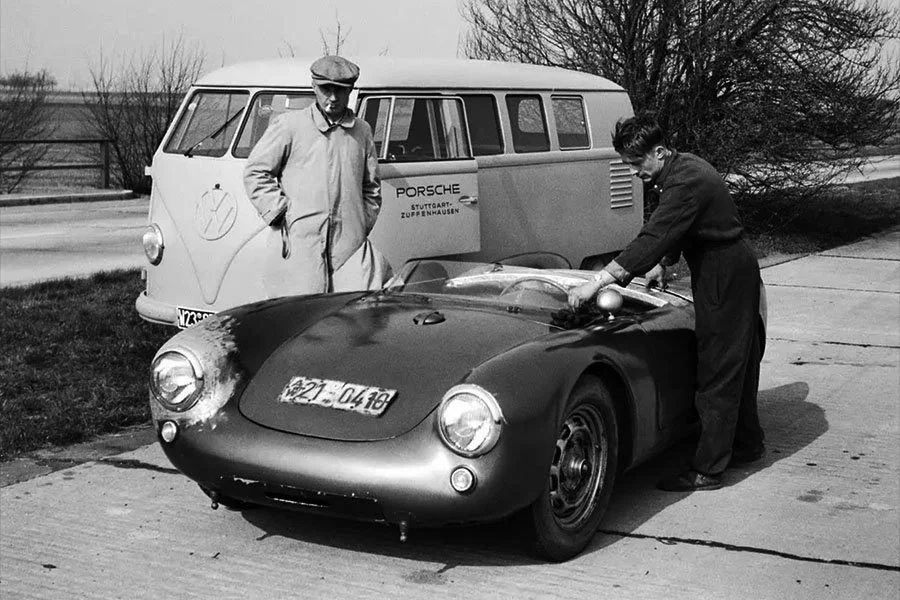
Other aspects of the specification included twin distributors, twin plug ignition and a brace of twin-choke Solex 40 PII-4 downdraught carburettors.
With compression set at 9.5:1 compression, the Type 547 engine initially produced a peak output of 110bhp at 6200rpm and 88.5lb-ft at 5000rpm.
Transmission was through Porsche’s own four-speed synchromesh gearbox, a hydraulic clutch and a ZF-limited-slip differential.
BODYWORK
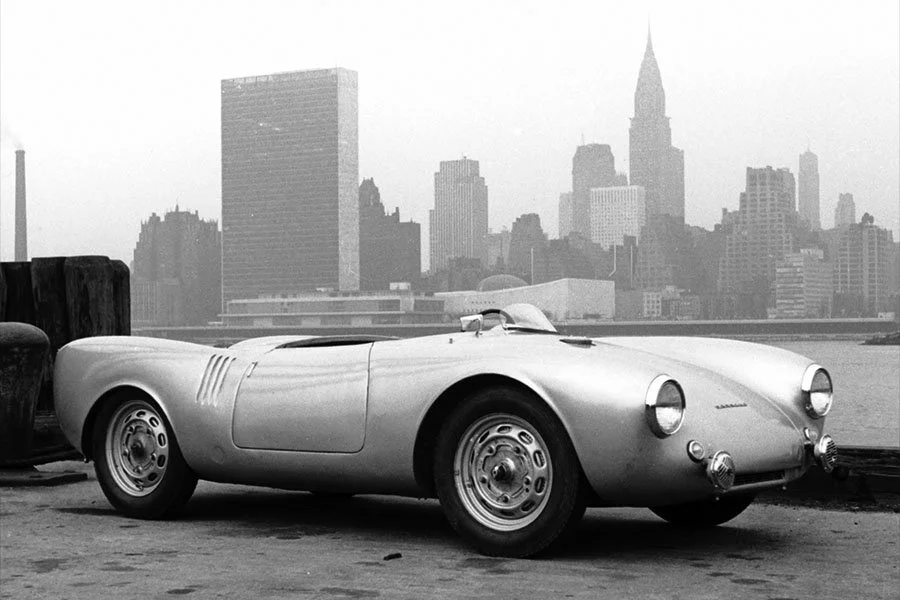
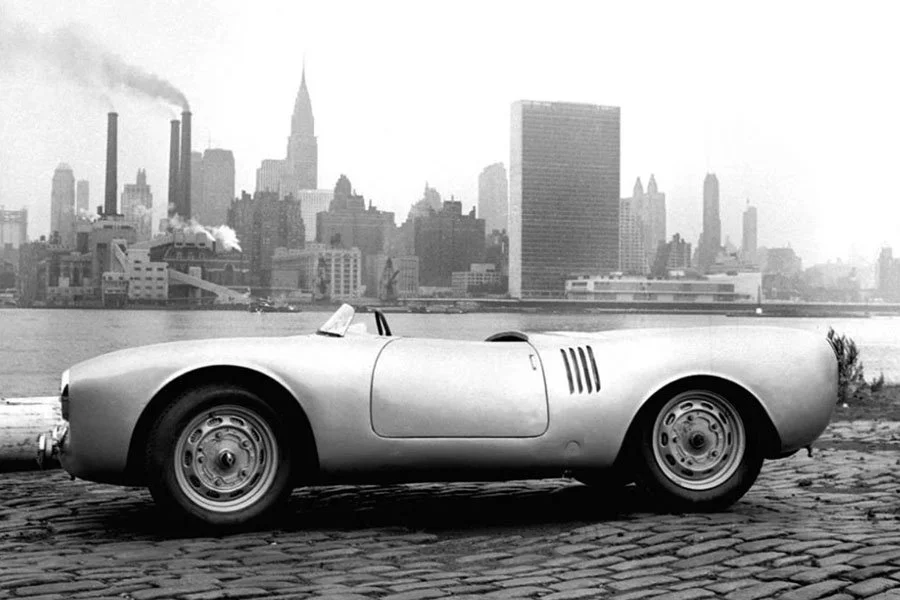
During the course of 550/2 production, Porsche stylist Erwin Komenda made a number of refinements to his original design. Accordingly, many of these prototypes differed in detail to one another.
As before, to cut cleanly through the air the 550/2’s nose sloped downwards inboard of its prominent front fenders. At the leading edge was a slim intake for the engine oil cooler while further back was a cutaway for a quick fuel filler cap. Initially, the central nose section was hinged at its leading edge as per the 550/1 but this approach soon made way for a smaller detachable front lid. Underneath the exposed headlights were indicators and sometimes recessed spot lights, the precise locations of which varied from car to car.
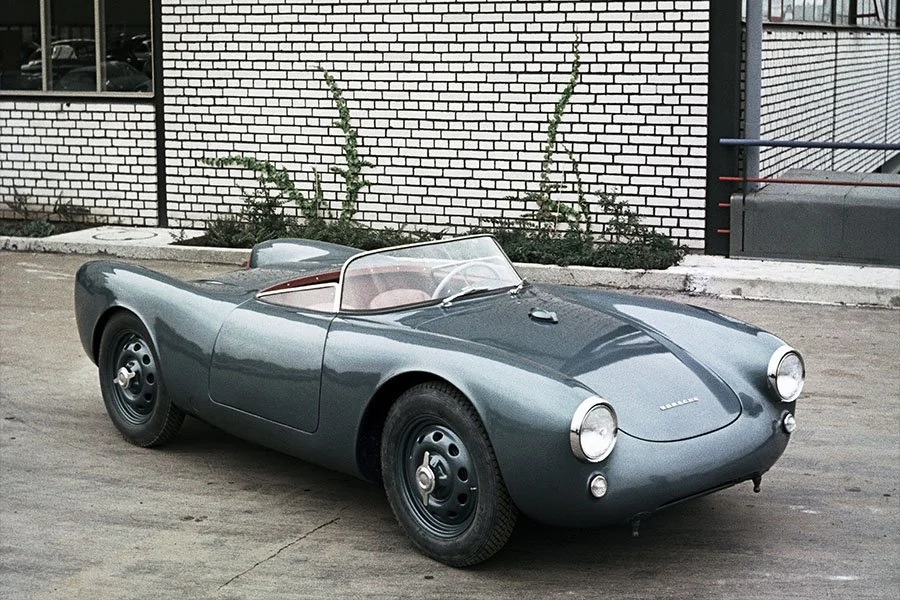
Depending on the nature of any given events, Porsche developed a range of windscreens to include a miniature driver-only Plexiglas aero screen, a cut-down full width Plexiglas screen and a full height glass screen housed in a bright metal shroud. A hardtop, folding canvas roof, retractable side windows and even windscreen wipers cropped up from time to time as Porsche looked to maximise the 550/2’s market potential.
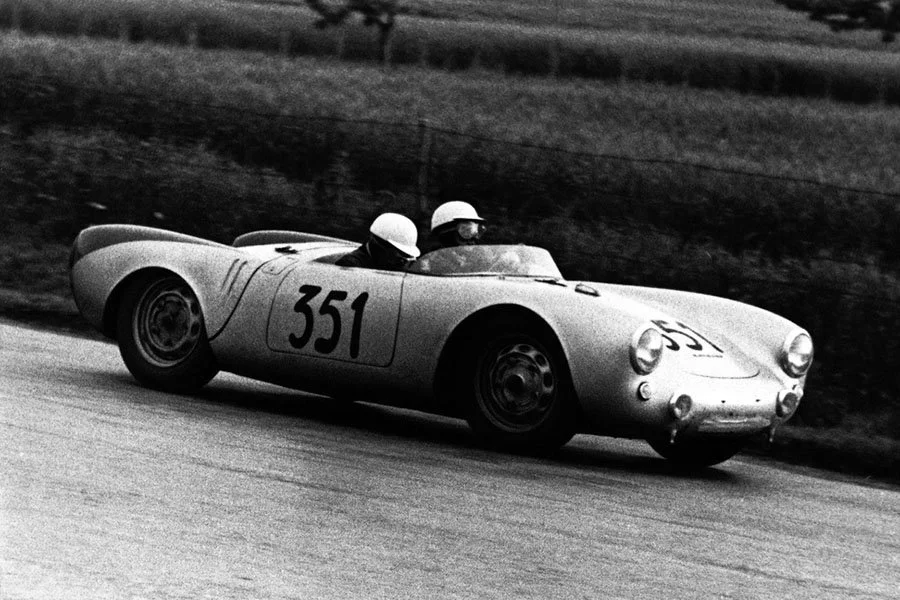
Further back, distinctive finned rear fenders were adopted in an attempt to increase high speed stability. Vertical cooling slats were often carved out from the flanks just ahead of the rear wheels and two large bright metal grilles were soon installed to aid engine cooling. Later cars came with a hinged rear clam that gave much easier access to the back end.
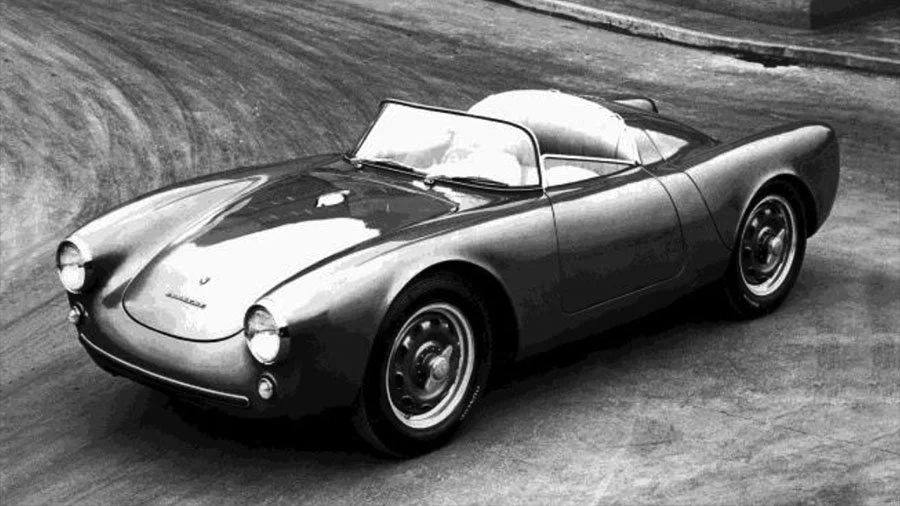
Following Porsche’s first wind tunnel tests with the 550/2, a couple of ‘Buckelwagen’ cars emerged with a large hump behind rear bulkhead but this design was soon abandoned.
INTERIOR
Little was changed inside although Porsche did begin to experiment by adding some extra equipment here and there.
Aside from a pair of lightweight leather-trimmed bucket seats, interiors were generally left free of any upholstery.
Behind the three-spoke steering wheel was a body coloured metal dash with large read outs for road and engine speed and a smaller combined dial for oil pressure / oil temperature. Scattered elsewhere were a variety of toggle and flick switches for other essential controls.
Located to the driver’s right-hand side (all 550/2s were left-hand drive) was a manual gear shift.
Once again, many components were drilled for lightness and linkages were often left completely exposed.
WEIGHT / PERFORMANCE
At circa 520kg, the 550/2 typically weighed in around 20kg heavier than the 550/1.
However, this slight increase was more than offset by the resulting performance gains.
Depending on gearing, 0-62mph was now possible in under six seconds.
With the tallest possible gear ratios, a top speed in excess of 130mph was possible.
1953 PARIS MOTOR SHOW
The Type 550 was given its official motor show launch at the Paris Salon during October 1953 to assess public reaction and see if there was potential for a production run. Porsche displayed one of the 550/2s as the 1500 RS which marked the firm’s first use of the Renn Sport moniker. The decision to adopt a model name as opposed to a simple type number was the idea of Porsche’s US distributor, Max Hoffman, who considered the move beneficial for marketing reasons.
At this stage many production features were still yet to emerge such as the hinged rear body section which debuted at the Brussels Motor Show in January 1954.
PRODUCTION CHANGES
In addition to myriad bodywork refinements, Porsche rapidly developed the four cam motor throughout 1954.
A second generation motor which came with Weber carburettors (plus numerous other detail refinements) was used at the Mille Miglia in May 1954.
The third generation engine then came on stream for the Le Mans 24 Hours in mid June by which time 114bhp was being developed at 6800rpm on blended pump fuel.
At the Berlin GP which took place around the high speed Avus track in mid September, Porsche trialled an experimental low drag body which was was not seen again. By this time, fabrication of the standard-type bodywork had been switched from Weinsberg to Wendler.
The fourth generation Fuhrmann motor with 117bhp subsequently appeared in time for Porsche’s trip to Mexico for the Carrera Panamericana in late November.
1.1-LITRE ENGINE
In addition to ever more potent iterations of the 1.5-litre four cam engine, Porsche developed 1.1-litre variant of the Type 547 motor in time for the 1954 Le Mans 24 Hours. Bore diameter was reduced from 85mm to 73mm and the existing 66mm stroke was carried over for an overall displacement of 1098cc (a reduction of 400cc).
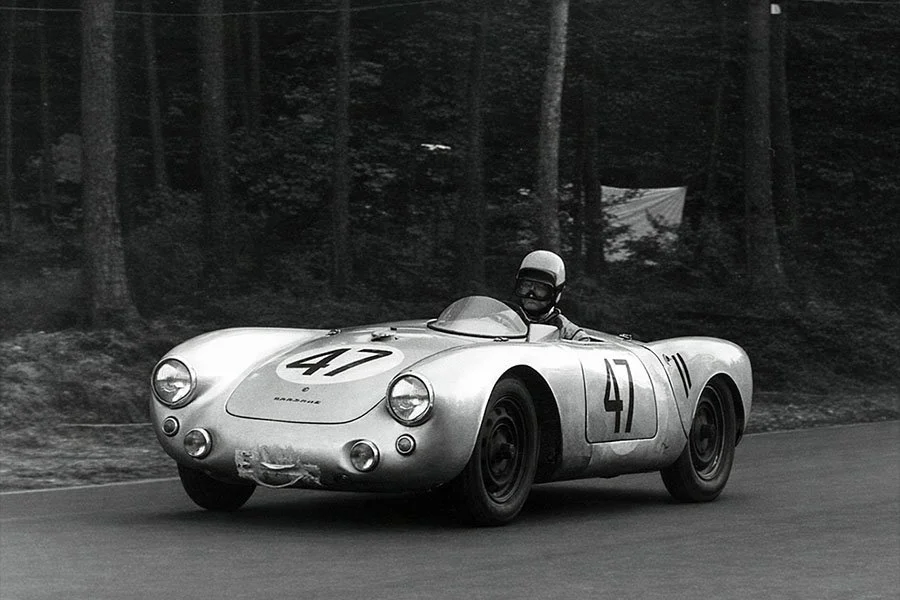
Running an unchanged 9.5:1 compression and two Solex 40 PII-4 downdraught carburettors, Porsche quoted the 1.1-litre engine as producing 93bhp at 5500rpm (down from 110bhp at 6200rpm).
1.3-LITRE ENGINE
A 1.3-litre version of the Type 547 engine was also created but not initially raced. These motors had bore diameter reduced from 85mm to 80mm and kept the existing 66mm stroke resulting in an overall displacement of WHATcc.
For this application, compression was reduced from 9.5:1 to 8.0:1. Running the existing Solex 40 PII-4 carburettors, Porsche quoted an identical 93bhp at 5500rpm to the higher compression but smaller capacity 1.1-litre engine.
END OF PRODUCTION
By late 1954, and with the Type 547 engine’s successfully completion of tough endurance events such as the Le Mans 24 Hours, Reims 12 Hours, Tour de France and Carrera Panamericana, Porsche considered the Fuhrmann motor ready for production.
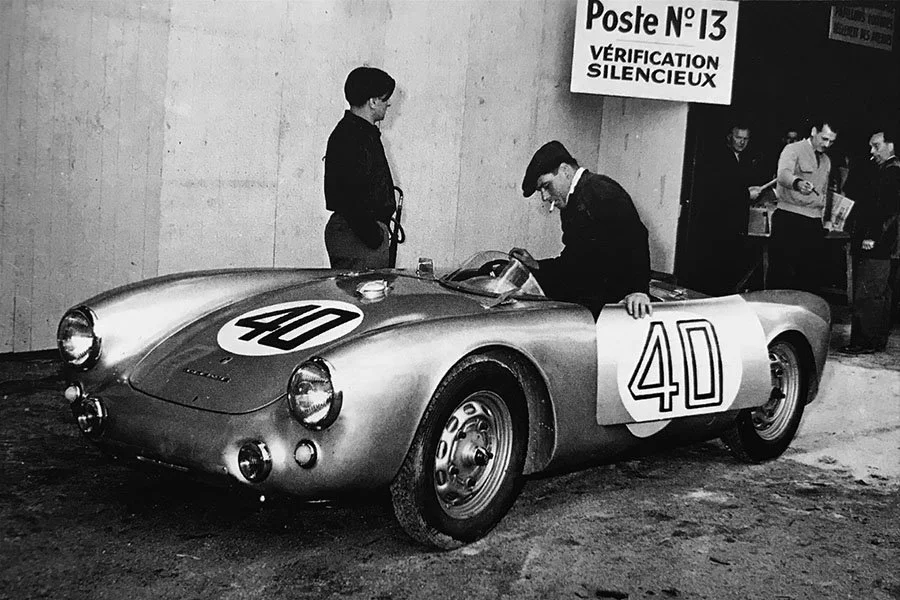
In total, 13 copies of the 550/2 were completed bearing numbers 03 through 15. However, chassis 15 was actually finished late and this car was built with a production-spec. body.
Subsequent 550s (officially known as the 1500 RS) used Wendler-built chassis and bodywork. These cars were numbered 0016 to 0090 and are covered separately.
COMPETITION HISTORY
Having used the 550/1 to win the 1953 Nurburgring Eifelrennen race outright (May 31st), secure a class victory at Le Mans (June 14th) and bag second place at Avus (July 12th), Porsche debuted its 550/2 under a cloak of secrecy during practice for the Nurburgring Rheinland contest on August 2nd.
Like the Nurburgring Eifelrennen and Avus races, the Nurburgring Rheinland event was another round of the fiercely contested German Sportscar Championship. However, the solitary 550/2 in attendance (driven by Helmut Glockler and Fritz Huschke von Hanstein) set disappointing times in practice and was not raced. Hans Herrmann went on to win in a 550/1.
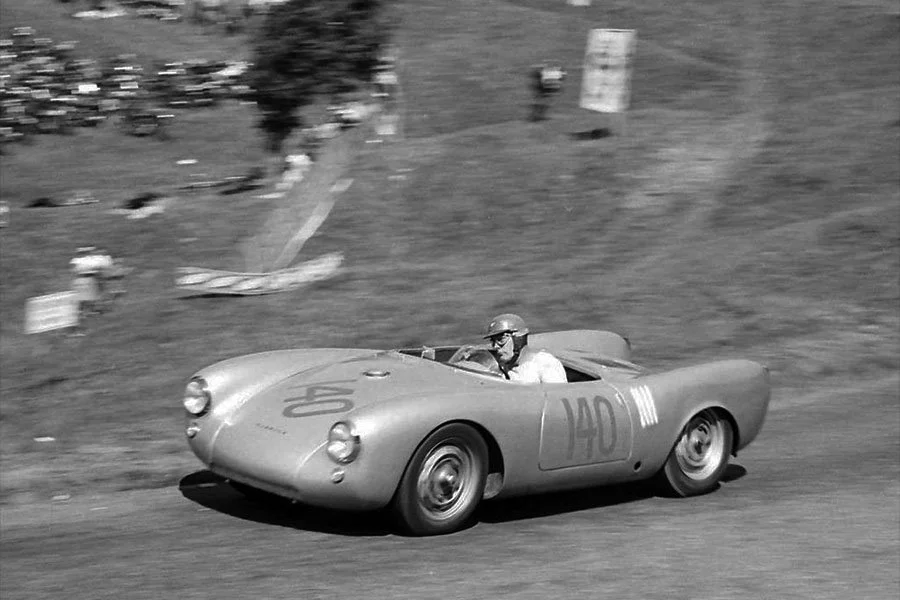
The 550/2 made its actual competition debut at the German Sportscar Championship season finale, the Freiburg-Schauinsland Hillclimb on August 9th, where Hans Stuck finished third in class having struggled to make the peaky four cam motor work well up the 12km course. Hans Herrmann won the 1.5-litre Sports category in a 550/1.
Afterwards, Porsche deemed the 550/1 to have reached the limit of its development potential and switched exclusively to the 550/2.
To give the new model some exposure in the United States ahead of Porsche’s trip to Mexico for the Carrera Panamericana, a brace of 550/2s were sent across the Atlantic to contest a pair of SCCA races at Turner Air Force Base in Georgia during late October. Unfortunately, Karl Kling and Fritz Huschke von Hanstein failed to finish either event owing to mechanical issues.
The final event of 1953 was the Carrera Panamericana which got underway four weeks after the Turner races and was the 1953 World Sportscar Championship season finale. For this gruelling 1912 mile run north from Tuxtla Gutierrez to Ciudad Juarez, Porsche elected to run its 550/2s with the old pushrod-operated overhead valve engines.
Although neither of the works entries made it to the finish, one of the 550/1s (both of which had been sold to privateers) finished 32nd overall to win the 1.6-litre Sports category.
The 1954 season saw more 550/2s come on stream, most of which were campaigned by the factory teams while a small number were sold or loaned to specially favoured customers.
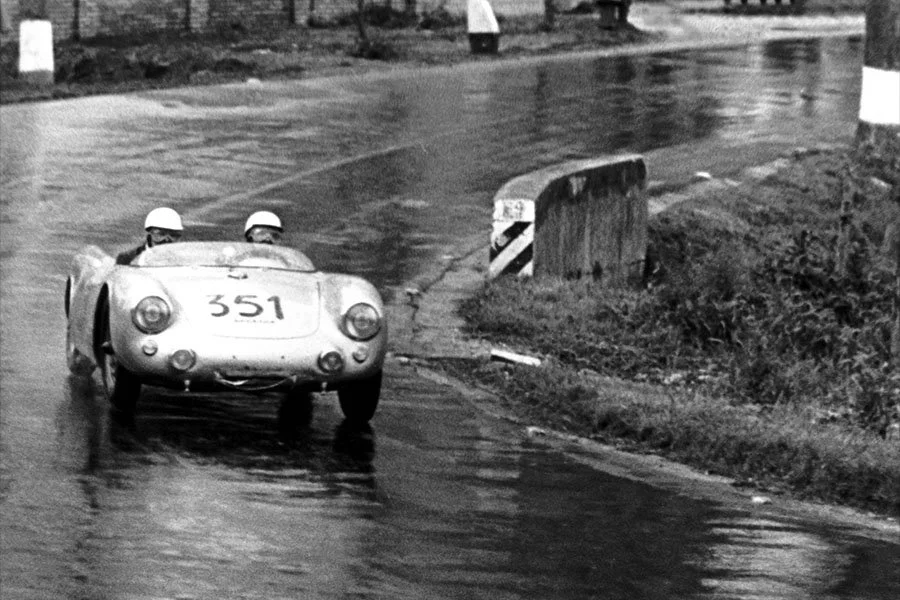
Porsche’s first major success of its ‘54 programme was a sixth place finish overall and under 1.5-litre Sports class win for Hans Herrmann and Herbert Linge on the Mille Miglia driving a brand new car powered by a second generation version of the four cam engine.
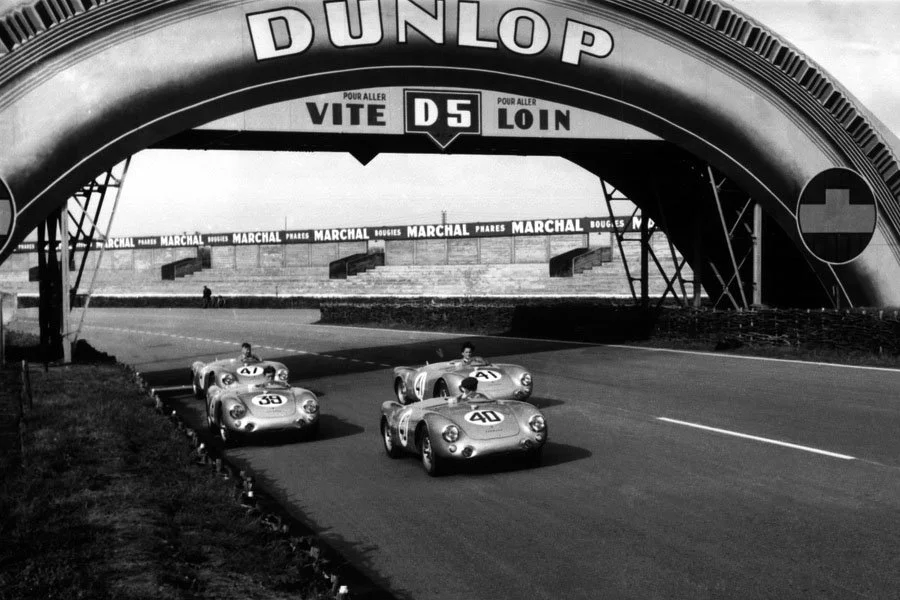
Four brand new works cars subsequently appeared at the Le Mans 24 Hours where Johnny Claes and Pierre Stasse were fortunate to inherit the 1.5-litre Sports class win from the factory OSCA team en route to twelfth place overall. A 550/2 also won the under 1.1-litre Sports class thanks to Zora Arkus-Duntov and Gonzague Olivier who were running a new 1098cc version of the four cam engine and finished 14th overall.
Two weeks after Le Mans, the brace of 550/2s that had failed to finish at Le Mans were entered for the non-championship Reims 12 Hours where Helmut Polensky / Richard von Frankenberg (eighth overall) and Auguste Veuillet / Gonzague Olivier (13th overall) finished first and second in the 1.5-litre Sports category.
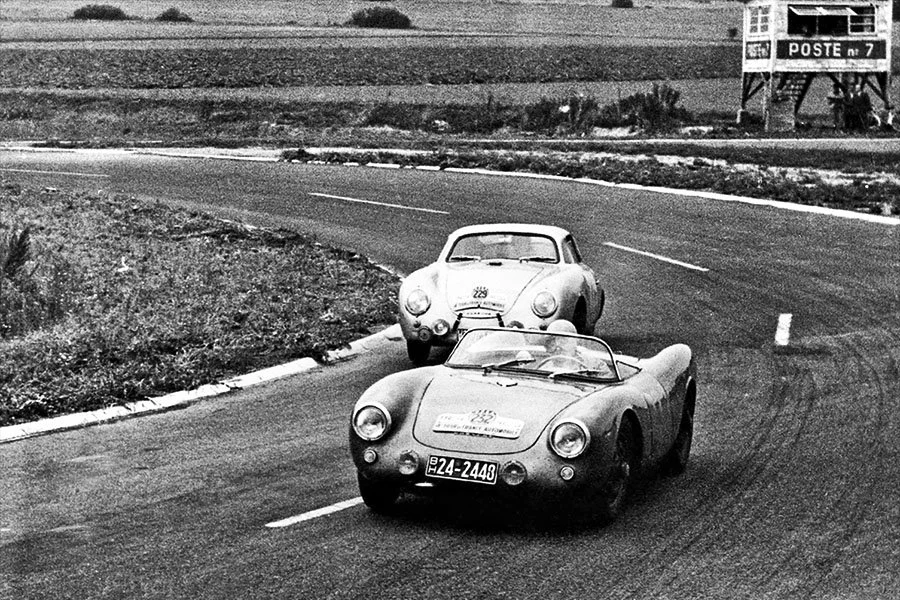
Another major non-championship success came at the Tour de France in mid September. Claude Storez and Herbert Linge finished a very impressive second overall to bag first in the under 1.5-litre Sports class. Further down the order, the all-female crew of Annie Bousquet and Marie-Claude Beaulieu placed eighth overall and third in class.
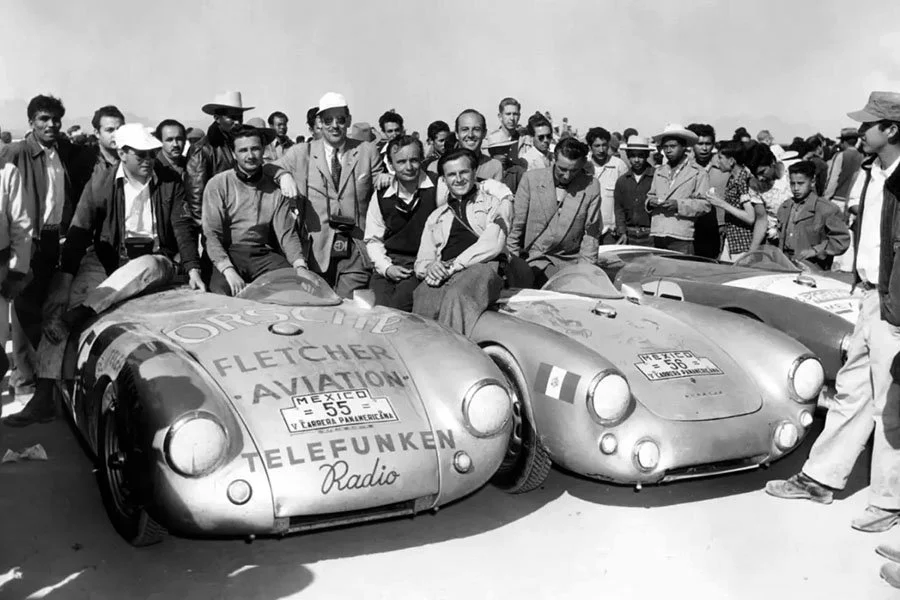
Perhaps the 550/2’s most impressive appearance of 1954 came at the Carrera Panamericana where the works cars were running four cam motors that now pumped out 117bhp. After five days, over 1900 miles eight gruelling high speed stages along freeways and mountain passes, Hans Herrmann crossed the line third overall to win the 1.5-litre Sports class. To emphasise Porsche’s domination, Jaroslav Juhan placed fourth overall (second in class).
Outside of the World Sportscar Championship and major stand alone events, Porsche won two German Sportscar Championship races: the Nurburgring Rheinland (Hans Herrmann) and the Berlin GP at Avus (Richard von Frankenberg). 550/2s also took class wins in all the races they entered at the end-of-season Bahamas Speed Week thanks to Herbert Linge and Fritz Huschke von Hanstein), Gonzague Olivier took a class win at the Picardie GP around the Amiens street circuit in France. Outright wins were achieved by von Hanstein in the East German Sportscar Championship race at the Sachsenring and by Arthur Heuberger at Bern GP in Bremgarten.
Text copyright: Supercar Nostalgia
Photo copyright: Porsche - https://www.porsche.com & unattributed