VIN: the Ron Dennis / Sinaloa Cartel McLaren F1 chassis 039
/ Ben Tyer
HISTORY OF CHASSIS 039
Manufactured in 1995, F1 chassis 039 was built for McLaren CEO, chairman and founder, Ron Dennis.
Painted Brazilian Brown Metallic with a matching brown interior, 039 was completed in late 1995.
However, Ron’s wife, Lisa, was reputedly not a fan of the colour and Dennis instead took delivery of a Magnesium Silver example (chassis 050). Prior to this, he had retained 003 as his personal car.
Chassis 039 was kept at the factory until it was purchased by a UK customer who only retained it for a short time.
McLaren then found a Mexican buyer for 039 in 1997. The wheels were repainted gold and the car was delivered via Texas.
By 2004, the car was in Culiacan, Mexico. It had reputedly been purchased by a high ranking member of a drug cartel.
Culiacan is the base for Mexico’s Sinaloa Cartel which, since the late 1980s, has been considered the most powerful drug trafficking organisation in the world. Primarily involved in the smuggling and distribution of narcotics into the US, the cartel is run by the family of Joaquin ‘El Chapo’ Guzman who is currently incarcerated in New York.
In May 2004, chassis 039 was photographed in Culiacan wearing the UK registration number P440 CPJ. This same plate was also issued to the ex-Fayed / Harrods F1 GTR chassis 06R in December 1996. Quite how the two cars came to carry the same registration is a mystery.
Shortly after it was spotted in Culiacan, 039’s owner is understood to have been killed in a firefight and the car has not been seen since. It is reputedly stored under armed guard somewhere in rural Sinaloa missing its keys and documentation.
Text copyright: Supercar Nostalgia
Photo copyright: unattributed
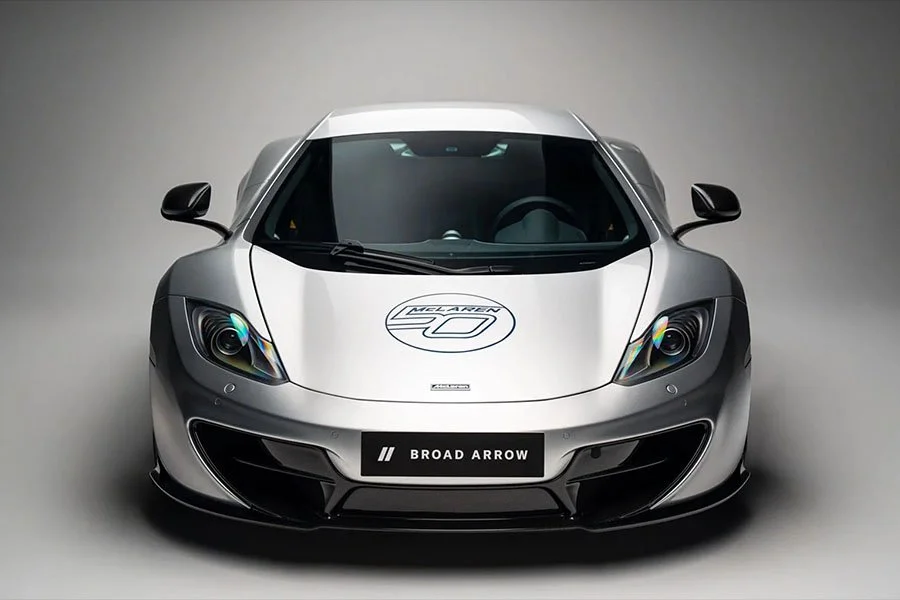
In May 2013, a little under three years after McLaren had launched its spectacular 12C, a limited run special was created to celebrate the firm’s 50th anniversary. Dubbed the 12C 50th Anniversary…
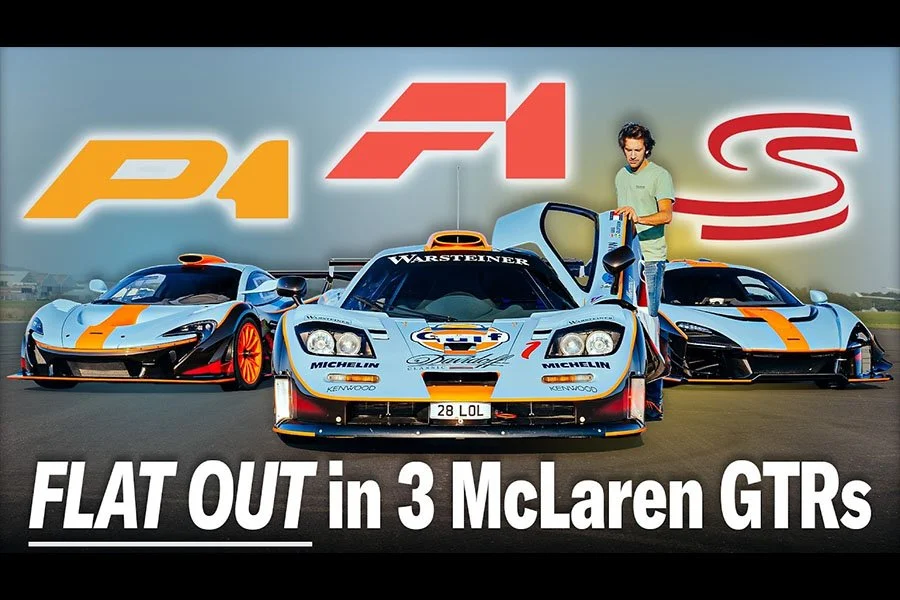
Only the F1, the P1 and the Senna have ever had the GTR treatment. Even fewer have been converted to drive on the road, but all three in this film have been through Lanzante’s workshop, meaning they can mingle with regular traffic.
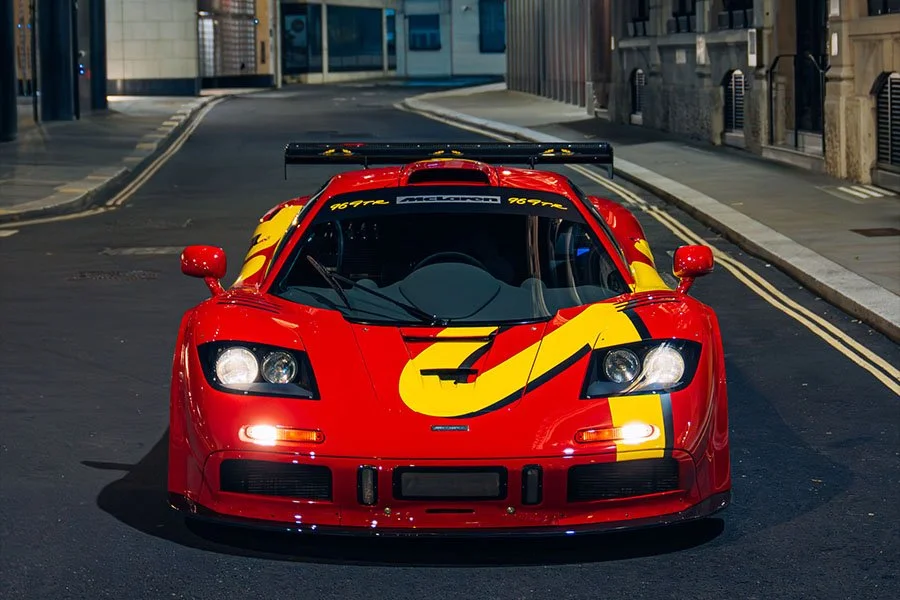
To see off the expected threat from GT1 iterations of the Ferrari F50 and a reverse engineered purpose built racer that Porsche was known to have in development, McLaren created an uprated…
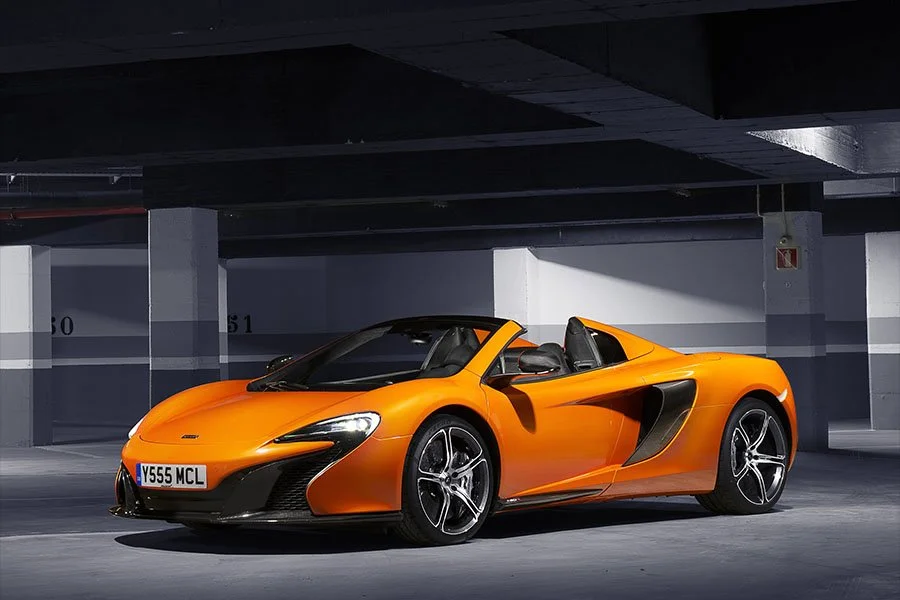
After collaborating with its F1 engine supplier, Mercedes-Benz, to design and build the C199 SLR between 2004 and 2010, McLaren re-launched its road car division with the critically acclaimed…
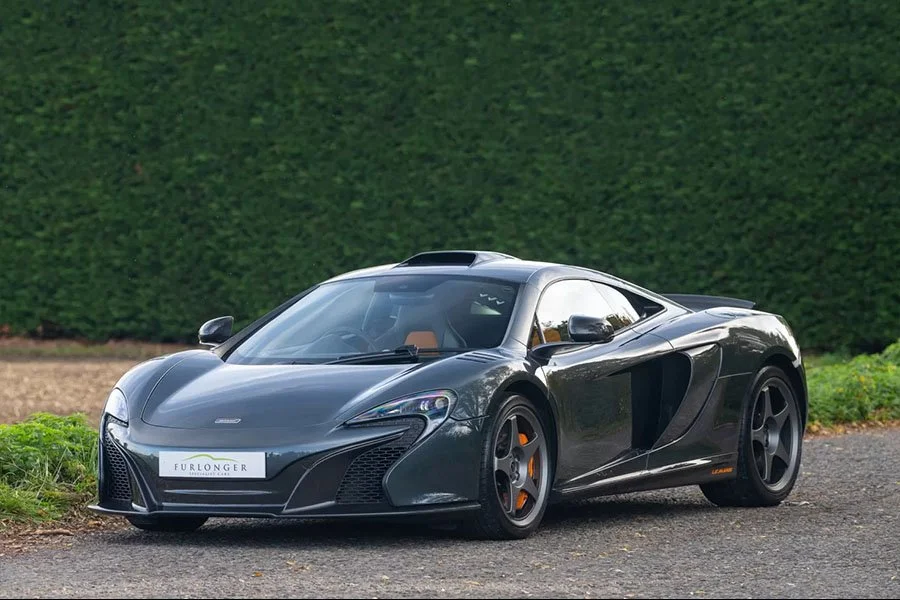
To celebrate the 20th anniversary of McLaren’s 1995 victory at Le Mans, the first debut win by a manufacturer at la Sarthe since 1949 and the first by a production-based car since 1979, the firm…
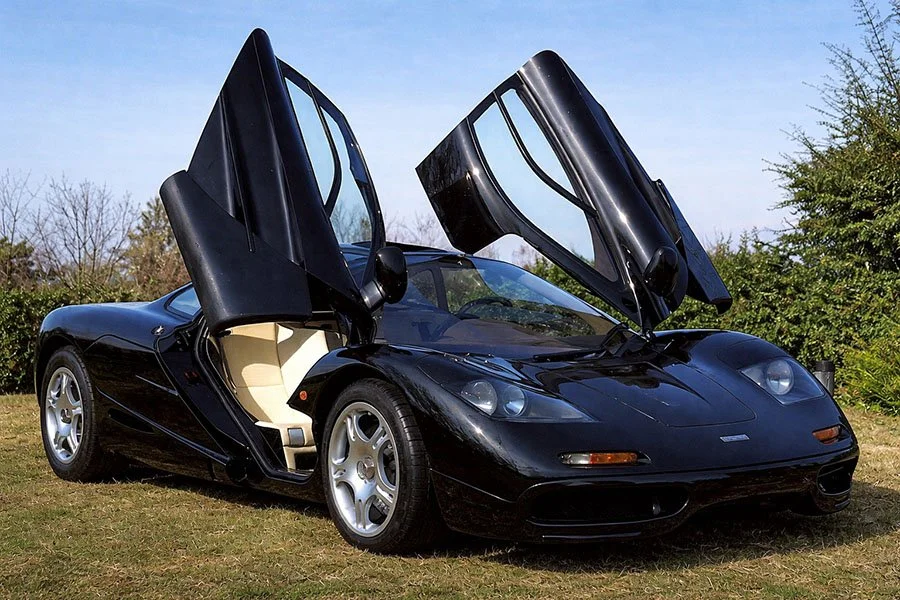
Chassis 007 was the seventh F1 production car built and one of 25 examples manufactured in 1994. It was configured with arguably the best exterior colour scheme for an F1: Jet Black (which included…
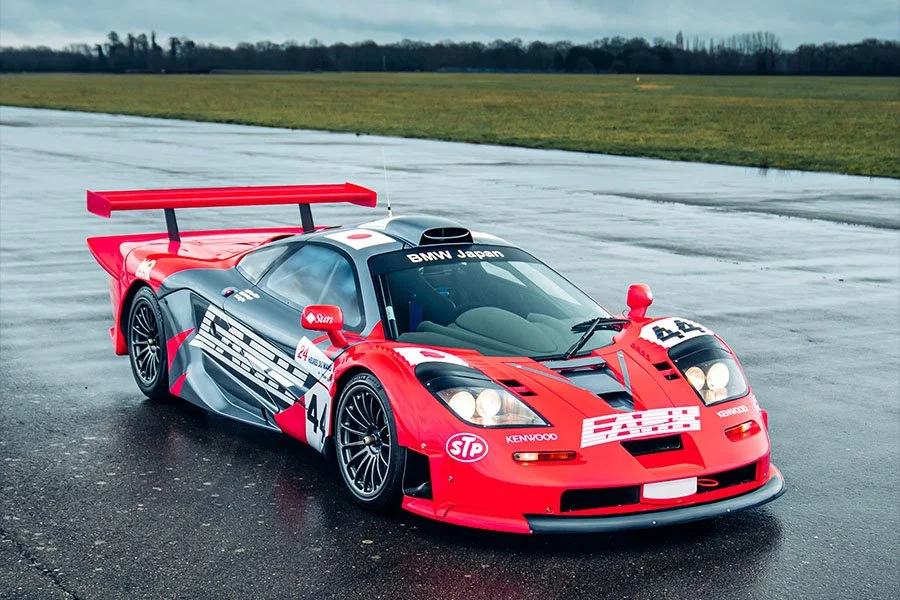
McLaren’s response to purpose-built GT1 challengers from Porsche and Mercedes-Benz was the F1 GTR 97 which featured an array of radical upgrades, the most obvious of which was its dramatic new…
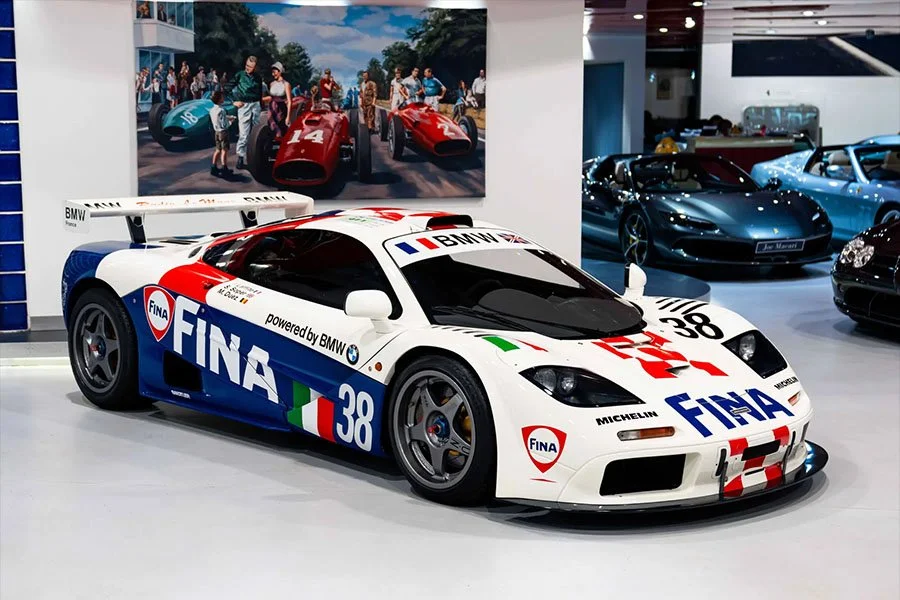
In 1995, BMW watched from the sidelines as its legendary 6.1-litre Motorsport V12 powered McLaren’s F1 GTR to ten wins from twelve outings in the BPR Global GT Championship plus a historic…
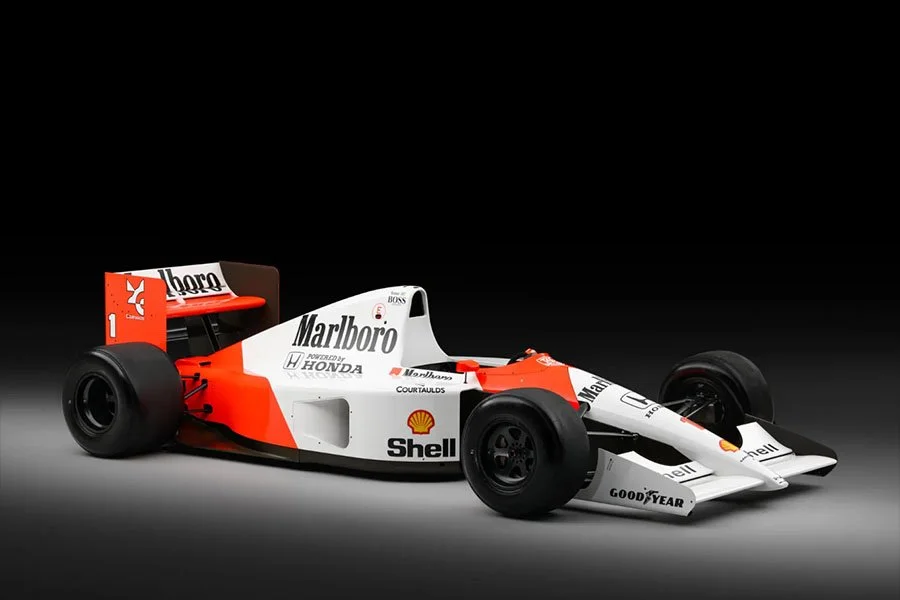
After an enormously successful partnership with TAG Porsche that delivered three Driver and two Constructor titles between 1984 and ‘87, McLaren signed an engine supply deal with Honda for 1988.

It’s hard to argue that the McLaren F1 is not the single best expression of a high performance automobile ever. However, McLaren’s preference to dial down the F1’s visual drama for reasons of…

In total, ten McLaren F1s were delivered to the Brunei Royal Family. Of these, five were standard F1 road cars (chassis 002, 004, 005, 008 and 014), one was an F1 GTR (chassis 09R), three were to F1…

Having swept to the top of international GT racing with a formidable BMW power unit, the McLaren F1 found itself firmly in the crosshairs of ‘Bee-Emm’s domestic rivals: Porsche and Mercedes-Benz.

Following the original 12C’s evolution to 650S trim, McLaren released the most exciting iteration of what was dubbed their ‘Super Series’ line when the 675LT was announced in early 2017 (and which…

As a consequence of its unrivalled technical specification and groundbreaking performance, every McLaren F1 is a very special car. However, even among such rarefied company, some stand…
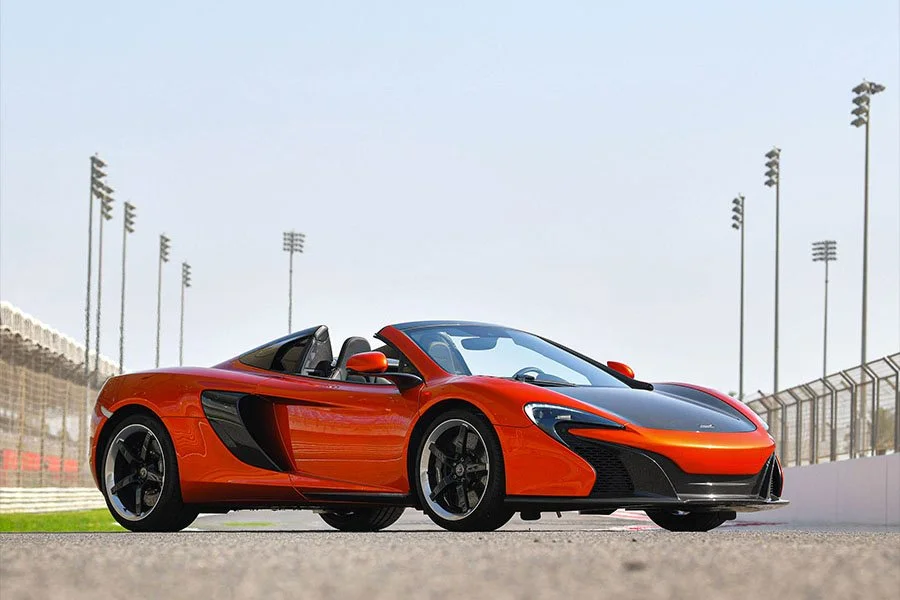
Following on from a batch of special 650S Coupes built to commemorate McLaren’s victory at the 1995 Le Mans 24 Hours, a run of 50 Spiders was created to celebrate the 50th anniversary of the…

When the McLaren management team of Ron Dennis, Mansour Ojjeh, Creighton Brown and Gordon Murray decided to forge ahead with their plan to construct the ultimate road car of its era…
Towards the end of 1981 season, McLaren boss Ron Dennis approached Porsche about the possibility of creating a turbocharged engine for his F1 team. With Renault and Ferrari having…

Chassis LM1 was the first of five consecutively numbered F1 LM production cars manufactured after McLaren’s prototype (chassis XP LM). Of the F1 LM quintet sold to customers, one went to…

Despite having been arguably the most consistent supporter of Prototype and GT racing during the second half of the 20th century, no other manufacture simultaneously had such a destructive impact…

Of the little over 3000 cars built as part of the MP4 12C line, perhaps none can boast a more sought after name to have in the log book than chassis ‘000132’. Delivered to seven-time F1…

The Sultan of Brunei, Hassanal Bolkiah, was already a serious buyer of high end cars while still Crown Prince of the Southeast Asian kingdom during the mid-to-late 1960s; during studies at the Royal…

Chassis 022 was the 21st McLaren F1 built and one of 26 completed in 1994. It was ordered by German banker, Thomas Bscher, and was originally painted Genesis Dark Blue. The interior was…

McLaren built nine examples of the first generation F1 GTR from 1995, all of which were raced bar one: chassis 09R. Although demand for the GTR from racing teams was strong, McLaren supplied…

Chassis LM4 was one of six F1s built to LM specification. This figure comprised the prototype (chasiss XP LM) which was retained by McLaren and five customer cars (chassis LM1 to LM5).

Following a successful couple of seasons for the 12C GT3 racing car, McLaren decided to produce a limited batch of GT Sprint variants for those customers that wanted a more focused track-only…

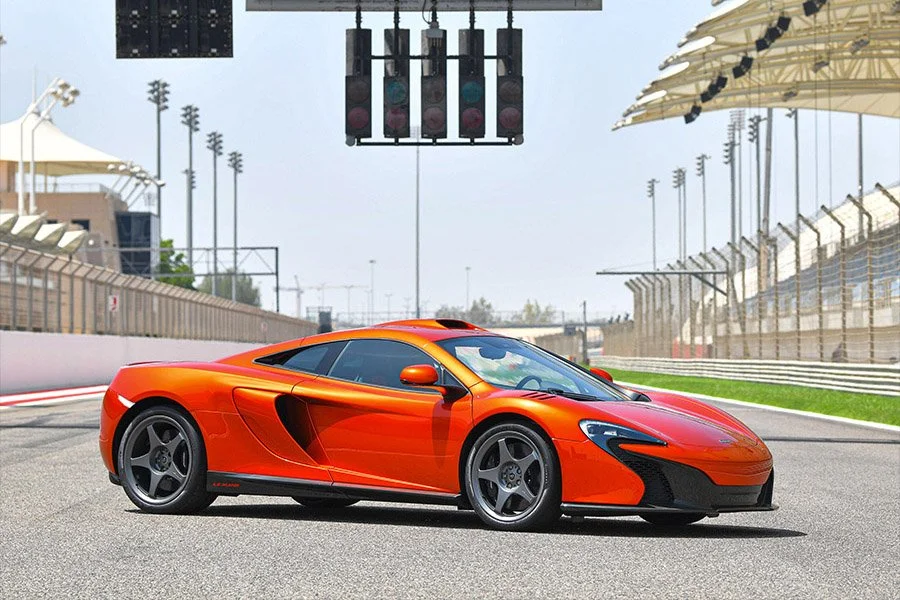
Twelve months after the critically acclaimed 650S had been unveiled as a replacement for the MP4 12C, McLaren presented an even more focused elaboration of the theme at Geneva in March 2015.

In April 1995, McLaren received an approach from Japanese businessman, Motokazu Sayama, who wanted his medical supplies company, Ueno Clinic, to be the title sponsor of an F1 GTR at that…

Although conceived purely for road use, the McLaren F1’s groundbreaking specification meant that, once converted into a top flight GT1 racing car, it had the measure of every other machine on…

Having finished second to Renault in the 2005 Formula 1 Constructors’ Championship with Kimi Raikkonen runner up in the Drivers’ standings and team-mate Juan Pablo Montoya fourth, McLaren…

Aside from the prototype F1 Clinic Model, chassis 060 was one of only two F1 production cars to be painted that colour (the other having been chassis 014 which was Titanium Yellow and delivered to