VIN: the works Aston Martin DB3 chassis 5
/ Ben Tyer
HISTORY OF CHASSIS DB3/5
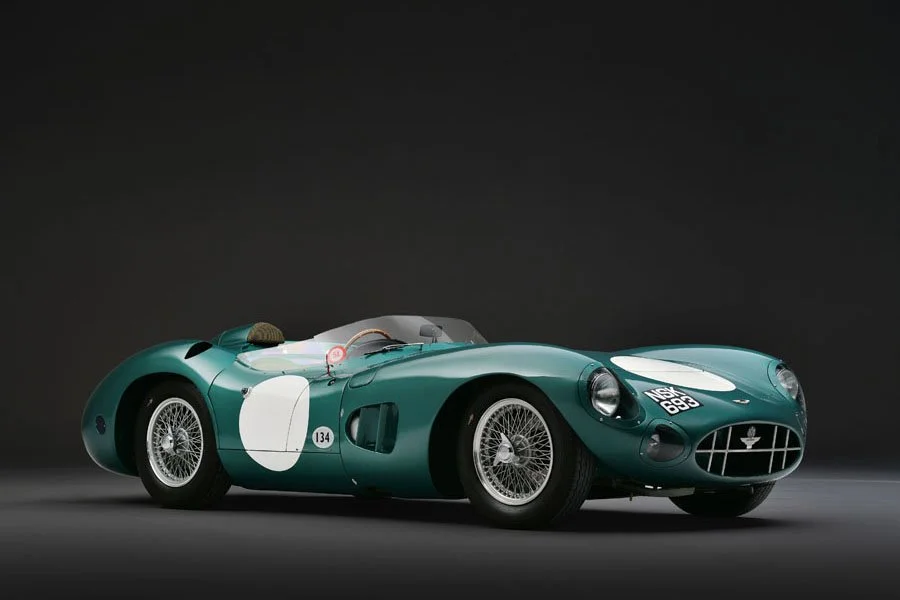
Of the five DB3s assembled for works use, none was relied upon more heavily than chassis 5.
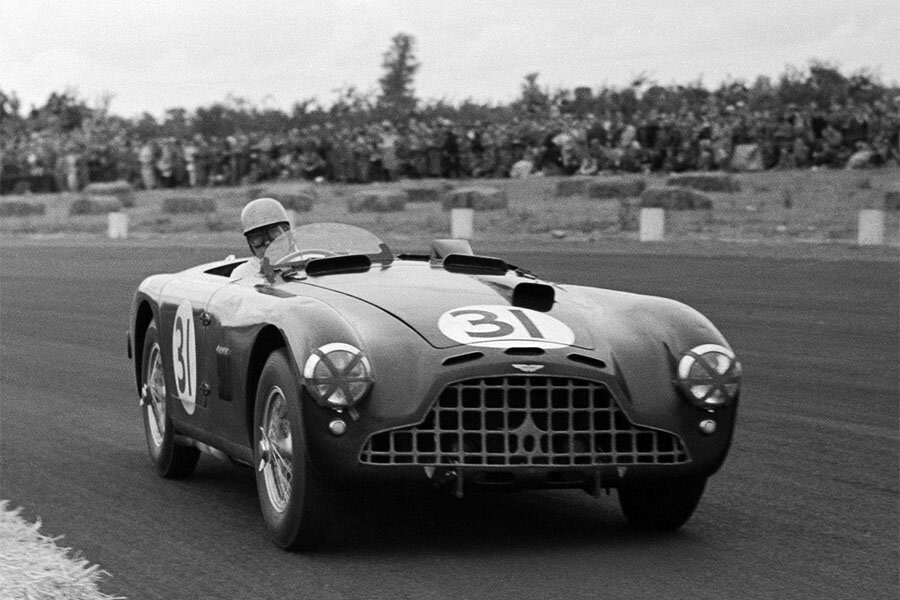
During Aston Martin’s 1952 campaign, chassis 5 was raced half a dozen times. It debuted in the hands of Lance Macklin at the Silverstone International meet where the DB3s famously finished first, second and third in class.
Appearances at the Monaco Grand Prix and Le Mans followed (both of which ended with a DNF).
Reg Parnell subsequently drove chassis 5 to a class win at the Boreham 100 mile International race. This followed a successful trip to the Jersey road races where Parnell took fourth overall and third in class.
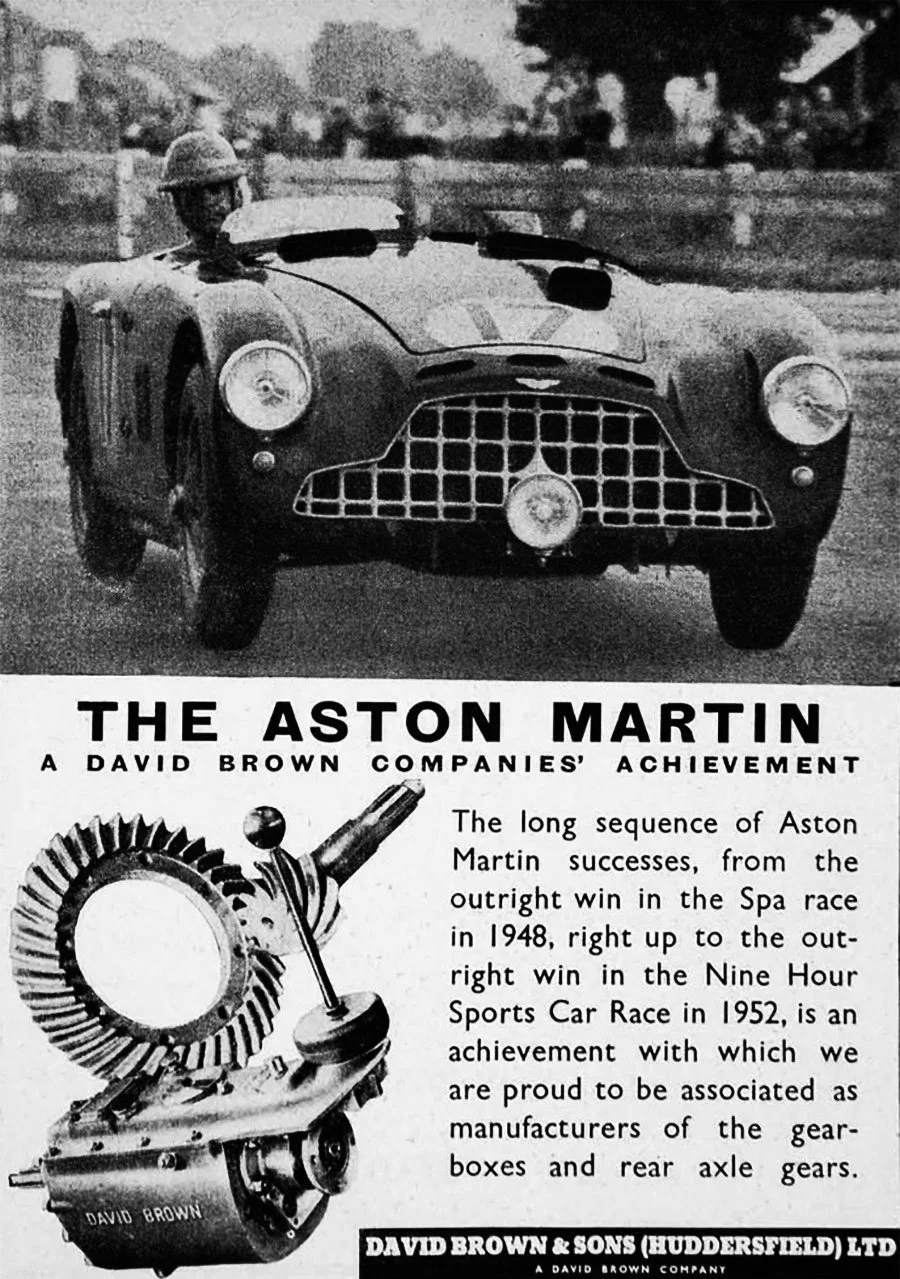
Perhaps the car’s finest hour was an exciting victory at the end-of-season Goodwood 9 Hours on August 16th 1952.
As some of the favourites fell by the wayside, Peter Collins and Pat Griffith stayed out of trouble to secure Aston Martin another highly marketable win.
As the much-improved DB3S wasn’t expected to arrive until the spring of 1953, Aston Martin prepared four of their existing DB3s for use during the early stage of the season.
Chassis 5 appeared twice more as a works car with both appearances coming as part of the inaugural World Sportscar Championship.
Reg Parnell and George Abecassis drove it to second overall and class victory at the Sebring 12 Hours which went down as the car’s other standout achievement.
It was then entered for Abecassis and Griffith to drive in the Mille Miglia. Unfortunately, this outing ended soon after the southerly Rome checkpoint when the steering broke and the car crashed out.
Chassis 5 was taken back to the factory where the damaged bodywork was removed.
The rolling chassis was purchased around twelve months later by Nigel Mann who had previously owned and raced a DB2 (LML/50/59) which he drove to a tenth place finish at Le Mans in 1951.
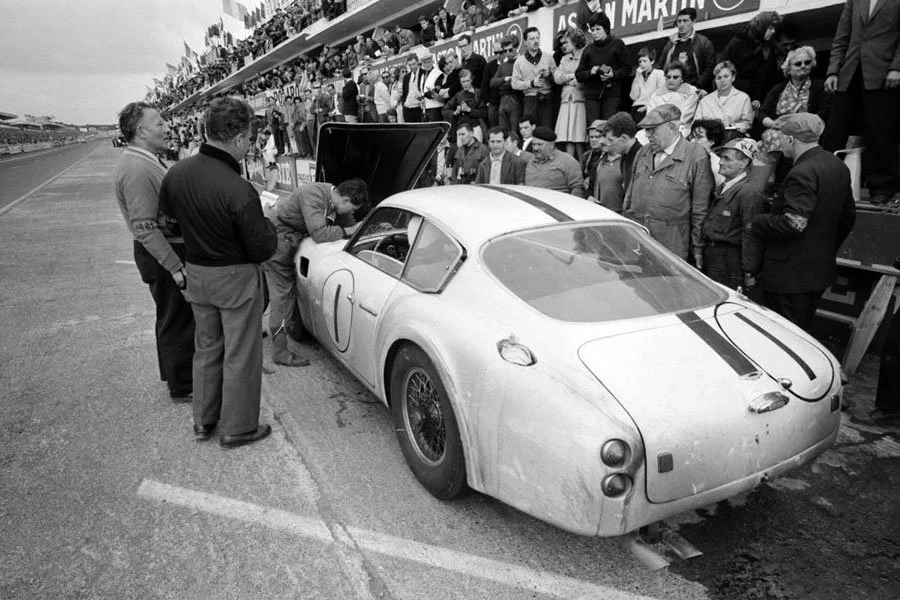
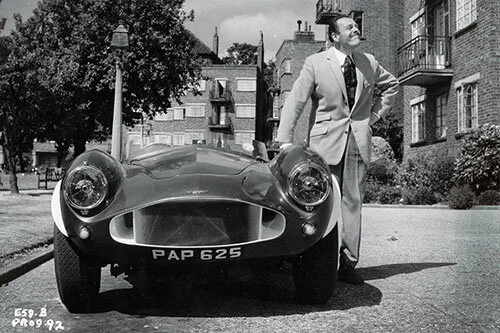
As a good customer, Mann was able to purchase the naked DB3. He quickly fitted a quirky Coupe body; the front end mimicked a DB3S while, from the cockpit back, it was Morgan-esque.
In this configuration, Mann raced chassis 5 three times in 1954. The car’s best result was sixth overall at the Hyeres 12 Hour road race in southern France.
For 1955, Mann preferred to use his new Alfa Romeo 1900 (he had previously raced an 8C alongside the DB2). Chassis 5 appeared just once that season. However, Mann had not skimped on its preparation. The existing Coupe body had been transformed into a Spider while the nose had been further modified in the latest DB3S style.
The car’s sole appearance in 1955 was at the Hyeres 12 Hours where it placed sixth overall for the second year in succession.
Thereafter, chassis 5 was retired from active duty.
The car was later road registered UPL 4 and exported to Hong Kong.
It re-emerged in the USA in 1979, by which time another Spider body had been fitted.
The car returned to the UK in 1990 and was restored to its original configuration.
Notable History
David Brown (Aston Martin Ltd.), Feltham
10/05/1952 IND Silverstone International (L. Macklin) 4th oa, 3rd S3.0 class (#31)
02/06/1952 IND Monaco GP (L. Macklin) DNF (#76)
15/06/1952 IND Le Mans 24 Hours (L. Macklin / P. Collins) DNF (#25)
10/07/1952 IND Jersey International Road Race, St. Helier (R. Parnell) 4th oa, 3rd S2.5+ class (#26)
02/08/1952 IND Boreham 100 mile International (R. Parnell) 3rd oa, 1st S3.0 class (#31)
16/08/1952 IND Goodwood 9 Hours (P. Collins / P. Griffith) 1st oa, 1st S3.0 class (#17)
08/03/1953 WSC Sebring 12 Hours (R. Parnell / G. Abecassis) 2nd oa, 1st S3.0 class (#30)
26/04/1953 WSC Mille Miglia (G. Abecassis / P. Griffith) DNF (#612)
Damaged body removed after 1965 Mille Miglia crash
Sold to Nigel Mann, Sussex
Fitted with Coupe bodywork
06/06/1954 IND Hyeres 12 Hours (N. Mann / C. Brackenbury) 6th oa, 2nd S2.0+ class (#3)
22/08/1954 IND La Baule (N. Mann) 14th oa, 6th S2.0+ class (#??)
25/09/1954 IND Goodwood International Unlimited Sports (N. Mann) ran (#76)
Body modified to Spider configuration
29/05/1955 IND Hyeres 12 Hours (N. Mann / M. Morris-Goodall) 6th oa, 5th S2.0+ class (#22)
Later road registered UPL 4
Text copyright: Supercar Nostalgia
Photo copyright: Aston Martin - https://www.astonmartin.com
Aston Martin launched the DB4 in late 1958 to replace the ageing DB MkIII which could trace its origins back to 1949. In addition to handsome new Touring of Milan coachwork, the DB4 ushered in a…
Although Aston Martin had not planned to make an open top version of its range-topping V8 Vantage, the early 1980s began to see a handful of special order cars built to such a configuration…
When Ferrari returned to the front-engined Gran Turismo market with the critically-acclaimed 550 Maranello in 1996, Aston Martin suddenly found itself with a big budget rival in a sector it had ruled…
Unveiled at the Paris Motor Show in October 1965 as the successor to Aston Martin’s iconic DB5, the DB6 most notably offered a more spacious cockpit that was the result of switching to a longer…
Although prior years had seen some spectacular attempts to bring F1 performance to the street, arguably nothing has come closer to achieving that feat than Aston Martin’s radical Valkyrie.
In addition to Kensington’s Radford coachworks, FLM Panelcraft based two miles across London in Battersea also offered a Shooting Break conversion for Aston Martin’s DB6. In a similar vein to…
Having seen how quickly Ferrari shifted over 200 examples of its premium priced 288 GTO, Aston Martin decided to get in on the act with their own low volume special: a short wheelbase Zagato…
During the late 1980s, nothing in class could match Aston Martin’s formidable X-pack-equipped V8 Vantage. Whereas the likes of Ferrari and Lamborghini only offered models with north of 400bhp in…
During the 1990s, Aston Martin produced a litany of low volume specials for VIP customers, many of which still remain little known today. One such model is the spectacular Vantage V550 / V600…
Chassis 30036 was one of 37 Aston Martin V8 Volantes built with coachwork by Zagato and one of nine completed during the final year of production: 1989. It was configured in Litchfield Black with…
The 1970s was a tumultuous time for Aston Martin which, owing to the effects of multiple ownership changes, poor trading conditions and labour reforms, seemed to lurch from one crisis to another.
Chassis 30015 was one of 37 Aston Martin V8 Volantes built with coachwork by Zagato and one of 27 completed in 1988. It was configured in Vulcan Black with Black upholstery, right-hand drive and…
Chassis 20021 was one of three V8 Vantage Zagatos supplied new to the Brunei Royal Family, the others having been chassis 20023 (a manual 1986 example finished in Lightning Silver with Blue…
Twelve months after the base DB4 had made its highly anticipated debut, Aston Martin displayed a high performance, short wheelbase version generally supplied without rear seats aimed at those…
Three years after the original V8 Vantage had been launched (the V540), Aston Martin introduced an updated version variously known as the V580 and Oscar India. Most significantly, the V580…
Having been announced at the Geneva Motor Show in March 2002, Aston Martin’s Zagato-bodied DB7 V12 Vantage (officially dubbed the DB7 Zagato) was subsequently given a public launch at the…
It’s no secret that here at Supercar Nostalgia we think, of all the high end machinery produced this century, the Aston Martin Valkyrie is far and away the most impressive. In addition to a…
Aston Martin built 1567 examples of the much-loved DB6 between October 1965 and November 1970 of which just 240 were the updated Mk2 variant. Introduced in July 1969, the Mk2 was a…
Although Aston Martin’s Virage was clearly an accomplished Grand Tourer, some customers wanted a machine with more punch than the standard car offered. From January 1992, those that desired…
Of all the ultra high end supercars produced in recent years, our favourite at Supercar Nostalgia is the Adrian Newey-designed Aston Martin Valkyrie. In addition to a beauty unmatched by its…
To commemorate the 40th anniversary of Aston Martin’s victory at the 1959 Le Mans 24 Hours when the DBR1s of Carroll Shelby / Roy Salvadori and Maurice Trintignant / Paul Frere finished first and…
Of the myriad classic-inspired low volume specials produced by Europe’s most esteemed manufacturers during the last few years, our favourite is the epic Aston Martin Valour. In a similar…
With challenging economic conditions having dominated much of the 1970s, the decade that followed ushered in a new sense of optimism that was perfectly reflected by booming sales for high…
When it came to the ultimate sporty open-topped Grand Tourer during the 1980s, nothing could match Aston Martin’s handsome line of V8 Volantes which offered Rolls-Royce build quality with…
Aston Martin created the DB3S to replace the DB3 which had been the firm’s first purpose-built sports racing car of the David Brown era. The new model featured an improved chassis, uprated…
Following a successful 1980s revival of the Zagato partnership last seen in the early 1960s, poor economic conditions for much of the 1990s meant only standard-bodied Aston Martins were offered…
One year after the lightened, shortened and mechanically uprated DB4 GT had made its salon debut, Aston Martin released an even more potent iteration. Unveiled at the London Motor Show in October…
Chassis 20057 was one of seven Aston Martin V8 Vantage Zagatos completed in Javelin Grey of which five were configured with Black leather upholstery. From this quintet, three were left-hand…
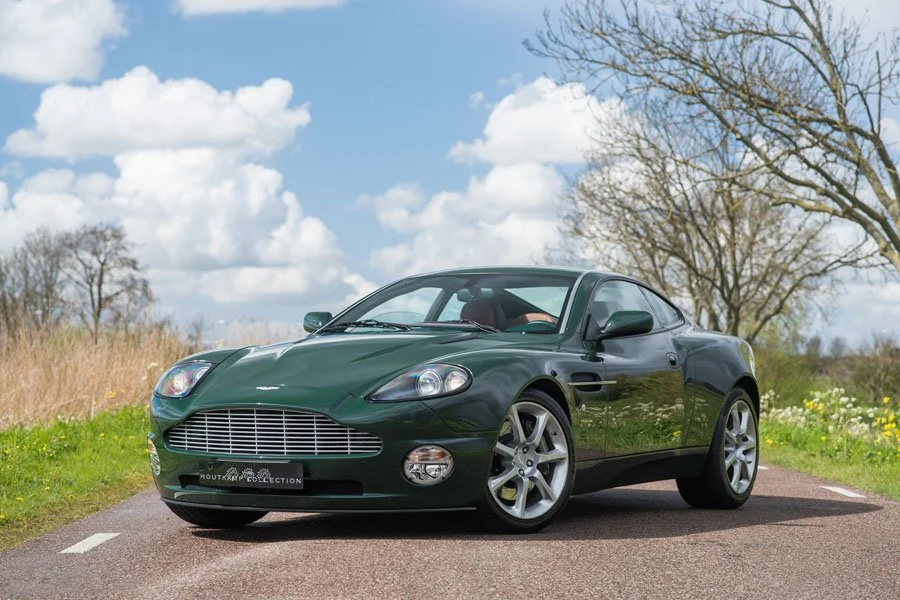
At the Paris Motor Show in September 2004 Aston Martin unveiled an enhanced version of the much-admired V12 Vanquish launched three-and-a-half years earlier. Most notably equipped with…
1954’s Appendix J regulations added a new Grand Touring class to motor racing’s existing regularity framework. Qualification required a manufacturer build at least 100 base cars during a twelve month…