One to Buy: Championship-Winning 1973 / 1975 Ford Capri RS2600 / RS3100 Gr.2
/ Ben Tyer
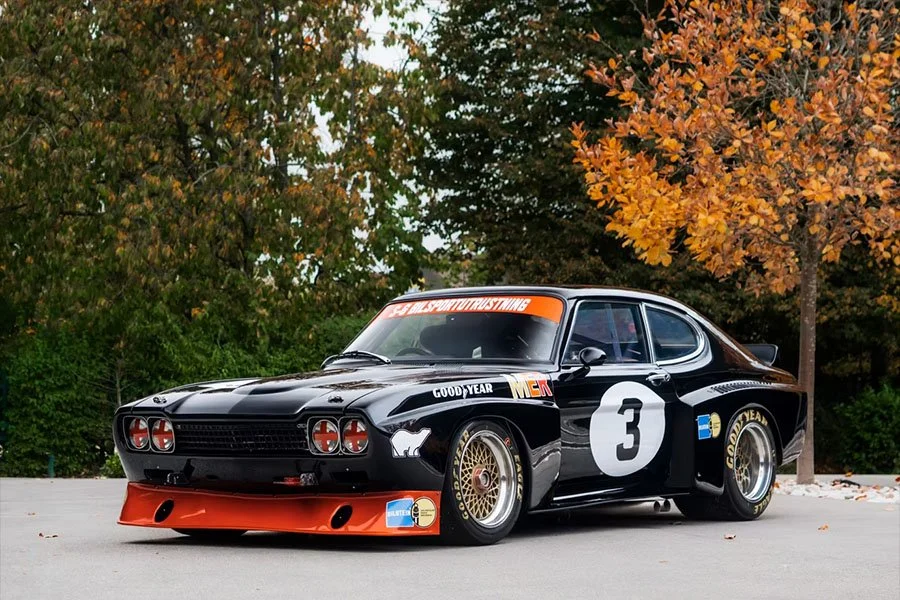
When BMW homologated its radical ‘Batmobile’ aero kit for the 3.0 CSL mid way through 1973, the balance of power in Group 2 Touring Car racing swung inexorably towards the Munich manufacturer. Prior to this, Ford’s Capri RS2600 had been the premier Division 3 class challenger.
Having dominated the 1971 and ‘72 seasons, Ford’s German operation which ran the works Capris from Cologne was reluctant to let a domestic rival steal its thunder. In order to regain its position atop the international Touring Car scene, a batch of formidable RS3100 Capris were commissioned from the Blue Oval’s Halewood factory in England to pave the way for a Batmobile challenger.
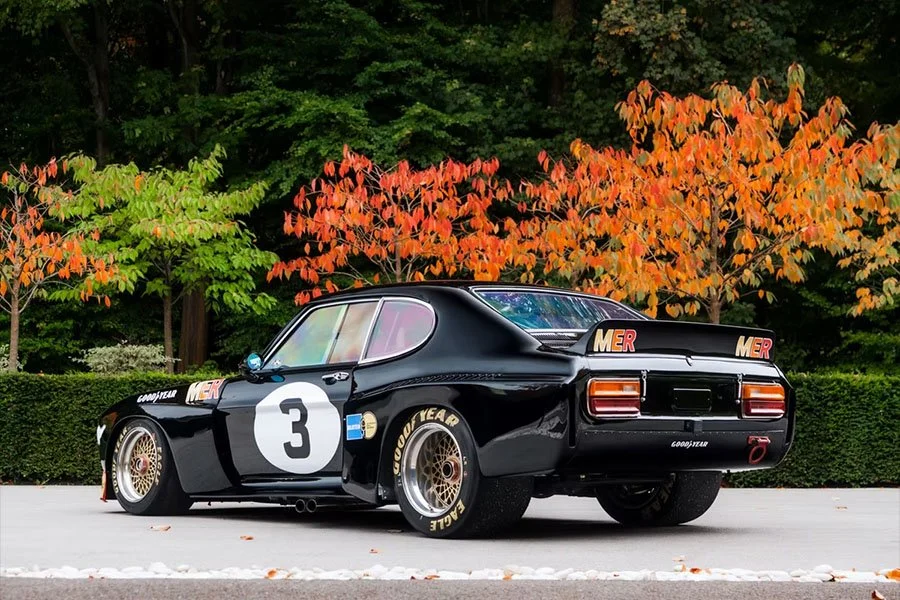
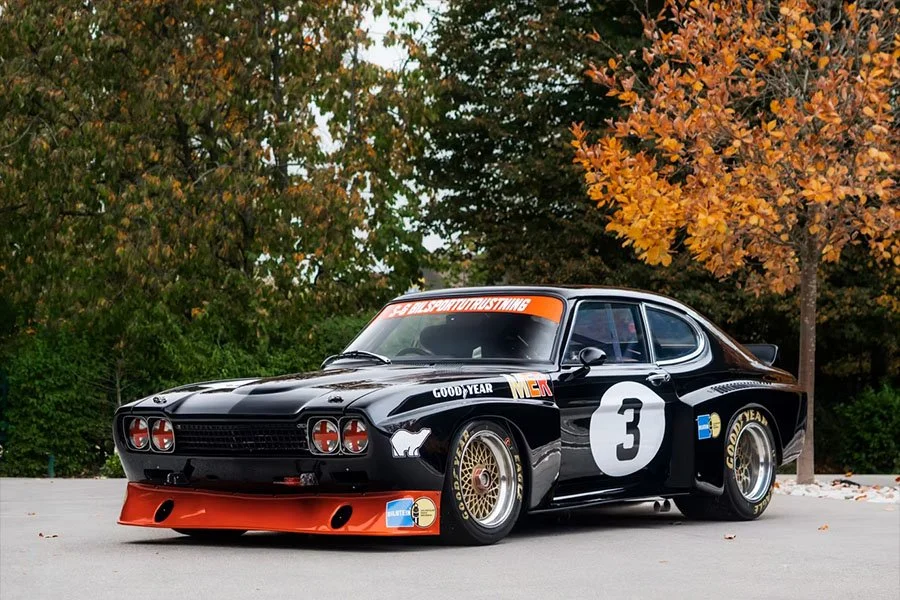
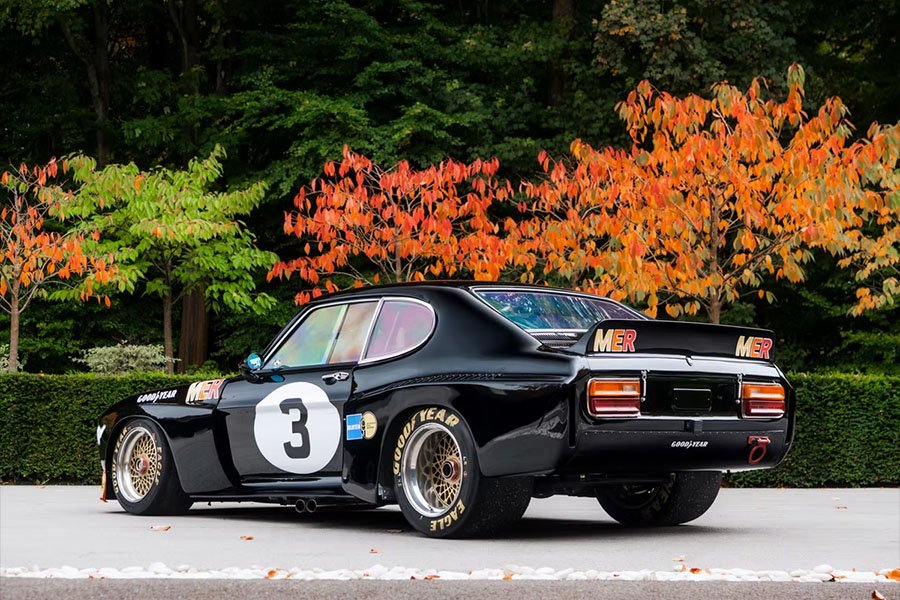
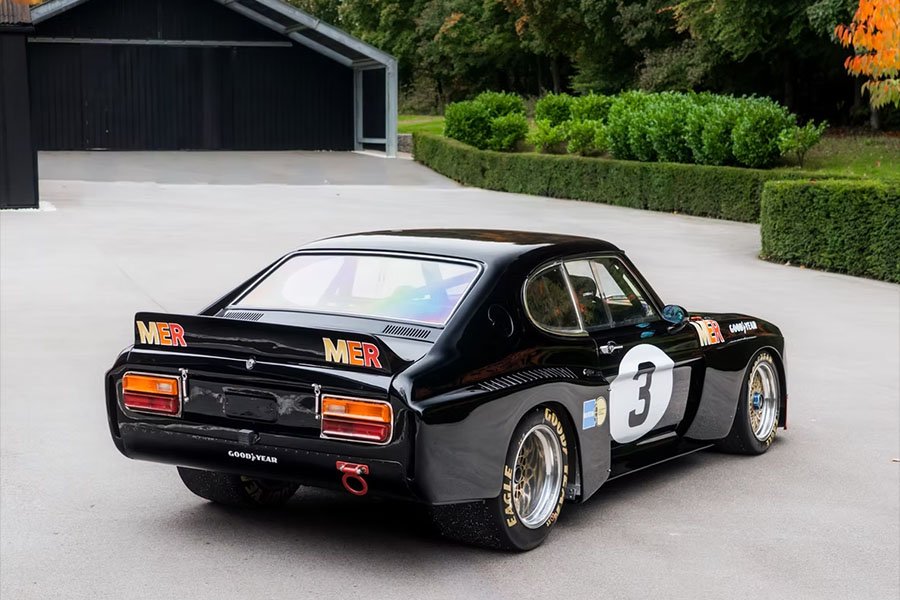
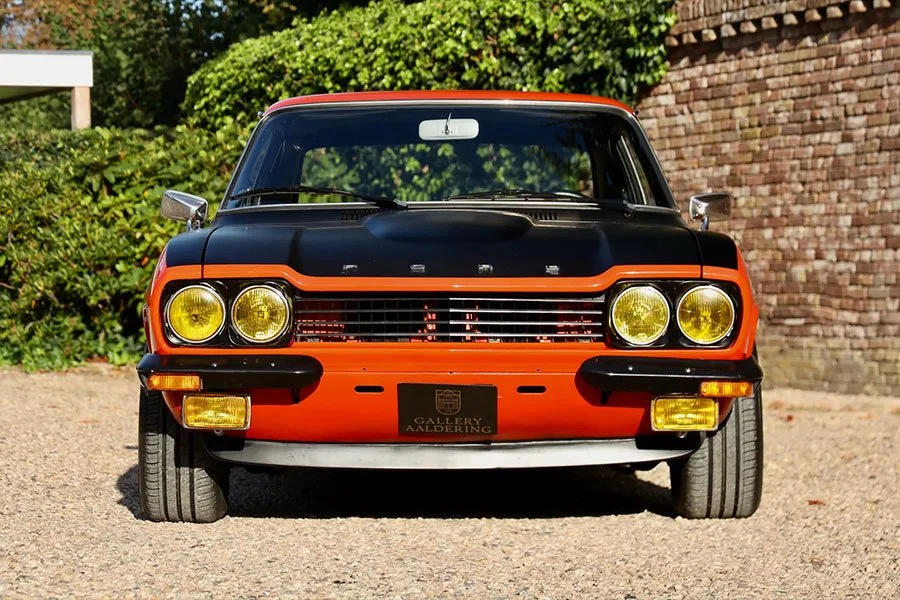
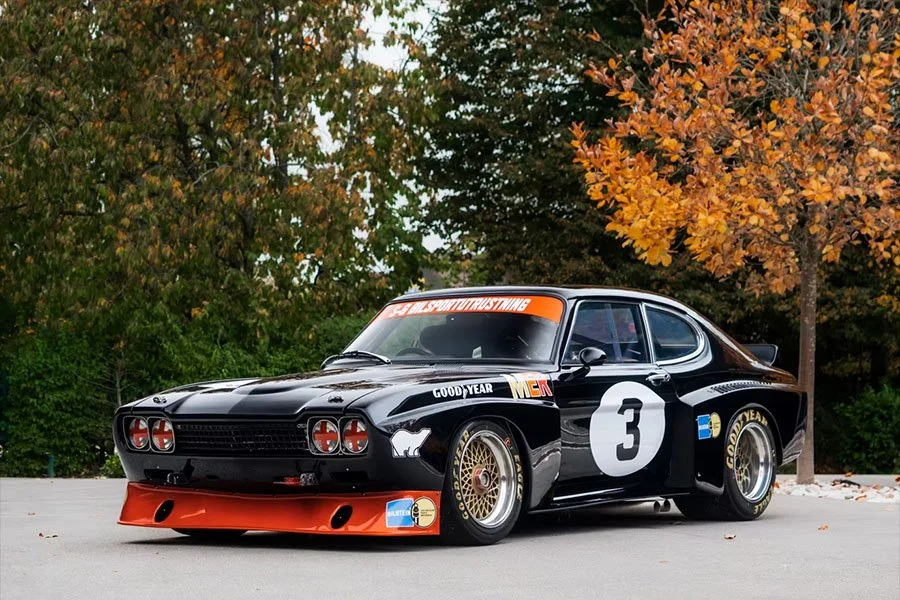
As the ultimate iteration of the Mk1 Capri, the RS3100 has gone down in folklore as a true Ford icon, especially when it comes to genuine factory-supported racecars. Although rarely seen, especially with unquestionable provenance and authenticity, just such a machine is currently residing at the Duncan Hamilton ROFGO showroom in Micheldever, Hampshire.
Chassis BFC 002 began its career as a works Group 2 RS2600 assembled by Broadspeed to 1973 ‘Cologne’ specification on behalf of the Ford Motor Company. Upon completion, it was dispatched to Ford of Belgium with whom it would appear in the green and yellow colours of title sponsor, BP.
Aside from two DNFs, Claude Bourgoignie drove chassis BFC 002 either to victory or podium placings in every round of the 1973 Belgian Touring Car Championship. Thanks to a brace of wins and a trio of other top three finishes, Bourgoignie was crowned Belgian over 1300cc Group 2 Champion.
For the 1974 campaign, chassis BFC 002 was loaned out to Bosse Emanuelsson (better known as Bo Emma) who, with factory support and STP backing, won that year’s Swedish Touring Car Championship.
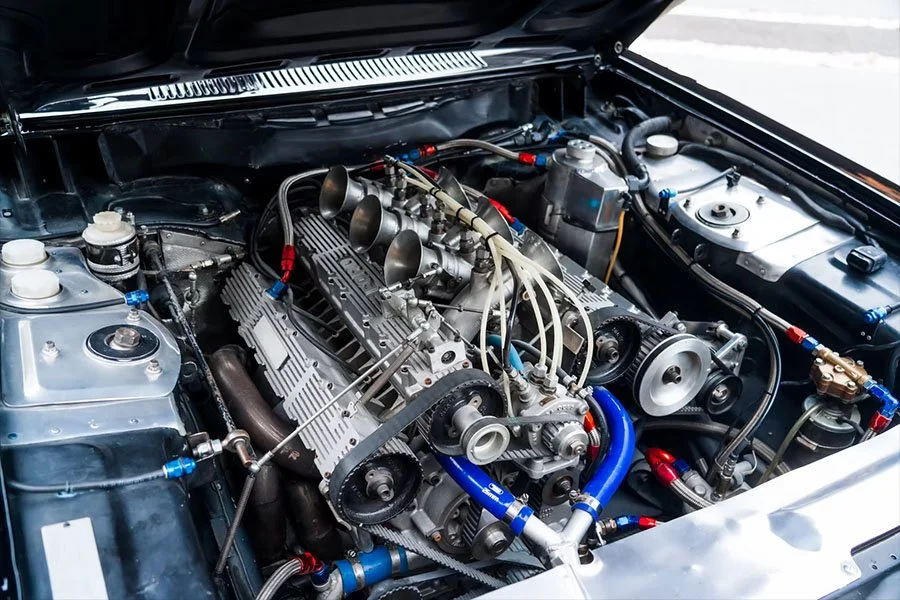
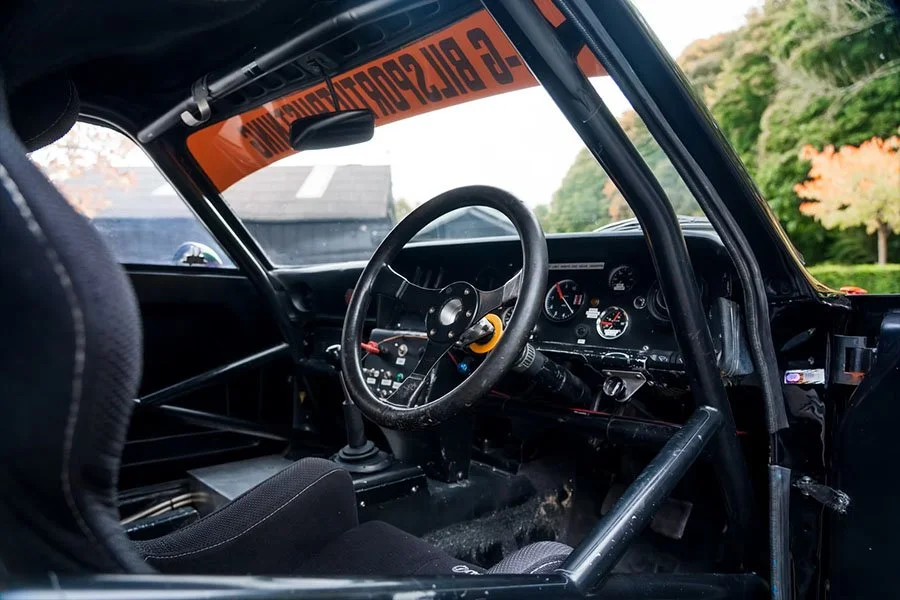
Over the winter of 1974-1975, the Capri made its way to Ford’s motorsport department in Cologne and underwent conversion to works RS3100 trim. The long list of enhancements included installation of the latest fuel-injected 475bhp Cosworth GAA V6 engine plus transmission, aero, cooling, body, wheel and tyre upgrades.
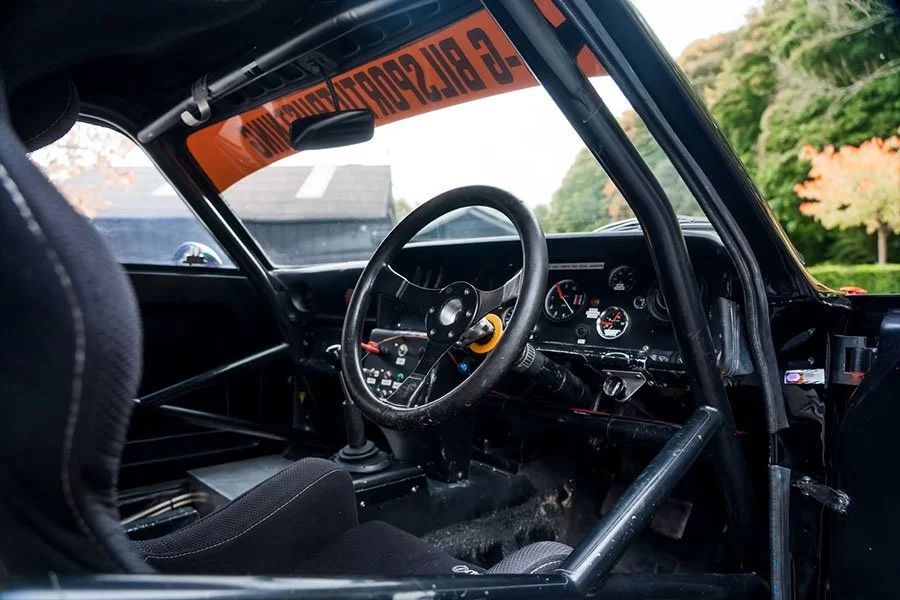
Uniquely, chassis BFC 002 retained its right-hand-drive configuration unlike all the other RS3100 works cars which were left-hand drive.
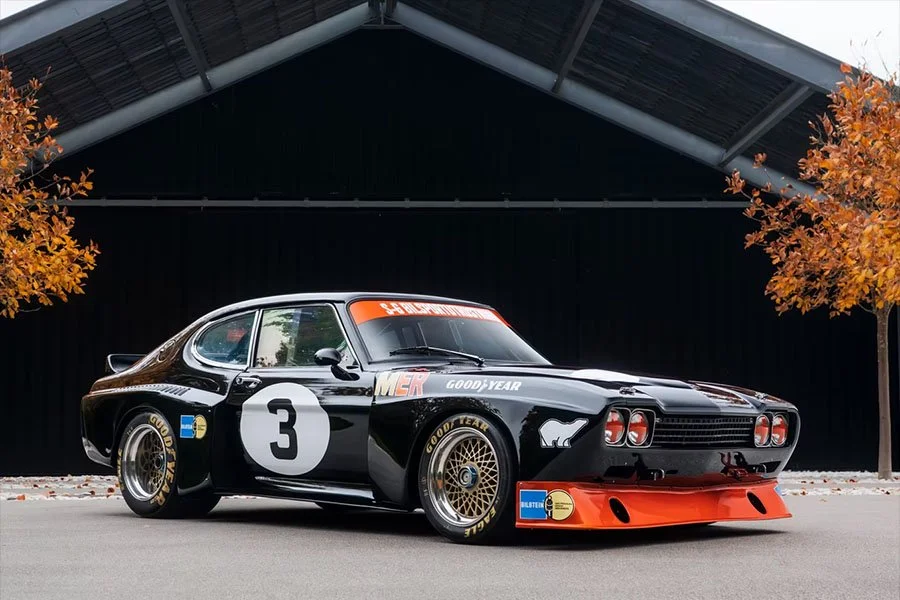
The now black BFC 002 returned to Bosse Emanuelsson and was quickly back to its winning ways during 1975.
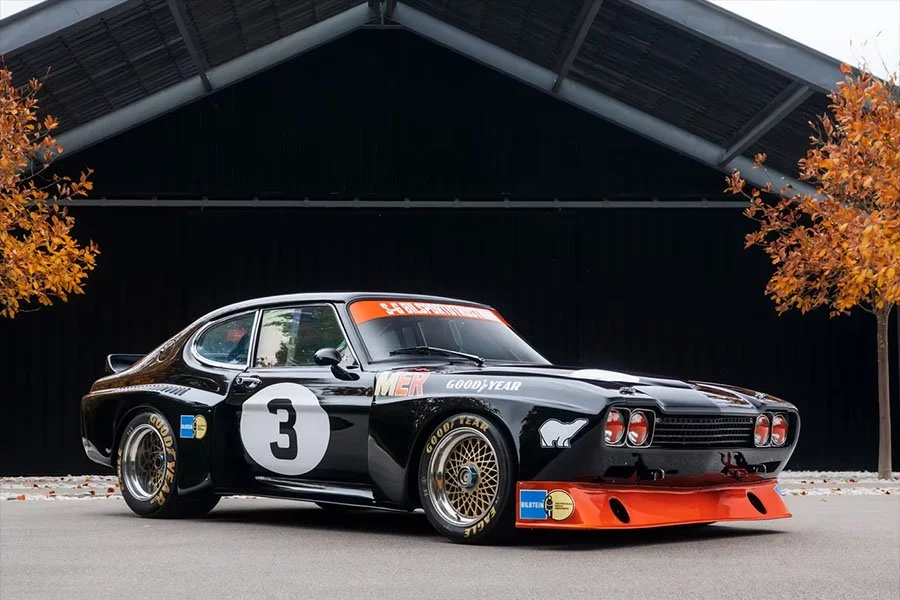
More recently, this hugely successful example of Ford’s revered Capri RS3100 has been beautifully restored to 1975 trim.
For more information visit the Duncan Hamilton ROFGO website at: https://www.dhrofgo.com/
Having created one of the 1980’s wildest homologation specials with the Sierra RS Cosworth, Ford took a similar approach when it came to a MkV Escort conceived for top flight rallying. Unveiled in…
Over the course of five weeks during April and May of 1970, members of the Royal Automobile Club and Motor Sports Association in the UK organised a high profile marathon that travelled a 16,000…
To replace the normally aspirated RS1600i which had failed to set the world alight in Group A competition, Ford created its first forced induction Escort for public consumption: the RS Turbo.
In September 1965, Ford signed an agreement with Hertz Rental to supply 1000 special copies of the Shelby Mustang GT350. The resultant GT350H would be available to Hertz Sports Club members for…
Launched in August 1965 for the 1966 model year, the Bronco was conceived as Ford’s offering for a Sport Utility Vehicle market that was rapidly beginning to gain popularity. Using a box-section body…
To pave the way for an attack on the SCCA B Production Championship, Ford commissioned Shelby to create the GT350 Mustang, at least 100 of which would have to be manufactured in order to…
Like most manufacturers that created Group B homologation specials, Ford found it very difficult to sell the RS200 when new. Therefore, to broaden its appeal, between 1987 and 1989 (after…
Famously, Ford’s attempt to create a softer, more commercially appealing iteration of the GT40 proved a commercial flop; having hoped to shift a run of at least 20 units, just seven copies of…
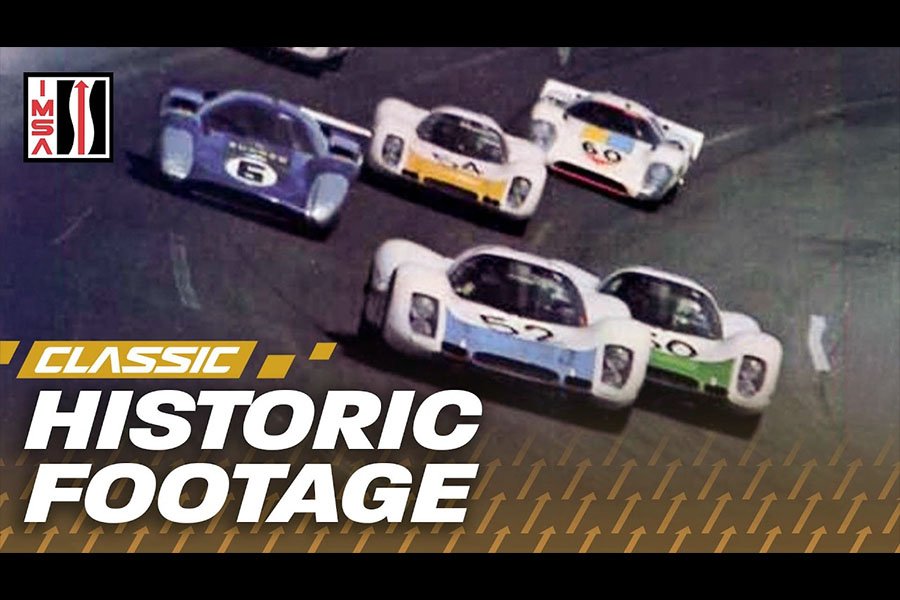
Relive one of the most dramatic chapters in Daytona endurance racing with this classic film from the 1969 24 Hours of Daytona. Porsche was widely expected to dominate again, but in a stunning turn of events the Sunoco-liveried Lola T70 Mk.3B GT Chevrolet took overall victory.
When BMW homologated its radical ‘Batmobile’ aero kit for the 3.0 CSL mid way through 1973, the balance of power in Group 2 Touring Car racing swung inexorably towards the Munich manufacturer.
Unlike some of its other iconic performance models such as the Mustang and RS line of European specials which were more or less ever present, Ford didn’t get serious about building a replacement…
Having thundered around Le Mans with a pair of experimental GT40s running enormous seven-litre engines in 1965, Ford became convinced big block motors were the route to success at ultra high…
In 1962, the North American Automobile Manufacturers Association lifted its ban on US car builders having any motor sport involvement. Imposed during 1957 as a response to the 1955 Le Mans…
During the last three decades of the 20th century, the closest Ford came to creating a successor to its four-time Le Mans-winning GT of the 1960s was the RS200: a purpose-built rally special…
Ford’s Total Performance programme of the 1960s spawned some legendary machinery of which the four-time Le Mans winning GT40 is particularly revered. The company’s engines were also…
Ford wasn’t able to create the all-wheel drive Sierra Cosworth that it wanted, something in the Audi Quattro mould, until the MT75 gearbox came on stream in late 1988. Having initially used the…
In October 1966, John Wyer was visiting New York on business when he took a call from Gulf Oil Executive Vice President, Grady Davis. The two men had met for the first time at the Sebring 12 Hours…
Although Ford dealers had expressed concern about their ability to sell the 5000 Sierra RS Cosworths required to get the car homologated into the FIA’s Group A category, customers couldn’t…
The newly formed BMW Motorsport operation with its big budget CSL arrived on the 1973 Touring Car scene with one simple aim: to de-throne the works Ford squad that had reined supreme with its…
When the World Rally Championship switched from Group A to WRC regulations for the 1997 season, one of the older generation cars to get a new lease of life was Ford’s Escort RS Cosworth. In…
If you didn’t get enough from our recent article on the Capri Mk3 Werks Turbo, here’s a bit more Zakspeed Ford goodness: Jorg van Ommen’s iconic Denim-backed Group 4 Mk2 Escort from the…
In light of the Mustang’s massive commercial success, Ford of Europe decided to create a scaled down version better suited to the Old World. The resultant Capri was launched at the Brussels…
Chassis P/1018 was one of two Mk1 GT40s built to race trim for promotional use. It was commissioned by Ford on behalf of Carroll Shelby whose firm had undertaken much development…
After a 34 year production run that had seen several million cars built across six different generations, Ford elected to kill off its eponymous Escort in favour of an all-new model: the Focus.
Having replaced the sixth generation Escort with the Focus in 1998, Ford made its customers wait until late 2002 until deliveries of an RS-badged version began. Very much inspired by Ford’s World…
Famously, in order to secure the fabled YBB motor for its Sierra RS Cosworth, Ford had to place an order for 15,000 engines which was three times the number needed to qualify for Group A…
Of the many collectable Fords heading to auction this spring, undoubtedly one of the most interesting is a Sierra RS Cosworth which will be going under the hammer during Iconic Auctioneers’…
During the GT40’s early life as a true Prototype-class racing car, Ford built a small batch of Roadsters for use in some of 1965’s biggest races. One such example was chassis GT/109 which is heading to…
Having long since ranked among the elite manufacturers in top flight rallying thanks primarily to high performance iterations of the Mk1 and Mk2 Escort, Ford’s European arm took a sabbatical after…
After the enormously successful GT programme that ultimately yielded four back-to-back Le Mans wins and a plethora of other significant victories, Ford was generally happy to offer its customers…