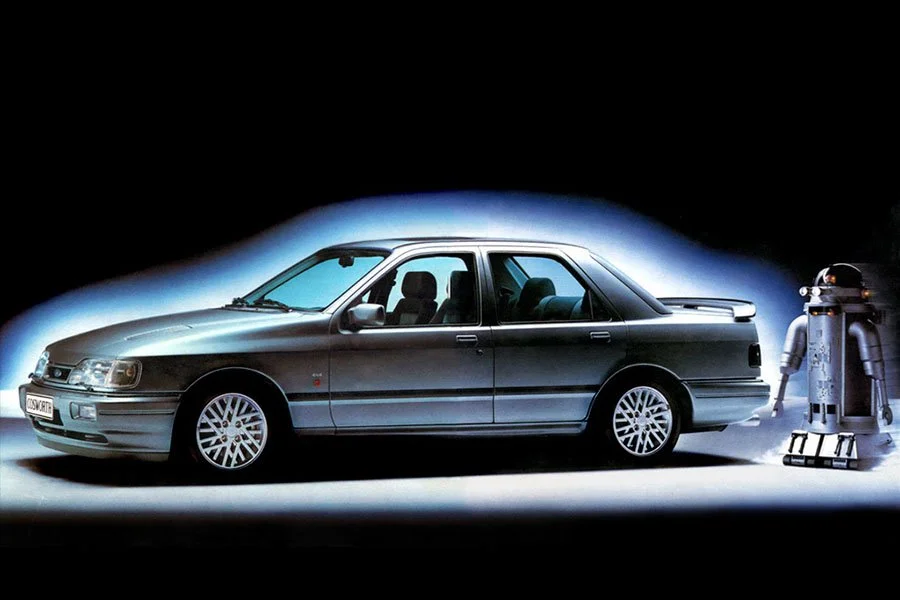
Cossie Quattro - a Historical & Technical Appraisal of the Ford Sierra Sapphire Cosworth 4x4
/
BACKGROUND
Although Ford dealers had expressed concern about their ability to sell the 5000 Sierra RS Cosworths required to get the car homologated into the FIA’s Group A category, customers couldn’t get enough of the radical new model and it quickly became something of a cultural phenomenon.
On track, the Sierra RS Cosworth also did exactly what Ford hoped, becoming the premier Division 3 class challenger in Group A and winning Touring Car championships in Britain, Germany, Japan and Australia.
The only downside to having commissioned the Sierra RS Cosworth was that Ford’s engine builder, Cosworth Engineering, had required an order of 15,000 motors to proceed rather than just the 5000 units Ford needed. Nevertheless, Ford agreed and, after the original run of three-door Sierra RS Cosworth hatchbacks had been completed, a four-door saloon version based on the Sierra Sapphire was introduced.
Sales-wise, this more discretely appointed Cossie proved an ever bigger hit with over 10,000 examples sold between 1988 and 1990.
Meanwhile, a four-wheel drive revolution had been gathering pace as practically every mainstream manufacturer sought to integrate an all-wheel drive system into their high performance offerings as per the trailblazing Audi Quattro.
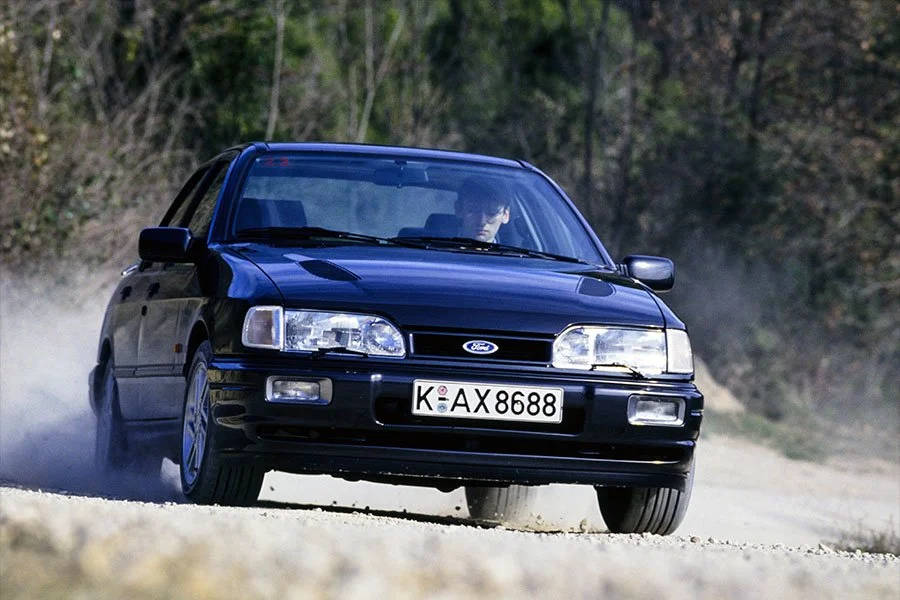
Ford themselves had introduced a four-wheel drive Sierra back in March 1985 when the XR4x4 was launched at the Geneva Motor Show. As expected, it proved very popular and by 1990 over 23,500 had been sold.
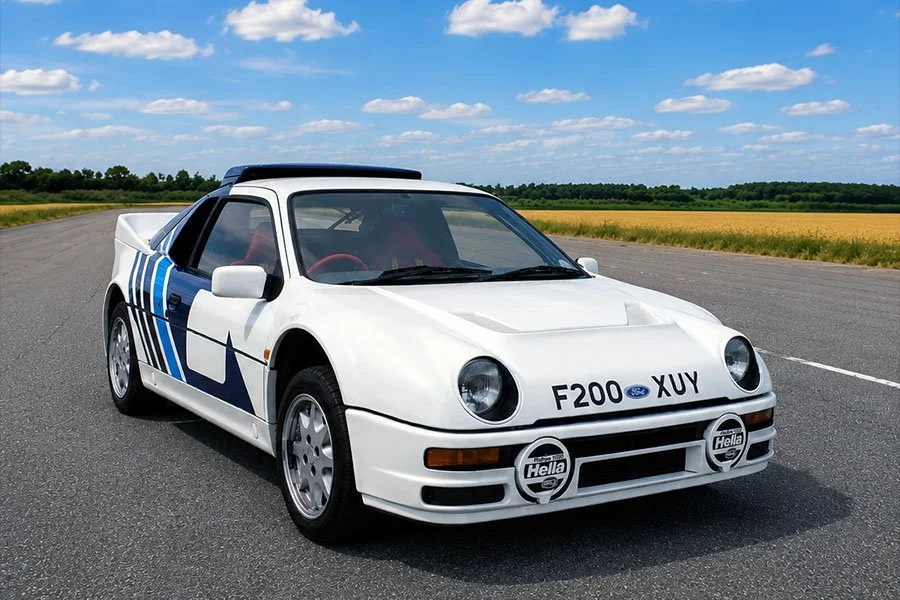
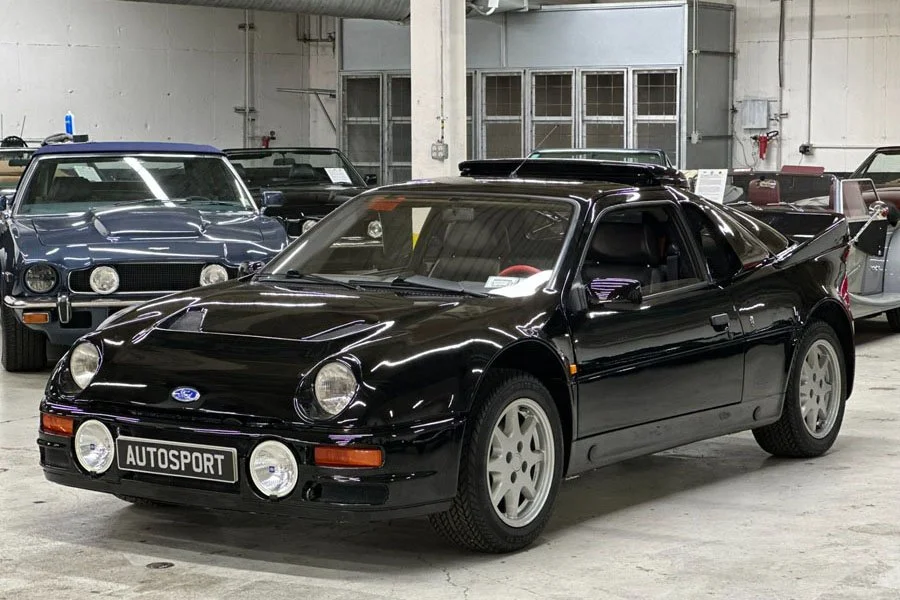
Far more extreme had been Ford’s other all-wheel drive creation, the RS200, which was conceived from the ground up to be the most effective rally weapon on earth. Designed to exploit Group B regulations that required just 200 base cars to be built in order to achieve homologation, the RS200’s competition career was unfortunately cut short when Ford decided to pull out of Group B rallying following a series of horrific accidents.
Executives at Ford had wanted to incorporate a four-wheel drive transmission into the highly marketable Sierra RS Cosworth platform as far back as 1987. However, the lack of a suitable gearbox meant the idea had to temporarily be put on ice; the Type 9 ‘box used by the XR4x4 was simply not capable of handling the massive torque loads expected while the RS200’s ultra specialised Hewland unit was not suited for general sale.
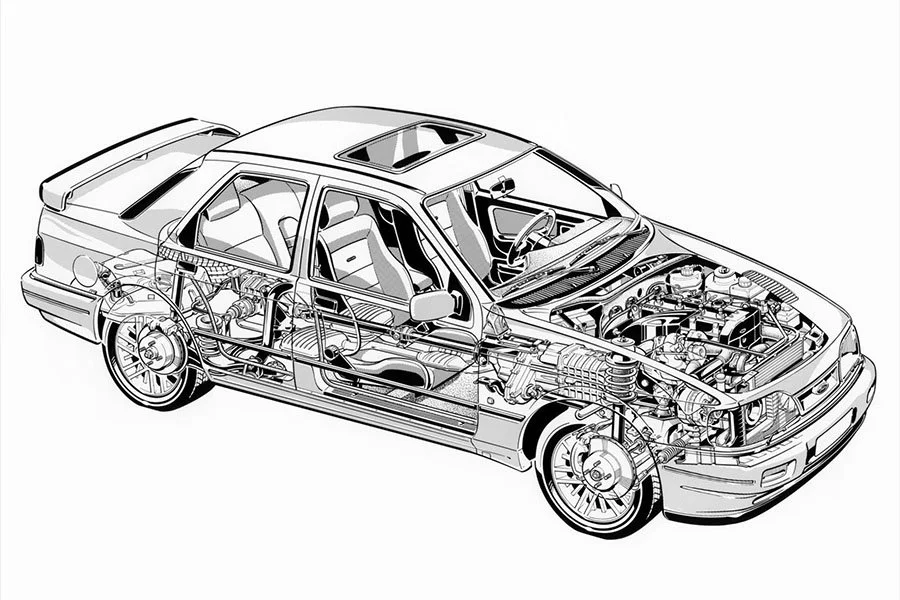
The option to combine a Cosworth-engined Sierra with four-wheel drive finally became a reality in late 1988 when the Ford MT75 gearbox came on stream. Suitable for both high output rear and four-wheel drive applications, the MT75 (Manual Transmission with 75mm gear centre spacing) was initially used in Ford’s more powerful Sierra and Granada variants as the finishing touches were applied to an all-wheel drive Cossie: the Sierra Sapphire Cosworth 4x4.
Unveiled to the press in January 1990, assembly of the new car once again took place at Ford’s Genk factory in Belgium. Customer deliveries began in April 1990.
In conjunction, Ford also planned to take the new model rallying with an official WRC campaign and to that end it was homologated into Group A following the completion of the first 5000 examples on August 2nd 1990.
CHASSIS
The Sierra Sapphire Cosworth 4x4 was based around a galvanised steel bodyshell with a 2608mm wheelbase. Once again, a 60-litre fuel tank was located under the trunk floor.
Suspension was via MacPherson struts with lower control arms at the front and semi-trailing arms at the rear.
Like its predecessor, these latest Cosworth variants came with stiffer coil springs, firmer dampers and thicker anti-roll bars than regular Sierra Sapphires. Hub-carrying spindles and wheel offsets were also different to the rest of the range as was the quicker than normal power-assisted steering rack.
Vented brakes discs were fitted all round along with a re-tuned electronic anti-lock brake system. Unlike the rear-drive Sapphire Cosworth, the 4x4 version used 278mm diameter as opposed to 283mm diameter front discs with single-piston floating calipers from the Scorpio instead of the four-piston type used before. At the rear, the existing 273mm diameter discs with single-piston floating calipers were carried over.
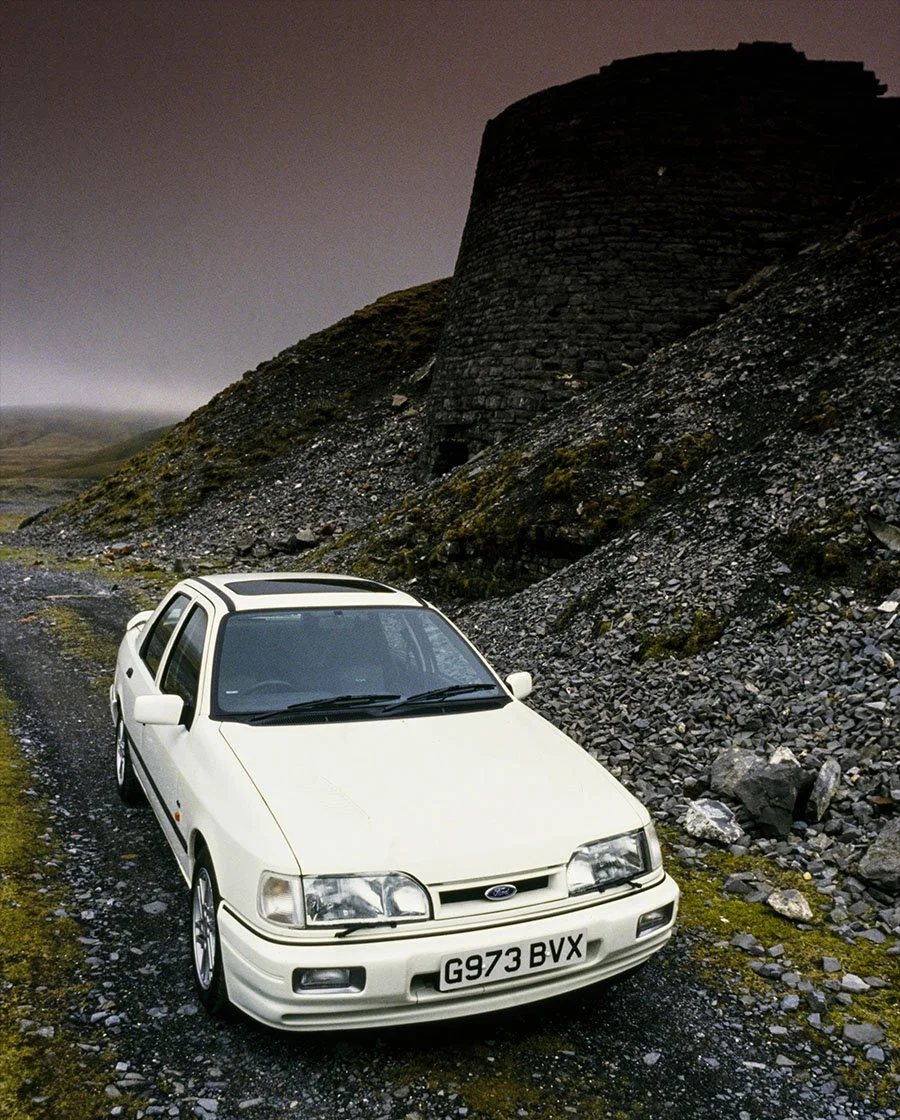
Wheels were the same Ford cross-spoke 7 x 15 alloys, but they were now shod with Bridgestone ER90 205/50 ZR 15 tyres as opposed to Dunlop D40s.
ENGINE / TRANSMISSION
The original YBB engine developed by Cosworth for the Group A Sierra programme had featured a special light alloy head with two belt-driven overhead camshafts operating 16 valves (eight 35mm diameter inlet and eight 31mm exhaust). Mahle pistons with forged steel connecting rods were also fitted together with a forged steel crankshaft, a special oil pump, a custom cast aluminium sump, a free-flow exhaust, a Garrett AiResearch T03B turbocharger (that ran at up to 0.7 bar) and an an air-to-air intercooler.
It employed wet-sump lubrication, an 8.0:1 compression ratio and Weber-Marelli digital engine management with electronic port fuel-injection.
Instead of the existing YBB engine, the all-wheel driver Sapphire Cosworth ran an updated YBJ version that most notably featured a reinforced head and block (the former identifiable on account of its ‘200’ branding cast into the side of the block). Other changes included an improved cast-iron inlet manifold for more efficient turbo cooling and a 25% bigger air-to-air intercooler that further assisted charge cooling.
Displacement was an unchanged 1993cc thanks to a bore and stroke of 90.8mm and 76.95mm respectively.
Digital engine management was courtesy of Ford’s EEC IV system developed in conjunction with Weber Marelli.
As a consequence of its various upgrades, the YBJ’s power output went from 201bhp to 224bhp at an unchanged 6000rpm. There was also more torque lower down the rev range with 214lb-ft on tap at 3500rpm compared to 204lb-ft at 4500rpm for the outgoing rear-drive model.
Transmission was through a Ferguson permanent four-wheel drive transmission with centre and rear-mounted viscous-coupled limited-slip differentials, the aforementioned Ford MT75 five-speed gearbox and a single dry-plate clutch. Torque split was 34:66 front-to-rear.
BODYWORK
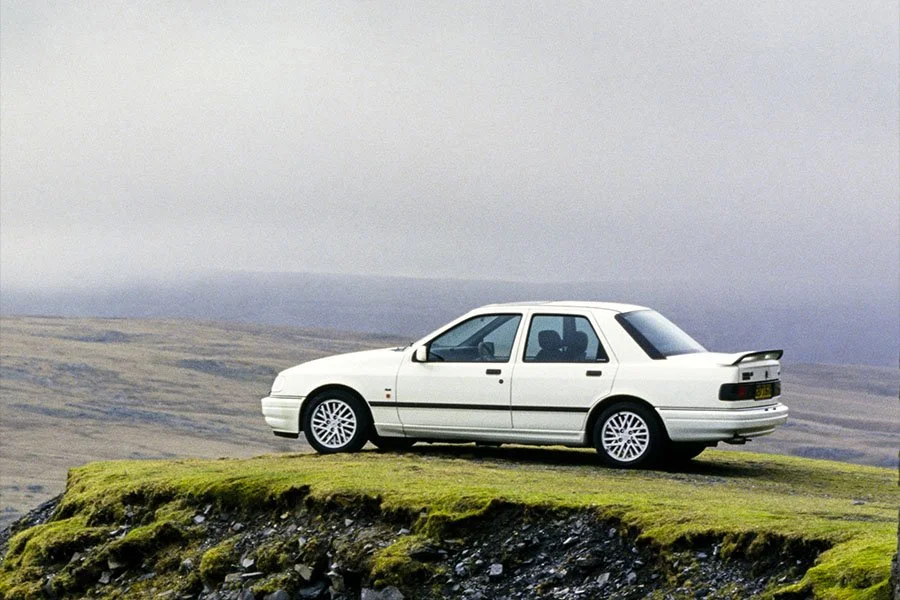
Aside from a pair of body coloured louvres carved out from the hood, clear instead of amber front indicators, a set of smoked tail lights and 4x4 badges on each front fender, the all-wheel drive Sapphire Cosworth was identical to its predecessor.
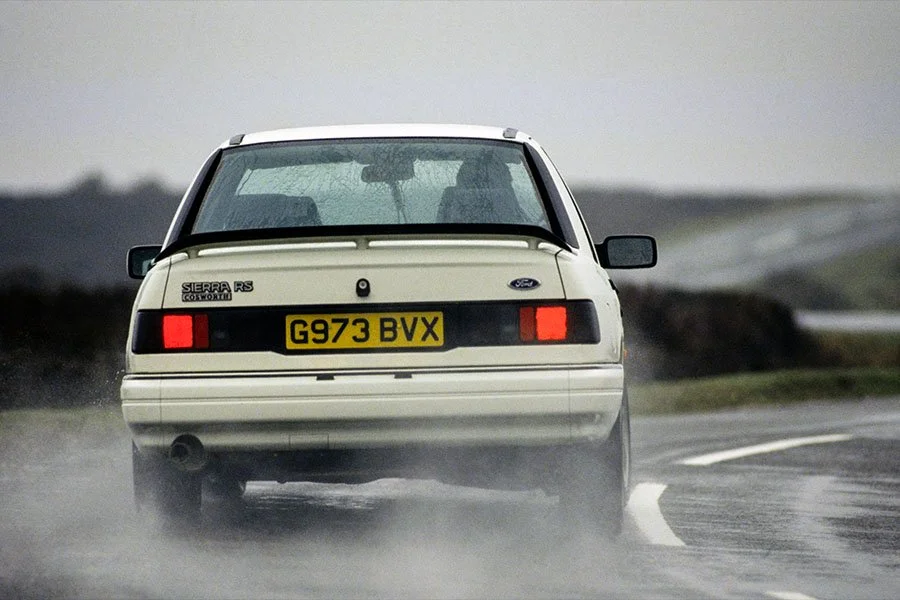
To differentiate these Cosworth-powered Sapphires from lesser offerings in the range, Ford made a series of discrete cosmetic performance-inspired tweaks.
Each car started life as a standard Ghia-spec. bodyshell to which a reprofiled front bumper assembly with enlarged cooling intakes, repositioned fog lights and wraparound chin spoiler were added.
In between the headlights was a custom grille treatment and down each flank were a set of deep side skirts.
At the back of the car was a Cosworth-specific rear bumper complete with a deeper than normal apron. Mounted on the trunk lid was was a rear spoiler.
Aside from the front chin spoiler, running strips and trailing edge of the rear wing, everything was painted body colour whereas on the standard Ghia variant black plastic was often used.
Body panels were manufactured from steel with plastic composite for the bumpers, skirts, hood louvres, door handles, mirror casings and rubbing strips.
INTERIOR
Inside, nothing was changed in the transition from rear-drive to 4x4 trim.
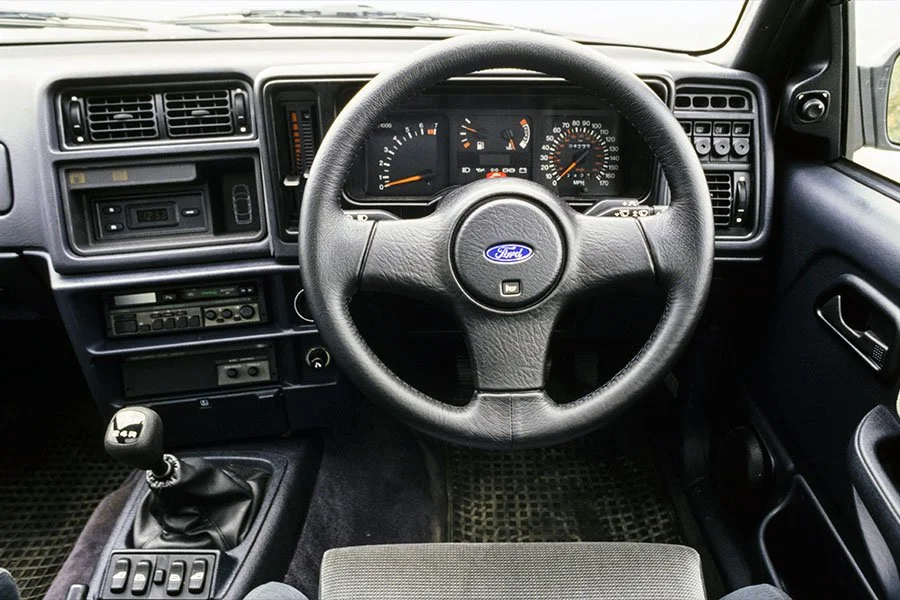
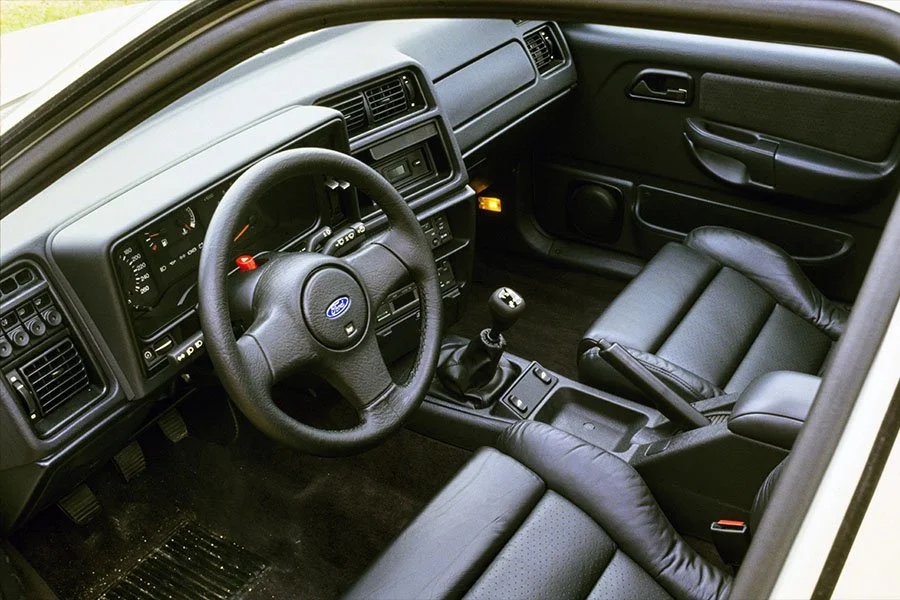
Ford started with their top-of-the-range Ghia trim level to which Recaro front seats, a small diameter leather-rimmed three-spoke steering wheel and a 170mph / 240kmh speedometer were added.
Raven Halley fabric upholstery was used for the seats and door panel inserts. The rest of the door panels along with the dash were fashioned from soft-touch grey plastic. Black plastic was used for the dash inserts.
Instrumentation comprised the aforementioned speedometer and a 7000rpm rev counter. In between were smaller read outs for fuel and water temperature, a digital trip meter plus a bank of warning lights. Unlike the first generation Sierra Cosworth built in three-door Hatchback configuration, a turbo boost gauge was not fitted to the four-door versions.
A manually-operated glass sunroof, electric windows, a leather-covered gear knob and a six-speaker audio system were fitted as standard.
OPTIONS
The list of optional extras included a Raven Black full leather interior, air-conditioning, an electric sunroof and onboard computer.
The four standard colours offered were Diamond White, Flint Grey, Metallic Magenta and Moonstone Blue. At additional cost, customers could choose from Ebony Black metallic, non-metallic Black, Moondust Silver, Smokestone Blue, Nouveau Red, Radiant Red, Pacifica Blue and Mallard Green.
WEIGHT / PERFORMANCE
Despite the addition of its bulkier all-wheel drive system, the Sierra Sapphire Cosworth 4x4 tipped the scales just 30kg heavier than the outgoing model: 1280kg compared to 1250kg.
Officially, the 0-62mph time was an unchanged 6.2 seconds, but the new car felt a little quicker than that.
Similarly, Ford quoted an identical 150mph top speed to the outgoing variant.
PRODUCTION CHANGES
To comply with the impending arrival of new environmental legislation, in August 1991 Ford began to fit the Sierra Sapphire Cosworth 4x4 with a cat-equipped YBG engine instead of the original YBJ version. In addition to having been equipped with a catalytic convertor, the YBG came with a green instead of red valve cover, a different inlet manifold, a different head gasket, a now dampered exhaust manifold and new spark plugs.
At the same time, new ‘Shark Tooth’ alloy wheels were fitted along with a modernised, more curvaceous dash and rainbow-style ‘Space’ fabric upholstery.
From this point an electric sunroof was fitted as standard.
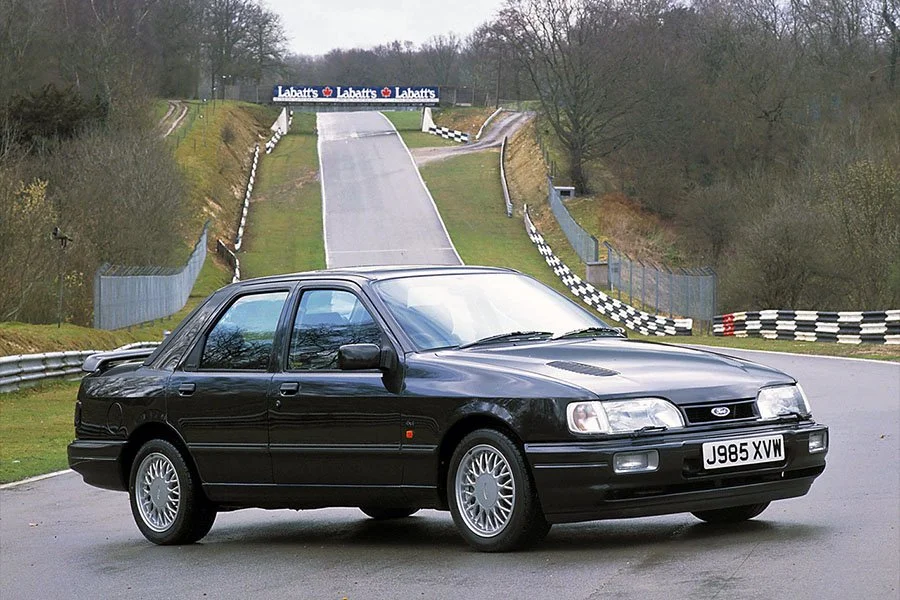


In March 1992, a new four-spoke steering wheel in ‘soft-touch’ plastic replaced the leather-trimmed three-spoke original and Ford switched to an entirely body coloured rear spoiler instead of the original bi-colour item which had featured a black trailing edge.
END OF PRODUCTION
Sierra Sapphire Cosworth 4x4 production was discontinued in December 1992 after 12,250 examples had been completed. By this time, the Escort RS Cosworth had already been on sale for six months.
COMPETITION HISTORY
After the Sierra Sapphire RS Cosworth 4x4 was homologated into Group A in August 1990, Ford’s Q8-backed World Rally Team contested three end of season events: the 1000 Lakes Rally in Finland, Rallye Sanremo in Italy and the RAC Rally in Britain. Disappointingly, the best results yielded from these three-car outings were ninth for Alessandro Fiorio / Luigi Pirollo on the RAC and eleventh for Pentti Airikkala / Ronan McNamee on the Sanremo.
More promising had been the performances by Colin McRae and Derek Ringer in their Shell Oil UK-backed privateer entry which had placed sixth on the 1990 RAC Rally and bagged second on the British Championship Audi Sport Rally a couple of weeks prior.
The 1991 campaign saw Ford’s works team compete in eight rounds of the World Rally Championship and with a substantially different driver line up to the year prior.
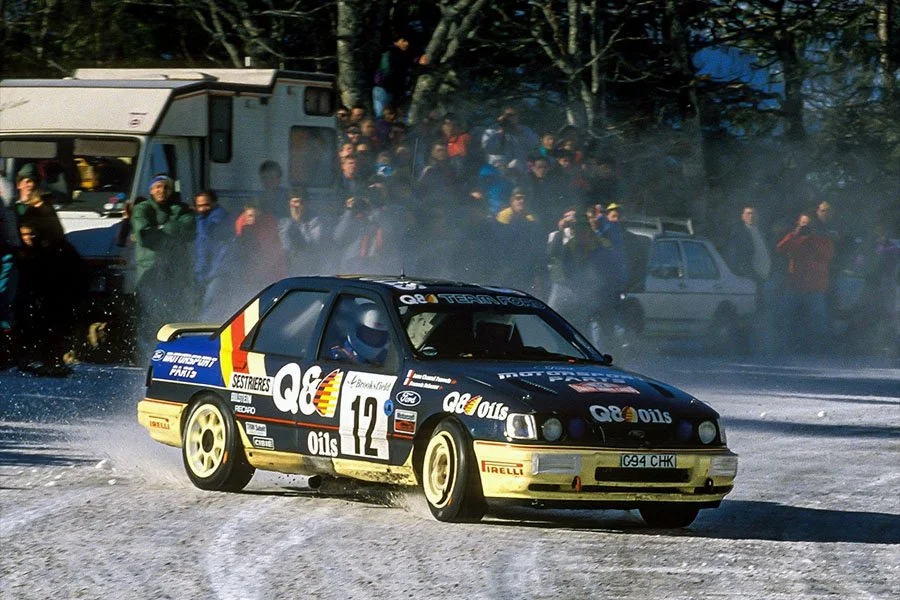
The best result of the year came in the ‘91 season opening Rallye Monte Carlo where Francois Delecour / Anne-Chantal Pauwels would have won had a late suspension failure not dropped them to third. Malcolm Wilson / Nicky Grist were seventh and Alessandro Fiorio / Luigi Pirollo tenth.
Other decent finishes that year saw Delecour and Daniel Grataloup collect another podium finish on Rallye Catalunya while team-mates Josep Maria Bardolet and Antonio Rodriguez placed fourth. Delecour also took a pair of fourth place finishes on the RAC Rally (co-driven by Grataloup) and Rallye Sanremo (with Pauwels). The Italian event saw Ford bag other top ten finishes for Fiorio / Pirollo (ninth) and Wilson / Grist (tenth).
Malcolm Wilson’s best finish of the year was fifth on the Tour de Corse where the Ford Italia pairing of Gianfranco Cunico and Stefano Evangelisti scored the car’s only other WRC podium finish of the season with a well deserved third.
Ford also collected a seventh place finish on the 1000 Lakes Rally thanks to Ari Vatanen / Bruno Beglund and ultimately finished fourth in the Manufacturers’ standings. Best-placed Ford man in the Drivers’ league was Delecour in seventh.
For the 1992 World Rally Championship, Delecour was joined by Miki Biasion while Wilson and Bardolet would only contest their home events (the RAC and Catalunya rallies).
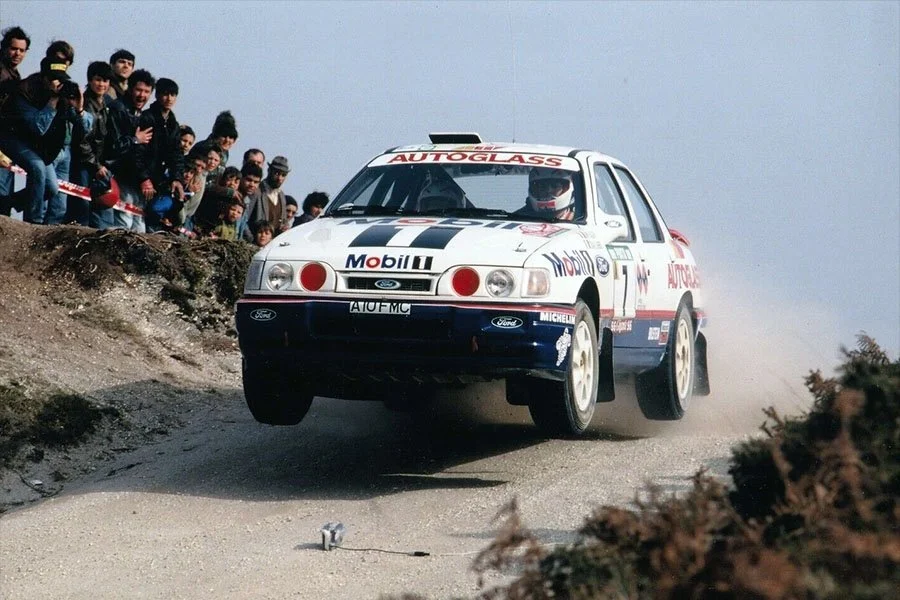
New signing Biasion and his co-driver Tiziano Siviero proved a model of consistency during their 1992 campaign. They finished all seven of their WRC outings for the now Mobil Oil-backed team, scoring a second place finish at Rallye Portugal, third on the Acropolis Rally, fourth on the Sanremo Rallye, fifth on the 1000 Lakes and RAC rallies, seventh on the Tour de Corse and eighth at Rallye Monte Carlo.
As for Delecour and Grataloup, they bagged second on the Tour de Corse, third in Sanremo, fourth on the Monte, fifth on the Acropolis and failed to finish in the Portuguese, 1000 Lakes and Catalunyan events. They did, however, also collect a second place finish on the European Championship Rallye Grasse-Alpin.
In their one-off appearances, Wilson / Bryan placed seventh on the RAC and Bardolet / Autet failed to finish in Catalunya.
Miki Biasion ended the ‘92 season fourth in Drivers’ standings and Delecour was sixth.
Ford placed third in the Manufacturers’ championship, after which the Sierra Sapphire RS Cosworth 4x4 was retired to make for the new Escort RS Cosworth.
Text copyright: Supercar Nostalgia
Photo copyright: Ford - https://www.ford.com