Final Flourish - a Historical & Technical Appraisal of the AC Ace Ruddspeed & Aceca Ruddspeed
/
BACKGROUND
In April 1956, engineer and semi-professional racing driver, Ken Rudd, debuted his specially adapted Bristol-engined Ace in a 13 lap Production Sports Car race at Goodwood’s annual Easter meeting.
Rudd was well-known at AC’s Thames-Ditton factory. Having acquired an Ace back in 1954 (which he raced with great success throughout the next couple of seasons), Rudd ran his Worthing-based Ruddspeed sports car engineering firm in addition to an AC agency.
After realising AC’s two-litre straight six engine had reached the limit of its tuning potential, for the 1956 season Rudd sourced a Bristol engine similar to the type that had successfully powered Cooper single seat racing cars as well as Frazer Nashes and Bristol’s own line of high quality sporting models.
In light of Rudd’s impressive run at Goodwood, where he vanquished the opposition to win by nearly a minute, AC decided to offer Bristol Type 100 motor (which was also a two-litre straight six) as an official option for both the Ace and Aceca from mid 1956.
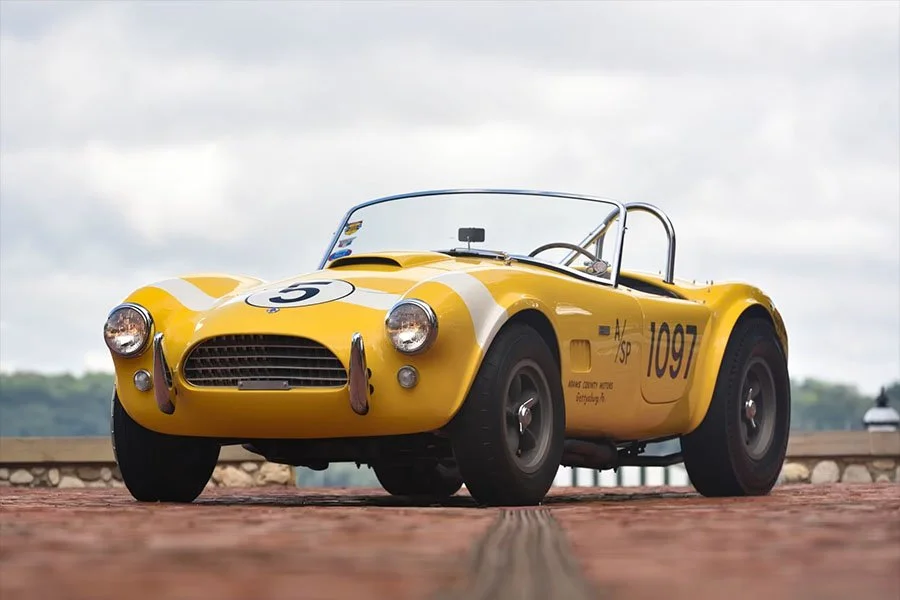
Over the next few years, these cars went on to achieve considerable success in motor sport, most notably posting multiple top ten finishes at Le Mans (winning their class in 1959) along with claiming five consecutive SCCA Production Class championships. However, in 1960, the Bristol Car company announced it was to discontinue production of its straight six engines and, although AC had accumulated a plentiful stock of Bristol power units, an alternative would be needed.
Thankfully, Ken Rudd stepped in with another solution, suggesting enhanced Ruddspeed versions of the Ford power unit found in the second generation Zephyr would make a good potential option for the Ace and Aceca.
A prototype Ruddspeed Ford-engined Ace, chassis RS 5000 (previously AE 1191), emerged in March 1961. Having undergone a successful evaluation, the new model was given a public launch at the London Motor Show in October 1961.
ENGINE / TRANSMISSION
Introduced during 1956, the Ford Zephyr 206E motor was an enlarged version of the 2262cc overhead valve straight six which had been around since the winter of 1950-1951. Bored from 79.37mm to 82.55mm and stroked from 76.2mm to 79.5mm, displacement came in at 2553cc which represented a gain of 291cc.
Otherwise, the engine remained much as before. It was based around a cast-iron block and head with pushrod-operated valve gear and a single side-mounted camshaft mounted within the engine block. In standard trim, Ford quoted a peak output of 85bhp at 4400rpm and 133lb-ft at 2000rpm.
Ruddspeed versions of these Ford engines fitted to the Ace and Aceca were offered in four stages of tune.
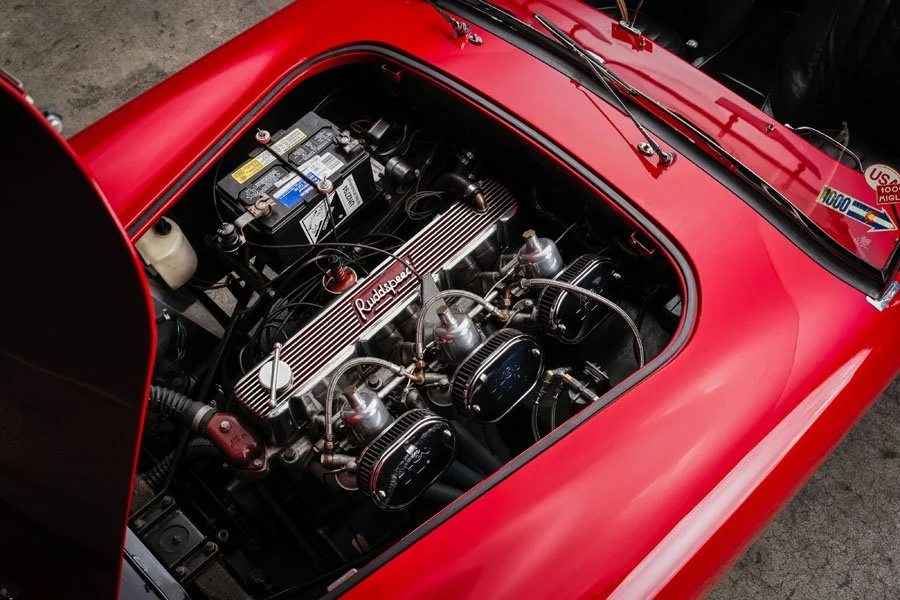
The basic Stage 1 configuration comprised Ruddspeed-modified version of the existing head that featured polished ports and larger inlet and exhaust valves. A triple intake manifold was fitted along with three SU H6 1.75-inch carburettors and a new exhaust system. In this configuration, the power output was 120bhp at 5000rpm.
Ruddspeed’s Stage 2 engine added lightweight pistons and produced 125bhp at 5500rpm.
In Stage 3 trim, Ruddspeed fitted a special Rubery Owen-made Raymond Mays Mk3 six-port aluminium cylinder head plus lightweight pushrods for 155bhp at 5500rpm. Customers could also request a ‘semi-Stage 3’ set up without lightweight pistons and pushrods which pumped out 140bhp at 5000rpm.
The ultimate Stage 4 upgrade included everything already mentioned but with a bank of three Weber 40 DCOE2 carburettors instead of the normal SU items. Peak output in Stage 4 specification was 170bhp at 5500rpm.
Transmission was through a four-speed Moss gearbox with single-plate Borg & Beck clutch.
CHASSIS
Whereas AC and Bristol-engined Aces had used 10swg main chassis tubes compared to thicker 12swg items on the Aceca, both body types used the beefier tubing when equipped with a Ruddspeed engine. Similarly, the Aceca’s fibreglass bulkhead and footwells were used for the Ruddspeed Ace. Other changes included installation of a new radiator, heater and electrical control box along with a repositioned battery.
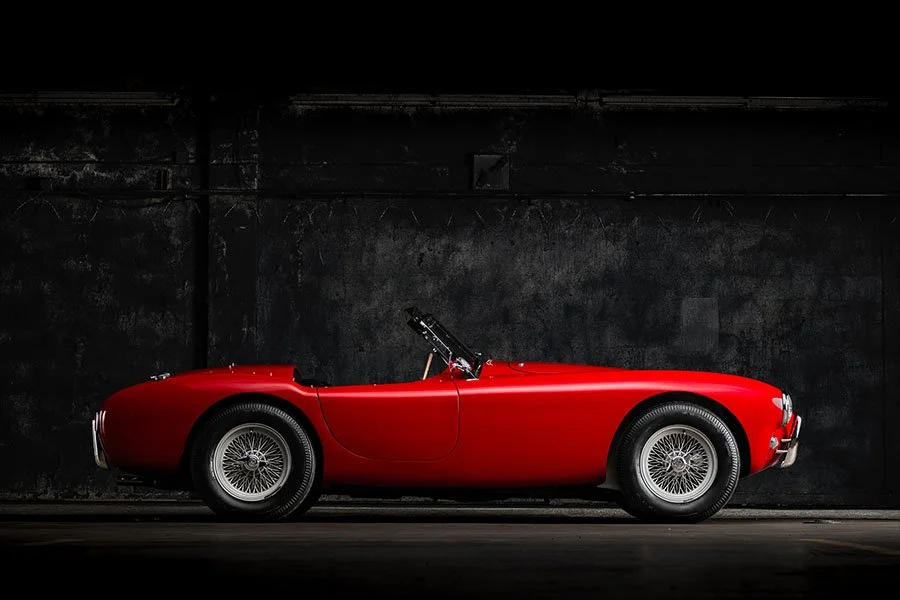
The chassis themselves were ladder-type steel units based around two large diameter tubes with front and rear subframes to which the suspension was attached. A skeletal frame of smaller diameter steel tubes was used to support the aluminium body. The wheelbase measured 2286mm (90-inches). A 12 UK gallon fuel tank (14.4 US gallons or 54.5-litres) was mounted under the trunk floor.
Suspension was via coil sprung dampers running off a transverse leaf spring at either end. Uniquely, Ruddspeed-engined cars came with a ninth leaf for the front suspension to compensate for the engine’s additional weight.
During 1960, both the Ace and Aceca had been upgraded to run disc brakes as standard (11-inch diameter all round). For these Ruddspeed variants, the front discs were enlarged to 11.75-inches and superior Girling calipers were installed.
Centre-laced 16-inch diameter wire wheels were originally shod with 5.50 R 16 Michelin X tyres.
BODYWORK
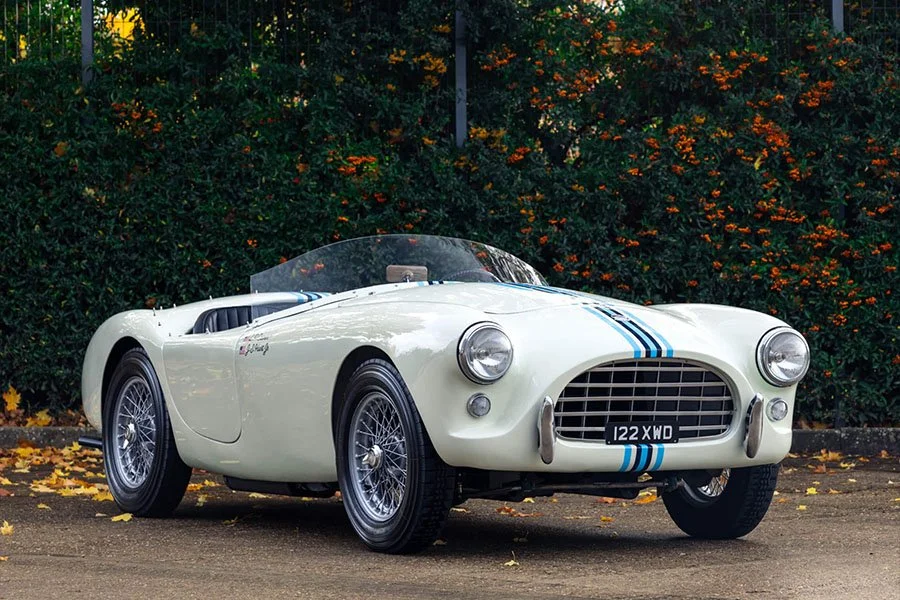
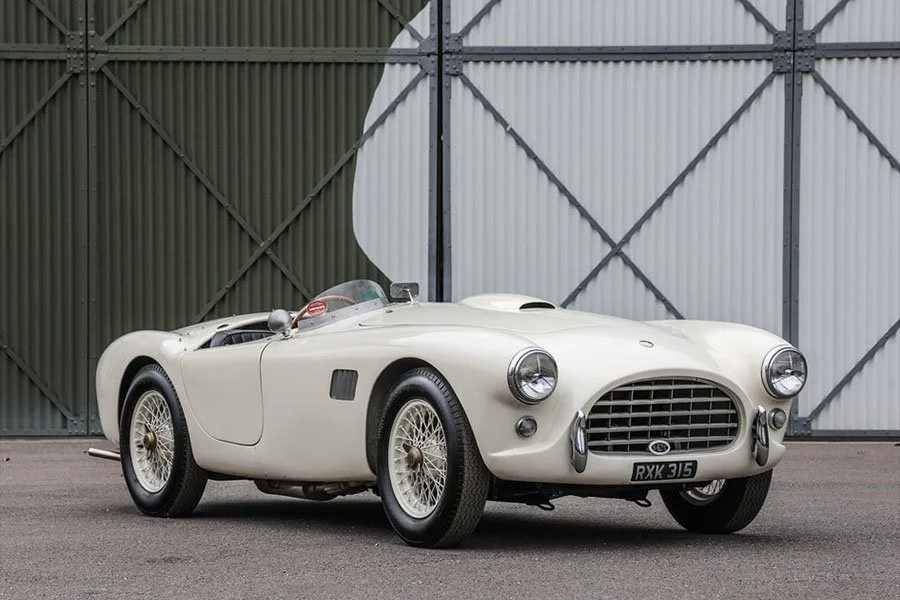
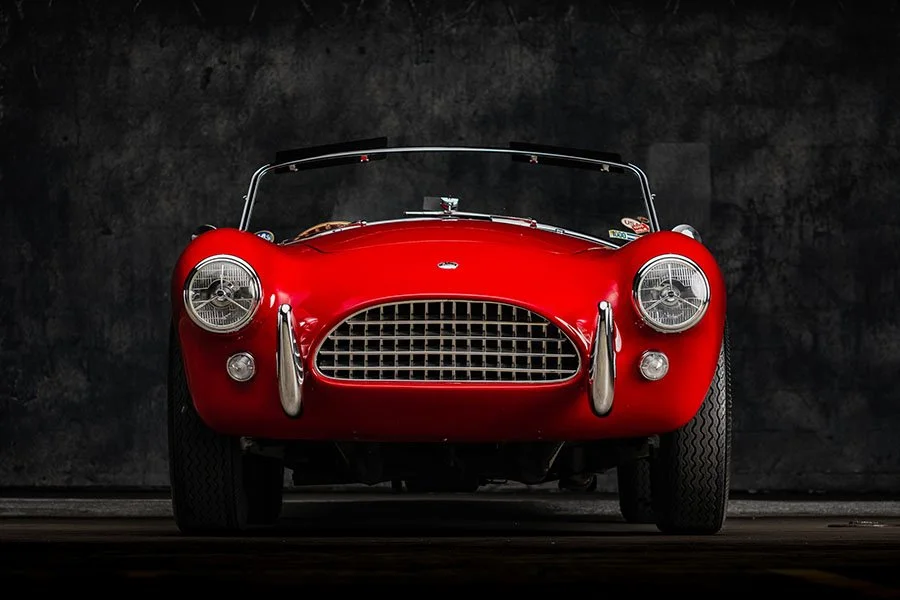
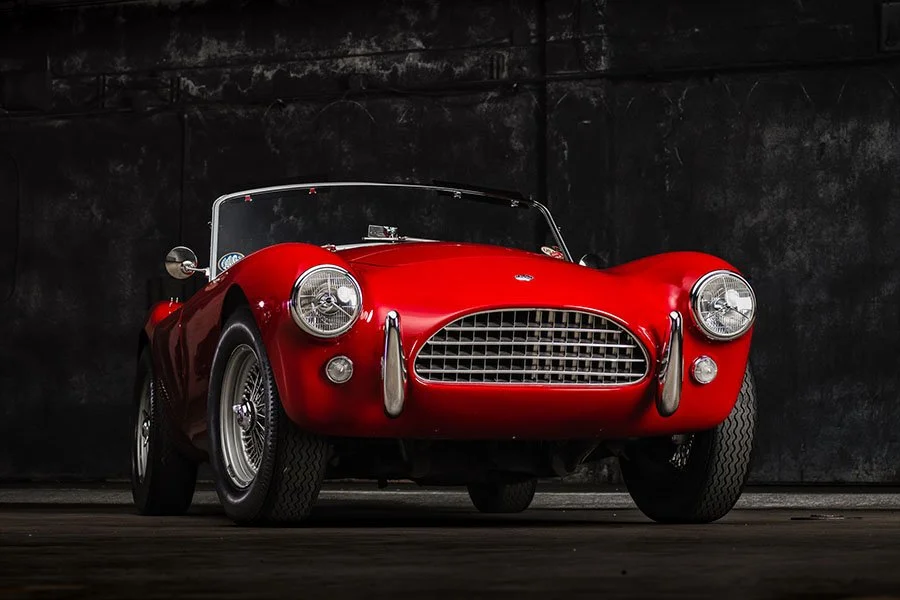
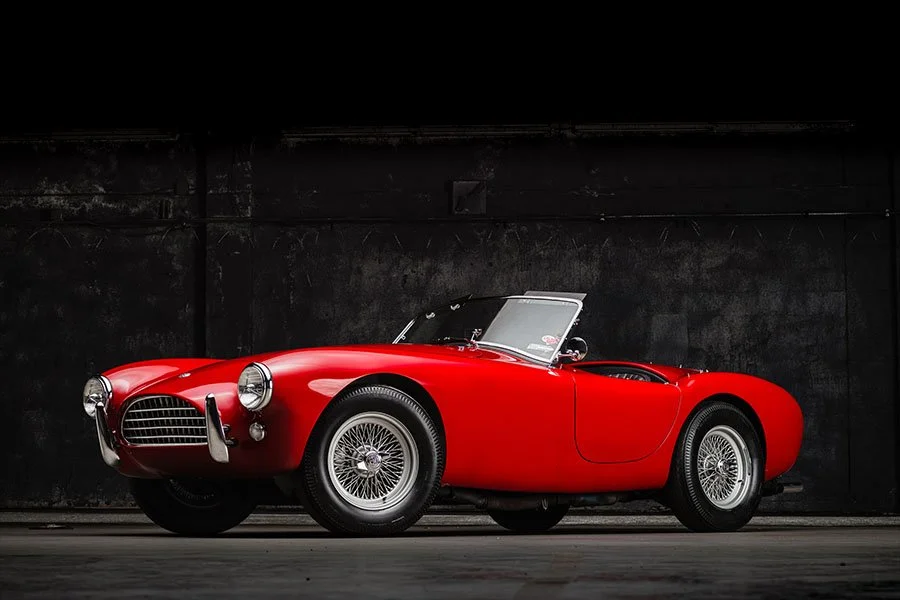
Bodywork changes made to the Ruddspeed Ace (with the exception of the prototype) saw AC move to a subtly re-profiled, more aerodynamic primary intake with an elongated leading edge. Set within this was a new grille that featured four horizontal and 16 vertical bars (instead of five and eight respectively).
Otherwise, the two models were unchanged from prior iterations.
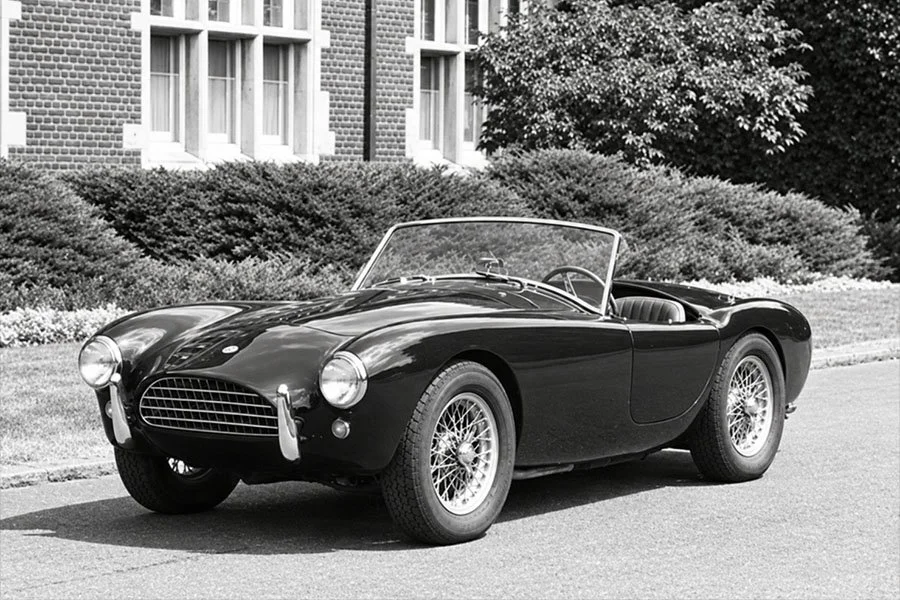
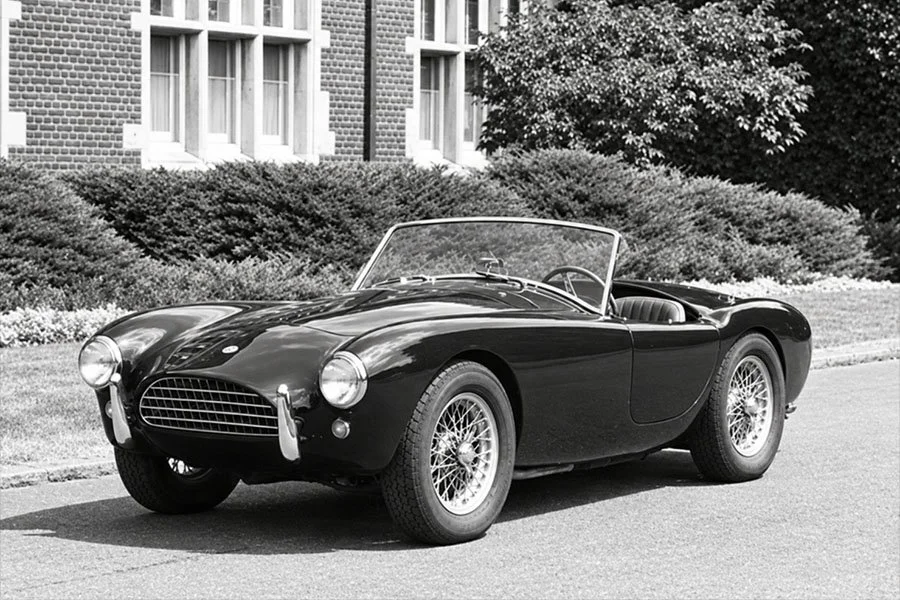
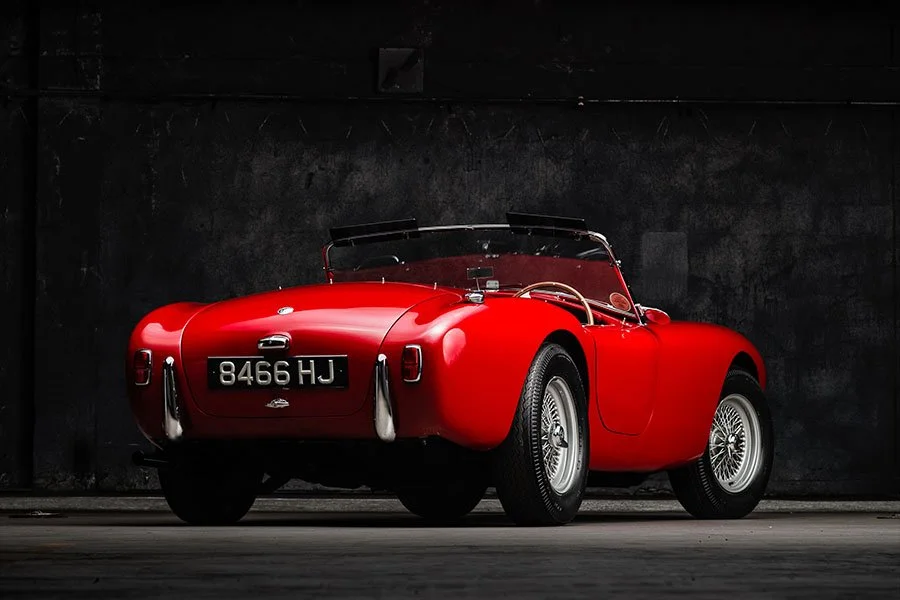
The Ace was characterised by its exposed headlights outboard of a large semi-circular cooling intake. Rounded fenders swept elegantly back towards the cockpit.
Weather protection for the cabin comprised a full-width detachable windscreen, similarly detachable two-piece sidescreens and a basic canvas roof with framework that had to be manually erected and dis-assembled. A full cockpit tonneau cover was supplied as standard.
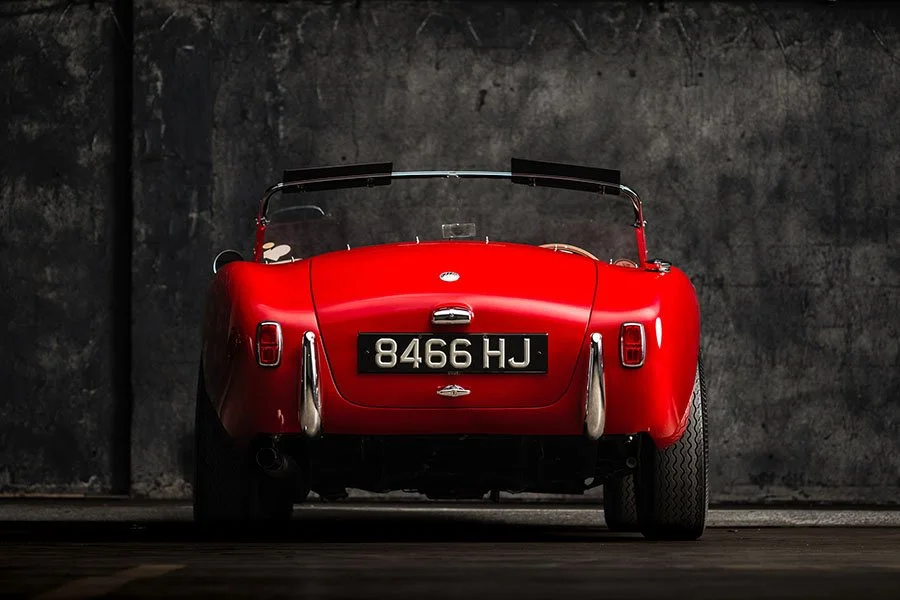
Cockpit access was by way of small doors without exterior handles, behind which were pronounced kick-up rear fenders that flowed back towards the closely cropped tail. Located on the left-hand rear fender was an exposed quick fuel filler cap.
Vertical overriders were fitted at each end, one type of which was able to accommodate the optional full width bumpers.
Aluminium body panels were fashioned on a wheeling machine and then welded together before final shaping took place on wooden bucks. Once a satisfactory profile was achieved, the panels were pop riveted in place.
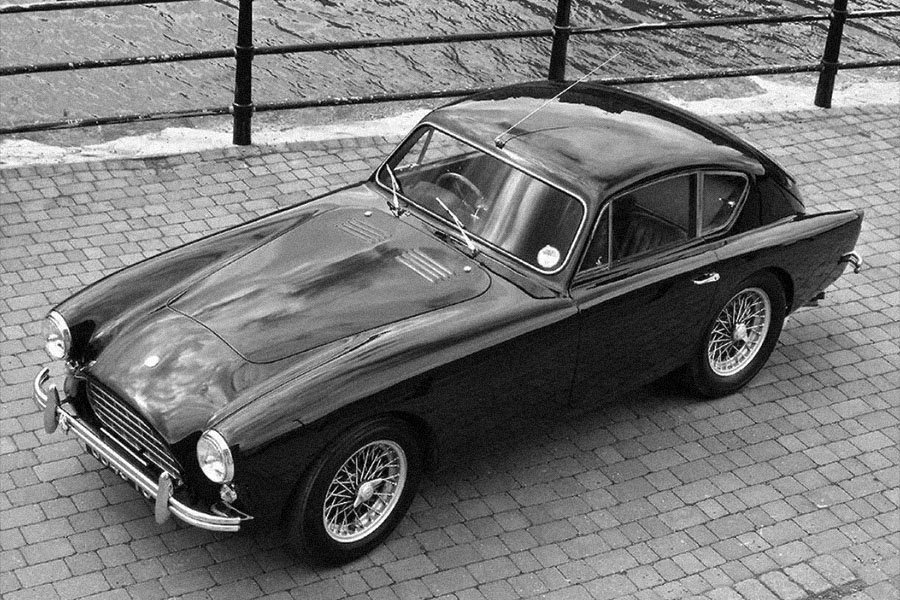
As for the Aceca, while at first glance its forward section may have appeared almost identical to an Ace, the upper surfaces were flatter and two banks of four louvres were carved out from the hood up near the bulkhead.
The most obvious difference though was the addition of a Fastback-style roof canopy that swept down towards the tail. A lift-up tailgate with perspex rear window opened to expose a good-sized luggage compartment. Wooden frames were used for the tailgate structure along with the more substantial doors which now featured proper push-button opening handles, wind-down windows and opening quarterlights. The rear side windows were hinged at their leading edge to allow for additional cockpit ventilation.
The Aceca’s sloping rear fenders were given a unique finned treatment and new lights. Housed on the tail fascia was a recessed number plate shroud with perspex cover.
INTERIOR
Inside, Ruddspeed cars were identifiable on account of a couple of minor tweaks.
On the dash, a separate clock was now installed. By contrast, AC and Bristol-engined variants had seen the clock housed within the speedometer.
To clear the slightly larger transmission tunnel necessitated by the Moss gearbox, the inner seat sides were slightly tapered. Outboard of the driver’s seat was the handbrake lever (moved from its original location on the transmission tunnel).
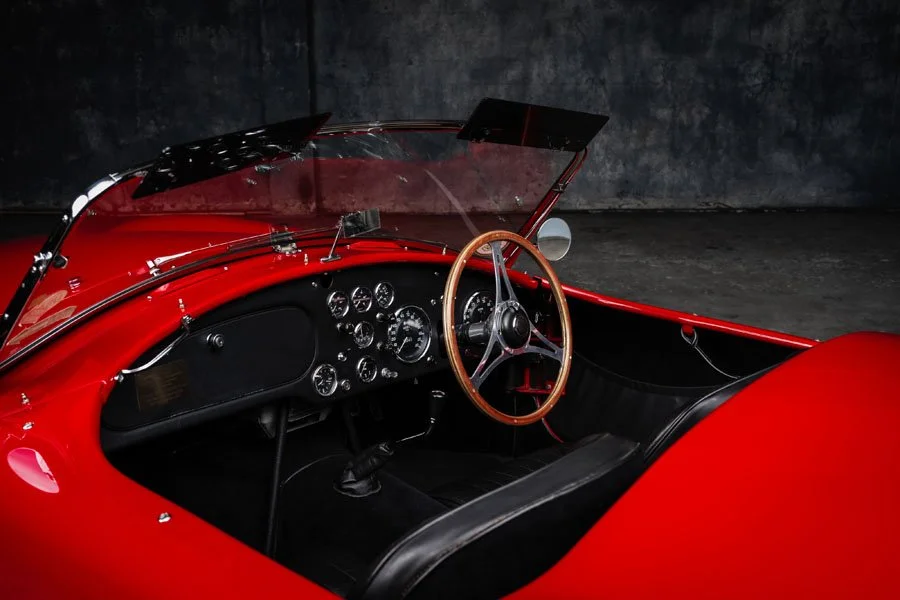
Some cars came with a black instead of body coloured dash.
Otherwise, all the basic cockpit architecture was carried over for both Ace and Aceca models.
Despite its quite spartan specification, the Ace was fully trimmed and equipped with everything needed for road use.
An elegant Bluemels bakelite steering wheel came as standard and featured three groups of four banjo spokes that connected the rim to the boss.
The aluminium dash was covered in leather. Positioned on either side of the height-adjustable steering column was large speedometer and matching rev counter. Organised centrally in a T-shape layout were four smaller read outs (water temperature, oil pressure and fuel along with an ammeter underneath).
Single-piece leather bucket seats were trimmed with pleated faces and carpeted backs. They could be adjusted fore / aft only. The doors, sidewalls and rear bulkhead were upholstered in a mixture of leather and carpet.
Leather door opening straps were fitted as opposed to conventional release catches.
As for the Aceca, these Fixed Head versions came with a completely redesigned dash trimmed in colour matched leather complete with burr walnut inserts for the primary instrument binnacle, centre console panel and glovebox.
Housed in the binnacle directly behind the steering wheel was a large rev counter and speedometer. In between were smaller read outs for oil pressure and water temperature. More small dials (an oil temperature gauge, fuel indicator and ammeter) were located in the central control panel. Above this was a chromed pull-out ashtray and below it were the heater controls.
If specified, the optional radio was positioned below the glovebox.
Another unique Aceca feature was properly trimmed leather-covered door panels with window winders, opening handles, small elasticated storage pockets and burr walnut caps. Dark emerald semi-transparent sun visors were also fitted along with a cloth headliner.
Out back, the rear storage area was carpeted as was the ‘half bulkhead’ except for its leather top roll.
OPTIONS
Customers could order their Ace or Aceca with a finned alloy Ruddspeed-branded rocker cover.
AC offered a comprehensive list of optional extras (some of which were Ace or Aceca specific) to include chrome-plated or painted wheels, a fibreglass hardtop, racing-style aero screens, full width front and rear bumpers, a Laycock de Normanville overdrive (which operated on second, third and fourth gears), external boot hinges, a wood-rimmed steering wheel, a heater, a windscreen demister, a radio, a glovebox door and an oil temperature gauge.
Other upgrades comprised a choice of alternative rear axle ratios, a second ignition coil, a secondary petrol pump, an oil cooler, an aluminium instead of steel fuel tank, a supplementary fuel tank, a fuel tank shield, a second spare wheel, a battery shield and a racing cowl for the radiator.
WEIGHT / PERFORMANCE
At 830kg, the Ruddspeed Ace weighed in 18kg heavier than a Bristol-engined variant.
The Ruddspeed Aceca came in at 945kg, also 18kg heavier than the Bristol-engined sister model.
In optimal 170bhp trim, these cars could hit 130mph and sprint from 0-62mph in a little over eight seconds.
PRODUCTION CHANGES
During production, changes were made to the overriders and AC began to fit an oil temperature gauge as standard.
THE COBRA
In October 1961, AC had a visit from Carroll Shelby who had recently hung up his racing helmet and was intent on creating a sports car that could challenge anything available in Europe at the time. Having struck a deal with Ford to supply V8 motors for the new machine, Shelby teamed up with AC and the iconic Ace-derived Cobra was born. The first Cobra prototype emerged in January 1962 and production began that summer.
END OF PRODUCTION
Production of the Ruddspeed Ford-engined Ace ran from March 1961 until December 1963. 37 units were built.
The Ruddspeed Aceca was built between July 1961 and September 1962. Just eight copies were built.
Text copyright: Supercar Nostalgia
Photo copyright: AC Cars - https://ac.cars/ & RM Sotheby’s - https://rmsothebys.com/