One to Buy: ex-Jay Sebring 1964 AC Shelby Cobra 289
/ Ben Tyer
Having retired from a successful driving career that most notably yielded outright victories at the 1959 Le Mans 24 Hours and Goodwood Tourist Trophy (both under the employment of the Aston Martin works team), Carroll Shelby turned his attention to creating a Ford-powered open two-seat sports car.
However, rather than develop an all-new machine from the ground up, Shelby struck a deal with AC that would see the British firm’s Ace transformed into a V8-engined rip snorter.
Thanks to its handsome looks, phenomenal performance and on-track prowess, the resultant AC Shelby Cobra quickly came to be regarded as an automotive icon.
After 75 of the early 260-cubic-inch / 4.2-litre Cobras had emerged, Shelby switched to a 289 cubic-inch / 4.7-litre V8. 51 cars later, a much-improved rack and pinion steering system was introduced.
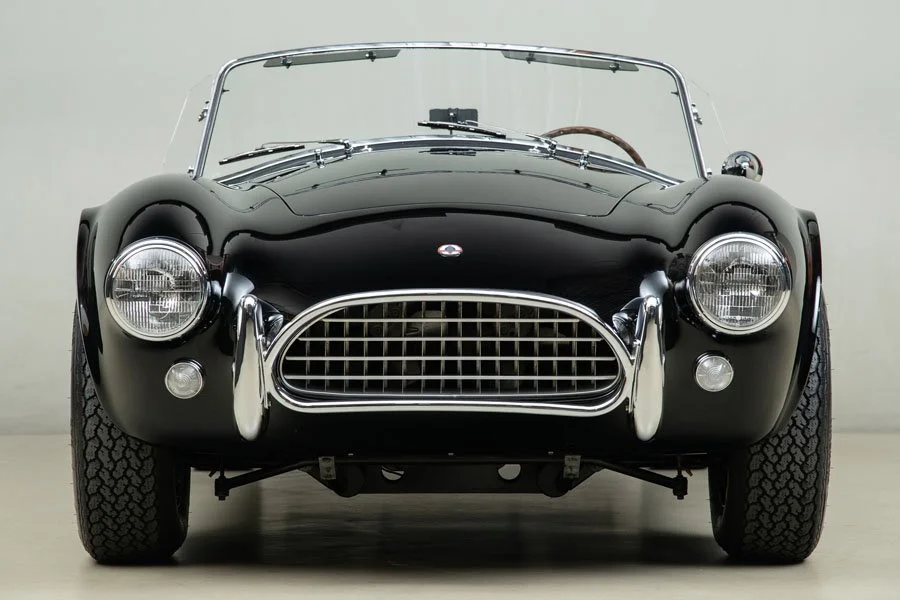
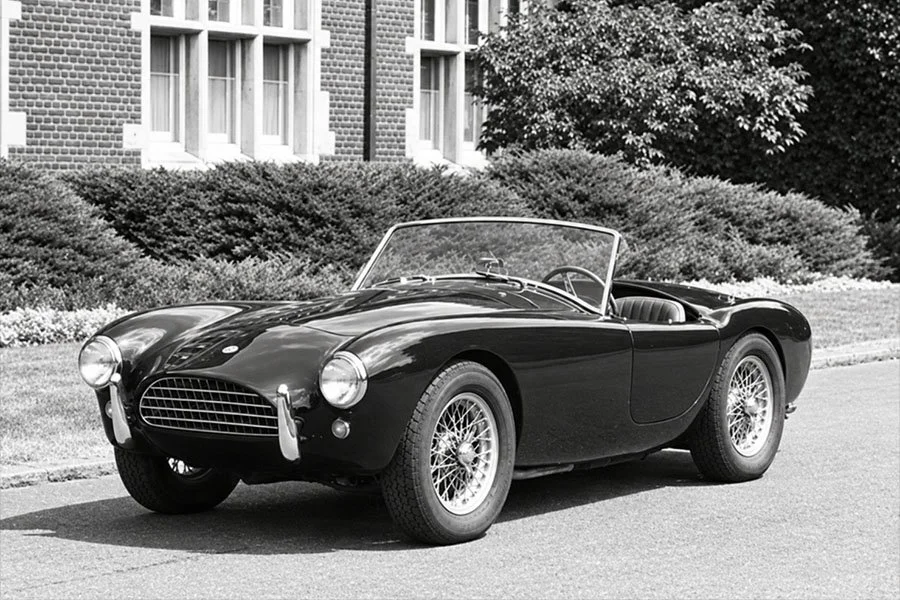
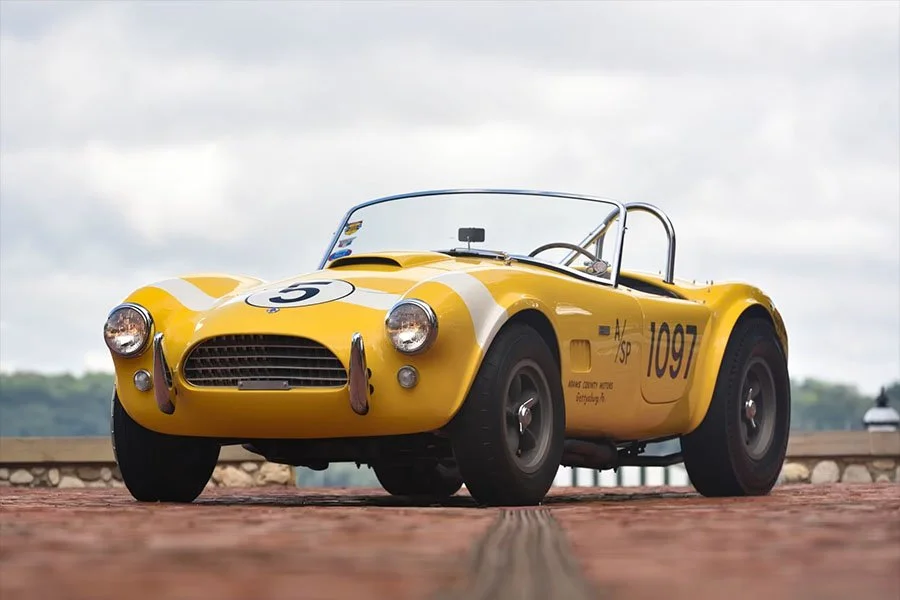
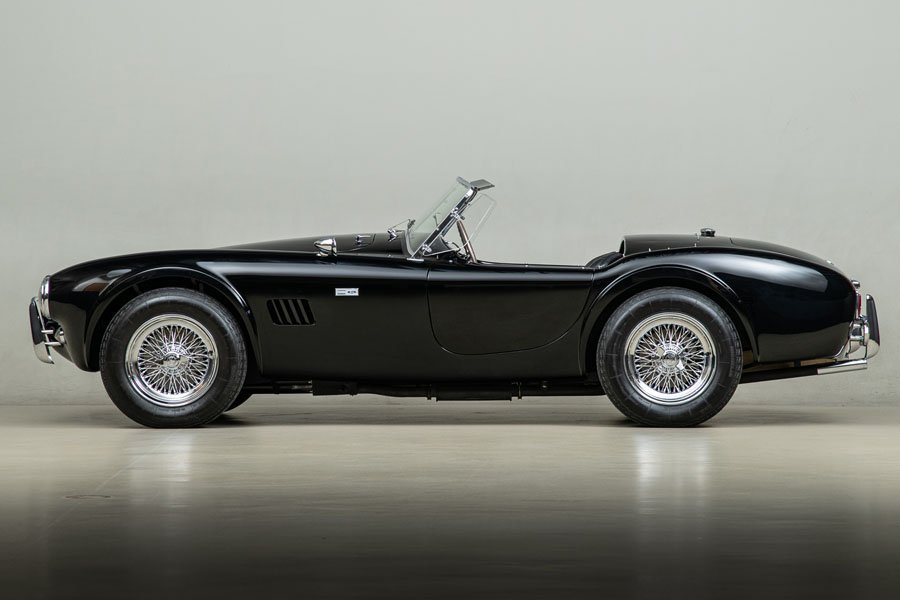
Currently on offer at the Canepa showroom in Scotts Valley, California, is an example of the later 289-engined Cobra with rack and pinion steering: chassis CSX2220.
Even more significantly, this particular car is linked to one of the most infamous moments of 20th century pop culture crime: the Manson Family murders of August 1969.
CSX2220 was invoiced to Shelby American on November 14th 1963 and sold to Executive Leasing in Los Angeles on January 22nd 1964. It was then leased (and later sold) to internationally renowned celebrity hairdresser, Jay Sebring, whose client list included Steve McQueen, Frank Sinatra, Sammy Davis Jr., Paul Newman, Warren Beatty and Kirk Douglas.
At some stage during his ownership of CSX2220, Sebring had the colour changed from Princess Blue with Red trim to Metallic Black with Black trim.
Unfortunately, on August 8th 1969, Sebring along with his friends Sharon Tate, Wojciech Frykowski and Abigail Folger (along with the housekeeper of the residence on Cielo Drive in California, Steven Parent) were brutally murdered by members of the Manson Family.
Today, the matching numbers Cobra has covered a little uner 27,000 miles.
For more information visit the Canepa website at: https://www.canepa.com/
Of the myriad Cobra variants, one of our favourites here at Supercar Nostalgia is the comparatively little known AC-badged, 427-chassis’d but 289-engined iteration sold by AC Cars in Great Britain…
In September 1965, Ford signed an agreement with Hertz Rental to supply 1000 special copies of the Shelby Mustang GT350. The resultant GT350H would be available to Hertz Sports Club members for…
Although the Ace and Aceca proved themselves formidable competitors right out of the box, their obvious weak spot was an engine that could trace its origins all the way back to 1919. Nevertheless, a…
To pave the way for an attack on the SCCA B Production Championship, Ford commissioned Shelby to create the GT350 Mustang, at least 100 of which would have to be manufactured in order to…
Despite having initially been powered by AC’s own almost prehistoric engine, a combination of light weight and excellent handling characteristics enabled the Ace and Aceca to become serious…
Chassis CSX2287 was the first Cobra Daytona completed and the only one whose panels were fabricated by California Metal Shaping in Los Angeles. Assembly took place at Shelby’s workshop in…
One of the rarest Cobra options offered by Shelby was the Dragonsnake pack. Conceived with drag racing in mind, it included items like modified rear fenders to accommodate slick-shod American…
Ford’s Total Performance programme of the 1960s spawned some legendary machinery of which the four-time Le Mans winning GT40 is particularly revered. The company’s engines were also…
When the pace of life was a little different, a reasonably wealthy motoring enthusiast could buy themselves a sports car and field an entry for some of Europe’s greatest motoring adventures. At…
COB6107 was one of 25 Cobra Mk3s built with the 289 engine for the British and European market. As Ford had acquired the Cobra trademark, these cars were marketed as AC 289 Sports. In addition to…
Chassis P/1018 was one of two Mk1 GT40s built to race trim for promotional use. It was commissioned by Ford on behalf of Carroll Shelby whose firm had undertaken much development…
Two years after the first production-ready Ace had emerged from AC’s Thames Ditton factory, renowned engineer and amateur racing driver Ken Rudd debuted his Bristol-powered example at…
To get his exciting Cobra project off the ground ahead of any potential financial input from Ford, Carroll Shelby teamed up with professional racing driver and high end European car dealer, Ed…
Launched in prototype form at the London Motor Show in October 1953, the open two-seat Ace and its fixed head sister, the Aceca, were conceived to replace AC’s ageing 2-litre Saloon and catapult…
Having retired from a successful driving career that most notably yielded outright victories at the 1959 Le Mans 24 Hours and Goodwood Tourist Trophy (both under the employment of the Aston…
In order to get the GT40 homologated into the new-for-1966 Group 4 Sports car class, Ford had to complete a minimum of 50 copies. Without sufficient demand for that number of racing variants, the…
During World War 2, AC’s Thames-Ditton factory had produced Swordfish and Albacore components for Fairey Aviation along with Ordnance QF 6-pounder anti-tank guns, glider undercarriages, flame…
In addition to the revered Shelby Cobras, AC Cars in Great Britain, who had done much development work and still handled the lion’s share of the assembly process, sold Cobras…
Since 1962, various iterations of the AC and Shelby Cobra had been used to win myriad races and championships. However, the one title that had proven elusive was the World Sportscar…
Having narrowly been defeated by Ferrari in the fight for the 1964 World Sportscar Championship, Shelby returned for another crack in 1965. By this time, the American team’s fleet of Cobra Daytonas…
With Ferrari having so far completely dominated the Group 3 Grand Touring era of the World Sportscar Championship, the Ford-backed Shelby outfit with its trick new Cobra Daytonas went…
In 1965, the Essex Wire Corporation went public on the New York Stock Exchange and embarked on a marketing partnership with Ford that saw the firm go racing with the GT40, Shelby Cobra and…
Because Ford had commissioned Shelby to produce the GT350 as a hot Mustang to contest the SCCA B-Production championship, it was no surprise that a good number of privateer owners…
In 1963, half a dozen 289-engined GT class Shelby Cobras were built to Competition Le Mans trim. This small batch of cars were inspired by a pair of Cobras that had contested the Le Mans 24 Hour…
Conceived as a more compact replacement for previous models like the Mk9 and Mk10, the Lotus Eleven went on to become arguably the most successful small displacement sports racing car of its…
Having dabbled in a variety of motor sport disciplines since his company’s 1959 inception, Alejandro de Tomaso’s first production model, the Vallelunga Coupe, entered the final throes of development…
For many collectors and enthusiasts, the ultimate incarnation of the legendary AC / Shelby Cobra is the seven-litre 427 Competition. Produced between 1965 and ‘67, just 23 of these legendary…
Chassis P/1004 was an early Mk1 GT40 allocated to Ford’s six-car attack at the 1965 Le Mans 24 Hours. Following preparation by Shelby in California (completed May 5th 1965), it ran at Le Mans in…
Chassis GT/104 was one of twelve Ford GT Prototypes manufactured prior to the subsequent Mk1 and Mk2 variants. GT/104’s debut appearance came alongside a brace of sister cars at the 1964 Le…
Launched at the London Motor Show in October 1953, the Ace was AC’s highly anticipated replacement for their ageing 2-Litre range. Production of the John Tojeiro-designed machine got…