Monster V8 Biturbo - a Historical & Technical Appraisal of the Maserati Shamal
/
BACKGROUND
Conceived as a more affordable model that could sell in far greater numbers than Maseratis of the past, the Biturbo came to exemplify Alejandro de Tomaso’s time in charge of Il Tridente.
Ambitiously powered by the first production twin turbocharged engine (a V6 derived from Maserati’s existing normally aspirated engine found in the Merak), the Biturbo debuted in December 1981 and initially proved a strong seller owing to a combination of badge appeal and a remarkably low price (about the same as a mid-range BMW 5-series).
However, although dealers had full order books during these early days, trouble was just around the corner; a 35% price hike within six months of launch and widespread reliability issues led to massively reduced demand.
During the years that followed, to broaden appeal, Maserati went on to launch a bewildering array of Biturbo-based models. Engine-wise, the original two-litre engine was joined by 2.5 and 2.8-litre variants while fuel-injection and dual overhead camshafts were also adopted. A variety of body styles were introduced to include a two-door Spyder and a four-door Sedan. More luxuriously equipped variants were offered as well.
The first truly high performance machine from Maserati’s Biturbo era was the Karif launched at the Geneva Motor Show in March 1988. By fitting the range-topping 285bhp 2.8-litre fuel-injected V6 into a Fixed Head version of the light, short wheelbase Spyder bodyshell and adding a close-ratio five-speed gearbox, the Karif quickly garnered a reputation as an untamed beast.
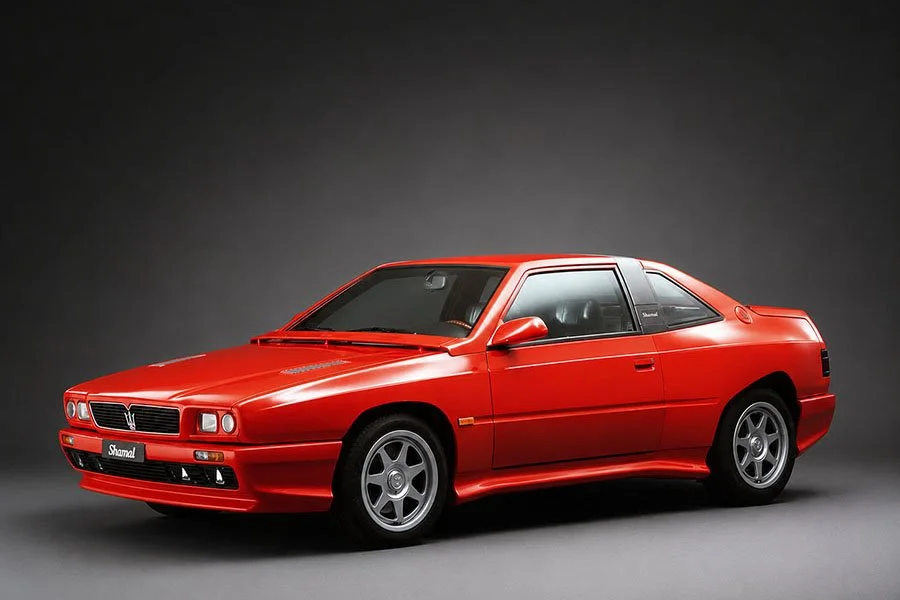
19 months later, Maserati released an even more spectacular offering to celebrate its 75th anniversary as an auto maker: the Shamal.
Like the Karif, the Shamal continued Maserati’s long standing tradition of naming its cars after the world’s most famous and powerful winds, in this case a hot summer gust from the Syrian Desert and Persian Gulf.
Another similarity between the Karif and Shamal was their short wheelbase platforms. For this latest creation though, Maserati added a newly developed twin turbocharged V8 hooked up to a six-speed gearbox, the firm’s most advanced suspension and brake systems and a heavily revised body that only shared its doors with Maserati’s existing range.
Unveiled at a press conference in Modena during December 1989, the Shamal proved to be the last Maserati developed wholly under De Tomaso ownership; in January 1990 Fiat acquired a 50% stake in the heavily indebted company.
Deliveries of the first Shamals began in early 1990.
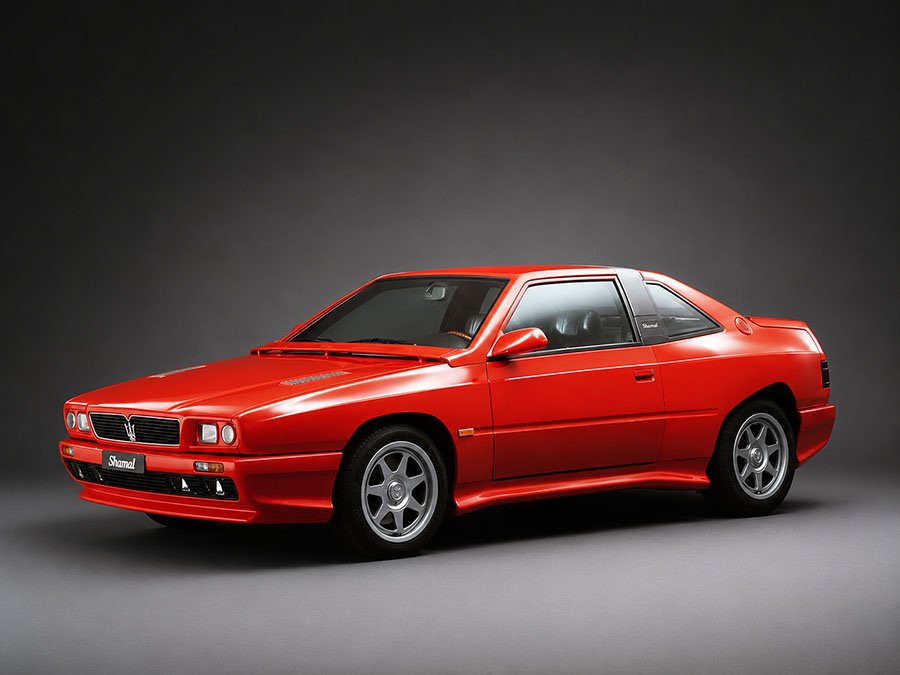
CHASSIS
The Shamal was based on a Biturbo-derived steel bodyhsell with 2400mm wheelbase.
Uniquely, the new V8 engine was mounted on a front subframe instead of directly to the monocoque. Once the Shamal’s front bumper and grille had been removed, the subframe and complete engine assembly could be slid forward without the need for a hoist.
An 80-litre fuel tank was installed in the trunk area behind the rear seats.
Independent suspension was via MacPherson struts at the front, semi-trailing arms at the rear with an anti-roll bar installed at either end.
One of the Shamal’s biggest selling points was its Electronic Active Suspension Control system shared with the Karif. Dubbed Meccanica Attiva, it was developed in conjunction with Koni to vary damping rates based on road conditions and desired comfort levels.
Each shock absorber electronically adjusted itself with both the compression and expansion phases controlled to produce a considerable improvement both in roadholding and traction. Via buttons mounted on the centre console, the driver could select one of four shock absorber settings: the first was very soft for low speed and maximum comfort, the second was for speeds up to 100 mph, the third was the best setting for driveability, manageability, roadholding and comfort while the fourth was for maximum sporting performance.
Through a system of interacting levers, Meccanica Attiva also ensured that the wheels remained completely square to the road surface while a state of constant parallelism was maintained between the lower suspension arm and the steering arm to ensure almost instantaneous steering response, optimal steering precision and reduced steering effort.
The brake system comprised ventilated discs with a 345mm diameter at the front and 296mm diameter at the rear. Floating calipers were fitted all round.
New 16-inch diameter seven-spoke OZ wheels were 8-inches wide at the front and 9-inches wide at the back. They were originally shod with Pirelli 225/45 and 245/45 ZR 16 tyres respectively.
ENGINE / TRANSMISSION
In the engine bay was Maserati’s new all-alloy Tipo AM 479 twin turbocharged 90° V8 which, although Biturbo based, shared neither its 80mm bore or 80mm stroke with any other Biturbo variant.
Boasting dual overhead camshafts, four valves per cylinder and single-piece crankshaft, the cat-equipped 3217cc Tipo AM 479 engine came with two water-cooled IHI turbochargers, each with an air-to-air intercooler. Weber-Marelli IAW fuel-injection with integrated electronic ignition ran off a separate engine control unit for each bank of cylinders.
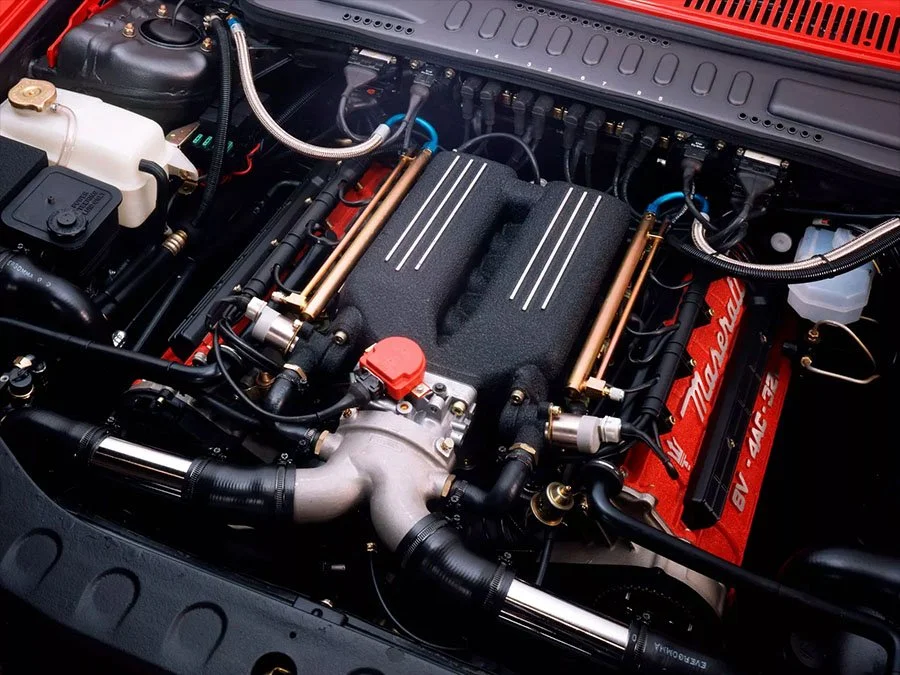
Maserati’s extensive research on port diameters and cylinder axis angles resulted in a minimum angle (20°) between the intake and exhaust valves. This reduced angle, along with ultra-compact combustion chambers, helped minimise fuel consumption.
With a 7.5:1 compression ratio, the Shamal produced peak output figures of 318bhp at 6000rpm and 319lb-ft at 3000rpm.
For comparison, when the V6-powered Karif was fitted with a catalytic converter, it produced just 221bhp at 5500rpm and 268lb-ft at 3500rpm.
Transmission was through a six-speed manual Getrag G560 gearbox, single-plate clutch and Maserati's new Ranger limited-slip differential.
BODYWORK
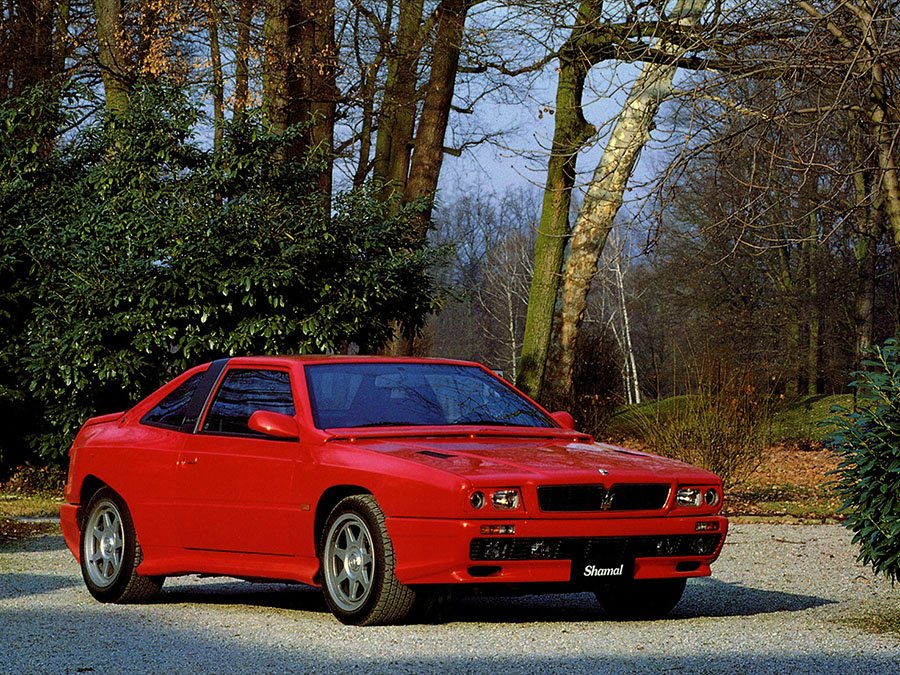
The Shamal’s aggressive look was the result of a collaboration between Gandini Design and Centro Stile Maserati. Signature Marcello Gandini features included a slanted rear wheelarch profile and front scuttle-mounted spoiler to deflect air and water over the cockpit.
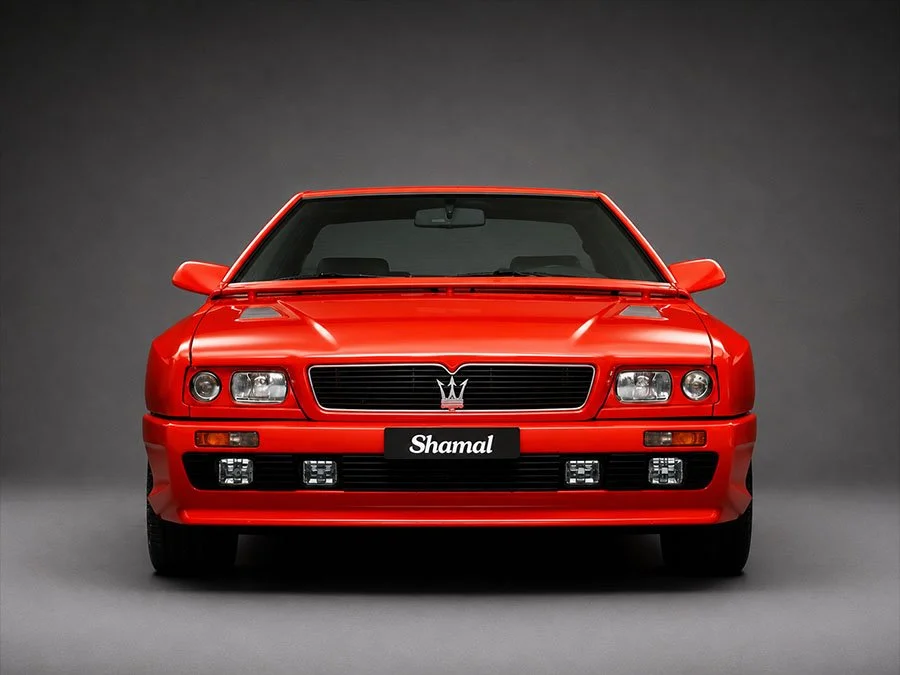
As had been the case with the Karif, a black B-pillar roll hoop formed an integral part of the bodyshell.
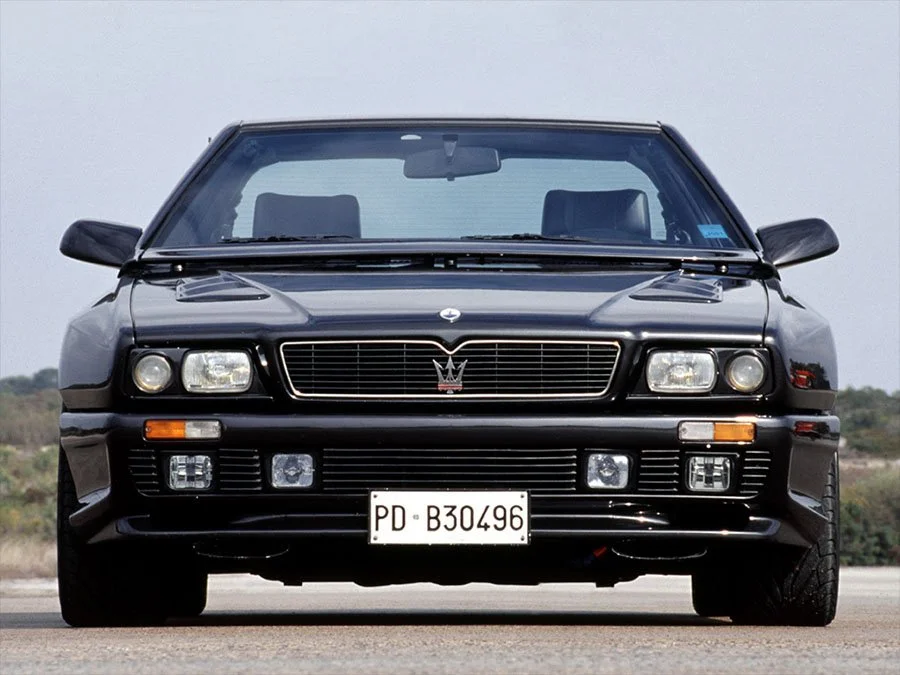
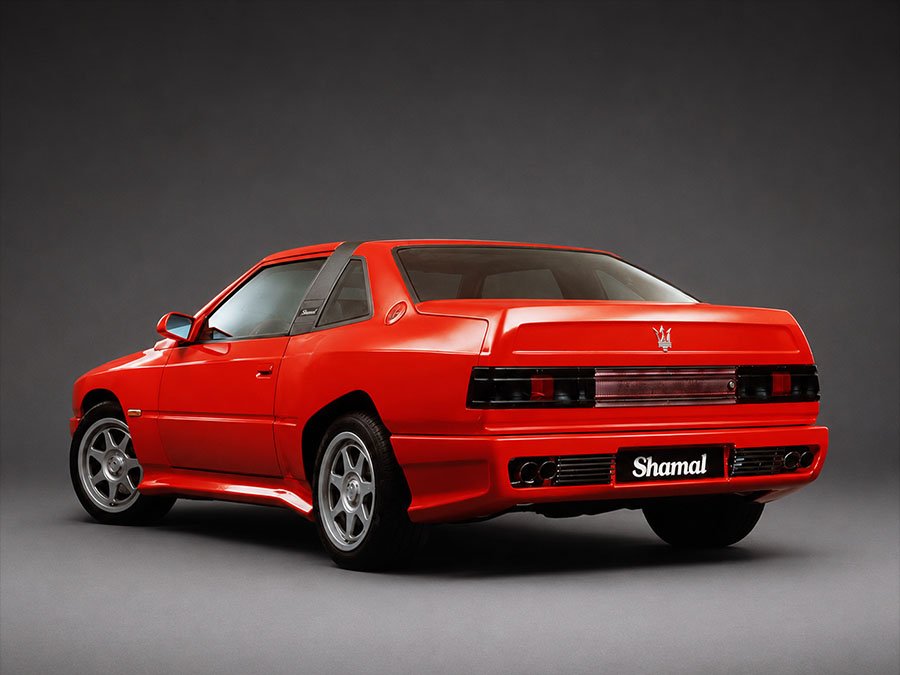
In addition to its flared fenders which were more bulbous than any other Biturbo derivative, the Shamal stood out on account of its new projector-type circular headlights, inboard of which were rectangular high beam lenses. This modern look was subsequently adopted by the rest of the Maserati range in 1991. Additionally, square fog and driving lights were incorporated to the front bumper’s otherwise full width grille.
At the rear, the Shamal’s tail light assemblies were smoked to further modernise the boxy old design for the curve conscious 1990s. In a similar vein, brightwork was limited to the Maserati emblems, the front grille accent and the Shamal script located on each B-pillar.
Aside from its doors, the Shamal shared no other body parts with any Biturbo-based model.
Body panels were made by hand at the Maserati factory using a mixture of steel and composite materials.
INTERIOR
Other than its new high-backed and heavily bolstered two-piece front bucket seats and redesigned occasional seats in the back, most of the Shamal’s interior fixtures and fittings were imported from existing Maserati models.
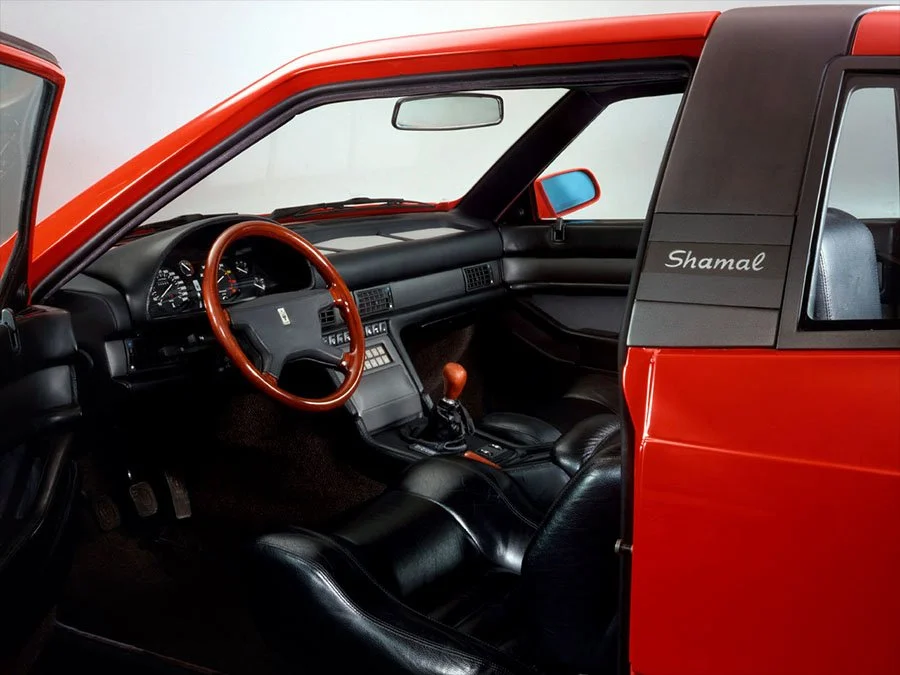
Appointed in typical Maserati fashion, the cockpit was trimmed in a mixture of leather, alcantara and woven carpet. Burled elm was normally used for the steering wheel rim, the dash, door and centre console inserts, the gear knob and handbrake lever.
Directly behind the four-spoke steering wheel was a neat instrument binnacle that housed large read outs for road and engine speed out plus smaller gauges for turbo boost, oil pressure, water temperature, battery voltage and fuel. The rest of the switchgear was mounted neatly above the audio system on the central control panel.
The long list of standard equipment included air-conditioning, electric seats, electric windows, electric mirrors, a traditional Maserati clock, central locking and an electro-magnetic trunk lid
OPTIONS
Owing to its very high standard specification, optional extras were limited.
Buyers could choose black instead of wood trim for the steering wheel, dash / door inserts and handbrake lever. Briar wood was also offered as an alternative to burled elm.
Maserati initially only offered the Shamal in two colours: Rosso Maserati and Nero. However, to stimulate demand, alternatives shades were soon introduced. From 1991, Shamals in Grigio, Blu, Bianco and Rosso Oriente began to emerge.
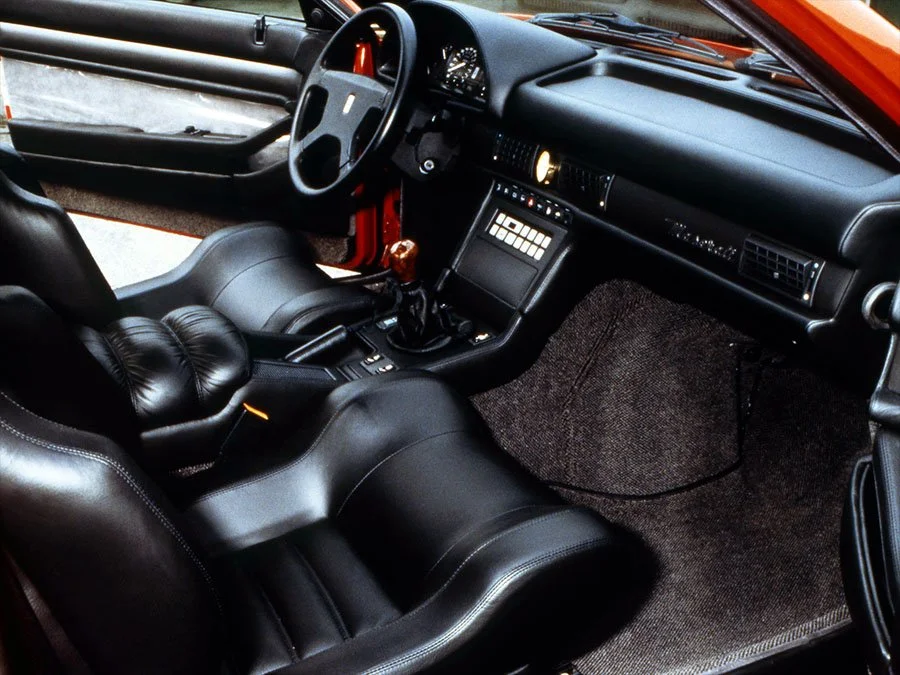
Upholstery came in either Nero, Grigio, Beige, Blu or Avorio.
WEIGHT / PERFORMANCE
Maserati quoted a weight figure of 1417kg, a top speed of 168mph and 0-62mph time of 5.2 seconds.
FIAT BECOMES SOLE SHAREHOLDER
In May 1993, Fiat acquired the remaining 50% of Maserati Automobili to become the firm’s sole shareholder.
END OF PRODUCTION
Shamal production ran from early 1990 to mid 1996. During this time a total of 369 units were produced, 20 of which were right-hand drive.
Text copyright: Supercar Nostalgia
Photo copyright: Maserati - https://maserati.com