Swindon Special - a Historical & Technical Appraisal of the Honda Accord Type R (CH1) & Accord Euro R / RX (CL1)
/
BACKGROUND
The sixth generation Honda Accord was built as three distinct models: one for Japan, one for the Americas, Australia, New Zealand and Southeast Asia and one for Europe.
While production of other versions began during the second half of 1997, the Euro market Accord (built in Swindon) was not launched until June 1998 when, alongside the normal array of efficient but largely unexciting variants, a high performance Type R was unveiled.
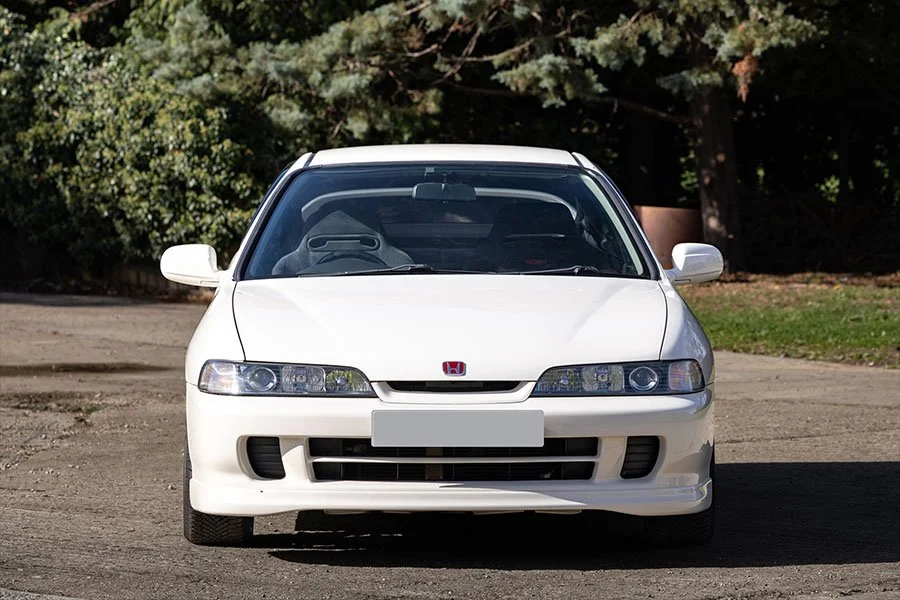
Just under a year earlier, Honda had decided to offer its critically acclaimed Integra Type R into the US and European regions having initially reserved this and its other Type R models exclusively for the Japanese Domestic Market. Strong export sales for the hardcore performance-oriented DC2 Integra paved the way for more Type R Hondas to be sold overseas.
The hot new Accord was born from Honda’s European Super Touring involvement with the model which had been ongoing since 1995. An initial two-year programme with Motor Sport Developments had seen Super Touring Accords raced in the British, German and Belgian Touring Car Championships before Honda teamed up with the renowned Prodrive operation for 1997 and ‘98 when just the British and German series were undertaken.
For the 1999 season, Honda would partner with West Surrey Racing when the sixth generation Accord would finally take to the track.
While its European endeavours failed to match those in the Land of the Rising Sun (Mugen-run machines won the 1996 and ‘97 Japanese Touring Car Championships), Honda UK wanted to capitalise on the high profile programme with a sporty Accord that would add a little stardust to the rest of the range.
With this in mind, Honda Japan gave its UK subsidiary the green light to develop an Accord Type R that would be reserved exclusively for the European market. As expected, this suitably enhanced derivative would follow Honda’s tried and trusted Type R formula: less weight, more focused handling, uprated brakes, increased engine output, an array of aero tweaks, several bits of special interior equipment and a unique set of wheels.
CHASSIS
The Type R was based around a special CH1 version of Honda’s four-door Accord Saloon bodyshell fashioned as usual from galvanised steel. Uniquely, the CH1 platform featured a rear bulkhead reinforced with a high-pressure aluminium casting that increased torsional rigidity by 40% compared to a regular Accord.
A 65-litre fuel tank was mounted underneath the rear floor chassis, tight inside the rear suspension subframe assembly.
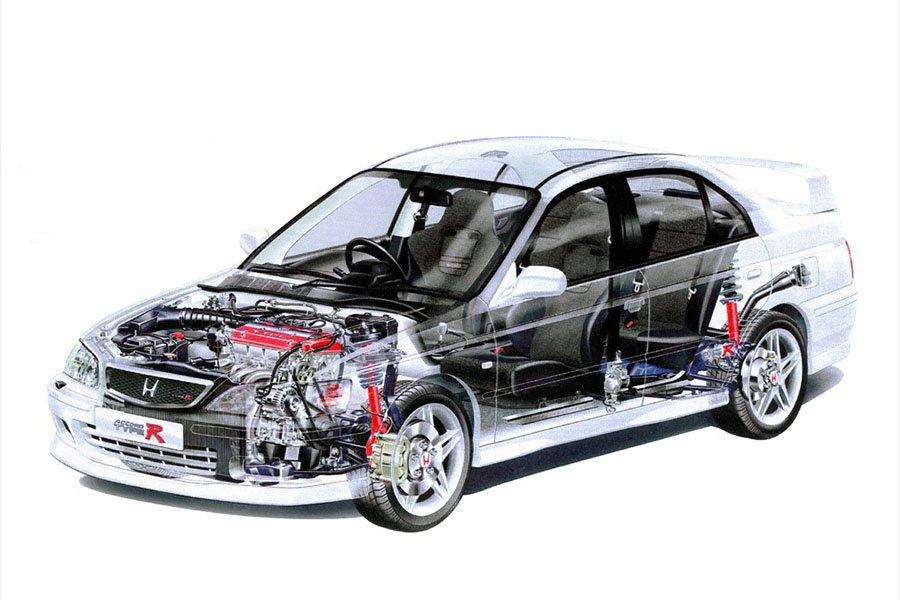
Suspension was via double wishbones at the front and a five-link arrangement at the rear. Stiff new spring and damper rates were employed for the Type R along with firmer bushes and model-specific anti-roll bars.
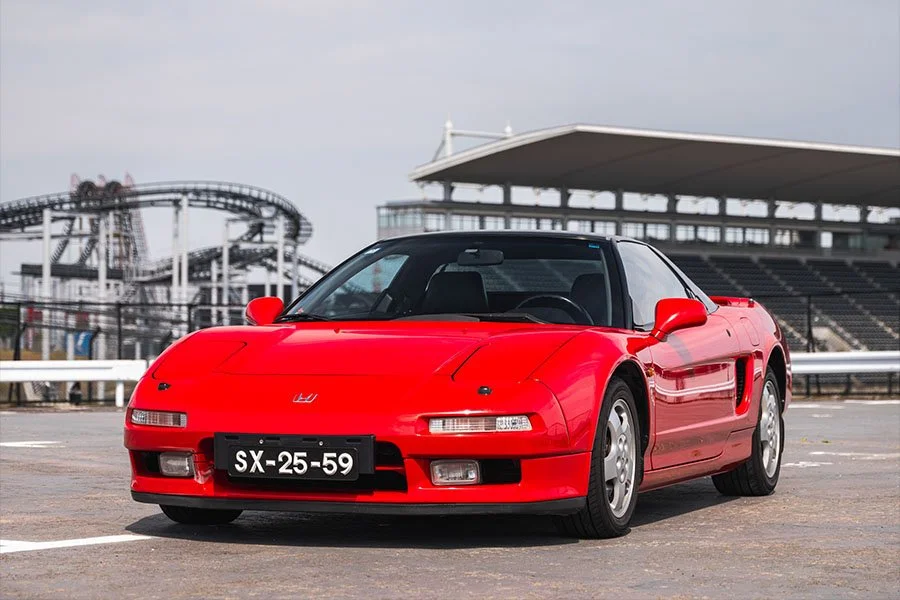
The NSX-derived front brake system employed 300mm vented discs with twin-piston floating calipers. At the back, solid 260mm discs with single-piston calipers were fitted. High-friction anti-fade pads were used all round. ABS and EBD came as standard.
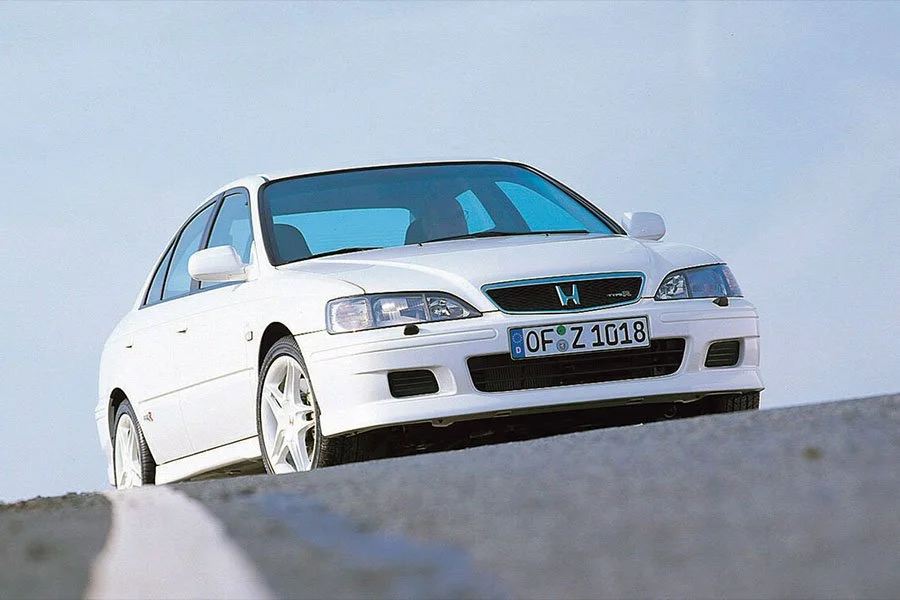
Also adopted at each corner were beefed-up wheel bearings. The wheels were new 7 x 17-inch five twin-spoke cast alloys manufactured by Speedline shod with 215/45 ZR17 Bridgestone Potenza RE050 rubber.
For the Accord Type R, the hydraulic power steering system was re-tuned to respond quicker and give greater feedback.
ENGINE / TRANSMISSION
In the engine bay was a specially developed version of Honda’s dual overhead cam H22 Inline 4 as found in the contemporary Prelude.
Boasting an aluminium alloy block and head, the latter with dual overhead camshafts and Honda’s renowned VTEC Variable Valve Timing & Lift Electronic Control system, the 2.2-litre H22 unit displaced 2157cc thanks to a bore and stroke of 87mm and 90.7mm respectively.
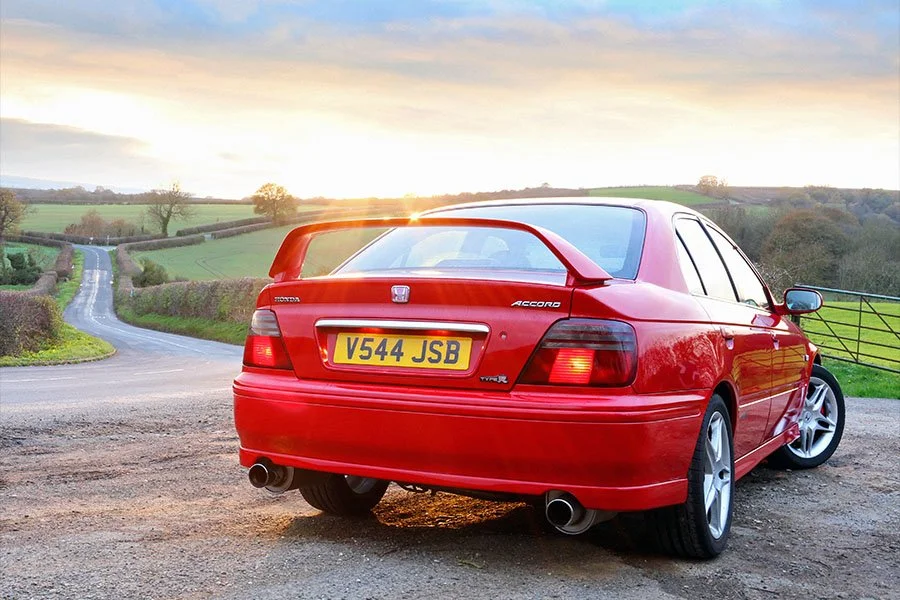
Created exclusively for Accord Type R, the Type H22A7 motor was hand-built in Swindon and then sent to Japan for final assembly. Here, low-friction pistons were added to precision-balanced cam and crankshaft assemblies. A large-diameter single rather than dual intake manifold was fitted for improved airflow at high engine speeds. Ports were hand finished and high-lift valves added. The exhaust system was a new 4-2-1 arrangement with stainless steel manifolds that ultimately split into two outlet pipes before exiting underneath either side of the rear bumper.
With compression hiked from 10.6:1 to 11.0:1, Honda quoted a peak output of 209bhp at 7200 rpm and 158lb-ft at 6700 rpm. The VTEC system began to kick in above 5500rpm when electronic sensors changed the camshaft profile to a more aggressive mode.
Power was fed to the front wheels through a close-ratio five-speed Type U2Q7 gearbox, a performance clutch and helical Torsen limited-slip differential.
BODYWORK
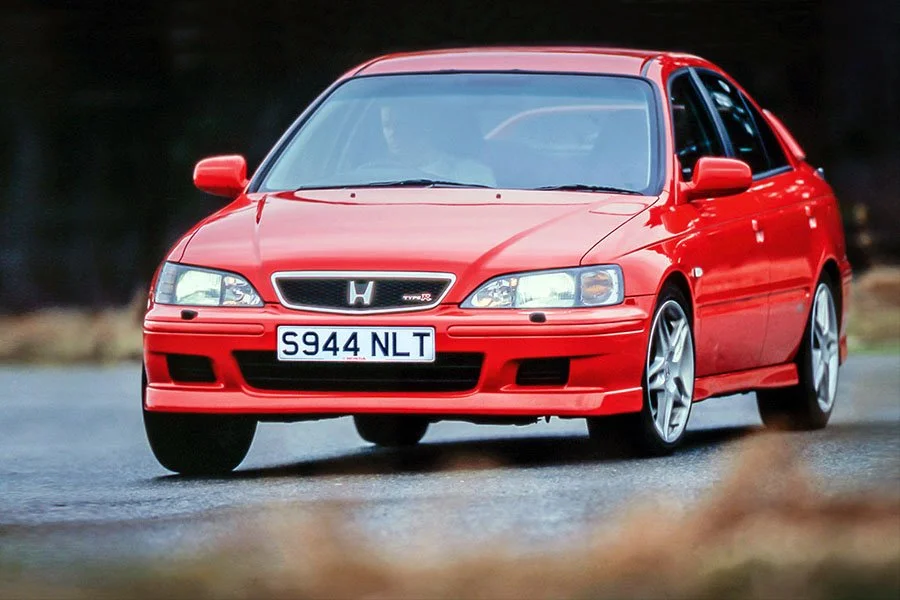
Externally, Honda added some mostly quite discrete new body parts that helped differentiate the Type R from the rest of the Accord range.
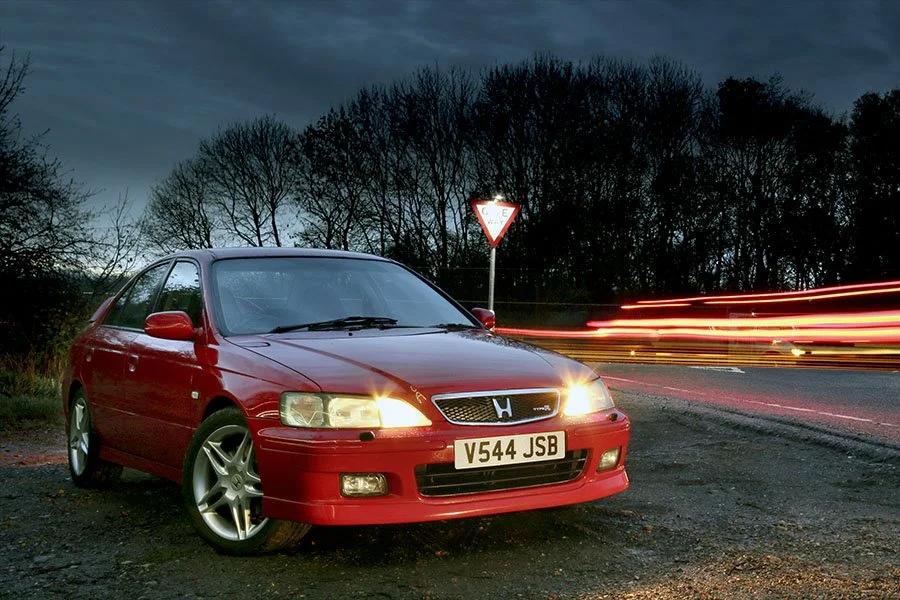
A redesigned front bumper assembly featured a re-shaped primary intake flanked by stylised brake cooling intakes (instead of fog lights). There was also a fully integrated body coloured chin spoiler. Further up, a meshed grille replaced the usual slatted item.
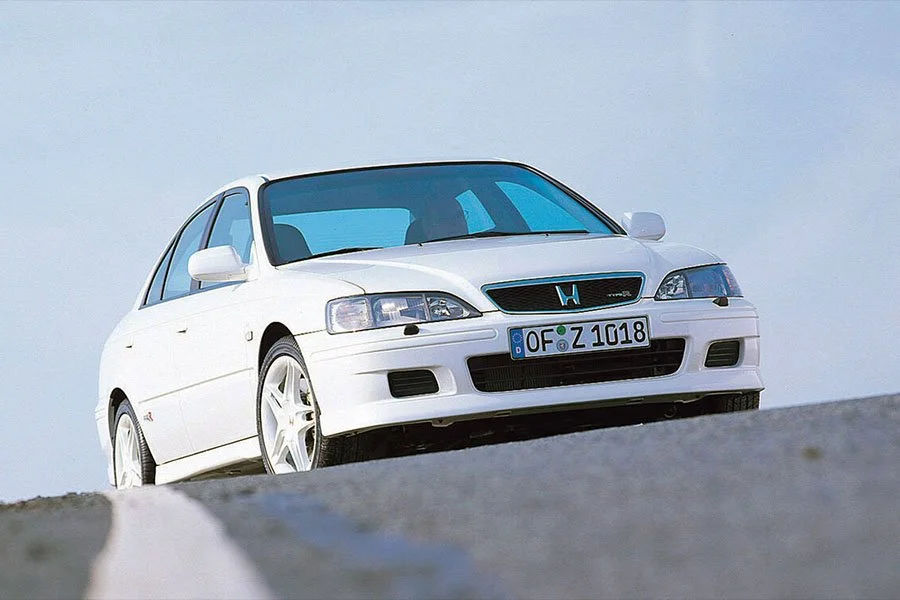
Down each flank, Honda added body coloured side skirts. No rubbing strips were fitted to the doors.
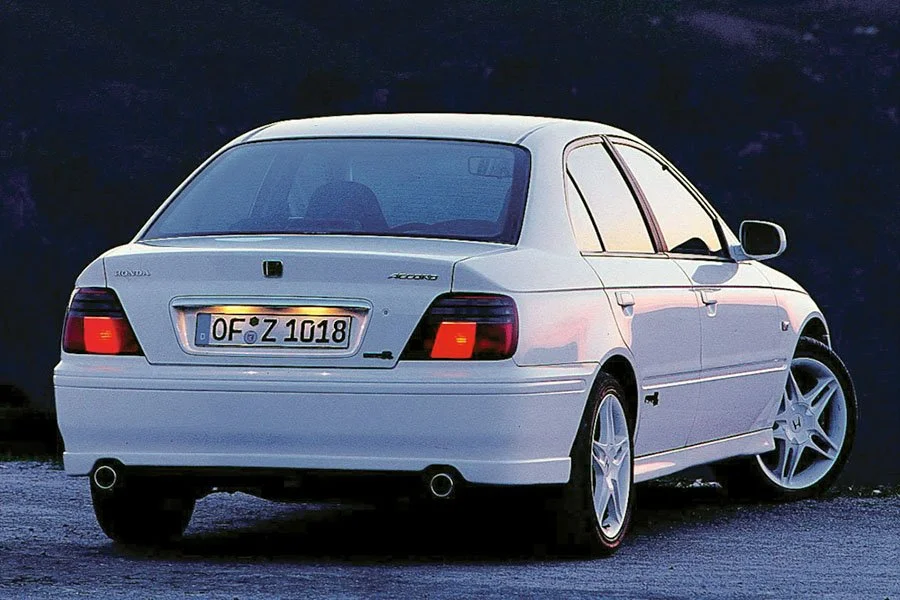
At the back, the rear bumper now featured a deep body coloured apron with cutaways for the duel exhausts.
Mounted atop the trunk lid was a large basket handle spoiler developed to increase high speed stability.
A red-backed Honda badge was fitted on the trunk lid.
Type R badges were added to the front grille and trunk lid along with matching Type R decals on the rear doors.
Ignoring the bumpers, skirts, rear spoiler and mirror casings (manufactured from polyurethane), all the body panels were fashioned from steel.
INTERIOR
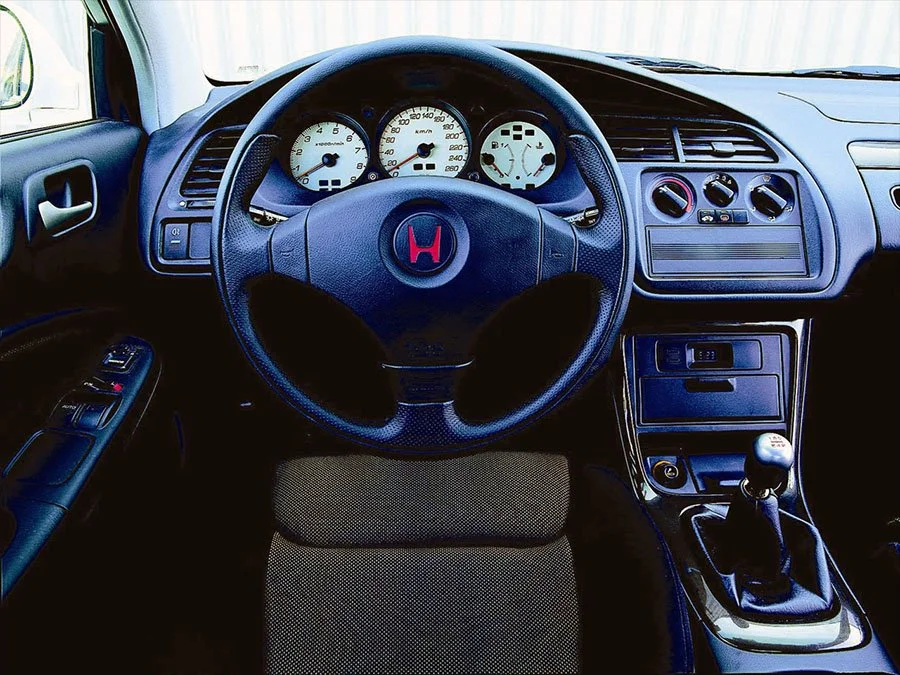
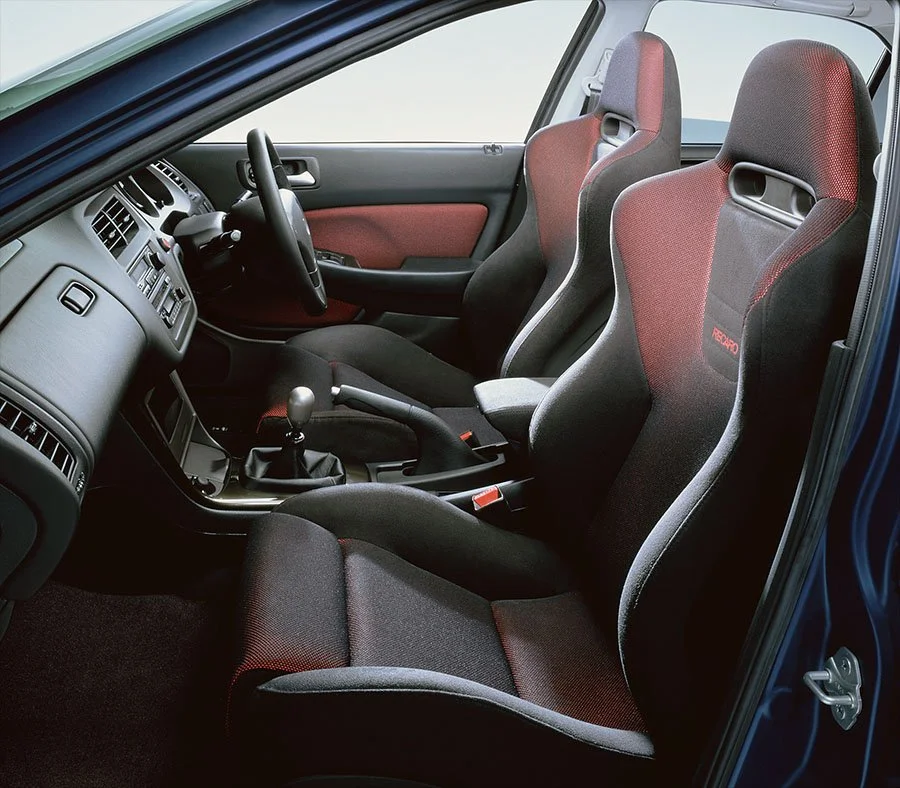
Inside, the Accord Type R came with new figure-hugging manually-adjustable Recaro seats trimmed in Black alcantara with Green woven gradient inlays. Other special equipment included a leather-wrapped three-spoke Momo steering wheel, a titanium-alloy gear shift knob and white-faced gauges (to include a custom 9000rpm rev counter). Metallic carbonfibre-effect centre console and door trim was fitted as standard.
In the interest of weight-saving, sound deadening was much-reduced and the Type R came with manual instead of electric rear windows. Other equipment left off the Type R included its audio system, seat-mounted front side airbags, pollen filter, luggage tie-down hooks, front map lights, heated door mirrors, glovebox felt, trunk lid lining and remote keyless entry.
Owing to the aforementioned reinforced rear bulkhead, the 60:40 split folding rear seat found on other Accords was absent from the Type R as was a central rear armrest.
Aside from the aforementioned list of equipment, all of the other interior fixtures and fittings were imported direct from the sixth generation Accord. Instrumentation comprised a central 280kmh / 180mh speedometer flanked to the left by that 9000rpm tachometer and to the right by a combined fuel / water temperature read out.
OPTIONS
Honda officially only offered the Accord Type R in three exterior colours: Vesuvio Red, Pirates Black and Titan Silver. In addition, a batch of 50 numbered Championship White cars were produced in left-hand drive for mainland Europe.
Instead of Black alcantara upholstery with Green woven inlays, customers could alternatively request Black with Red inlays.
Other optional extras included electric rear windows, air conditioning, rear parking sensors, a satellite navigation system, front fog lights, a Cat 1 ultrasonic alarm, a carbonfibre gearshift knob, door rubbing strips, a two-tone red and black leather version of the Momo steering wheel, Type R floor mats, a low-rise rear spoiler and spoiler delete.
A choice of audio systems was also available. Above and beyond the normal radio cassette player (fitted as standard in the UK), Honda offered a six or twelve-disc CD shuttle, voice controller and remote control.
The Accord Type R was not offered with a sunroof.
WEIGHT / PERFORMANCE
At 1306kg, the Type R weighed 54kg less than a poverty spec. Accord 1.8i S and came in 100kg lighter than a 2.0i ES.
0-62mph required 6.9 seconds and top speed was 142mph.
UK cars generally came with a slightly higher level of equipment to include a four-speaker radio cassette player and tipped the scales at 1348kg.
ACCORD EURO R (CL1)
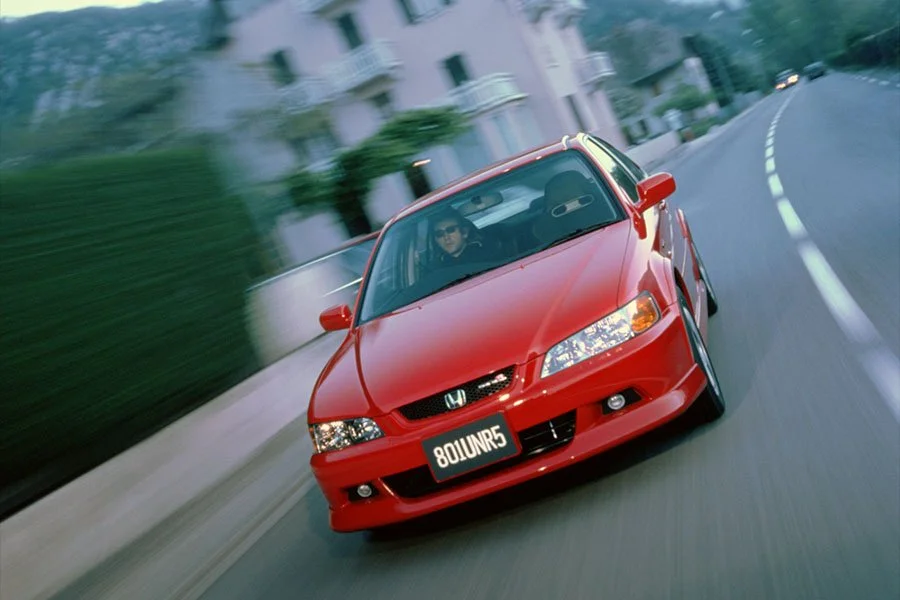
In June 2000, Honda launched a Japanese Domestic Market version of the Europe-only CH1 Accord Type R. Based on the face-lifted Japan-only CL platform released simultaneously, the CL1 Accord Euro R wore a different, slightly larger body to its CH1 counterpart, but featured nearly all the same chassis, suspension, brake and interior enhancements.
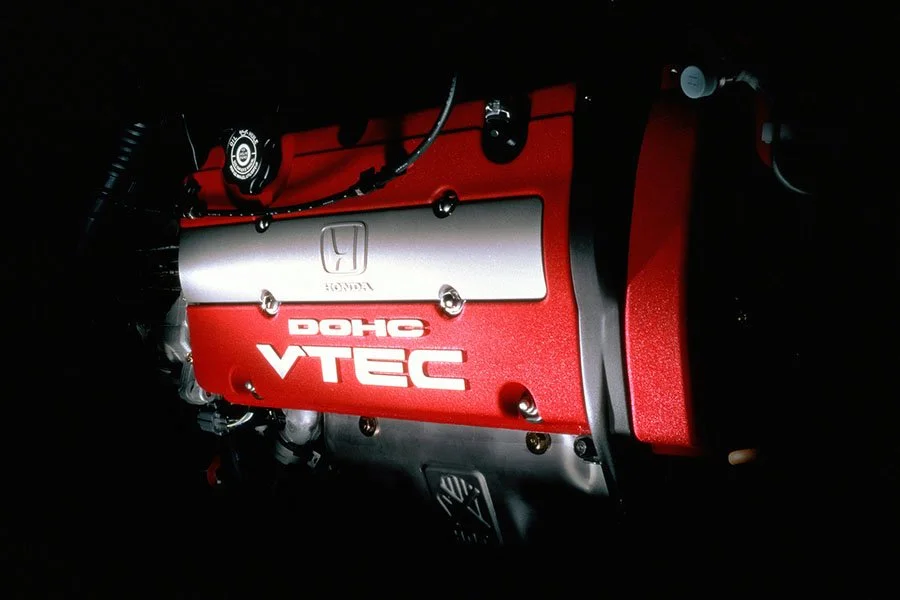
Aside from its obvious external differences, owing to less restrictive Japanese noise and emissions legislation, the CL1 Euro R came with an engine that offered slightly more power and torque than its CH1 counterpart.
Designated Type H22A, it produced 217bhp at an unchanged 7200rpm (up from 209bhp) and 163lb-ft at an unchanged 6700 rpm (up from 158lb-ft).
Power was again fed to the front wheels through a close-ratio five-speed gearbox (Type T2W4 as opposed to the CH1’s U2Q7 gearbox), a performance clutch and helical Torsen limited-slip differential.
Compared to other CL variants, the Accord Euro R came with a sporty new front bumper assembly complete with re-shaped intakes, custom spot lights and a jutting chin spoiler. Deep side skirts were also fitted along with a more aggressive rear bumper. Euro R badges adorned the meshed front grille and tail fascia. A body coloured high-rise rear spoiler was available as an optional extra.
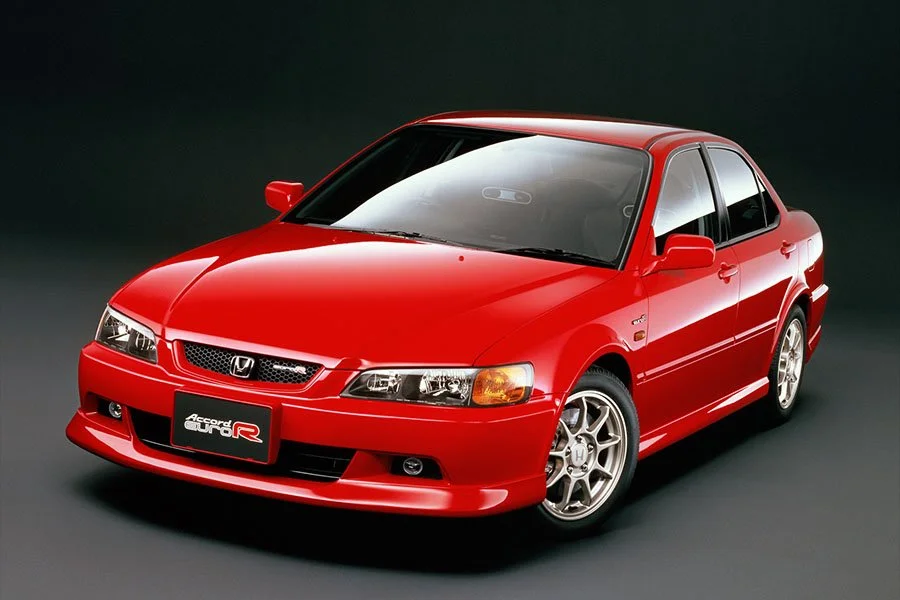
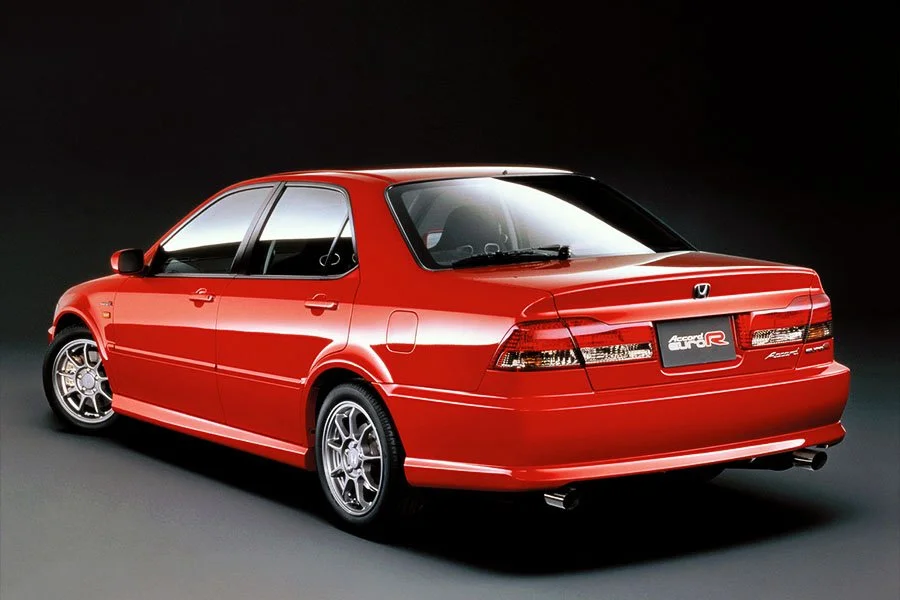
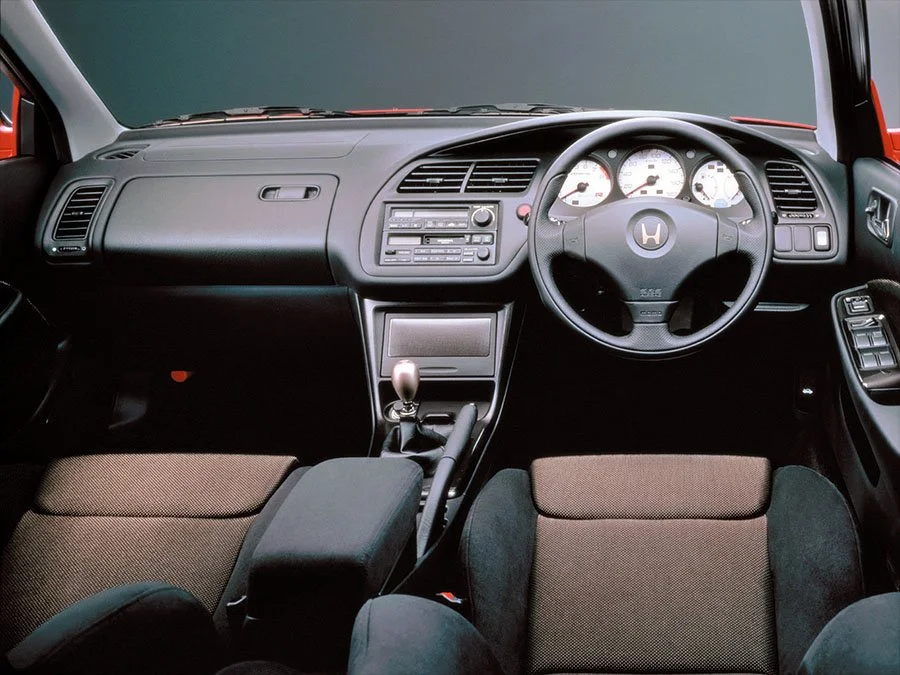
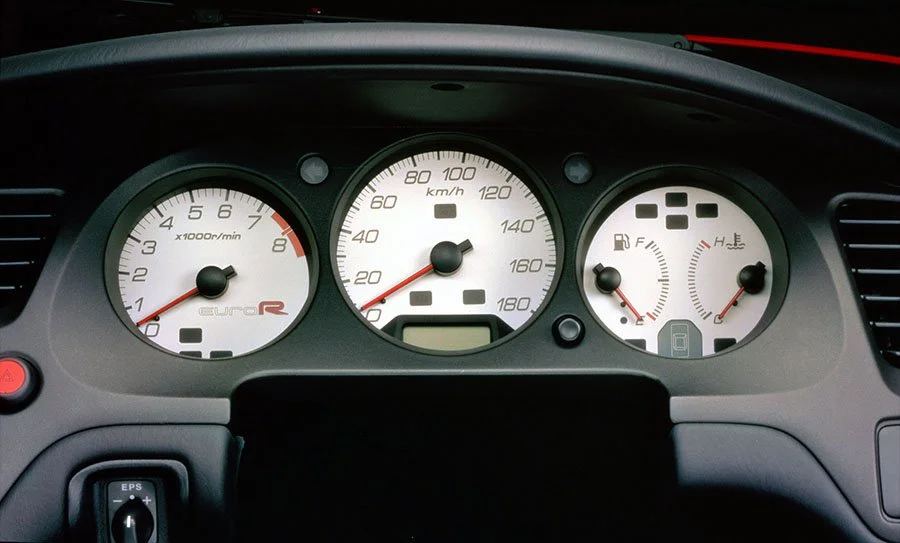
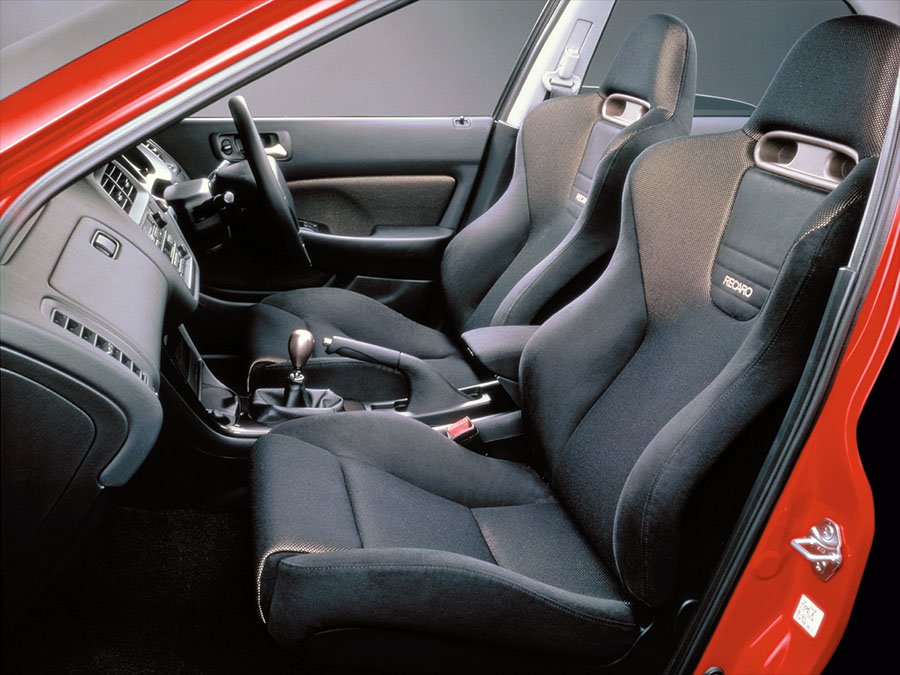
Instead of 17-inch Speedline wheels (as fitted to the CH1), the CL1 came with nine-spoke 6.5 x 16-inch Asahi rims in a Gunmetal finish shod with 205/50 R16 tyres.
Eight exterior colours were offered, some of which were exclusive to the Euro R: Milano Red, Indigo Blue Pearl, Nighthawk Black Pearl, Premium White Pearl, Taffeta White, Satin Silver Metallic, Signet Silver Metallic and Iron Blue Metallic.
Upholstery was Black alcantara with Green-Gold woven gradient inlays. Exposed carbonfibre-effect inserts were applied to the centre console, window switch surrounds and glovebox.
Most of the same optional extras were available, in addition to which Japanese customers were able to purchase all manner of engine, suspension, chassis, brake, wheel, body and interior enhancements from the official Mugen catalogue.
Honda quoted the un-optioned Euro R at a weight of 1330kg.
2001 ACCORD TYPE R (CH1) PRODUCTION CHANGES
In June 2001, Honda made several changes to the CH1 Accord Type R.
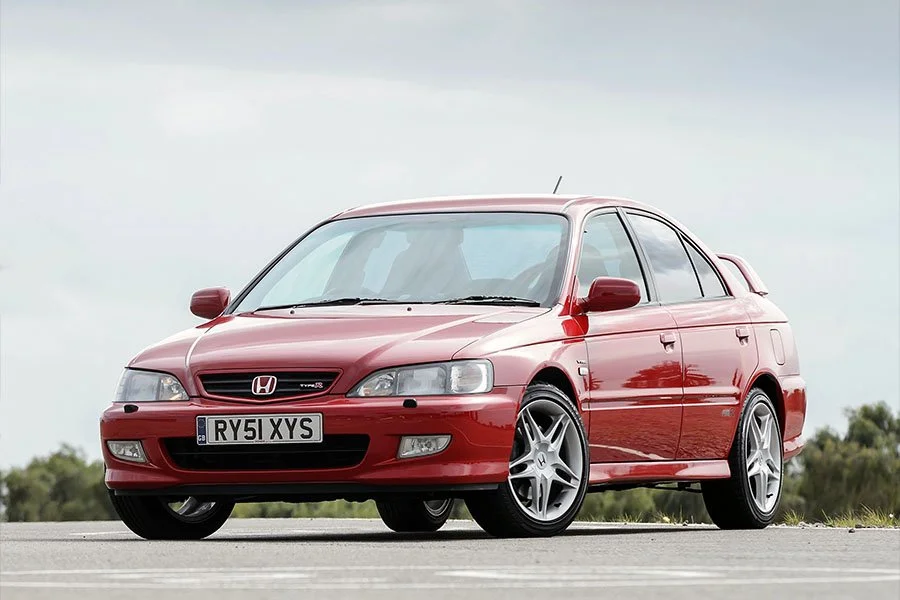
Most noticeably, the original front bumper assembly was switched for a standard fog light-equipped item to which a discrete black chin flap was added. The meshed front grille made way for a standard slatted item, but the original black-faced Honda emblem was switched for a red-face. The back bumper was changed to a unit without exhaust cutaways as these updated variants now came with exhaust tips angled downwards and that no longer featured plated tips. Mounted on the roof was a smaller ‘Bee Sting’-type aerial.
Three new colours were offered: Milano Red, Nighthawk Black and Satin Silver.
Inside, an aluminium alloy gear knob replaced the earlier titanium alloy item.
Mechanically, the five-speed gearbox was enhanced with stronger synchros.
ACCORD EURO RX (CL1)
For the 2002 Model Year, the Japanese Domestic Market CL1 Accord Euro R was re-named the Euro RX.
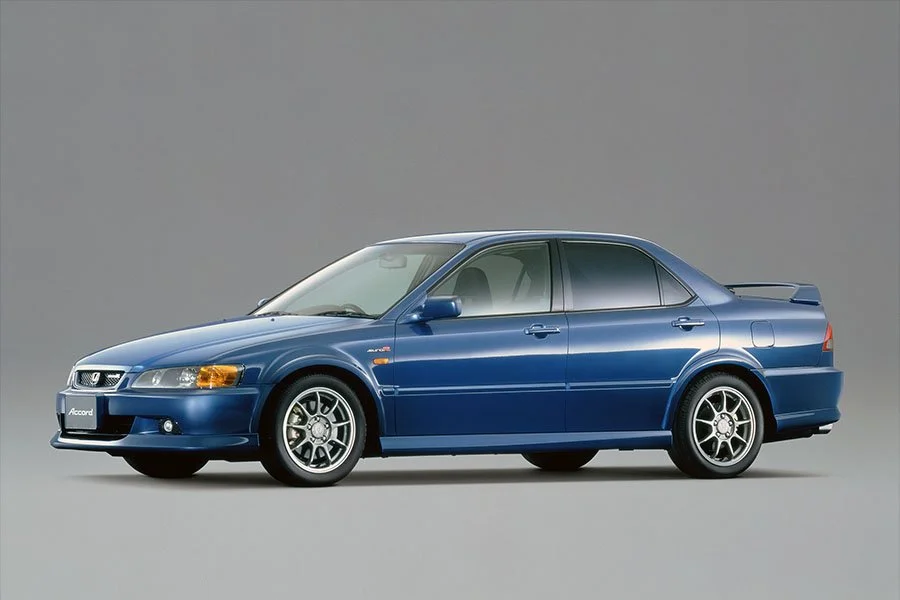
This revised model came with bronze-coloured Asahi alloy wheels, the previously optional high-rise rear spoiler fitted as standard, rear privacy glass and a titanium-alloy gear knob. Black alcantara upholstery with Red woven gradient inlays was added to the options list.
Mechanically, the RX featured a re-programmed ECU (to address accelerative hesitation after cold starts) and stronger gearbox synchros.
END OF PRODUCTION
Production of the CH1 Accord Type R ran from mid 1998 to mid 2002. During this time 3789 cars are understood to have been completed, 2081 of which were destined for the UK market.
As yet, Honda has not published precise production figures for the CL1 Accord Euro R and Euro RX but somewhere in the region of 2000 units were most likely built.
Text copyright: Supercar Nostalgia
Photo copyright: Honda - https://global.honda/