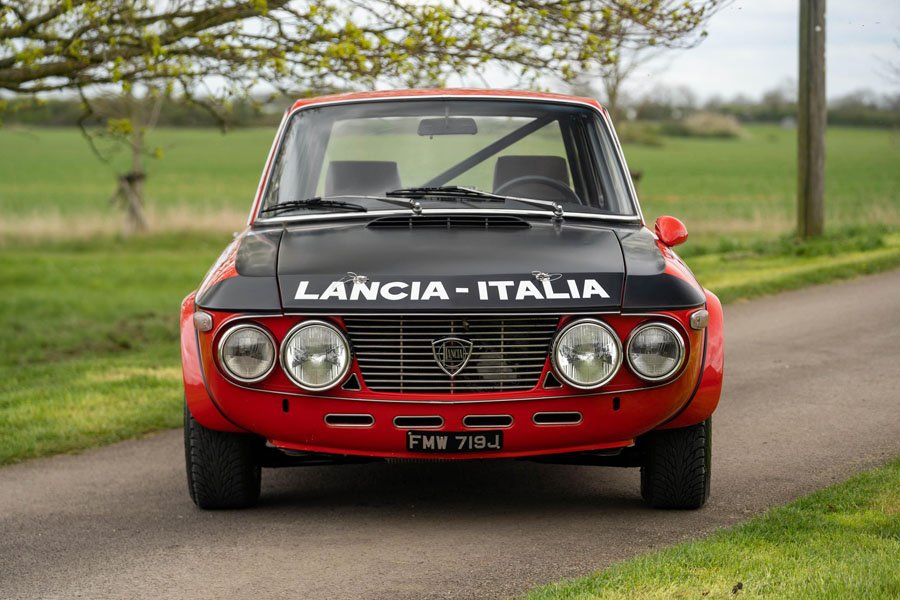
One to Buy: ex-works 1971 Lancia Fulvia 1.6 HF
/ Ben Tyer
Lancia’s ambitious motor sport programme of the early 1950s had seen the company compete in both top flight sports car racing and Formula 1. However, money problems saw the financially stretched Lancia family pull the plug soon after the death of star driver Alberto Ascari in May 1955.
Scuderia Lancia’s assets were sold to Enzo Ferrari who went on to race the promising D50 F1 car for the next couple of seasons.
In 1956 the Pesenti family took control of Lancia.
The best part of a decade then passed until Lancia returned to motor sport; 1965 saw HF Squadra Corse (which had originally started out as a privateer racing team founded by Lancia enthusiasts) become the official works team under the management of Cesare Fiorio.
Various High Fidelity iterations of the front-wheel drive Fulvia Coupe were subsequently produced and Lancia went on to win the Italian Rally Championship every year bar one between 1965 and 1973.
In 1972, the Fulvia won the International Championship for Manufacturers which was the precursor to the inaugural 1973 World Rally Championship. By this time, the Lancia motor company had been sold to another new owner: the Fiat Group.
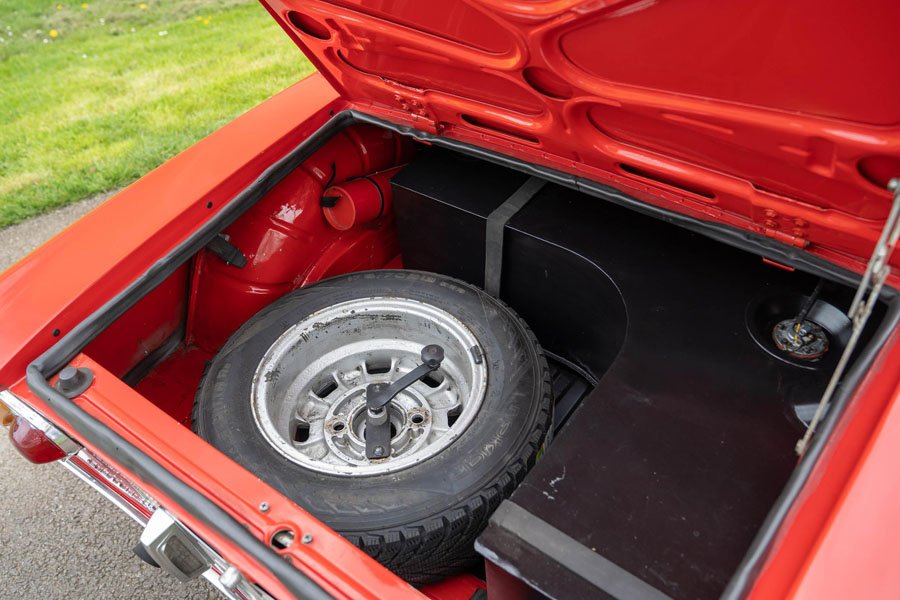
Currently on offer at The Hairpin Company in Compton Basset, Wiltshire, is one of Lancia’s works Fulvias from the company’s successful 1971 campaign.
Chassis 2263 was used in five events that season. It picked up a brace of outright wins in its final two outings (at the Rally Alpi Orientali and Rallye Medio Adriatico) plus a class win (and third overall) on the Rally 4 Regioni. The car’s other two appearances saw it fail to finish the Rally d’ Italia and bag sixth on the Rallly 999 Minuti. 2263’s driver roster included Harry Kallstrom, Simo Lampinen and Sergio Barbasio.
Today the car is offered in excellent condition with an FIA HTP valid until the end of 2026.
For further information, visit The Hairpin Company website: https://www.thehairpincompany.co.uk/
While most examples from Lancia’s 200-strong batch of 037s built to homologate the model for Group B competition led a relatively pampered life, a handful were rallied by their owners and a few…
As rallying morphed towards generally shorter, flat out special stages, the cars required to win at the top level became increasingly specialised. However, despite the massive prestige afforded to…
Of the myriad Delta Integrale special editions offered during the first half of the 1990s, perhaps the most famous are the Martini variants that mimicked Lancia’s works cars piloted to such great…
As if the paltry 200-car homologation requirement for Group B did not permit sufficiently extreme machinery, manufacturers were permitted to build even more potent Evolution variants from the…
Being a child of the 80s and growing up in the 90s, my must-have-driven cars are almost all contemporary, they are the dominators of their respective categories. Added to this list was what is probably the most ferocious and extreme rally car ever legalized by the Federation: the Delta S4 Group B.
When the Lancia Delta was launched at the Frankfurt Motor Show in September 1979, no-one could have predicted the boxy five-door hatchback would go on to become the most successful rally car…
During the early 1950s, Lancia embarked on an ambitious sports car racing programme that most notably yielded victories at the Mille Miglia, Targa Florio and Carrera Panamericana. The privately…
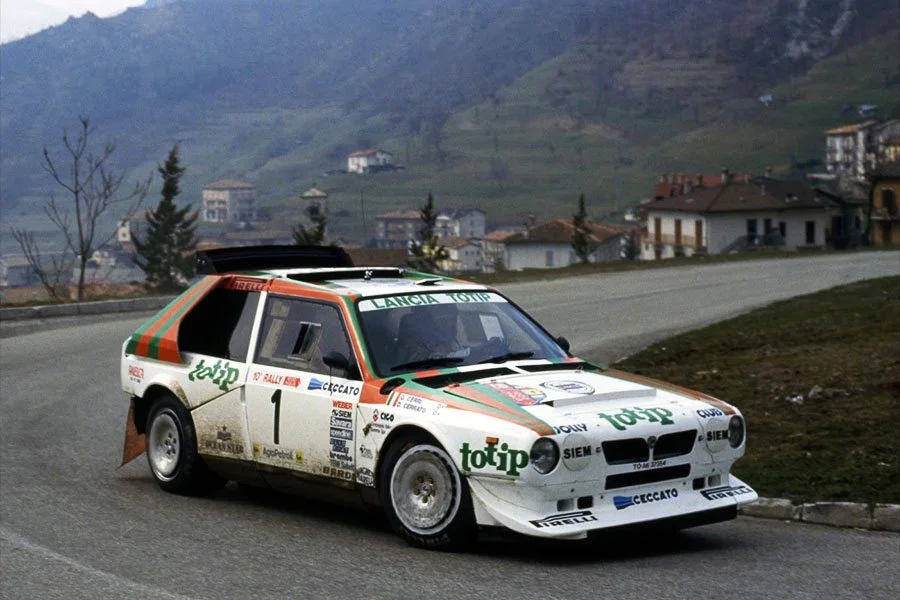
Chassis 208 was one of five S4s used by the Totip-backed Jolly Club outfit during 1986. That season, Jolly Club’s programme focused on Dario Cerrato’s attempt to retain the European and Italian Rally…
During a 20 year period from the early 1970s to the early 1990s, the combined efforts of Fiat and its Lancia subsidiary won championship after championship at rallying’s highest level. After the Fulvia…
There’s little better than having a great car with a special history to make it stand out from the crowd. Collector-grade examples of Integrale Evoluziones are already pretty expensive, but this is…
In order to beat the all-conquering Peugeot 205 T16, the engineers at Lancia and its competition arm Abarth had to come up with a remarkable machine that, like its French rival, was designed…
Of the myriad special editions offered by Lancia on the Delta HF Integrale Evoluzione platform, arguably the most spectacular was the Evo 1-based Martini 6 produced to celebrate the firm’s sixth…
Chassis 204 was one of the Delta S4s campaigned most extensively by the works Martini Lancia team. It debuted in the hands of Henri Toivonen and Sergio Cresto at round two of the 1986 World…
Unlike most manufacturers who simply developed hot versions of existing models to satisfy the minimum production requirements for classes that demanded any significant volume, Lancia’s…
As a consequence of its purebred nature, rear-drive layout and supercharged rather than turbocharged engine, the Lancia Rally provides arguably the best driving experience of all the Group…
During a seven year stretch between 1987 and 1992, Lancia secured all but two of the 14 World Rally Championship titles up for grabs. Seven consecutive Manufacturer crowns for various iterations of…
After a disappointing debut season in 1982, the Lancia 037 came good in 1983 by winning that year’s Driver and Manufacturer World Rally Championship titles. The rear-wheel drive 037’s state-of-art…
Despite having been launched back in 1979, Lancia’s compact Delta proved the class of the Group A field during the second half of the 1980s following the FIA’s decision to impose a ban on radical…
With stints in Formula 1 and top flight sports car racing having helped edge Lancia towards bankruptcy, the Turin firm, renowned for its innovative engineering solutions, was sold to the Pesenti…
Chassis 225 was one of the last Delta S4s in ‘Corsa’ trim called up for service by the official Martini-backed squad for Lancia’s 1986 World Rally Championship campaign. The car debuted alongside…
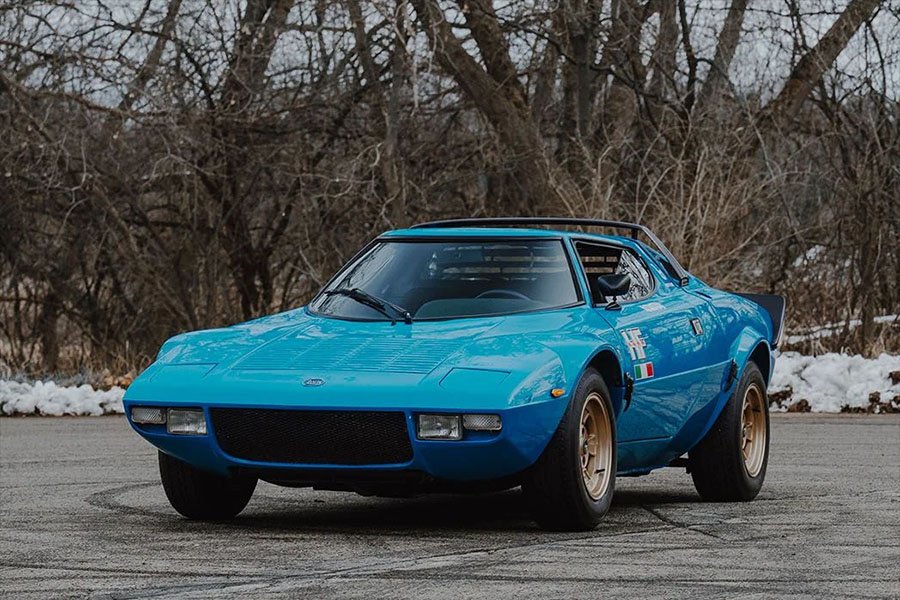
Between 1974 and 1976, the Lancia Stratos established itself as among the most successful rally cars of all time winning three Manufacturers’ titles for the Turin-based firm. However, ahead of the 1977…
Chassis 214 was an S4 ‘Corsa’ reserved for use by the Martini-backed Lancia factory squad. The car made its debut on round three of the 1986 World Rally Championship, Rally Portugal. which took…
Although the likes of Pininfarina, Zagato and Ital Design came up with some memorable creations during the late 1960s and mid 1970s, it was Bertone that emerged as king of the wedge era.
The Evoluzione was Lancia’s last and perhaps most significant technical push to keep the all-conquering Delta HF Integrale at the head of the field in top flight rallying. Launched at the…
In addition to the official Martini Racing squad, Lancia supplied Delta S4 ‘Corsa’s to the Jolly Club and Grifone teams during 1986, both of whom were given quasi works status. Chassis 203 was one…
Alongside chassis 202, chassis 207 was one of the S4s to ‘Corsa’ trim that Lancia used for the model’s WRC debut on the 897km all-gravel 1985 RAC Rally which took place between November…
As more and more manufacturers piled into rallying following the introduction of Group B regulations for 1982, the new generation of purpose-built machinery led to an explosion in media…
By virtue of its extraordinary state-of-art specification and 205 T16-toppling competition record, Lancia’s Delta S4 can legitimately be regarded as the ultimate expression of the legendary Group B…
As a consequence of an extremely high price at a time of a severe economic downturn, Lancia’s Dutch distributor, Lusso Service Holland, only took orders for 24 of their Lancia Delta HF Integrale…
Of the myriad special editions created by Lancia on the Evoluzione 1 and 2 platform, arguably the most sought after is the Club Italia of which just 15 were built for VIP customers in 1992. In addition…