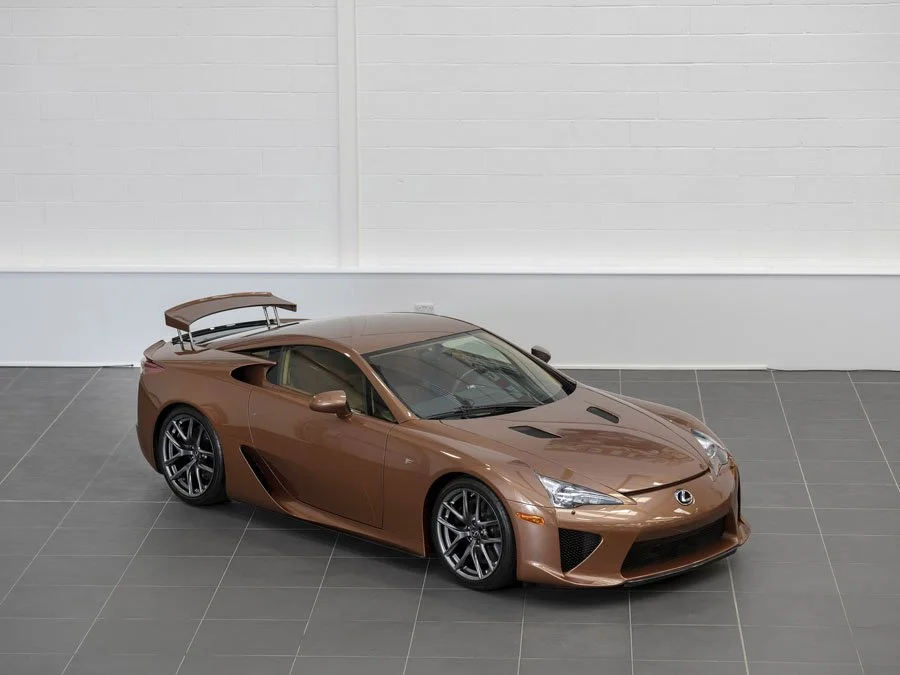
One to Buy: 1 of 3 Pearl Brown 2012 Lexus LFA
/ Ben Tyer
Although Toyota’s seven-year $2b F1 programme of 2002 to 2009 ultimately yielded just 13 podiums from 139 starts and a best finish of fourth in the 2004 Constructors’ championship, it led to the firm producing a spectacular top flight supercar in the hope of further enhancing its high performance credentials.
After myriad prototypes, the production-ready Lexus LFA was finally unveiled at the Tokyo Motor Show in October 2009 following its official announcement two months prior.
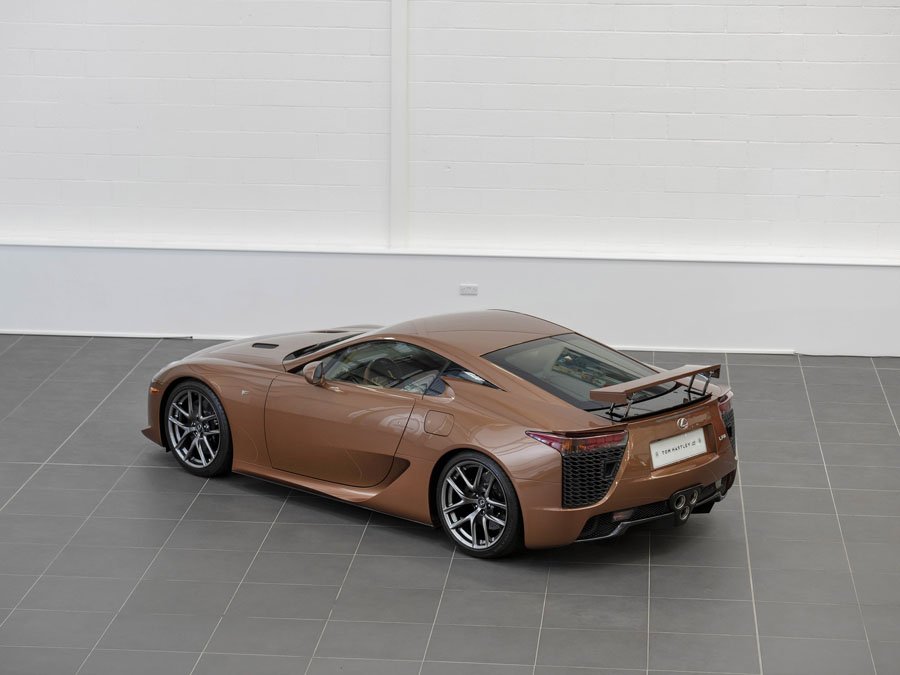
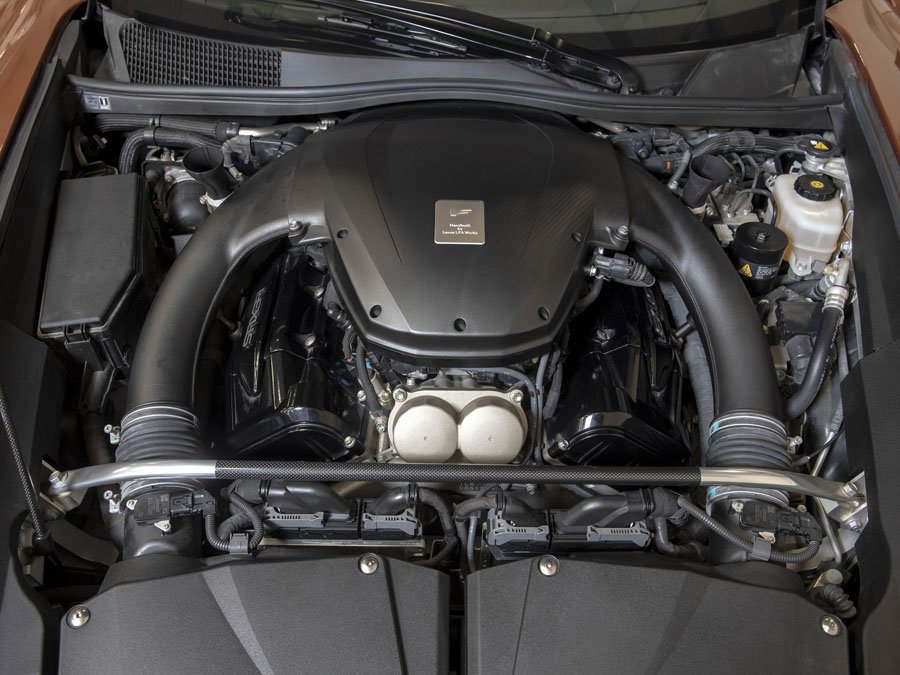
It featured a CFRP monocoque construction with double wishbone suspension up front, a multi-link arrangement out back and vented carbon brakes all round. In the engine bay was a 552bhp normally aspirated V10 coupled to a six-speed F1-style automated manual transaxle gearbox.
LFA production ran for two years from December 2010 until December 2012. 500 were built but despite the car’s enormous price, Toyota lost a considerable sum of money on every car sold.
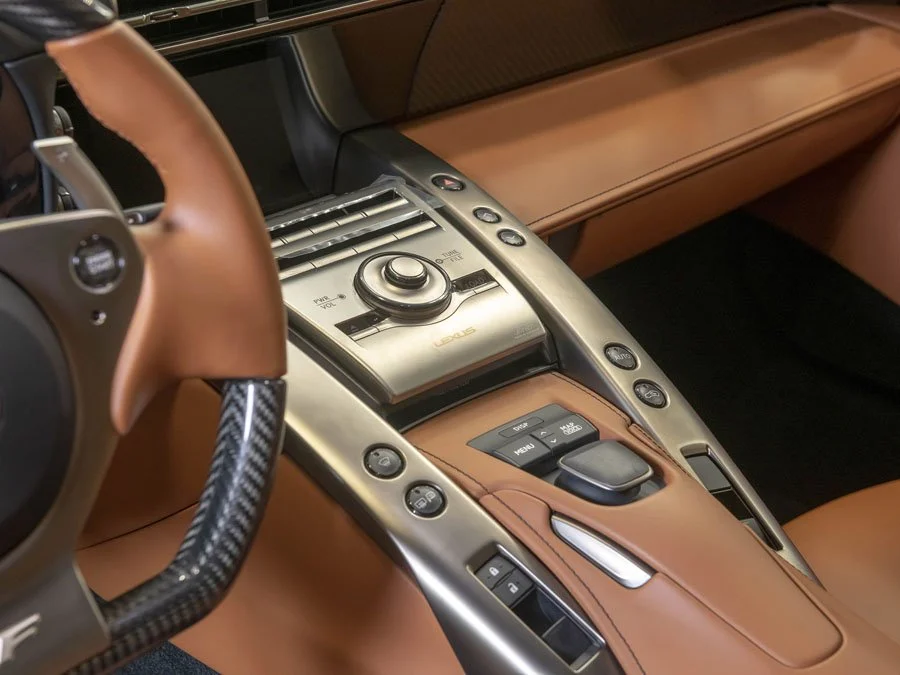
436 of the 500 units were completed to standard trim and the remaining 64 equipped with the Nurburgring Performance Package. Of these 436, 238 were left-hand drive, a fine example of which is currently residing at the Tom Hartley Jnr. showroom in Ashby-de-la-Zouch, Leicestershire.
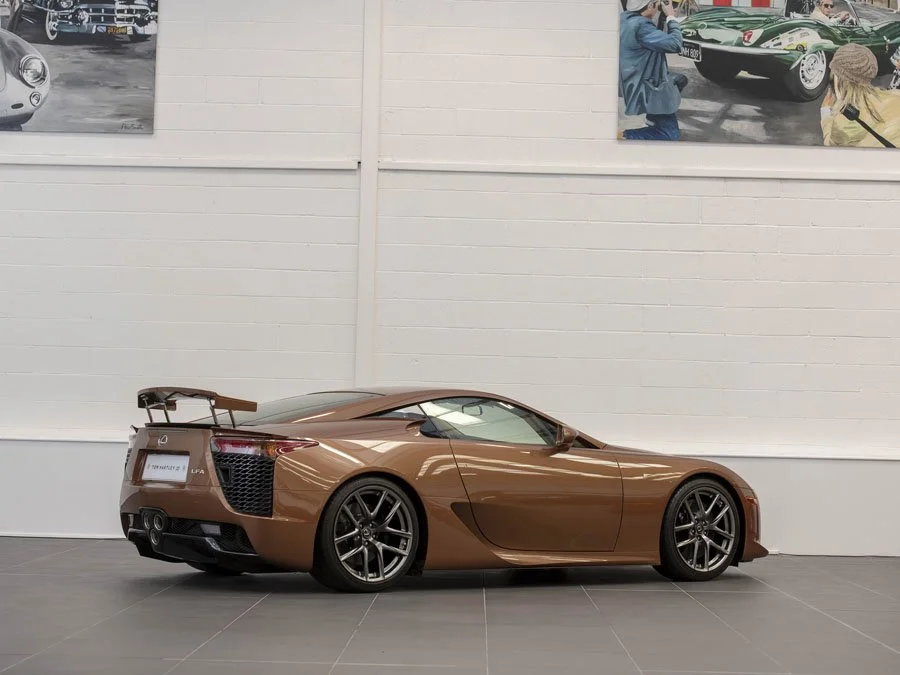
One of just three LFAs finished in the unusual colour of Pearl Brown, chassis 482 has covered just 1208 miles from new, despite which it has accumulated the most remarkable maintenance history with a service carried out every year following delivery.
For more information visit the Tom Hartley Jnr. website at: https://www.tomhartleyjnr.com/
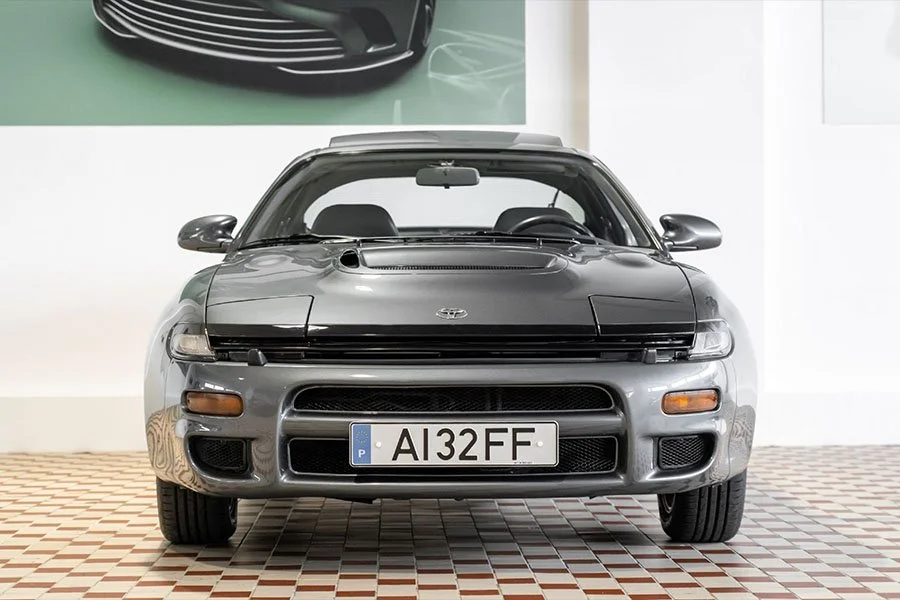
Although Toyota released the heavily revised Celica ST185 in late 1989, the Japanese manufacturer continued to run its older ST165 in the World Rally Championship for another two seasons until an…
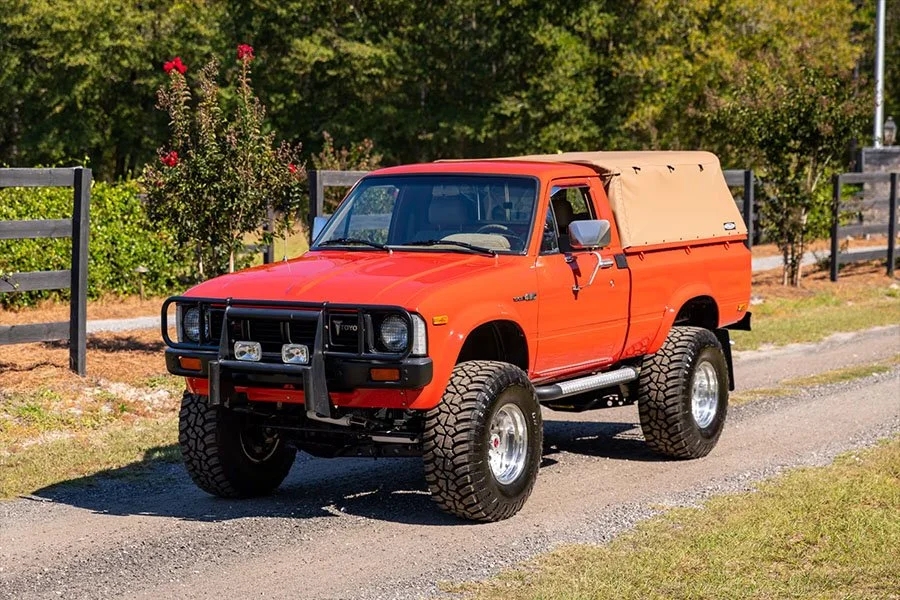
We love a vintage Toyota off roader here at Supercar Nostalgia and one of our recent favourites will be going under the hammer at Mecum’s Kissimmee auction in Florida on January 10th. Completed in…
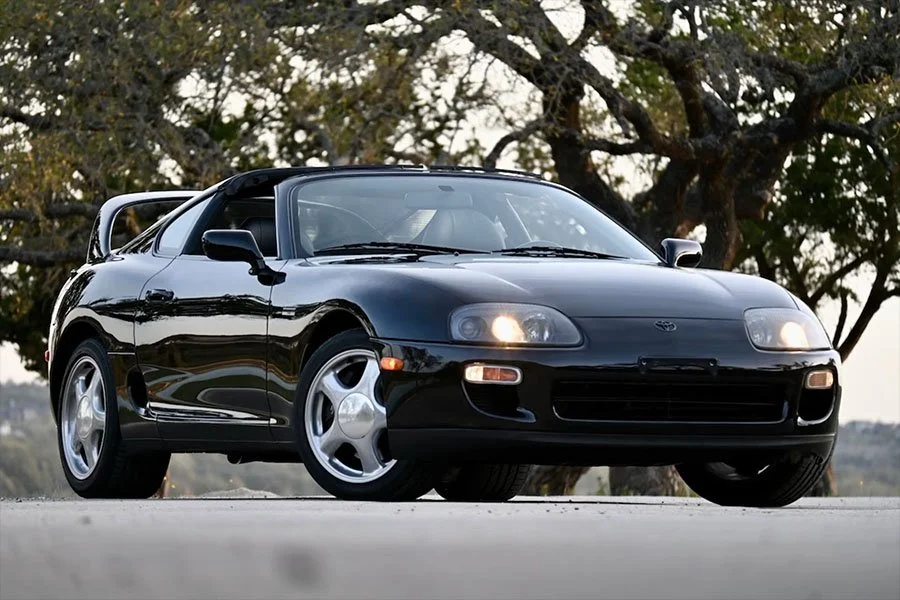
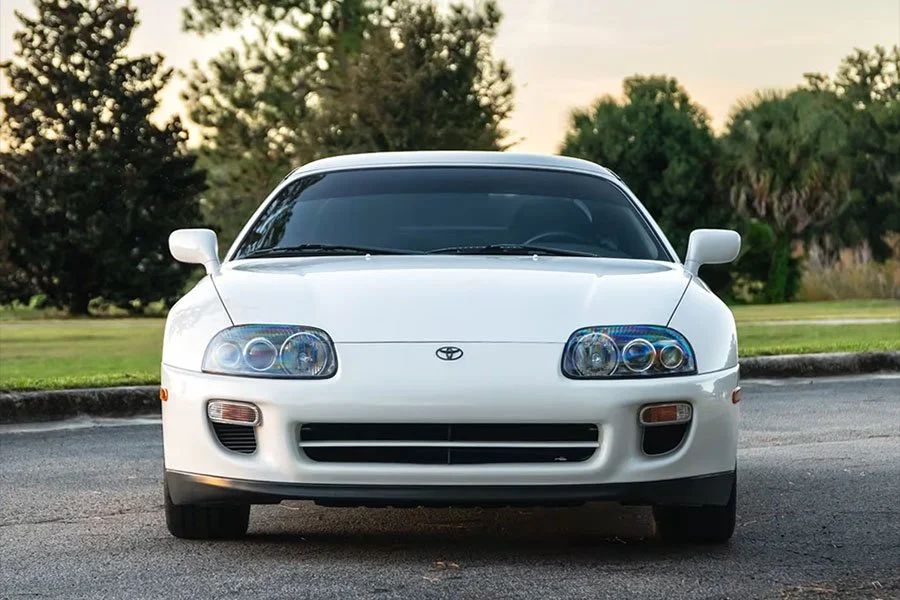
For the fourth generation Supra, Toyota focused on creating its highest performance model thus far. Accordingly, this latest iteration of the popular Supra theme (code-named A80) came in for a…
After Group B cars were banned from the World Rally Championship and Group A took over as the premier class, Lancia’s Martini-backed Deltas collected a trio of back-to-back Driver and…
In terms of iconic four-wheel drive utility vehicles from the 20th century, Toyota’s first generation Land Cruiser is right up there with the best of them. Initially offered as a two-door Hardtop, Toyota…
Although Mazda became the first Japanese manufacturer to take outright victory at Le Mans, Toyota had arguably been even more committed to the cause having spent vast sums on its various…
Despite an enviable back catalogue of sporting motor cars that variously achieved icon status, massive commercial success or major competition honours, until the late 2000s Toyota had never…
With the first generation Mr2 having proven a massive commercial success (Toyota shifted nearly 165,000 of the things in five years) it was no surprise that the Japanese giant launched a second…
Having unveiled the 2000 GT amid great fanfare in late 1965, customer deliveries began in the spring of 1967 by which stage Toyota’s hoped-for figure of 1000 sales a month was already looking…
Having successfully campaigned third generation A60 Celicas on Toyota’s behalf in IMSA’s junior GTU category, Dan Gurney’s renowned All American Racers was commissioned by the Japanese…
Although the gen. three Celica TCT was fairly conventional by the super specialised nature of most Group B creations, its toughness and reliability helped Toyota to half-a-dozen WRC wins on the…
Toyota’s 2000 GT represented the first attempt to build a high-end production sports car by a Japanese manufacturer. Powered by a dual overhead cam 150bhp two-litre straight six, the 2000 GT…
Although Toyota’s seven-year $2b F1 programme of 2002 to 2009 ultimately yielded just 13 podiums from 139 starts and a best finish of fourth in the 2004 Constructors’ championship, it led to the firm…
Toyota created its offshoot Lexus brand in 1989 to market the company’s new LS 400 luxury saloon in foreign regions. The LS 400 was a critically acclaimed four door sedan conceived to take on the…
Having presented a trio of design concepts for their new front-engined supercar since 2005, Lexus finally unveiled the finalised LFA at the Tokyo Motor Show in October 2009. Production versions then…
For the 1988 season, Toyota created the 88C which was a fairly straightforward evolution of the previous year’s 87C. These updated cars, again powered by a turbocharged 2.1-litre 3S-GT inline four…
Toyota’s iconic 2000 GT came about as the result of a proposal from Yamaha who wanted to create a two-seat Grand Tourer in the mould of Jaguar’s E-type. At the time, Yamaha had a…
Toyota first started to compete in top flight rallying during the early 1970s when the firm began a long-term association with Swedish driver, Ove Andersson. In 1975, Andersson’s rallying operation…
For 1985, Toyota decided to embark on a factory Sportscar programme with the intention of becoming the first Japanese manufacturer to win at Le Mans. However, the Group C era could not…
Auto manufacturers began to adopt the mid-engined layout for their small displacement sports cars in the late 1960s. By the early 1970s, models like the Porsche 914 and Fiat X1/9 were being sold in vast…
Toyota’s Group 7 programme began in the autumn of 1967 when the green light was given for it to replace the 2000 GT which had been campaigned in various disciplines since 1966. The new…
After encouraging results with the 2000 GT-based 311 S at the 1966 Japanese Grand Prix and Suzuka 1000km, Toyota decided to attempt a series of high speed endurance records. The choice…
Toyota first started to compete in top flight rallying during the early 1970s when the firm began a long-term association with Swedish driver, Ove Andersson. In 1975, Andersson’s rallying operation…
During the 2000 GT development phase, Toyota decided to take their first step into the world of motor racing. At the time, Japan was still recovering from the affects of World War 2. While the…
In December 1964, the Toyota and Yamaha Motor Companies began a collaboration to produce a sleek high performance Coupe unlike anything yet seen from a Japanese manufacturer. Toyota…
You Only Live Twice was the fifth James Bond movie and was set largely in Japan. Bond was once again played by Sean Connery and the plot for this latest adventure involved the terrorist…