Guide: Turbo Tech. - a Historical & Technical Appraisal of the Toyota Celica ST185 GT-Four
/
BACKGROUND
After Group B cars were banned from the World Rally Championship and Group A took over as the premier class, Lancia’s Martini-backed Deltas collected a trio of back-to-back Driver and Manufacturer titles between 1987 and ‘89.
Mid-way through the ‘88 season, Toyota had thrown its hat into the ring with an all-wheel drive and turbocharged special based on the fourth generation T160-line Celica. Code-named ST165 but better known as the Celica GT-Four, the car showed much early promise and finished the ‘88 campaign with its best result of the year: third on the RAC Rally.
The Celica GT-Four then took its first WRC victory at Rally Australia in September 1989 and, after just one full season, delivered sufficient points that Toyota finished second in the Manufacturer standings.
Also in September 1989, Toyota unveiled is fifth generation Celica: the T180 line.
Launched for the 1990 model year, the re-styled T180 Celica most obviously ushered in a softer, more curvaceous design language. Among the headline-grabbing features offered on some variants were four-wheel steering and active control suspension.
Customers could choose from a range of tweaked inline four cylinder engines and three basic body styles: Liftback Coupe, Notchback Coupe and Convertible. The handsome Liftback Coupe came in standard and wide-bodied format.
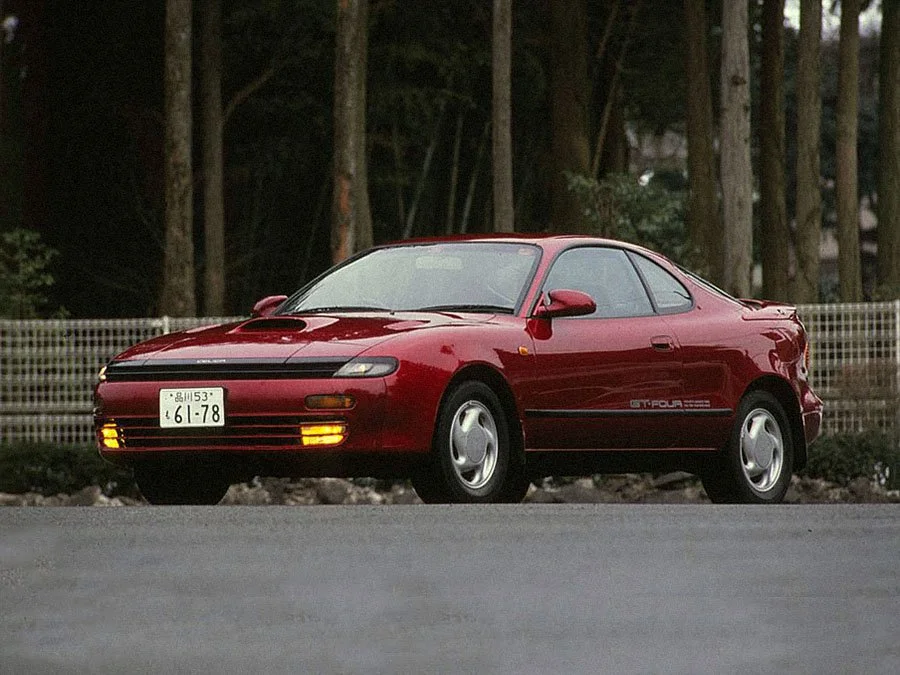
Sitting atop the range was Toyota’s latest GT-Four: the ST185.
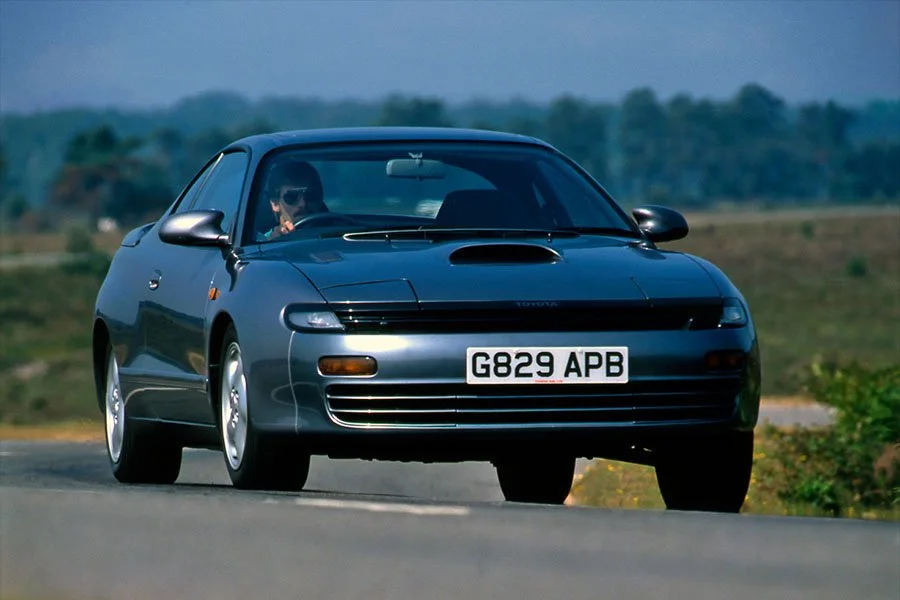
Marketed as the Turbo 4WD in Europe and the Turbo All-trac in North America, the new GT-Four brought with it a second generation 3S-GTE engine that featured a state-of-art twin entry turbo system.
The ST185 was initially sold as:
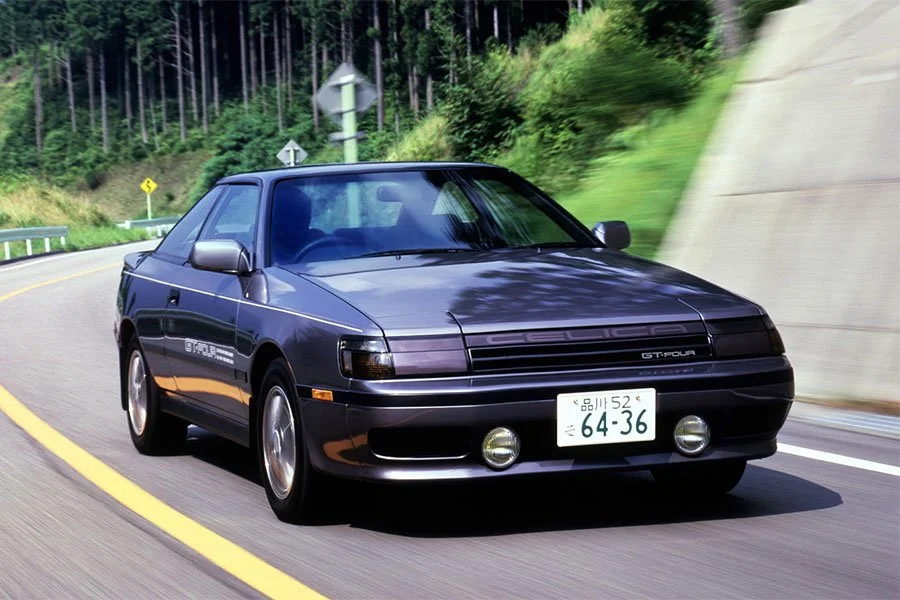
the GT-Four in Japan (with a narrow body)
the All-trac Turbo in the United States (with a wide body)
the Turbo 4WD in Europe (with a wide body)
Production began in October 1989.
CHASSIS
The T160 steel monocoque was an evolution of the previous platform. It shared the same 2525mm wheelbase but was slightly longer overall. Thanks to a little extra reinforcement, it was much stronger than before. Rigidity was said to have been further improved as a consequence of the more curvaceous exterior panelling.

Like the rest of the fifth gen. Celica line, the GT-Four came with a 68-litre fuel tank mounted under the rear seat.
Custom ratings for the coil springs and gas-filled dampers were employed. Suspension comprised MacPherson struts all round with an anti-roll bar at either end.
The ventilated front brake system came in two varieties: 255mm diameter discs with twin-piston calipers for the JDM GT-Four and 277mm diameter discs with single-piston calipers for wide body export variants.
Solid 285mm discs were always used at the rear.
Engine speed-sensitive power steering was fitted as standard.
There were also two types of alloy wheel: 14 x 6-inch for the JDM GT-Four and 15 x 6.5-inches for wide body export variants. Tyres were 205/60 R14 and 215/50 R15 respectively.
ENGINE / TRANSMISSION
Transversely mounted in the engine bay was a second generation version of the 3S-GTE turbocharged inline ‘four’.
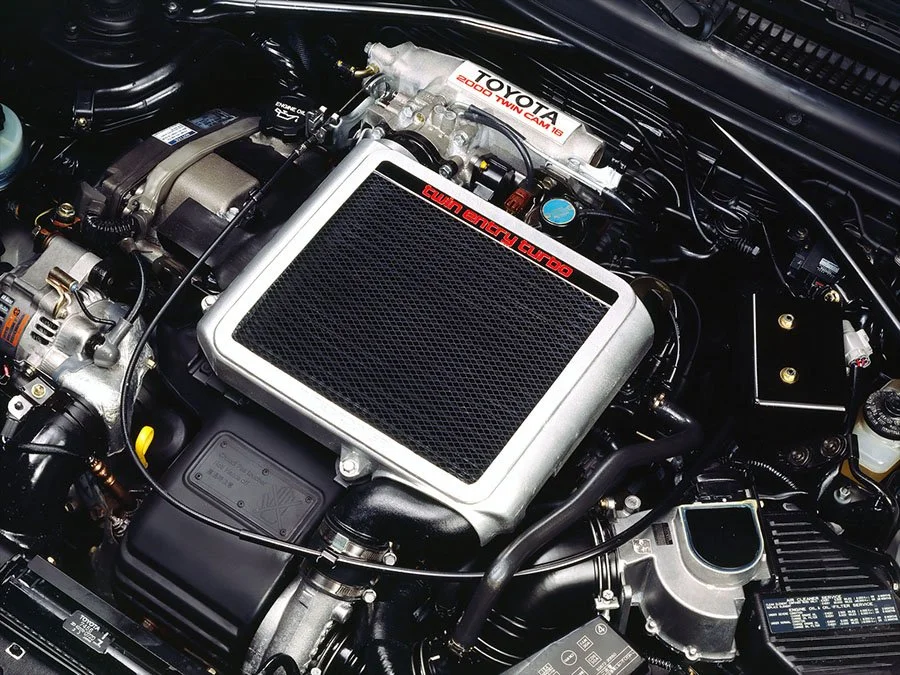
The block and connecting rods were cast-iron. The DOHC 16 valve head and pistons were aluminium.
Displacement was unchanged from the outgoing ST165: 1998cc with an 86mm bore and stroke.
New features for this latest iteration of the 3S-GTE theme included an air-to-air instead of air-water intercooler (which was fed by a distinctive GT-Four-specific hood scoop).
Other major engine changes were the additions of a twin-entry CT26 turbo and a variable induction system that dramatically improved low-speed performance and acceleration. Boost pressure was kept at 0.7 bar max. Increased valve lift yielded a little more power and torque. The compression ratio was increased from 8.5:1 to 8.8:1.
Electronic fuel-injection and digital engine management systems were updated.
JDM trim included a turbo with special ceramic turbine and more aggressive timing. In this configuration the 3S-GTE motor produced 222bhp at 6000rpm and 224lb-ft at 3200rpm.
In export guise a turbo with a steel turbine was used. Peak output of these motors was 204bhp at 6000rpm and 203lb-ft at 3200rpm (201bhp if fitted with a three-way catalytic converter).
For comparison, the old ST165 engine developed 185bhp at 6000rpm and 177lb-ft at 4000rpm.
The gearbox was a Type E150F five-speed manual with single-plate clutch. Transmission was through a full-time four-wheel drive system with viscous coupling limited-slip centre diff and torque-sensing Torsen LSD at the back. Torque was split 50:50 between the axles.
BODYWORK
Not a single exterior body panel was carried over from the ST165 to the ST185. Curvier and more aerodynamic, Toyota engineers claimed the rounded styling and lack of straight edges increased strength without adding weight.
As you would expect, the GT-Four had a number of tell-tale features that distinguished if from lesser models in the range.
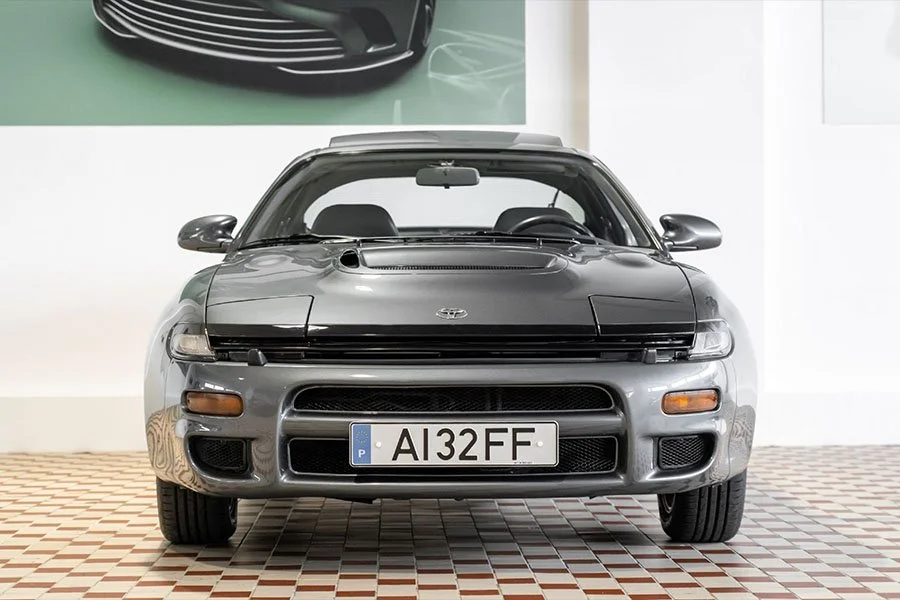
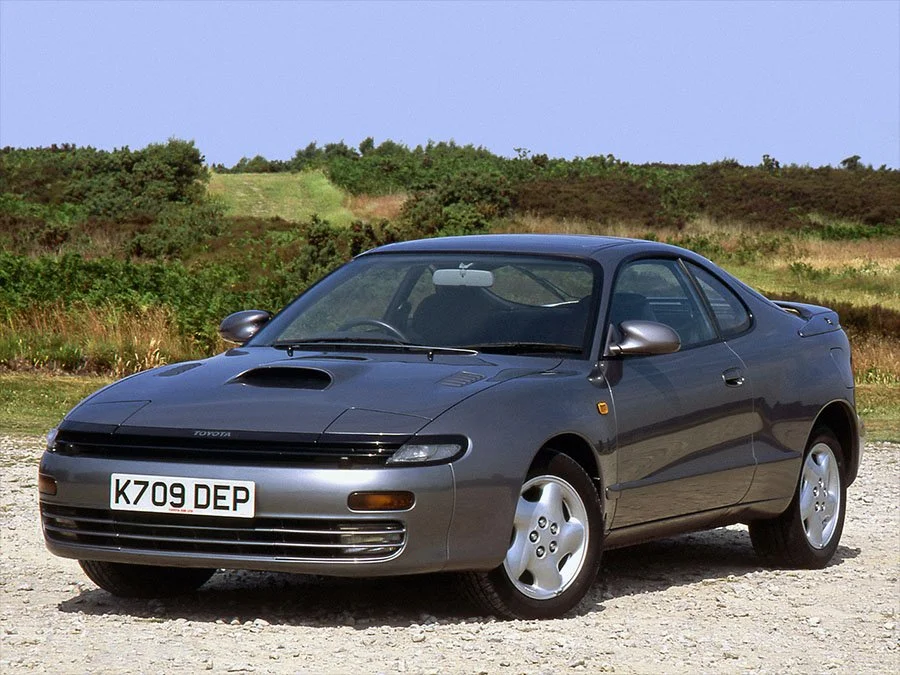
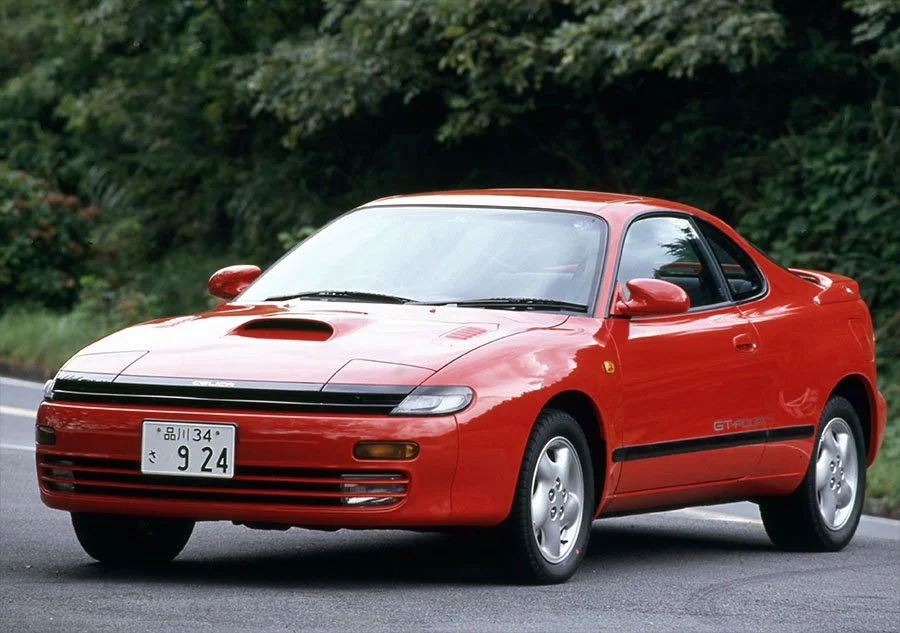
Most obvious was the new hood with its large central intercooler scoop and neat bank of vents along each flank.
The nosecone was also GT-Four specific with a full width twin-vaned intake aperture and concealed fog lights.
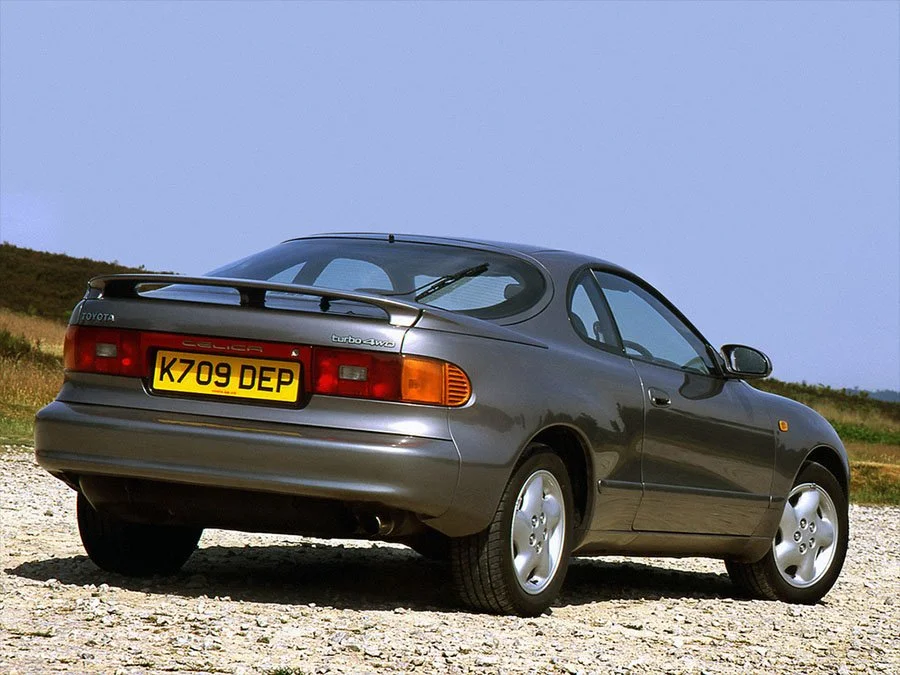
The rear spoiler that was an optional extra on some wide-bodied Liftback Celicas was fitted as standard.
Body panels were fashioned from steel with the exception of the bumpers, front grille assembly, exterior mirror housings and rear spoiler, all of which were polyurethane.
INTERIOR
As per the exterior, Toyota re-fashioned the T180 Celica line to reflect the taste for more organic design.
Every aspect of the cockpit architecture was completely new – dash, driver zone, seats and door panels.
The audio system controls, gear lever, parking brake lever and other switches were all ergonomically repositioned and the dash and door trims were re-shaped for a more solid, smoother feel.
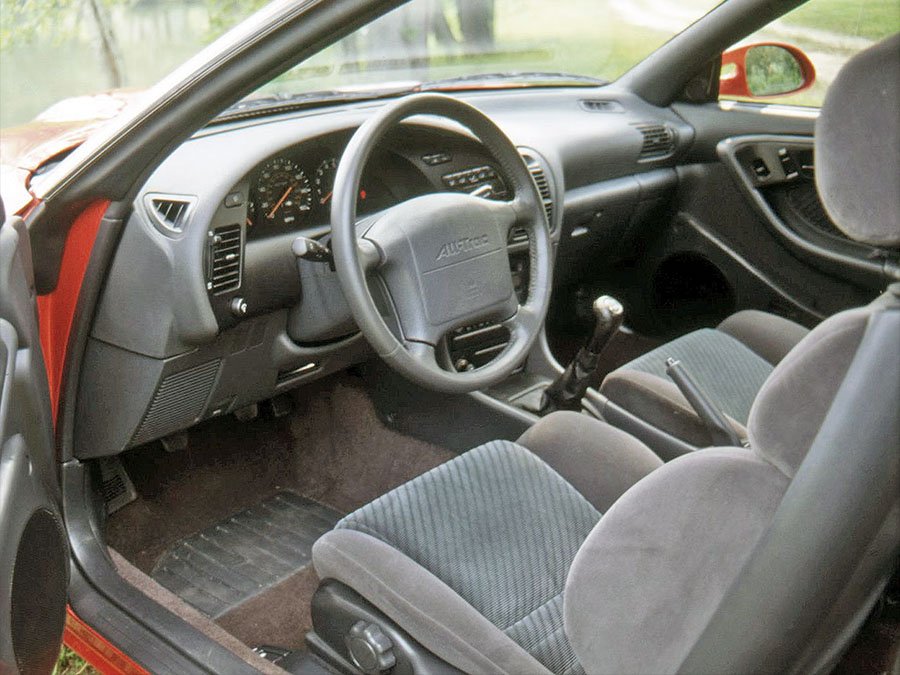
In terms of the GT-Four, it generally got all the best equipment on offer elsewhere in the Celica range: velour fabric upholstery, sports seats (with a five-way adjustable drivers’ seat), a six-speaker audio system, central locking, electric windows and power steering.
Directly behind the four-spoke steering wheel was a binnacle that housed large read outs for road and engine speed, fuel, water temperature and boost pressure.
OPTIONS
The GT-Four was offered in a choice of colours to include: White, Black and Super Red.
Metallic paint options were: Grey, Silver, Blackish Khaki, Burgundy Red Pearl and Medium Blue Pearl.
Fabric upholstery colours were: Grey, Blue and Burgundy.
Leather upholstery (seats and steering wheel) was offered in Grey and Blue.
In addition to metallic paint and leather upholstery, the GT-Four options list included an Anti-lock Brake System (ABS), fog lights, a ten-speaker audio system, air-conditioning, an electric sunroof and a memory / auto tilt-away function for the steering wheel when the ignition key was removed.
In some regions certain options were automatically fitted as standard equipment.
For the Japanese Domestic Market, Toyota offered the GT-Four with two additional option packs: the Rally pack and V pack.
RALLY PACK
The Rally pack was created for the kind of buyer that may have wanted to compete. With that in mind, weight-saving and uprated performance were order of the day.
Unique to the Rally pack was a Type E152F short-ratio gearbox. The first four gears all got shorter ratios for optimised acceleration.
6 x 14-inch steel wheels were shod with 175/70 R14 tyres.
Electrical and interior equipment was much reduced; the driver’s seat, windows and exterior mirrors were now manually operated for example and no rear wiper was fitted. ABS was not available, nor was a sunroof or many of the usual optional extras.
In total, the Rally’s more basic specification yielded a 40kg weight saving.
V PACK
Conceived as an entry level GT-Four that could be sold at a lower price point, the V pack came with much of the Rally version’s reduced equipment and steel wheels with hubcaps. Weight was unchanged from the standard JDM GT-Four with which it shared a normal Type E150F gearbox.
WEIGHT / PERFORMANCE
Toyota quoted the narrow-bodied JDM Celica GT-Four at 1400kg which was 50kg up on the outgoing 185bhp ST165. These 222bhp cars had a top speed of 144mph and 0-62mph time of 6.7 seconds.
Wide-bodied export versions (the All-trac Turbo and Turbo 4WD) came in at 1460kg. Top speed was 137mph with a 0-62mph time of 7.1 seconds.
1991 MODEL YEAR: GT-FOUR A
For the 1991 model year, production of which began in August 1990, Toyota decided to offer the wide body version in Japan where it was marketed as the GT-Four A.
1992 MODEL YEAR
For the 1992 model year, production of which began in August 1991, the JDM-only narrow bodied GT-Four was discontinued. The wide-bodied JDM-only GT-Four A that had been launched twelve months prior lost its A moniker and was now marketed simply as the GT-Four.
A range-wide face-lift that saw the tail light assembly given a smoked shroud effect and the Toyota script on nose and tail switched for Toyota emblems. Inside were a couple of minor switchgear updates and an improved gear linkage for shorter shifts.
Three new option packs were introduced. The Cruise Control Package comprised cruise control and an electric sunroof. The SD Package came with ABS and a driver-side airbag. The Luxury Package featured leather seats, a ten-speaker audio system and remote central locking.
Teal Metallic was added to the list of available colours along with Greenish Yellow (Japan only) and Beige Metallic (US only).
Silver Metallic and Burgundy Red Pearl were dropped
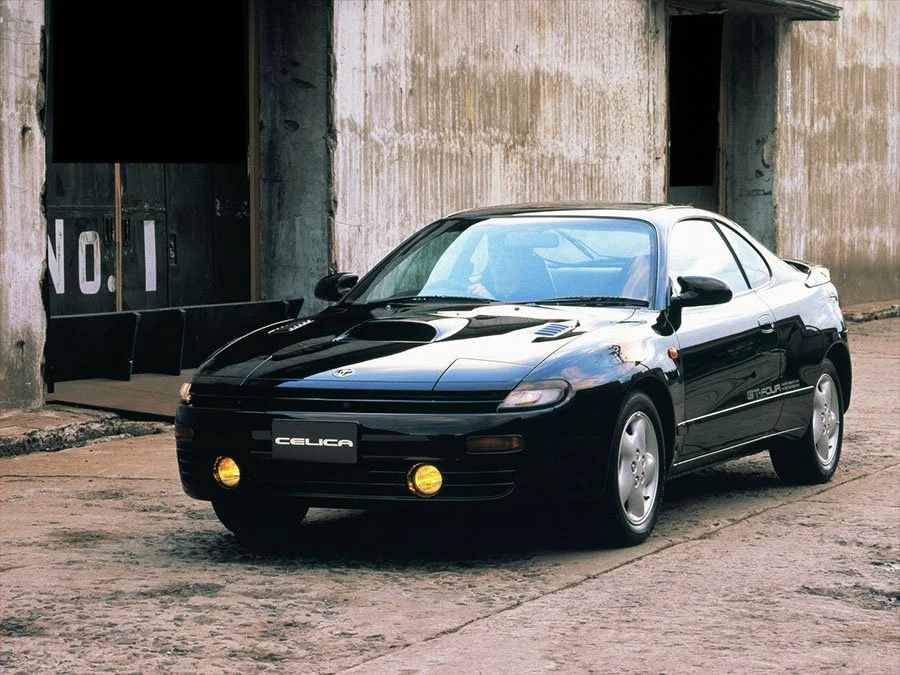
The JDM GT-Four featured a special bumper assembly with new circular fog lights.
Customers could still order a GT-Four with the Rally pack in Japan. These cars were now switched to the wide body shell with 15 x 6.5-inch steel wheels on 195/60 R15 tyres.
RC VERSION
Although Toyota had produced sufficient copies of the GT-Four to satisfy the 5000 car Group A homologation requirement by late January of 1990, it continued to run the old ST165 in the WRC for two more seasons (1990 and ‘91).
The 1990 season had seen Toyota’s Carlos Sainz claim the Drivers’ crown, but both Manufacturer titles had gone to Lancia and the ‘91 Drivers’ champion was Delta pilot, Juha Kankkunen.
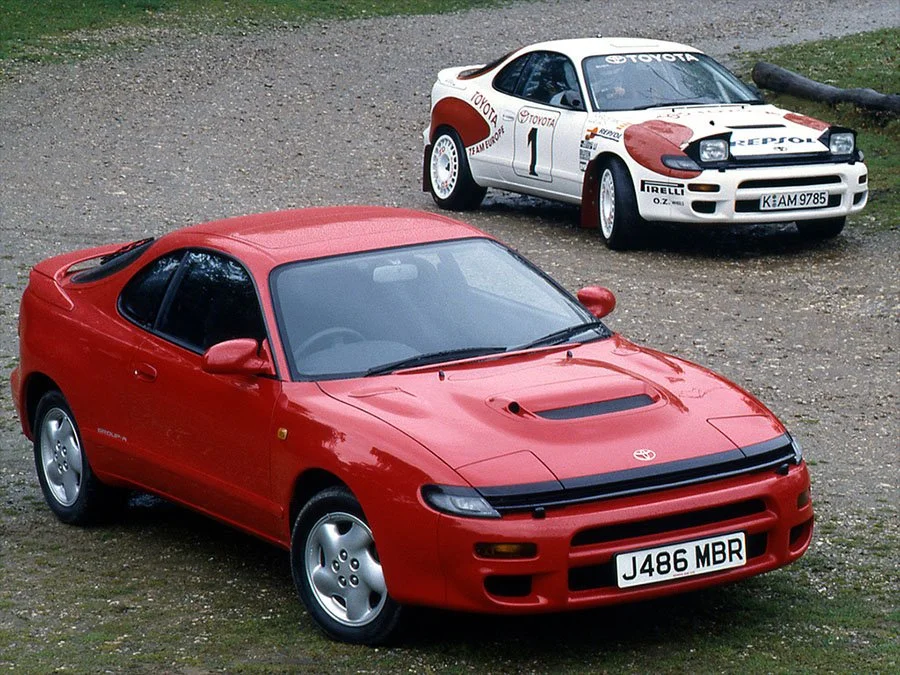
A Group A version of the ST185 finally came on stream for the ‘92 season based on the special RC version of the ST185 (covered separately). The RC was produced in a batch of 5000 units between August 1991 and February 1992.
Known as the GT-Four RC in Japan, it was marketed as the Turbo 4WD Carlos Sainz Limited Edition in Europe and the Turbo 4WD Group A in Australia and New Zealand.
1993 MODEL YEAR
Turquoise Pearl paint was added to the options list for the 1993 model year.
END OF PRODUCTION
Production ran from October 1989 until August 1993.
During that time around 21,000 units are understood to have been built.
An additional 5000 copies of the aforementioned RC version (covered separately) were produced between August 1991 and February 1992.
The completely new Celica ST205 GT-Four was launched in February 1994.
COMPETITION HISTORY
During three-and-a-half seasons of competition in the WRC, the ST165 had established an enviable record of twelve rally victories and one title (the 1990 Drivers’ championship). However, the ST185-based RC version paved the way for even greater success: 16 rally victories and five titles in just over three seasons.
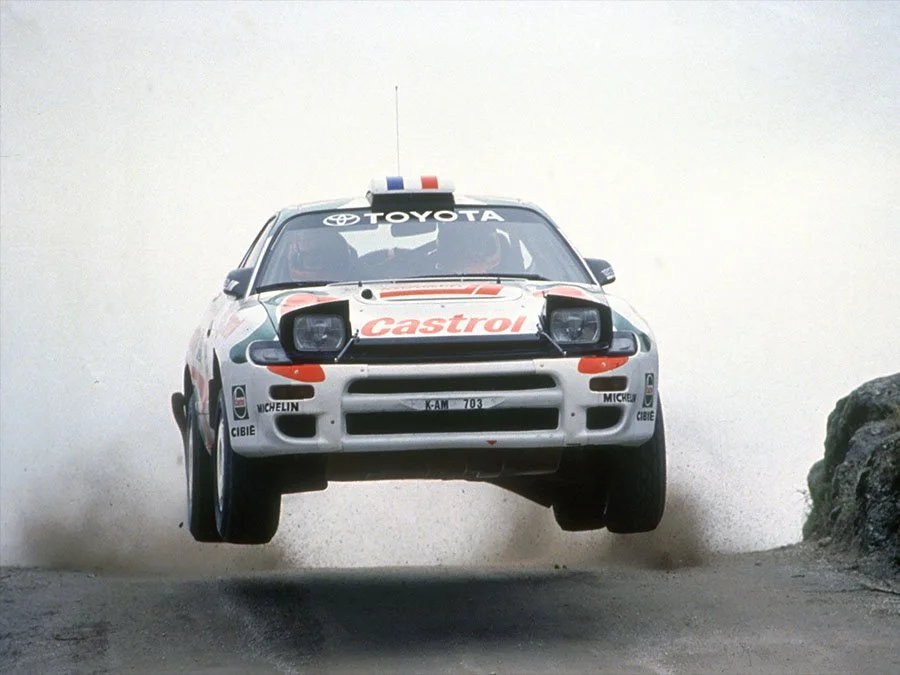
In its first WRC campaign (1992), the ST185 platform propelled Carlos Sainz to a second Drivers’ crown.
Toyota men also won the World Drivers’ Championship in 1993 and ‘94 (thanks to Juha Kankkunen and Didier Auriol respectively). At the end of those two seasons, the Japanese firm collected the Manufacturer titles as well.
Text copyright: Supercar Nostalgia
Photo copyright: Toyota - https://global.toyota/