Stillborn Sport Leicht - a Historical & Technical Appraisal of the Mercedes-Benz SLX
/
BACKGROUND
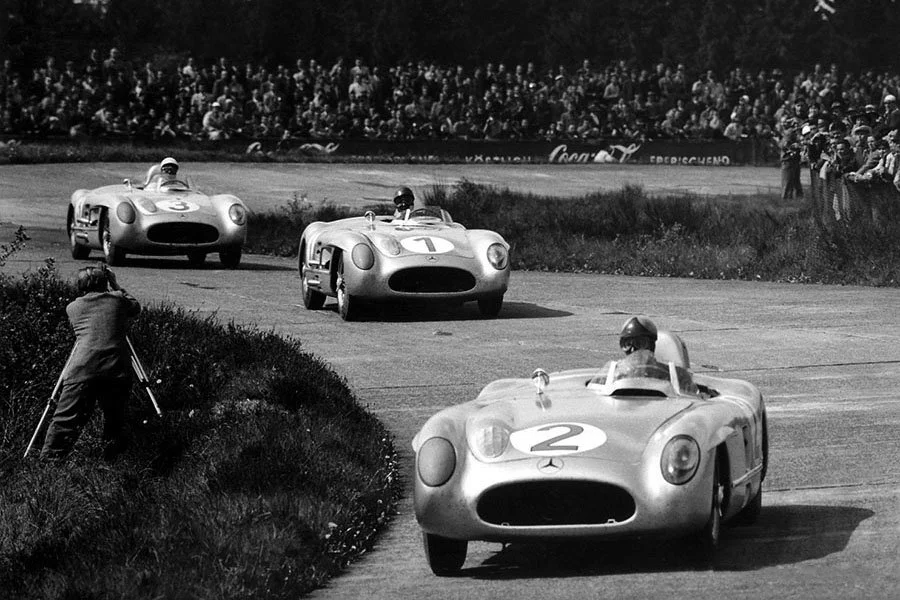
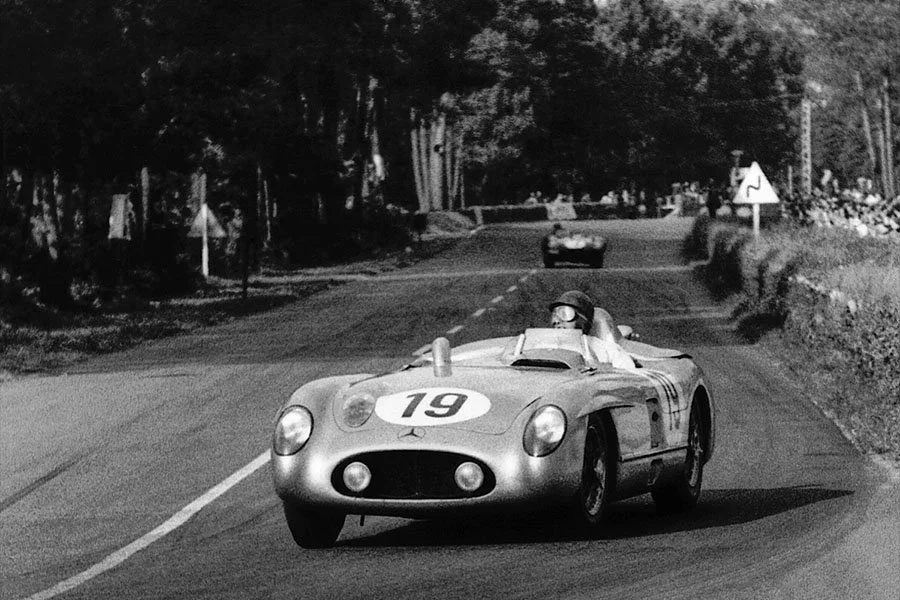
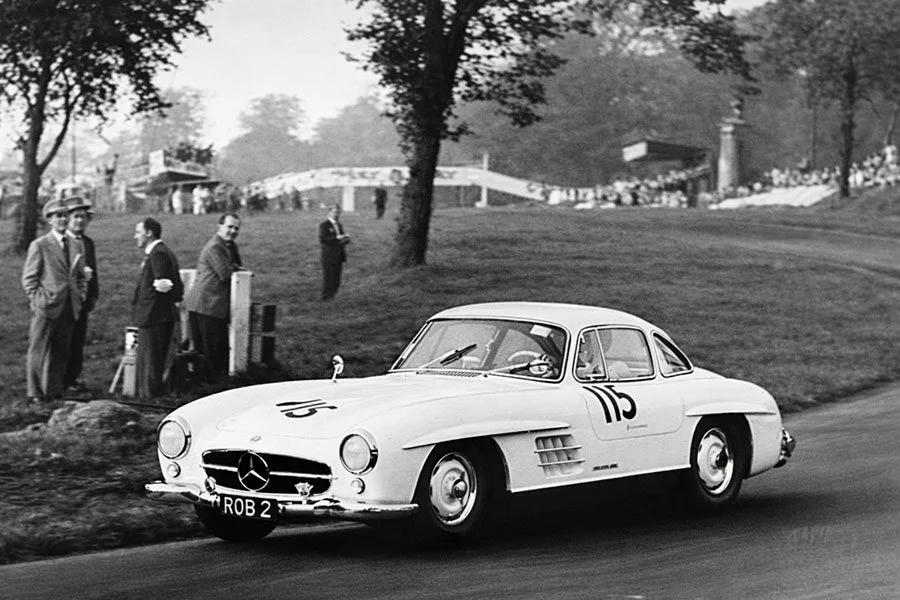
Unfortunately, the return of Mercedes-Benz to top flight motor racing was cut short by the infamous events at Le Mans in 1955 when the 300 SLR of Pierre Levegh barrel rolled into a crowd. Levegh and 83 spectators lost their lives. In the aftermath, Mercedes decided to abandon its high profile Formula 1 and Sportscar programmes.
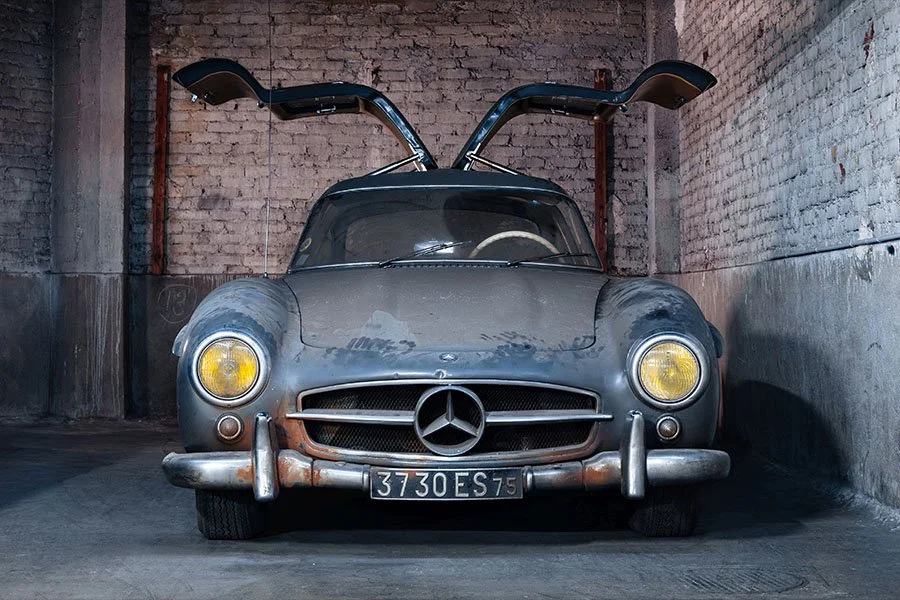
Another casualty of the 1955 Le Mans disaster was Mercedes’ decision to eschew the further development of any overtly sporting road cars. Obviously this included a clean sheet replacement for the iconic W194 300 SL sold initially in Gullwing and later Roadster body styles.
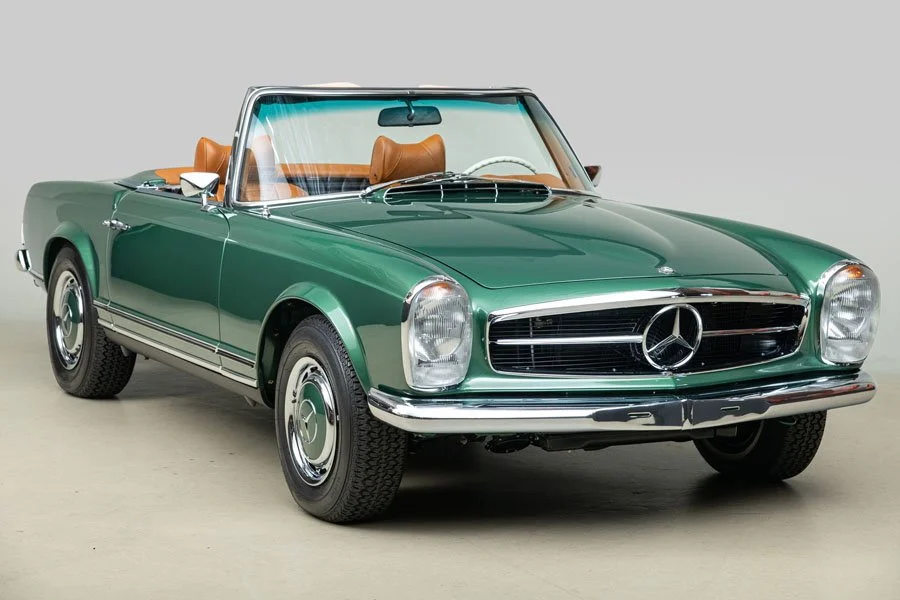
Ultimately the W194 was superseded by a far more restrained offering: the comparatively hunble W113 SL.
Whereas the 300 SL had been arguably the ultimate off-the-peg super sports car of its day (at least in original Gullwing trim), the W113, which debuted with a 150bhp 2.3-litre engine, was a boulevard cruiser designed and priced for mainstream appeal.
One aspect of the W113 that simply could not be criticised, however, was its avantgarde Paul Bracq styling.
Frenchman Bracq had joined Mercedes in 1957 as head of the firm’s Advanced Design studio in Sindelfingen. Having masterfully converted Friedrich Geiger’s original design for the W111 and W112 Saloons into supremely elegant Coupes and Convertibles, Bracq had completed preliminary design work for the second generation SL by the summer of 1961.
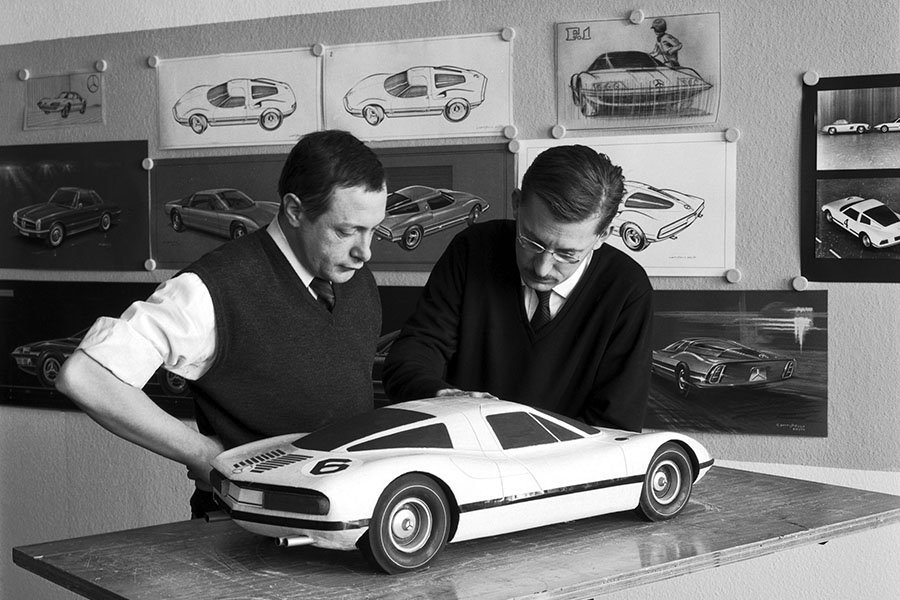
Yearning to create a like-for-like successor to the original Gullwing though, Bracq quietly began work on a radical mid-engined design concept to put Mercedes back at the vanguard of the ultra high performance class.
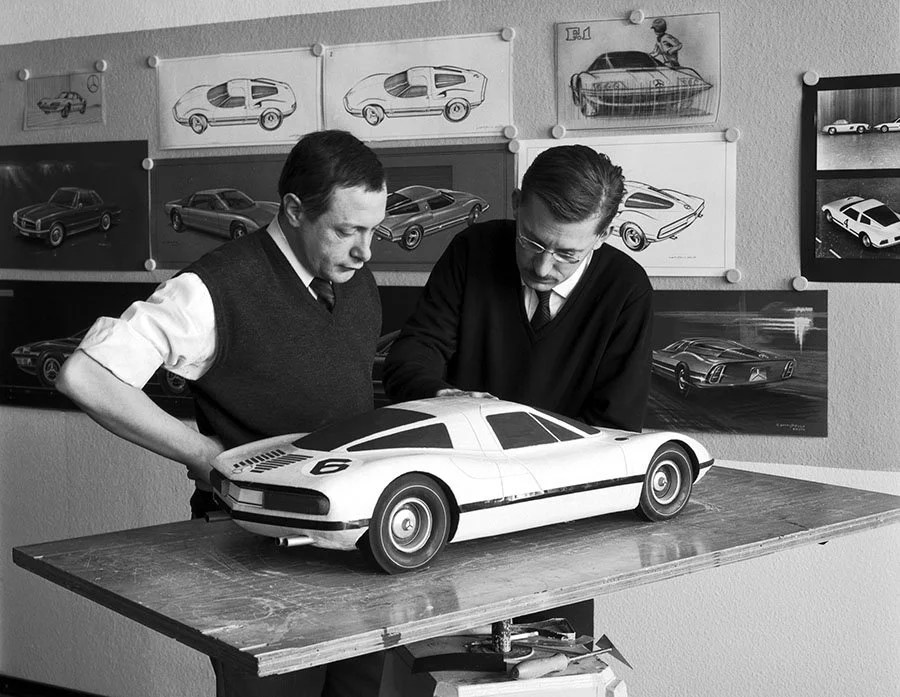
The first sketches of what became known as the SLX began to emerge in the spring of 1962, but as it was not a high priority for Mercedes, work progressed at a gentle pace until Bracq was joined by Italian stylist, Giorgio Battistella, in 1964.
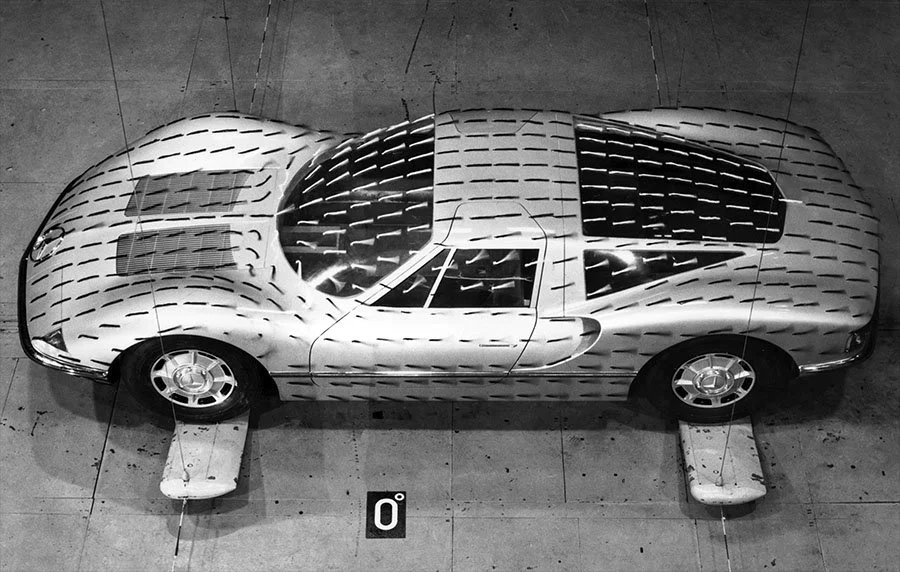
A 1:5 scale model of the SLX surfaced during 1965 and, following positive wind tunnel tests, a full sized model fashioned from wood had been completed by April 1966.
BODYWORK
Thanks to its array of futuristic design features, the SLX was unlike anything else around at the time.
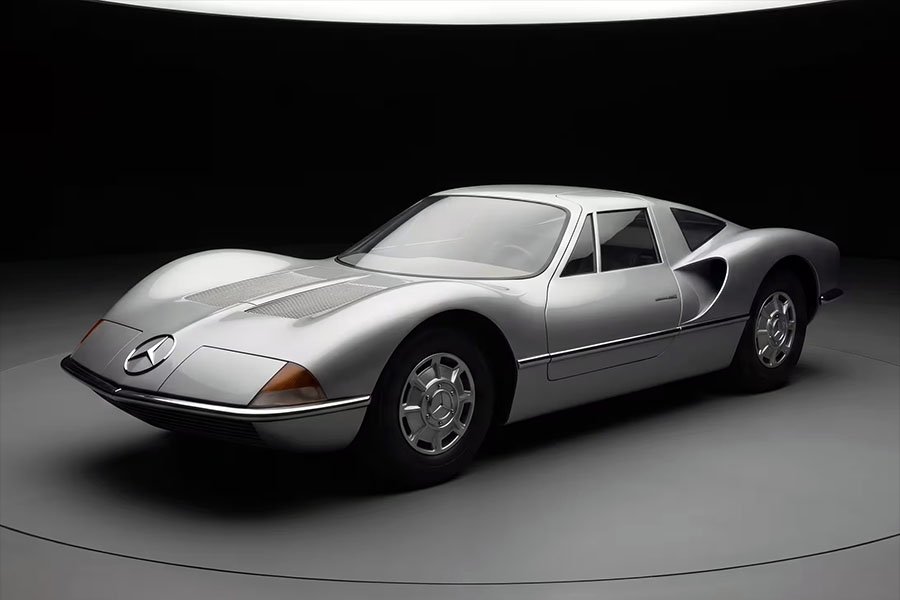
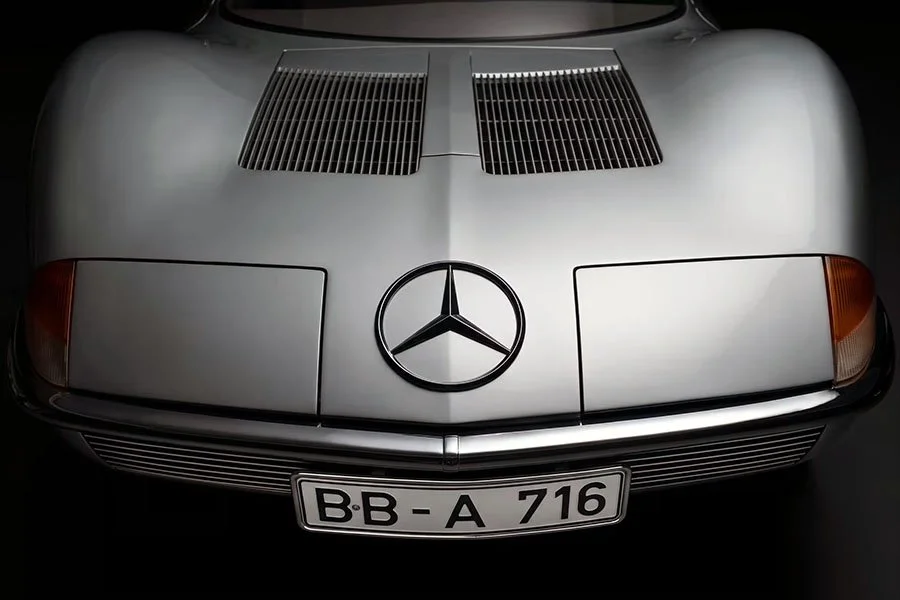
The arrow-like nose incorporated large retractable headlights outboard of which were triangulated indicator / sidelight clusters. Underneath the fully integrated wraparound single-piece bumper was a raked apron that housed a slatted full width grille. Further up, located centrally above the front axle were two huge air vents that would have enabled hot air to escape from the radiator.
A Fastback teardrop cockpit canopy incorporated Gullwing doors and heavily slanted glass. Down each flank, deep sills were a necessary addition if the chassis was to retain sufficient rigidity with a Gullwing door configuration. A chrome plated trim panel with black rubbing strip mimicked the bumper treatment at either end.
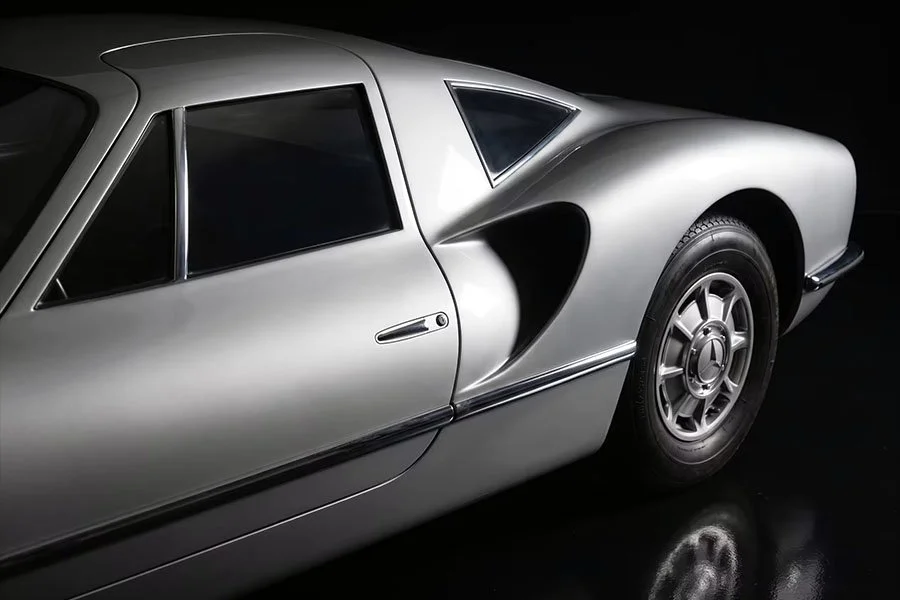
Mounted on the rear fenders were massive air scoops designed to feed the mid-mounted engine.
The pointed tail, much like the nose, had minimal overhang. It housed the lights and licence plate in a full width aperture that continued the SLX’s modernist theme.
ABANDONMENT
The SLX was presented to the Mercedes board during the late spring of 1966, but following a recent re-shuffle, found little support. One of the car’s key backers, Mercedes’ head of research and development, Fritz Nallinger, had retired at the end of 1965 and his replacement, Hans Scherenberg, was unenthusiastic.
Instead, Mercedes elected to focus its experimental R&D budget on creating Wankel rotary engines which later found their way into the famous line of C111 development prototypes.
Thus, before it ever had the opportunity to be trialled with an engine, running gear or interior, the SLX project, which could potentially have yielded one of the late 1960s great mid-engined supercars, was abandoned.
Text copyright: Supercar Nostalgia
Photo copyright: Mercedes-Benz - https://www.mercedes-benz.com