Michelotti Masterclass - a Historical & Technical Appraisal of the Maserati Sebring Series 1
/
BACKGROUND
Having originally relied on low volume coachbuilt models to fund its racing activities, Maserati unveiled a prototype ‘off-the-shelf’ model in early 1957. Equipped with a handsome 2+2 Coupe body created by Carrozzeria Touring of Milan, the Tipo 101 3500 GT went on to become a critical and commercial hit.
Late 1959 saw Maserati expand its line up when a short wheelbase 3500 GT Spyder was added. Styled by Carrozzeria Vignale of Turin, this somewhat less practical two seater offered just the same visual appeal as its Fixhed Head counterpart, but proved markedly less popular as was typically the case for Italian drop tops of the era.
For those customers that desired something more exclusive and for whom price was no object, displayed alongside the 3500 GT Spyder at the Turin Motor Show in October 1959 was the first of a new and wickedly expensive line: the 5000 GT.
Unlike the 3500 GT (which came with 3.5-litre straight six engines and standardised bodies), the Tipo 103 5000 GT was equipped with a monstrously powerful 450 S-derived V8 and bespoke coachwork. Regarded as the most expensive Gran Turismo of its day, less than three dozen copies of the 5000 GT were built compared to more than 2000 examples of the 3500 GT in both its body styles.
Now on a more sound financial footing, the early 1960s saw Maserati plan for a new line of models. The idea was to offer a three-car line up that comprised a 3500 GT-derived 2+2 Coupe, a pure two-seater that could be offered in Coupe and Spyder trim, and a high performance four-door Sedan.
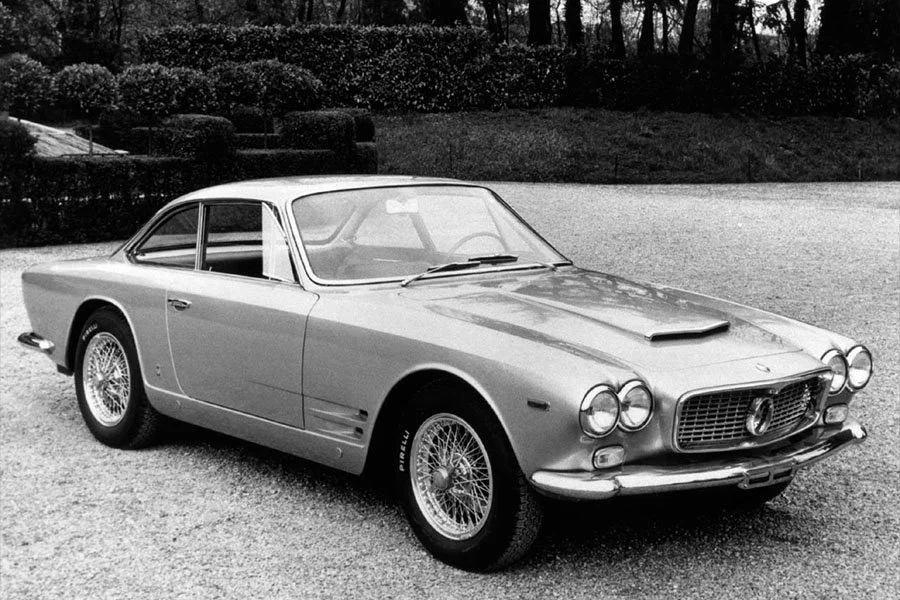
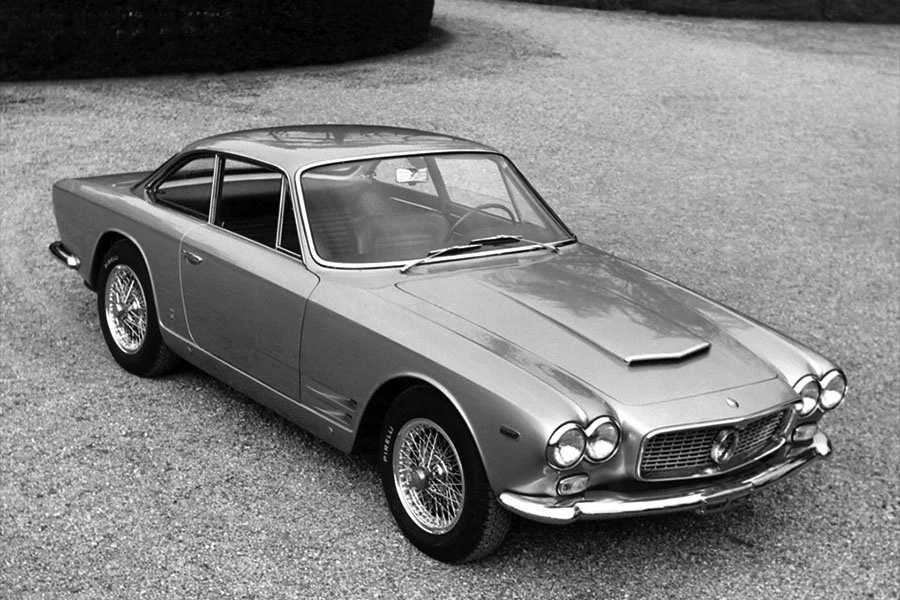
First to arrive was the 3500 GT-based 2+2 Coupe that broke cover in still rather unrefined prototype form at the Geneva Motor Show in March 1962. The definitive production version, officially dubbed Tipo 101/10 3500 GTiS, but best known by its Sebring moniker, subsequently appeared at the Turin Motor Show in October 1963 where it was displayed alongside the two-seat Tipo 109 Mistral and four-door Tipo 107 Quattroporte.
The Sebring handle was chosen to honour one of Maserati’s greatest achievements in sports car racing. Back in 1957, Juan Manuel Fangio and Jean Behra had driven their works 450 S to victory at the Sebring 12 Hours, finishing two laps clear of team-mates Stirling Moss and Harry Schell in a 300 S.
CHASSIS
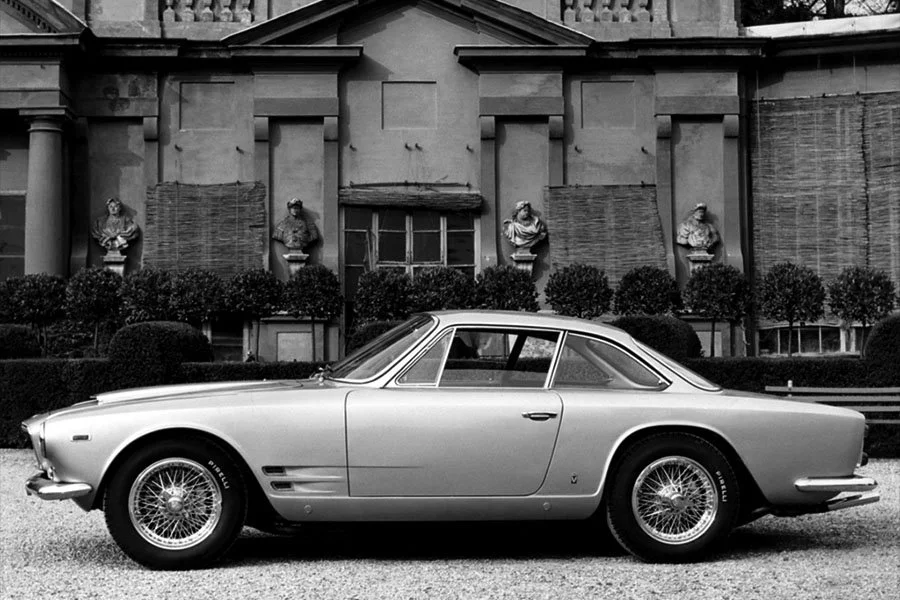
The Sebring was simply a rebodied version of Maserati’s 3500 GT Spyder. Both cars (bodied by Vignale) employed the same welded tubular steel chassis with 2500mm wheelbase whereas the outgoing 3500 GT Coupe (bodied by Touring) had come with a longer 2600mm wheelbase frame. Although space for passengers in the back of the Sebring would therefore be much less than the 3500 GT Coupe, the trade off was improved handling and a more compact appearance.
Twin 35-litre fuel tanks were brand new.
Independent front suspension was via coil sprung double wishbones. At the rear was a rigid Salisbury axle with semi-elliptical leaf springs and a longitudinal torque arm. Hydraulic telescopic shock absorbers were fitted all round along with an anti-roll bar at either end.
Girling disc brakes were fitted front and rear.
16-inch diameter light alloy wheels were manufactured by Borrani. They measured 6.5-inches wide and normally came shod with Pirelli Cinturato 185/16 VR16 tyres.
ENGINE / TRANSMISSION
Maserati’s 3.5-litre straight six used in the 3500 and Sebring was derived from the high compression dry-sump unit found in the 350 S racing car. Equipped with chain-driven dual overhead camshafts, it featured a block, head and ribbed sump all manufactured from aluminium alloy. It also featured hemispherical combustion chambers, domed pistons, a seven-bearing crankshaft and wet-sump lubrication. Ignition was via two Marelli distributors and twin spark plugs per cylinder.
For the Sebring, displacement remained at 3485cc thanks to a bore and stroke of 86mm and 100mm respectively.
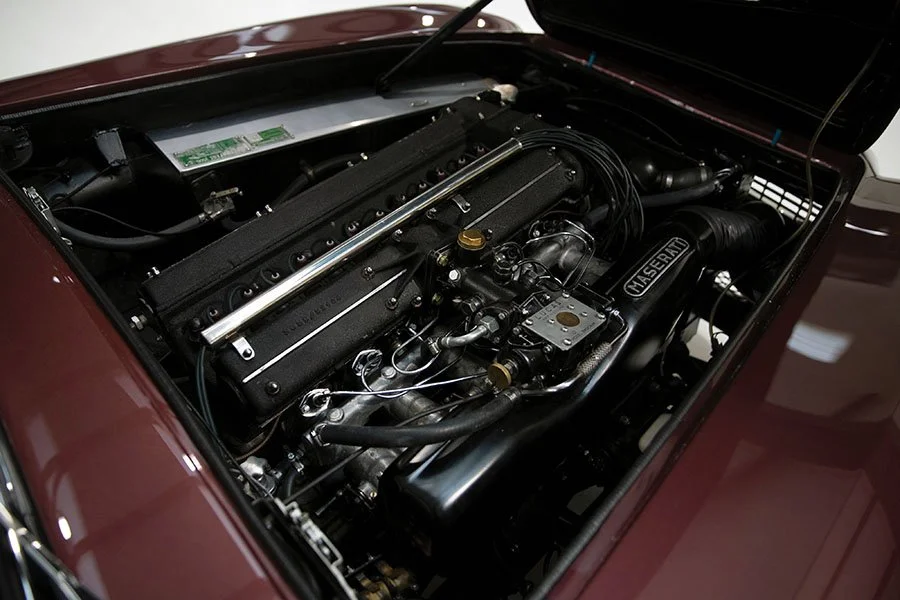
Also carried over was the state-of-art Lucas fuel-injection system which had been employed mid-way through 3500 production. In addition to improved output figures, fuel-injection had made the Maserati engine quieter and smoother, improved throttle response and reduced tickover. Only four very early Sebrings were ever fitted with carburettors.
Although a hike in compression (to 8.5:1 up from 8.2:1) did not yield a peak horsepower gain (this remained 235bhp at 5500rpm), the Sebring did get some more torque lower down the rev range with a peak rating of 260lb-ft now on stream at 3600rpm as opposed to 4000rpm.
Transmission was through a five-speed ZF gearbox. Borg & Beck single dry-plate clutch and Salisbury differential.
BODYWORK
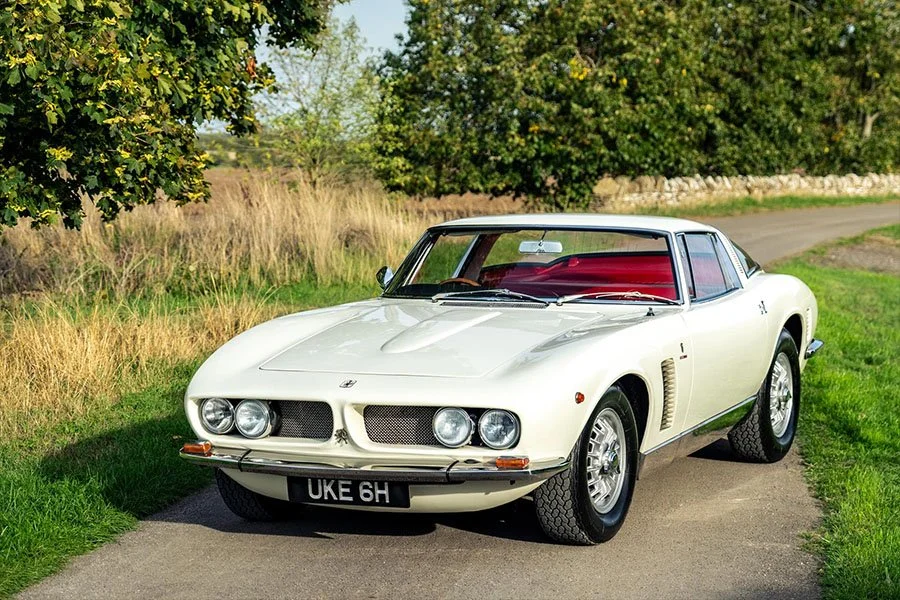
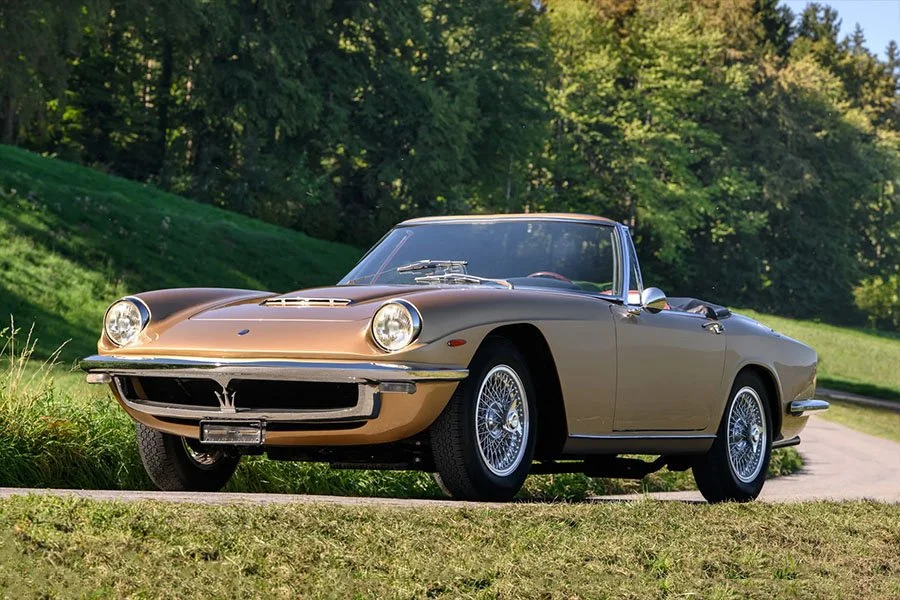
Although styled by Giovanni Michelotti for Vignale, the Sebring took inspiration from a couple of Frua-made special versions of the normally Touring-bodied 3500 GT Coupe. Similar cooling and lighting integration was copied across to the Sebring along with a broadly similar overall profile.
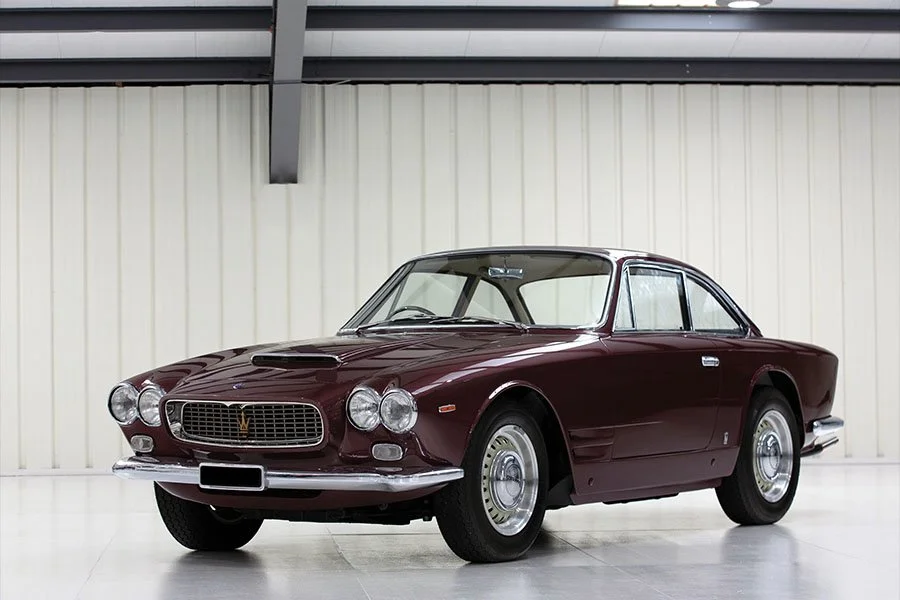
The front end was characterised by two striking features: a stretched F1-style central intake with spectacular chrome trim outboard of which were twin circular headlights .
The elegant cockpit treatment adopted slim pillars and a neat semi-Fastback rear window. Down each flank, a pair of stylised engine cooling cents were intricately sculpted from the front fenders and doors.
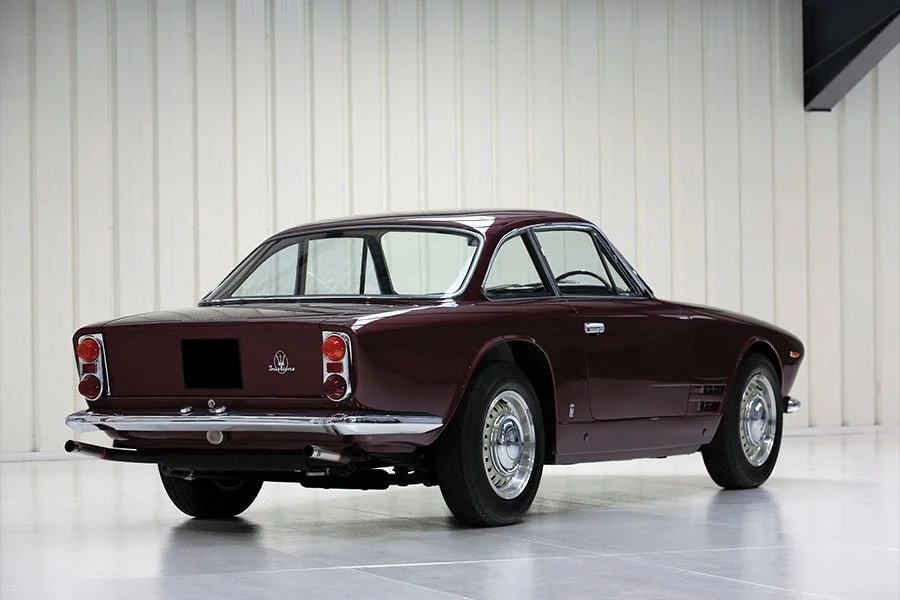
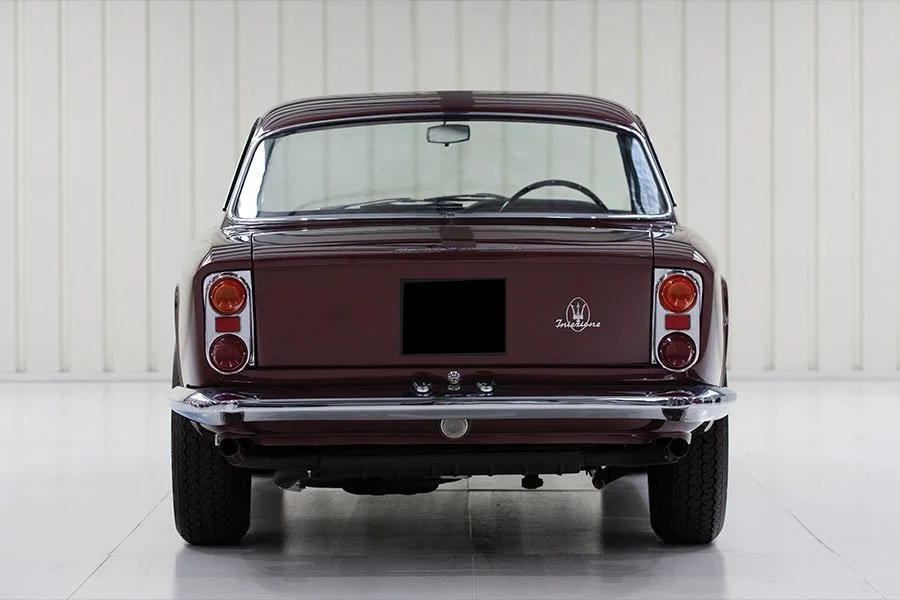
Like the front, Vignale’s stylists paid particular attention to lighting at the rear of the Sebring with deep profile lenses stacked one above the other in handsome single piece chrome bezels. An enormous trunk lid gave access to the similarly impressive load space.
Wraparound full width bumpers were fitted at either end.
Compared to the 3500 GT Coupe, Maserati packaged the Sebring much more tightly: it came in 310mm shorter and 115mm narrower. A 50mm higher roofline was added to increase headroom.
Aside from the hood and trunk lid (both of which were aluminium), Sebring bodies were fashioned entirely from steel.
INTERIOR
As per its exterior, the Sebring came with completely new interior
Instrumentation was clustered together in blistered binnacle directly behind the Bakelite-rimmed steering wheel with its three highly polished vented spokes. At either end of the binnacle were two large read outs (road and engine speed), inboard of which were five smaller gauges: oil temperature, water temperature, fuel, oil pressure and voltage.
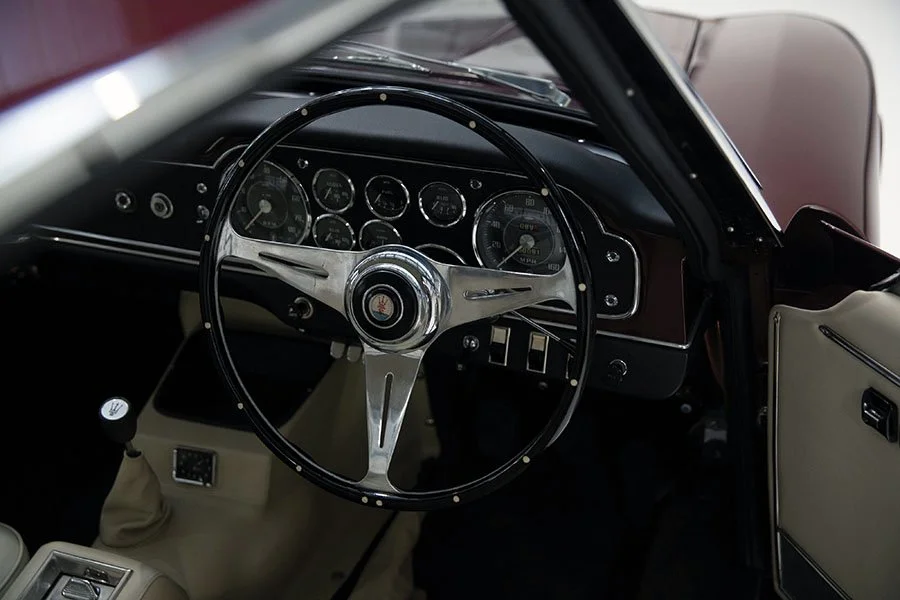
These dials were set within a satin black inlay that spanned almost the full width of the otherwise body coloured dash fascia. Leather or fine carpet was used to cover practically every other interior surface.
Electric windows were fitted as standard along with a pair of rear seats that offered extremely limited leg room.
OPTIONS
Customers could enhance their Sebring with some of the options Maserati offered at extra cost.
These included a limited-slip differential, a choice of rear axle ratios, special paint finishes, Borrani wire wheels, air-conditioning, tinted glass, an audio system and a three-speed Borg-Warner automatic transmission.
Beyond this, practically any level of customisation was possible given sufficiently deep pockets.
WEIGHT / PERFORMANCE
At 1370kg, the Sebring weighed in 50kg lighter than the long wheelbase 3500 GT Coupe (1420kg) and 70kg lighter than the 3500 GT Spyder (1440kg).
With the longest rear axle ratio, a top speed of 147mph was reputedly possible. 0-62mph required a quoted 7.2 seconds.
SEBRING SPECIALE
One car, chassis 01769, was build by Vignale with 5000 GT-style single piece headlights instead of the usual twin unit configuration. Completed in June 1963, the car was ordered by Italian industrialist, Renzo Bompani, founder of the Bompani appliance brand.
END OF PRODUCTION
Production of the first generation Maserati Sebring was discontinued in late 1965 when a much-modified Series 2 with restyled bodywork and new engines came in.
351 copies of the Sebring Series 1 were built between late 1963 and late 1965. Just 35-or-so were completed in right-hand drive.
Text copyright: Supercar Nostalgia
Photo copyright: Maserati - https://maserati.com & RM Sotheby’s - https://rmsothebys.com/