Back in the Big Time: a Historical & Technical Appraisal of the Lola T70 Mk1
/
BACKGROUND
To follow the enormously successful Mk1 which most famously won the BRSCC Sports Car Championship in 1959, 1960 and 1961, Lola boss Eric Broadley came up with something completely different.
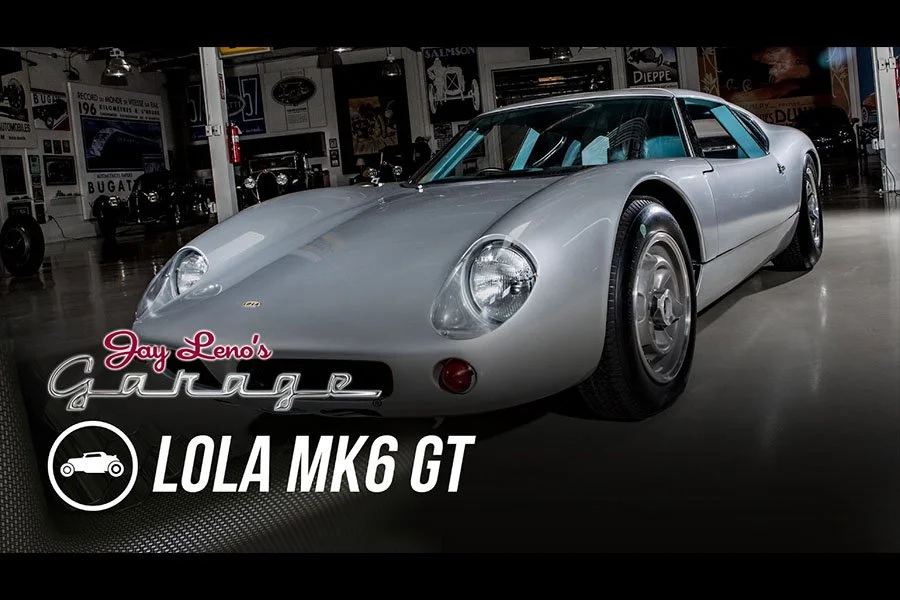
Spurred on by his decision to quit top flight single seater racing after Lola’s sponsor, Bowmaker, had elected to withdraw from motor racing, Broadley created the radical Mk6 GT with Sports car racing’s biggest prize in mind: outright victory at the Le Mans 24 Hours.
Unlike the Lola Mk1, which ran a 1.1-litre Coventry Climax engine front-mounted in a tube chassis and draped with skimpy open bodywork, the Mk6 GT employed a mid-mounted Ford V8 fitted to a state-of-art monocoque chassis cloaked with a Coupe skin.
Unveiled to much fanfare at the London Racing Car Show in January 1963, by the middle of that year Broadley’s Mk6 GT had shown sufficient promise that the project had been taken over by Ford who, having been rejected in their bid to buy Ferrari, were now planning a sports car programme of their own.
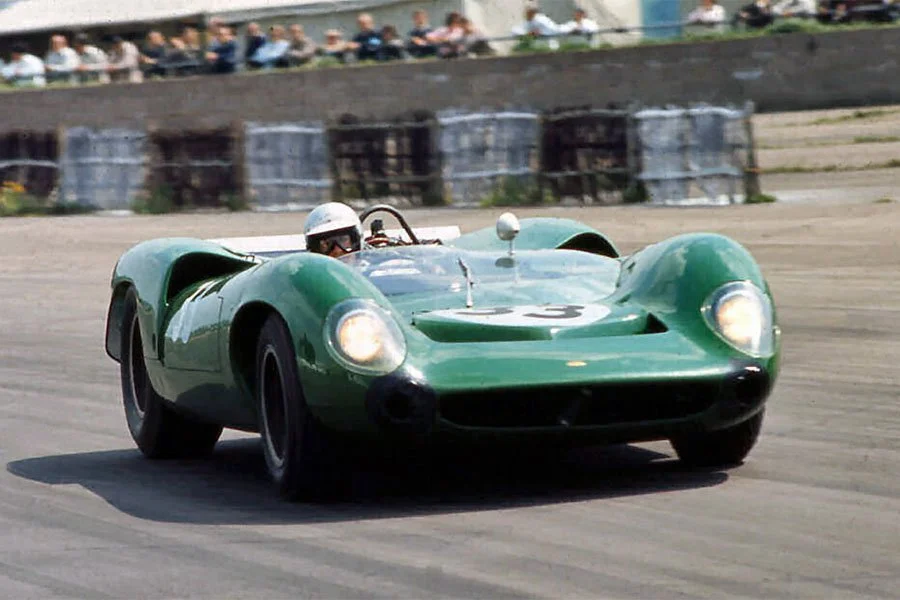
Considering the handsome Lola to be the perfect foundation to fast track its own car, Ford purchased the two existing Mk6 GTs to act as mobile test beds for what would become the GT40. As for Broadley, he was given a lucrative two-year contract to work as part of the GT40 design team.
Little more than a year later, and with the GT40 still yet to fulfil its potential, Eric Broadley walked out on Ford owing to personality clashes within the organisation. Having returned full-time to the Lola factory (which was based in Slough, right next to Ford Advanced Vehicles), Broadley began work on a brand new Group 7 / 9 car for the 1965 season.
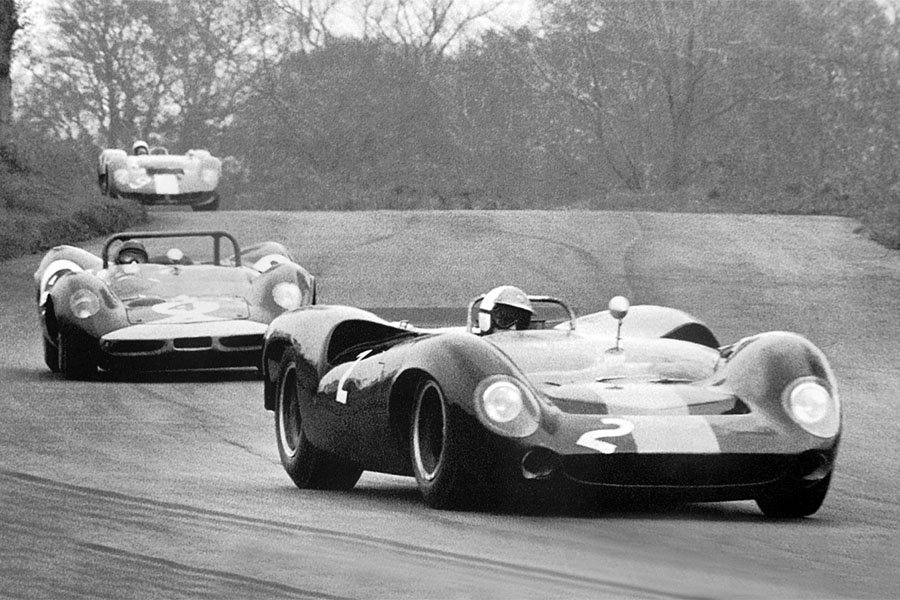
What became the first generation T70 made its debut at the London Racing Car Show in January 1965. The new car was then tested extensively by 1964 F1 World Champion, John Surtees, who had cut his teeth on four wheels driving Lolas and would campaign a quasi-works T70 throughout the ‘65 season.
Unlike the Mk6 GT and Ford GT40, the T70 was not conceived with long distance races in mind. Rather, Broadley designed the T70 to contest the kind of short form races that typically lasted less than two hours and which were beginning to gain popularity in Great Britain and North America.
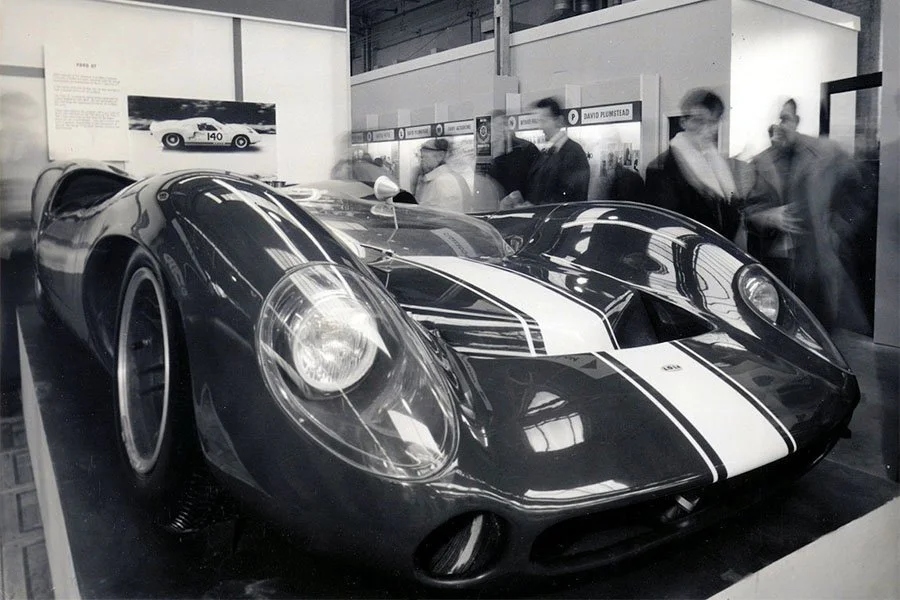
Whereas the Group 4 cars that dominated events like Le Mans had to comply with a comparatively tight ruleset, Groups 7 and 9 were much less restrictive, more akin to open or unlimited categories. Cars built for these regulations were much lighter, more powerful, low-slung open-bodied creations with monstrous mid-mounted American V8s.
For 1965, the European Group 7 scene focused on the eight round British Sportscar Championship where the T70 would go head-to-head with the Oldsmobile-powered McLaren M1A, the Ford-powered Lotus 30 and the Brabham BT8 which variously ran with Coventry Climax and Oldsmobile engines. The series was also graced by the occasional GT40, but the big Ford struggled to compete with all that extra weight to lug around.
Across the Atlantic, 1965 would be the last year before the Can-Am Championship came into being. Thus, at this stage T70s appeared in the United States Road Racing Championship and the Autoweek Championship which ran in conjunction with the Canadian Sports Car Championship. Notably, the American organisers of the two US-based World Sportscar Championship events of 1965 (the Sebring 12 Hours and Bridgehampton 500km) also permitted the crowd-pleasing Group 7 / 9 cars to run although they were not eligible for points.
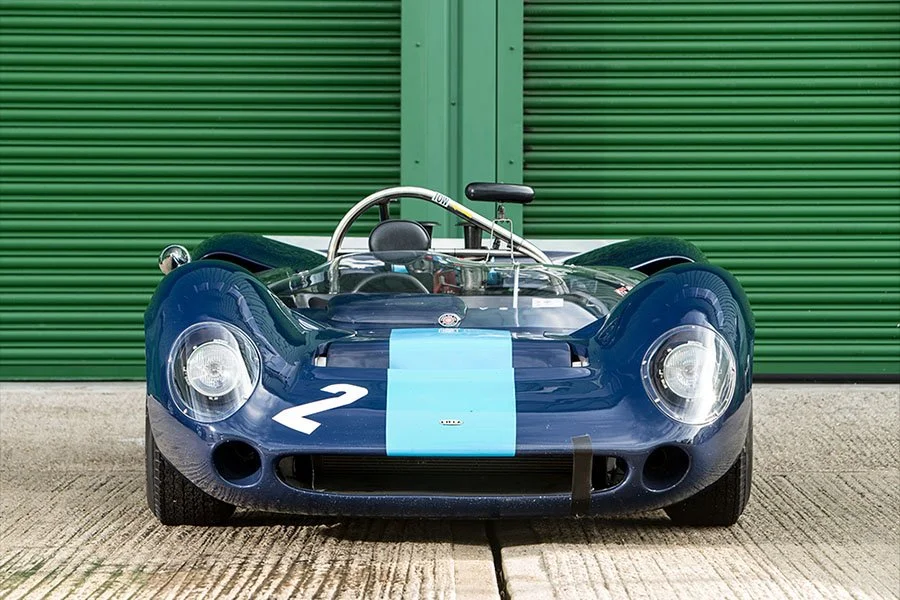
In addition to aforementioned challengers from McLaren, Lotus and Brabham, T70s racing in North America would have added opposition in the shape of the formidable GM-backed Chaparral 2A and Roger Penske’s Cooper-based Zerex Special.
CHASSIS
The T70 was based around a full-length monocoque tub that comprised a tubular steel framework skinned with aluminium panels. Fully integrated and thus without separate subframes, it was designed to accept small block Ford or Chevrolet engines which were attached to the firewall bulkhead and side members as a semi-stressed member.
Cells for the pair of built-in 12.5 UK gallon fuel tanks (56.8-litres) also formed part of the construction giving the T70 something of a twin fuselage design. A spare wheel was mounted ahead of the front bulkhead.
Front suspension was via double wishbones. At the back, Lola ran inverted lower wishbones and top links with twin trailing arms. Coil sprung Armstrong dampers were fitted all round along with an anti-roll bar at either end. Rose joints ensured the suspension was fully adjustable.
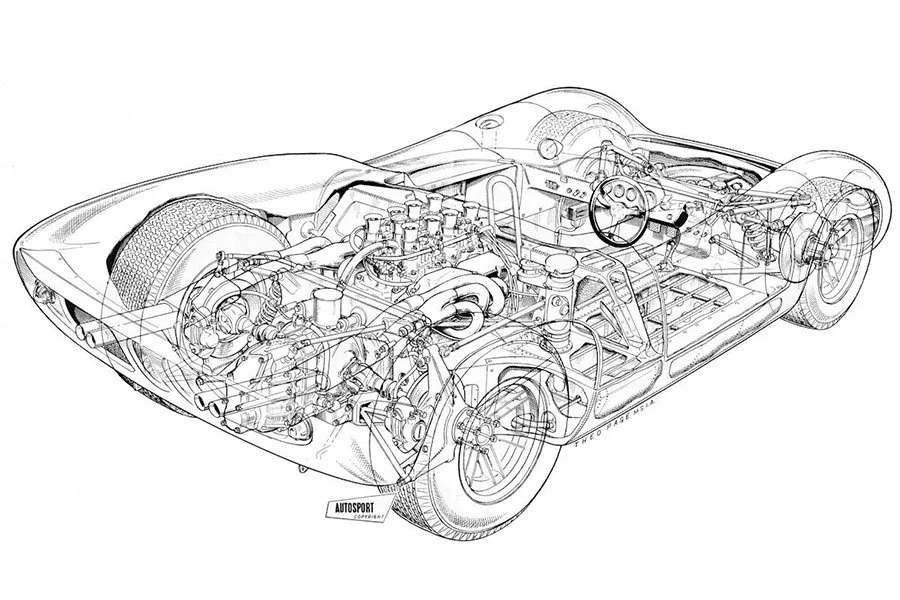
12 or 12.5-inch Girling brake discs mounted on light alloy bells were installed front and rear with those at the back mounted outboard of the differential. Light alloy four-piston Girling calipers with Ferodo DS11 pads were actuated by twin master cylinders with an adjustable bias bar.
Centre lock 15-inch diameter cast magnesium wheels measured 8 and 10-inches wide front to rear. Goodyear, Firestone and Dunlop tyres were available.
ENGINE / TRANSMISSION
Customers could choose to have their T70 fitted with a small block overhead valve 90° V8 from either Ford or Chevrolet.
Imported from the latest FIA-spec. competition Cobra, the 289 cubic-inch Ford engine was the slightly lighter of the two. It featured a cast iron block and heads, two valves per cylinder and wet-sump lubrication. Displacement came in at 4727cc thanks to a bore and stroke of 101.8mm and 72.9mm respectively. With a compression ratio of 10.8:1 and four Weber 48 IDM downdraught carburettors, peak output was 390bhp at 6750rpm and 341lb-ft at 4000rpm.
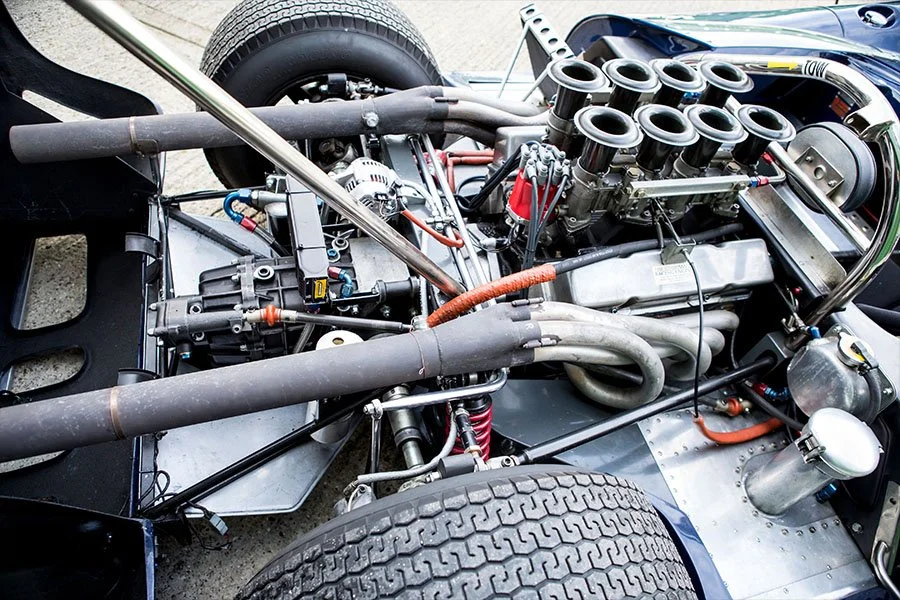
Slightly heavier, but more powerful, was a 305 cubic-inch Chevrolet unit built by the Traco Engineering outfit run by Jim Travers and Frank Coon in Culver City, California.
Traco created these 5-litre engines by pairing a custom bored Chevy 327 cubic-inch block with a short stroke forged steel crankshaft from a Chevy 283. The result was a displacement of 4995cc thanks to a bore and stroke of 101.6mm and 76.2mm respectively. Based around a dry-sumped cast-iron block and heads with two valves per cylinder, Traco also added heavy-duty mechanical solid-lifter camshafts, strengthened pushrods and beefier rocker arms. Equipped with four Weber 48 IDA carburettors and a compression ratio of around 11.5:1, these engines produced a peak output of 430bhp at 6800rpm and 370lb-ft at 5000rpm.
In addition to a choice of engines, T70 buyers could select one of two gearboxes: either a five-speed ZF 5DS-25 or the more popular magnesium-cased Hewland LG500 four-speed unit which had been designed specifically for use with high output V8 engines. Both came with sturdy BRD driveshafts and a twin-plate clutch. A limited-slip differential was fitted as standard.
BODYWORK
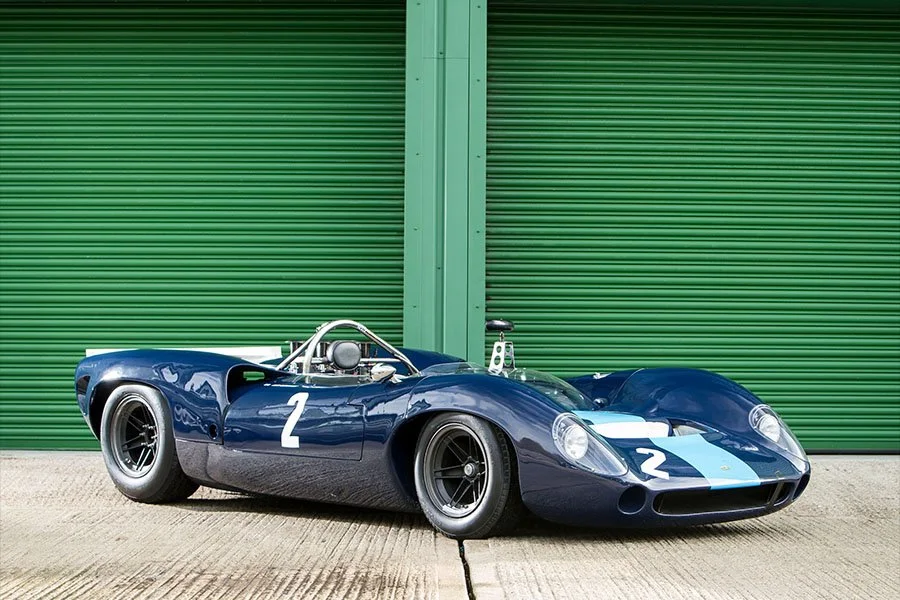
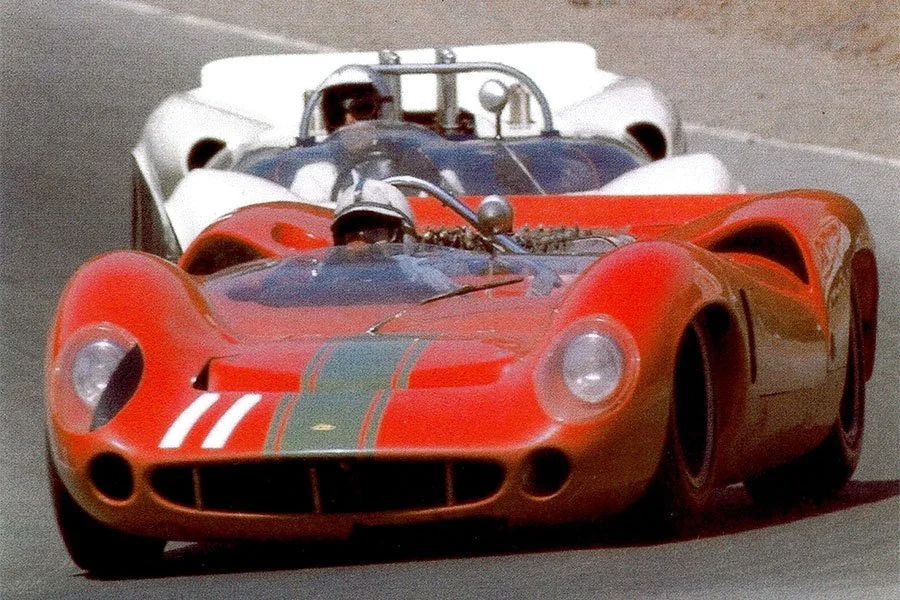
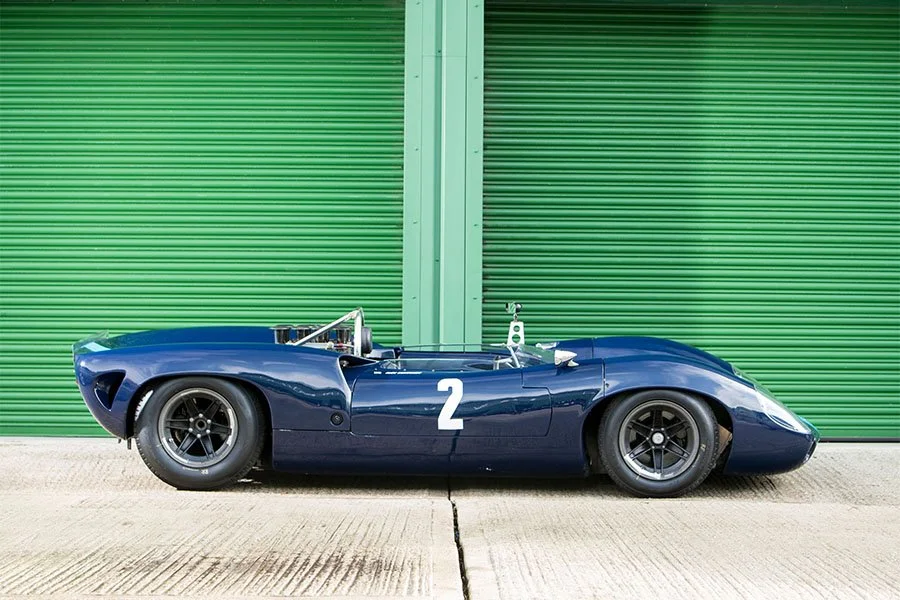
The T70’s conventional, low slung glassfibre body was un-stressed and served purely as an aerodynamic outer skin.
At the leading edge, a wide radiator intake was flanked by circular ducts that fed fresh air to the brakes. Further up, the headlights were mounted behind contoured Plexiglas covers. Inboard of the dramatically sculpted front fenders was a large radiator cooling vent fronted by a discrete air deflector.
Partially shrouding the cockpit was an ultra low profile Plexiglas screen that wrapped all the way round to the rear bulkhead. Small doors opened in a conventional fashion. Having debuted without any kind of rollover protection, a steel hoop was soon added behind the driver.
Another addition that quickly began to appear was a full width aluminium flap riveted onto the trailing edge of the tail.
As a consequence of its ultra low profile, the engine’s intake system was fully exposed thanks to an opening directly behind the rear bulkhead. Outboard of this were two triangulated shoulder-mounted intake scoops that fed fresh air to the engine. A pair of delta-shaped brake cooling vents were also carved out from the body section behind each rear wheel.
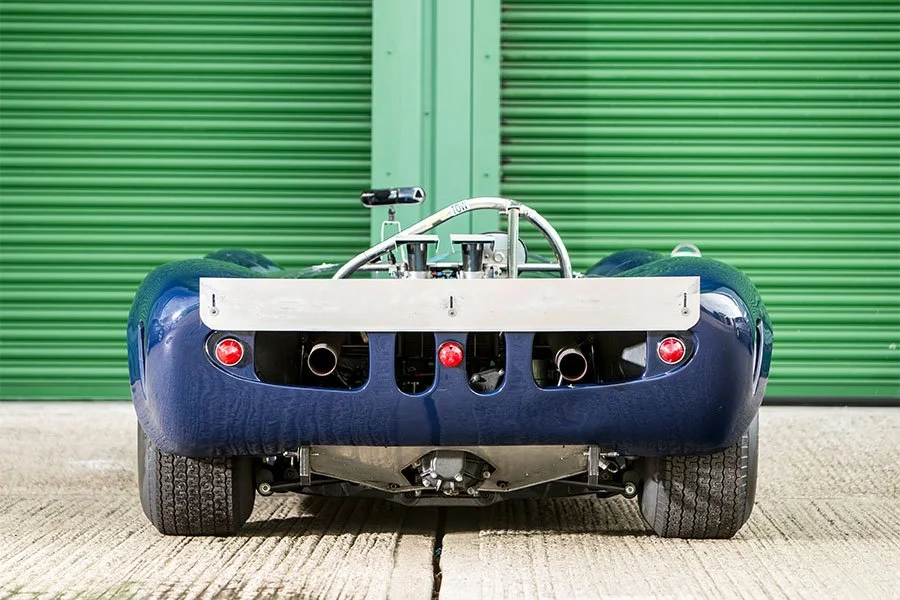
The tail fascia was characterised by a group of four large openings carved out to further optimise cooling and through which the twin megaphone exhausts protruded.
Both the front and rear clamshells were held in place with Dzus fasteners and were quickly detachable.
INTERIOR
Aside from an upholstered pair of bucket seats, the T70’s cockpit was a mixture of unpainted aluminium and body coloured fibreglass.
Located behind the leather-rimmed three-spoke steering wheel was a five-gauge binnacle that typically housed read outs for engine speed, oil temperature, oil pressure, water temperature and voltage. Control panels either side housed a variety of flick switches with the engine start button off to the driver’s right.
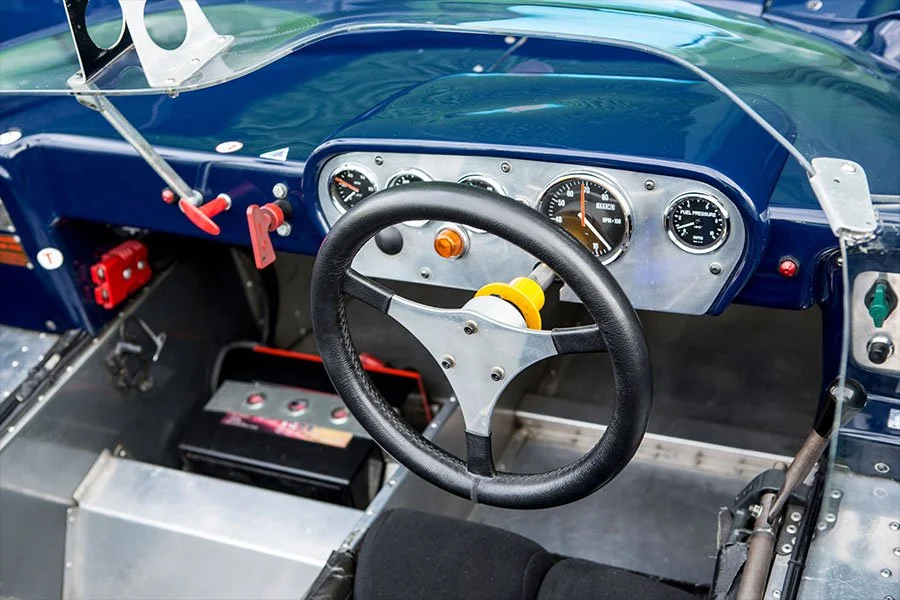
Every T70 was built in right-hand drive with a right-hand gear shift.
WEIGHT / PERFORMANCE
The Ford-powered T70 weighed in at around 680kg and the Chevry-powered version was about 25kg heavier. Depending on gearing, T70s could comfortably exceed 180mph and hit 0-62mph in about three seconds.
To put these figures into perspective, during qualifying for the 1965 Silverstone International Trophy Sports Car race,,John Surtees went 1.5 seconds faster driving his quasi-works T70 than the pole time set by Graham Hill’s BRM for that weekend’s F1 event.
PRODUCTION
Lola produced 15 copies of the Mk1 T70 during 1965. Chassis numbers ran from SL70/1 to SL70/15.
A spare tub numbered SL70/1A was also completed.
The prototype of a lighter, subtly reworked Mk2 version debuted in late August of 1965 before production got underway for 1966.
PRODUCTION CHANGES
Chassis SL70/13 was completed with a slightly shorter wheelbase. In April 1965 it was supplied as a bare tub to the US-based Mecom Racing Team which also took delivery of chassis number 3, 6 and 12 along with a spare tub numbered 1A.
John Mecom’s team built chassis 13 up with anti-dive rear suspension and subtly modified bodywork. In addition, the Mecom outfit experimented with snorkel-type intake engine cooling scoops mounted atop the rear deck on some of its T70s.
In terms of engines, because the Chevrolet motor’s higher deck height meant that it could be stroked to six-litres, substantially enlarged 5.3-litre / 327 cubic-inch and 5.9-litre / 360 cubic-inch units that pumped out 450 to 480bhp began to come on stream during the 1965 season.
COMPETITION HISTORY
The 1965 British Sports Car Championship proved to be a fiercely contested affair. Jim Clark won the opening two rounds (the Silverstone Senior Service 200 and Goodwood Lavant Cup) driving a Ford-powered Lotus 30. Round three (the Oulton Park Tourist Trophy) fell to Denny Hulme in Sid Taylor’s under two-litre Brabham BT8 Climax. Round four (the Silverstone International Trophy) was won by Bruce McLaren in a McLaren M1A Oldsmobile.
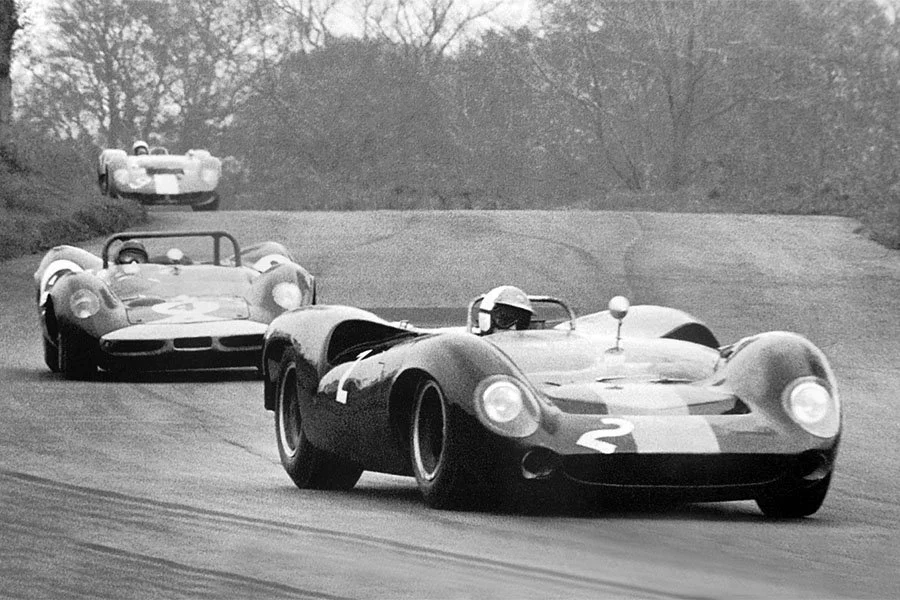
Aside from Clark, the only other driver to win more than once was David Hobbs who took victory at the Mallory Park Guards Trophy (round five) and the Croft Daily Mirror Trophy (round seven) in Harold Young’s Ford-powered Lola. Chris Amon won round six (the Silverstone Martini Trophy) in a works McLaren and the season-ending Guards Trophy at Brands Hatch went to John Surtees who was in a Chevy-powered prototype Mk2 T70.
With three wins, the T70 was the most successful car of the year and David Hobbs was crowned 1965 British Sports Car Champion.
Elsewhere, the T70 also collected wins at the Mosport Player’s 200 (John Surtees), the Laguna Seca 200 mile race (Walt Hansgen), the Kyalami Grand Prix (Paul Hawkins) and the Guadalajara Grand Prix (John Fulp).
Text copyright: Supercar Nostalgia
Photo copyright: Lola Heritage - http://www.lolaheritage.co.uk, Bonhams - https://cars.bonhams.com/ & Hugh Dibley