VIN: the works / Ford Motor Company Lola Mk6 GT chassis LGT-P
/ Ben Tyer
HISTORY OF CHASSIS LGT-P
Chassis LGT-P was the original Mk6 GT prototype. It was the only Mk6 GT built with a steel as opposed to aluminium monocoque.
Lola took it to Olympia in January 1963 for the London Racing Car Show but, at this stage, it had not been fitted with a functional drivetrain. Equipped as a road car with vivid turquoise seats to match the turquoise chassis, a 4.2-litre Ford V8 with single Holley carb was subsequently installed.
The low-slung silver Lola then made the Mk6 GT’s competition debut when it appeared at the Silverstone International Trophy race for GT and Sports cars on May 11th.
John Surtees drove the car in practice but was outlawed from racing it by his employers at Ferrari.
Tony Maggs stepped in at the last moment and started from the back of the grid; he had never even sat in the car before the race began.
At an average speed of around 100mph, Maggs progressed up the 43-car field to eventually finish ninth overall and fifth in the over two-litre class.
One week later, LGT-P was entered for the Nurburgring 1000km World Sportscar Championship event.
Maggs was co-driven by Bob Olthoff and the Lola qualified a reasonable ninth. The race proved a disappointment though as Maggs had to stop at the end of the first lap for the rear wheel nuts to be tightened up. He then retired on lap four with a broken distributor.
After its appearance at the Nurburgring, LGT-P was retired from competition duty as two new cars with aluminium monocoques were nearing completion (LGT-1 and LGT-2).
Following LGT-1’s performance at Le Mans in June, the Ford Motor Company purchased it along with LGT-P to act as mobile test beds for what would become the GT40. Ford had failed in their quest to buy Ferrari and were planning a Sports car programme of their own. They considered the Mk6 GT to be the perfect foundation and Eric Broadley was given a two-year deal to work with them as part of the GT40 design team.
However, Broadly quit the project after twelve months and received LGT-P as part of his settlement.
LGT-P was then stored back at the Lola factory in Slough where, in May 1965, it was spotted by Shelby American racing driver, Allen Grant.
Grant was in England working for Shelby at Ford Advanced Vehicles (FAV). The FAV operation was on the same industrial estate as Lola.
Grant spotted the Mk6 GT under a cover in the corner of the Lola factory and struck a deal with Broadley to buy it for $3000.
Allen Grant has owned LGT-P ever since.
Notable History
Lola Cars
Silver with Turquoise interior
01/1963 London Racing Car Show
11/05/1963 IND Silverstone International Trophy (T. Maggs) 9th oa, 5th S2.0+ class (#48)
19/05/1963 WSC Nurburgring 1000km (T. Maggs / B. Olthoff) DNF (#115)
Purchased by Ford Motor Company for GT40 testing and development
1964 returned to Eric Broadly as part of his settlement from Ford
May 1965 sold to Allen Grant, USA
Text copyright: Supercar Nostalgia
Photo copyright: Lola Heritage - http://www.lolaheritage.co.uk
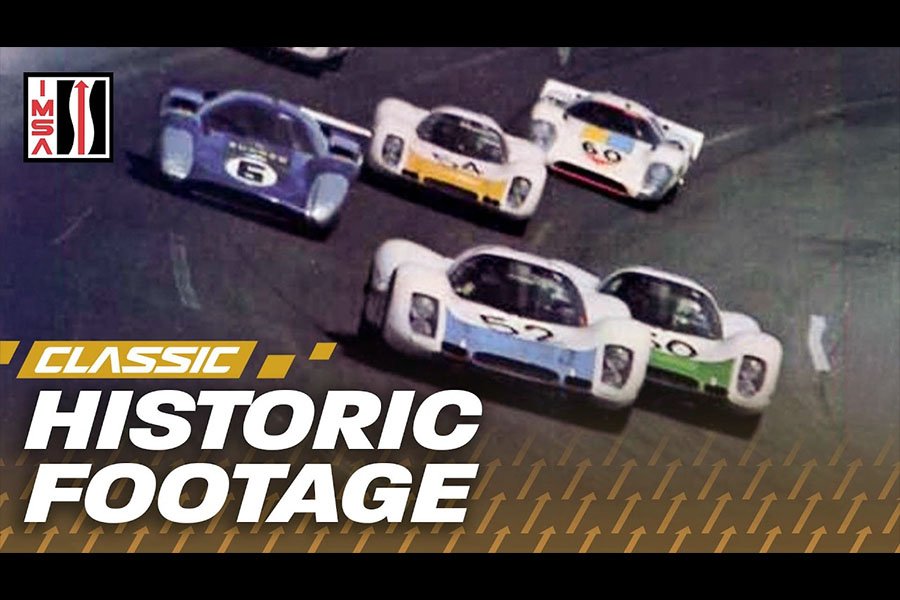
Relive one of the most dramatic chapters in Daytona endurance racing with this classic film from the 1969 24 Hours of Daytona. Porsche was widely expected to dominate again, but in a stunning turn of events the Sunoco-liveried Lola T70 Mk.3B GT Chevrolet took overall victory.
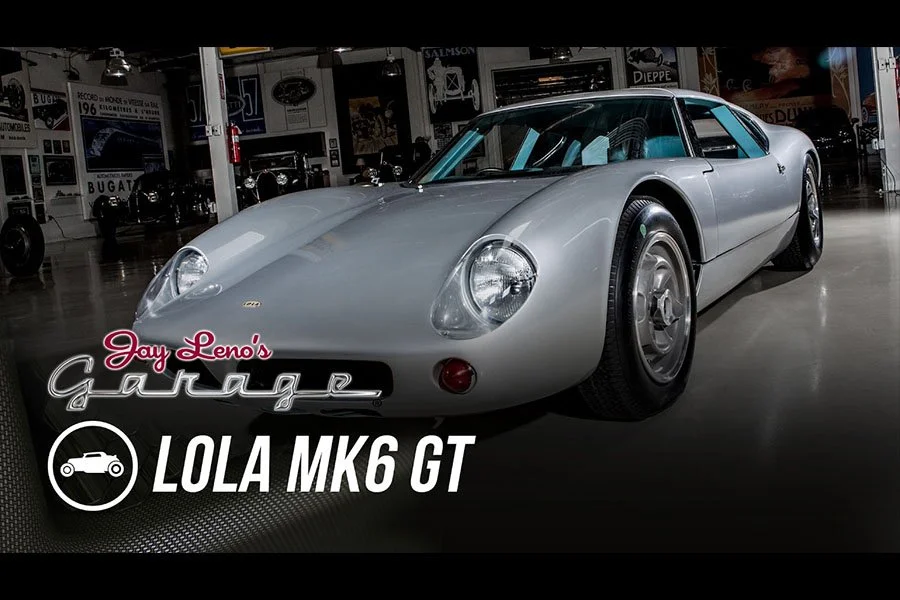
Automotive royalty pays a surprise visit to the garage when Allen Grant stops by with his newly restored 1963 Lola Mk6 GT, the prototype vehicle that led to the legendary Ford GT.

Lola were great beneficiaries of the FIA’s decision to restrict engine capacity of top flight Group 6 Prototypes to three-litres for 1968. Like Ford’s GT40, the Lola T70 Mk3B GT was, on account of a…

During an enormously successful maiden campaign in 1965, Lola’s new Group 7 class T70 won major races in the UK, United States and Canada with international stars like John Surtees, David

Chassis SL76/153 was the T70 Mk3B GT supplied new to privateer Terry Croker for the 1970 season. The yellow car appeared under an A&J Motors entry which was the garage run by Croker’s father in…

Chassis SL76/147 was dispatched on May 20th 1969 to Lola’s European distributor, Jo Bonnier. Bonnier in turn sold the car to renowned Swiss tuner, Louis Morand, who planned to race it with an…

For 1967, Lola created a Coupe version of the highly successful T70 which for the previous two seasons had proven so effective in Can-Am, the Unites States Road Racing Championship and the…

Chassis SL76/151 was the second T70 Mk3B GT sold to the Swiss Ferrari distributor, Georges Filipinetti. It followed chassis SL76/145 which incurred heavy damage on its debut outing at the…

Chassis SL76/149 was sold to 28-year old English privateer, Mike de Udy, for his 1969 campaign. Prior to this latest T70, in 1967 de Udy had purchased a new first generation Mk3 GT (chassis SL73/105)…

Chassis SL76/145 was sold to Lola’s US distributor, Carl Haas, of Lincolnshire, Illinois. Together with the sister cars of Roger Penske and John Love, SL76/145 was expected to form part of a three-car…

Chassis SL76/144 was sold to 32 year old privateer racing driver David Preston of Bosworth, Leicestershire. Between 1964 and 1968, Preston had competed with a Lotus Seven, a Brabham BT14…

Chassis SL76/148B was built around a brand new chassis and body using the engine and gearbox from Picko Troberg’s wrecked T70: chassis SL76/148A. The red Lola was supplied to British privateer…

Chassis SL76/148A was the second T70 Mk3B GT supplied to Swedish privateer, Picko Troberg. It replaced Troberg’s earlier example, SL76/148, which had been wrecked by Bjorn Rothstein during…

Chassis SL76/148 was sold via Lola agent, Jo Bonnier, to Swedish car dealer and privateer racing driver, Picko Troberg. Troberg began racing in the Swedish Formula Junior series. In addition he…

Chassis SL76/146 was sold new to John Woolfe. Woolfe was a British privateer who, together with his business partner, Arnold Burton, ran John Woolfe Racing, a major UK retailer of high performance…

Chassis SL76/138 was sold to Irish racing driver and team owner, Sid Taylor. Taylor hailed from Rathfarnham in south Dublin. He ran Taylor’s Grange Hotel (located on his family’s extensive farm)…

Chassis SL76/150 was one of 16 Lola T70 GTs built to Mk3B specification. It was originally sold to renowned British privateer, David Piper. David Piper was among the best known sports car entrants…

Chassis SL76/139 was the first T70 Mk3B GT. Completed by Lola on December 30th 1968 and dispatched to the USA the next day, its destination was Roger Penske Racing in Philadelphia. Penske…

Chassis SL70/143 was one of the 16 B-spec. T70 MK3 GTs constructed by Lola. It was supplied new to Swedish Formula 1 driver, Jo Bonnier, whose Grand Prix career included spells at BRM, Porsche and…

Chassis LGT-2 was one of the two Mk6 GTs fitted with an aluminium monocoque after the prototype (LGT-P) had been completed with a steel monocoque. LGT-1 was retained by Lola as a works car and…

After the Mk6 GT prototype (LGT-P) had been completed with a steel monocoque, two additional examples were built with aluminium monocoques. The first was LGT-1 which Lola retained for use as…

Chassis LGT-P was the original Mk6 GT prototype. It was the only Mk6 GT built with a steel as opposed to aluminium monocoque. Lola took it to Olympia in January 1963 for the London Racing…

Lola’s first sports racing car, the Mk1, had proven an enormous success. Powered by an 1100cc Coventry Climax engine, it won multiple titles including the BRSCC Sports Car Championship in…

Considered among the best sports car drivers of his time, Australian Paul Hawkins was variously employed by the works Porsche and Ferrari teams as well as Carroll Shelby and the Gulf-backed…

Ulf Norinder was a wealthy Swiss privateer whose grandfather manufactured Lakerol pastils and lozenges. By 1968, Norinder had owned and raced a variety of cars to include a Maserati 200 S, two…