VIN: the Jabbeke record setting Jaguar XK120 chassis 660986
/ Ben Tyer
HISTORY OF CHASSIS 660986
Chassis 660986 was completed in early 1952 as a right-hand drive XK120 with Open Two Seat bodywork. It was retained by Jaguar for competition and promotional use. A colour scheme of British Racing Green over tan was specified.
Soon after completion, 660986 was road registered MDU 524.
The car’s first competitive outing was on the 1952 Coupes des Alpes which took place from July 11th to 17th. It was allocated to Dutch rally driver, Maurice Gatsonides, and his British navigator, George Samworth.
The event kicked off at 9pm on Friday 11th when the cars left Marseilles and travelled the 981km to Cortina d’Ampezzo. The second stage comprised a 168km dash on mostly closed roads over the Dolomite Cup circuit. Stage three was an 802km route to Menaggio on Lake Como and stage four saw the competitors travel 495km to Aix-les-Bains. The fifth and final stage comprised a 709km run down to Cannes.
By the finish, only 23 of the 87 starters were still in the competition. Of these, Gatsonides and Samworth had racked up the most special stage wins (eleven).
However, they narrowly missed out on the general classification win. That honour fell to Alexander von Falkenhausen and his wife, Katharina, although there was some dispute about whether their BMW 328 had actually met the 30 car production requirement to compete.
Nevertheless, 660986 claimed a fine second overall and took victory in the over three-litre class.
The green XK120 next appeared for a high speed test run on the Ostend-Jabbeke motorway in Belgium during April 1953.
Jaguar had made a similar trip in May 1949 with a white left-hand drive OTS prototype (670002). On that occasion, test driver, Ron Sutton, had achieved a top speed of 132.6mph over the flying-start kilometre.
For this latest record attempt, 660986 was equipped with a full length undertray, the hood and sidescreens were removed, the windscreen was replaced with an aero screen and a rigid tonneau was fitted over the passenger side of the cockpit.
At the wheel was Norman Dewis who hit 141mph.
In September, Celso Fernandez broke Jaguar’s record, this time raising it to 151mph in a supercharged Pegaso Z-102 BS 2.8.

Jaguar decided to return and settle the matter once and for all.
660986 was further modified to improve its aerodynamics: the XK120 was equipped with a domed single seat roof canopy from a glider, the engine was tweaked, the tyres inflated to 50 PSI and streamlined headlight cowls were installed.
On this occasion, Norman Dewis exceeded everyone’s expectations and hit 172.4mph.
Soon afterwards, high speed runs on the Jabbeke motorway were banned.
The speed equipment installed for the record run was subsequently removed.
In 1954, chassis 660986 was loaned to the producers of Calling All Cars which starred Cardrew Robinson, John Fitzgerald and Spike Milligan.
660986 was then sold off. It continued to race at club level until 1957.
In the early 1960s, the car was acquired by a young Brian Redman who used it for his honeymoon.
Notable History
Jaguar Cars
11-17/07/1952 IND Rallye International des Alpes (M. Gatsonides / G. Samworth) 2nd oa, 1st 3.0+ class (#404)
01/04/1953 IND Ostend-Jabbeke Speed Record (N. Dewis) new world record 141mph
20/10/1953 IND Ostend-Jabbeke Speed Record (N. Dewis) new world record 172mph
Loaned to the producers of Calling All Cars
Sold later in 1954
Early 1960s sold to Brian Redman
Text copyright: Supercar Nostalgia
Photo copyright: Jaguar Heritage Trust - https://www.jaguarheritage.com/
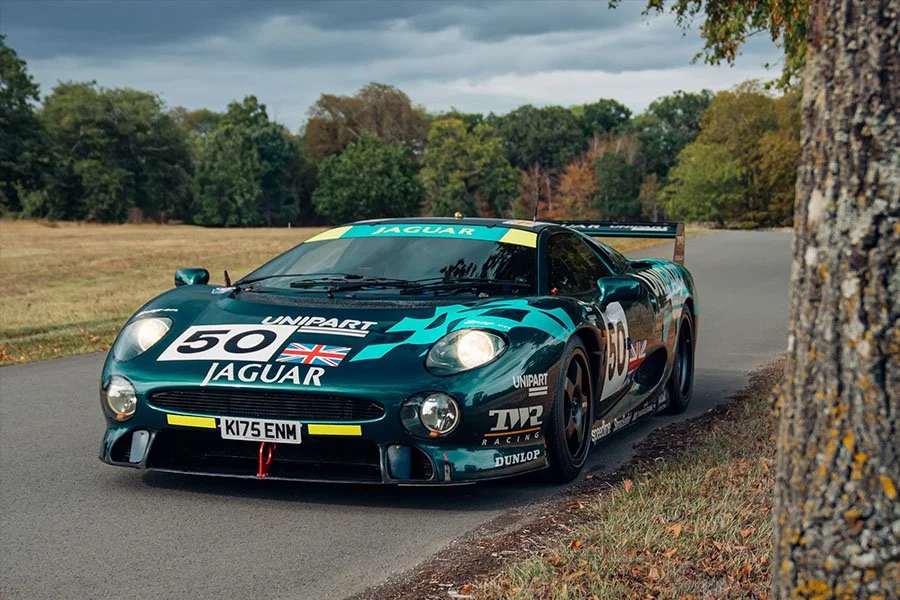
The return of GT cars to Le Mans during the early 1990s coincided with two of the track’s biggest controversies in years. Having been the exclusive preserve of out-and-out Sports Prototypes since…
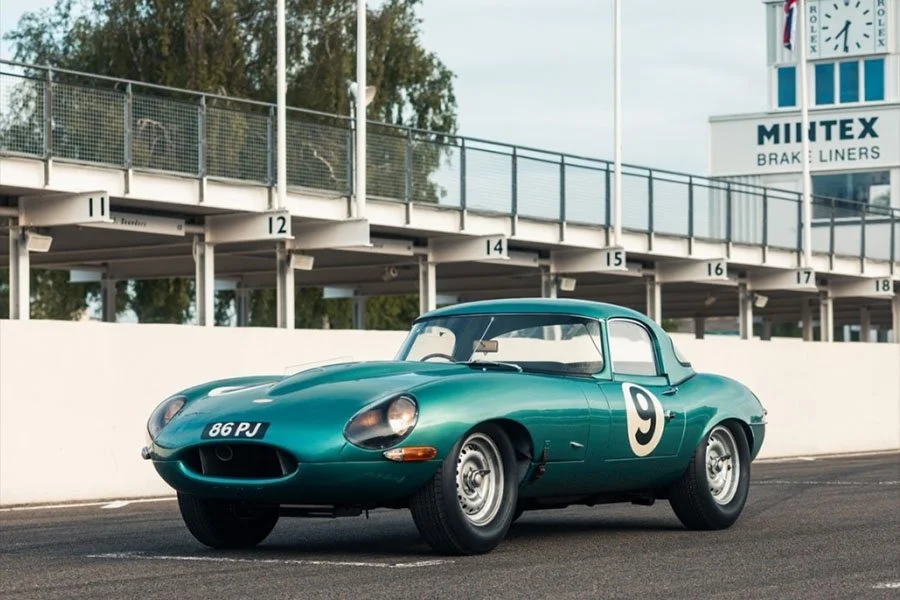
Although it went up against the rule-bending Ferrari 250 GTO which was scandalously accepted into the Group 3 Grand Touring class, Jaguar’s E-type Lightweight gave a very good account of itself at…
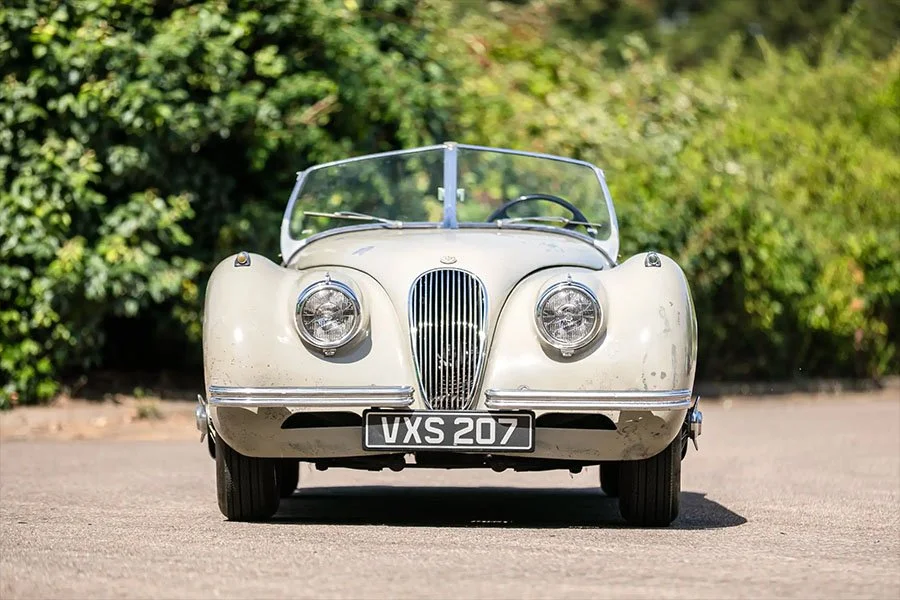
When Jaguar displayed the XK120 prototype at the London Motor Show in October 1948, it did so with little expectation of sending the model into production. However, even in the gloom of post-war…
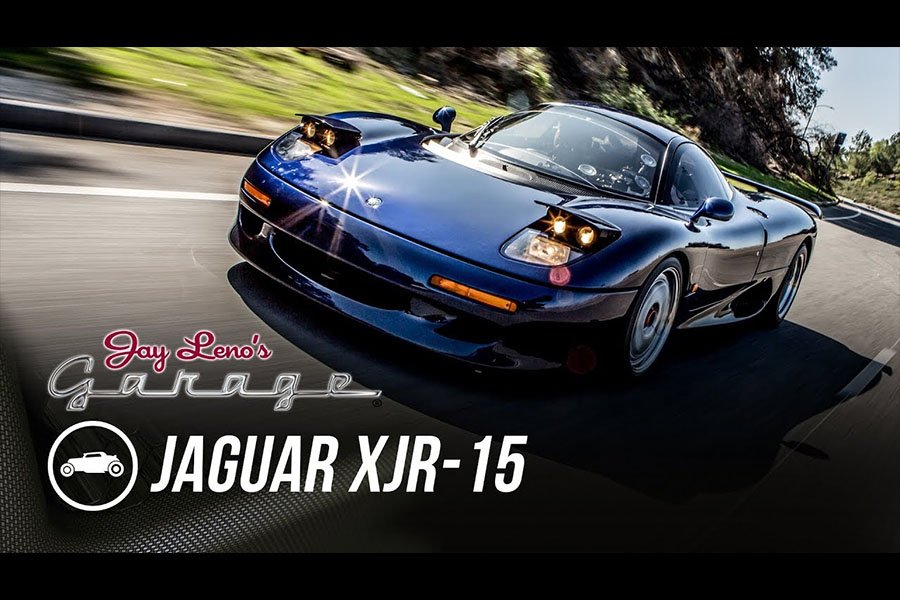
Based on the legendary Jaguar XJR-9 race car, this XJR-15 owned by Dr. Jasbir Dhillon was one of only 53 made and was the predecessor to the XJ220!
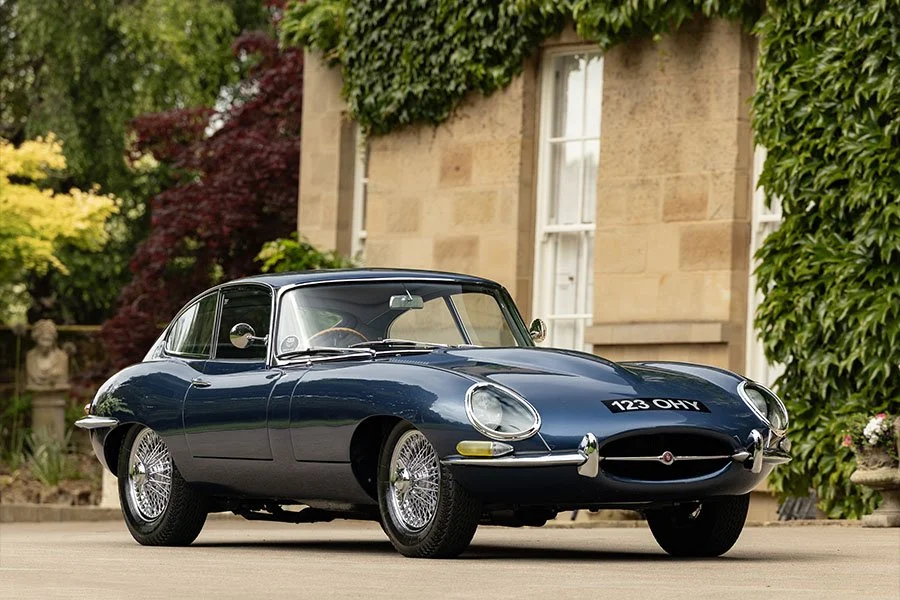
Three years after Jaguar had debuted the all-conquering tube framed C-type, the Coventry firm released arguably the most advanced sports racing car of its day. Based around a state-of-art…

As denoted by its ‘885’ VIN prefix, chassis 885002 was a left-hand drive E-type FHC. It was completed in mid 1960 as the second ‘proper’ E-type FHC. Together with the original FHC…

Having successfully managed Jaguar’s European Touring Car Championship effort with the XJS between 1982 and ‘84 (a programme that yielded 16 wins and the 1984 Driver’s title), Tom Walkinshaw…

Although Jaguar had officially decided to withdraw from motor racing a few years prior, a batch of seven specially prepared E-types were prepared for competition use during the 1961 season…
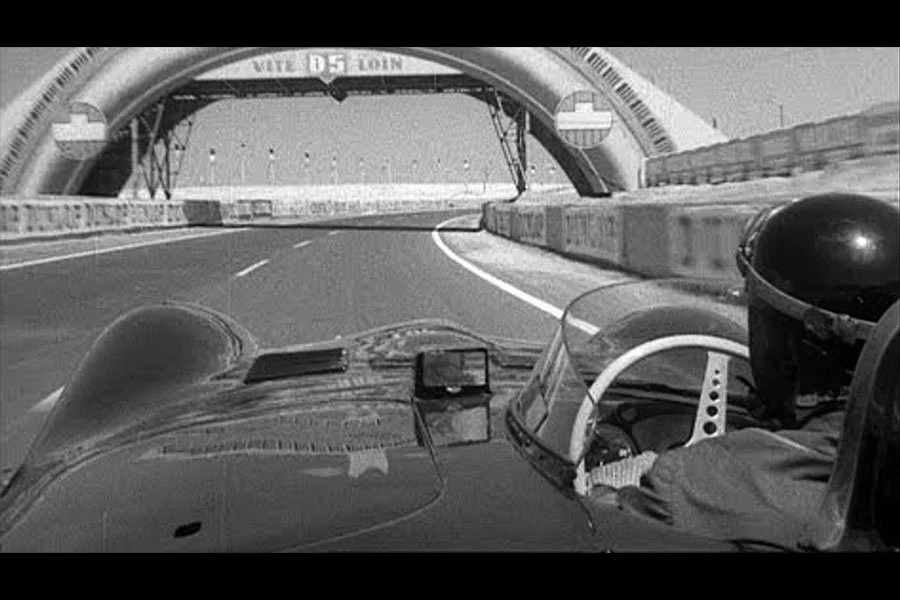
Watch Mike Hawthorn, with a film camera strapped to the back of his D-Type Jaguar and a microphone fitted, commentate his way around the famous Le Mans circuit in 1956.
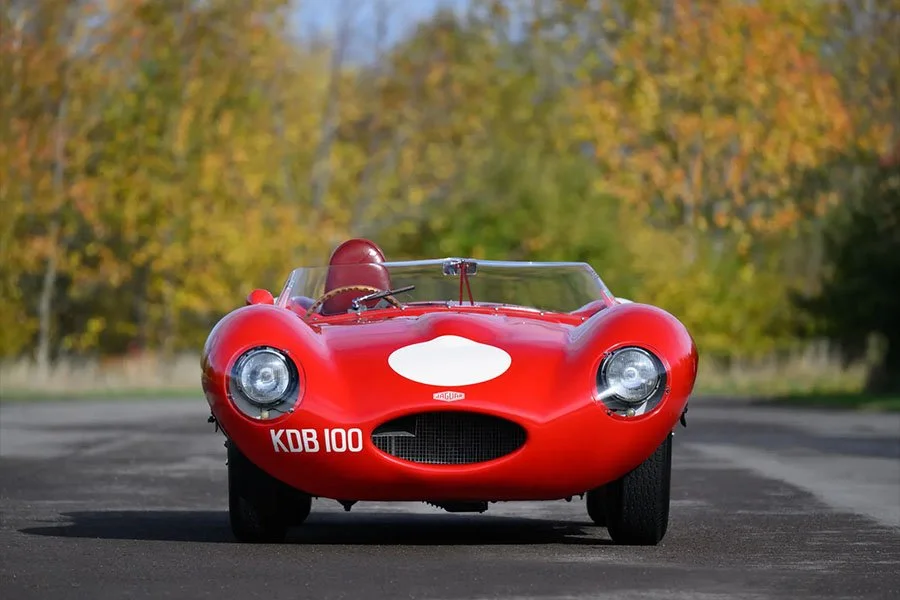
Only two D-types were originally painted red by the Jaguar factory in Browns Lane, Coventry, one of which is this car, chassis XKD 518, currently on offer at the Fiskens showroom in London.
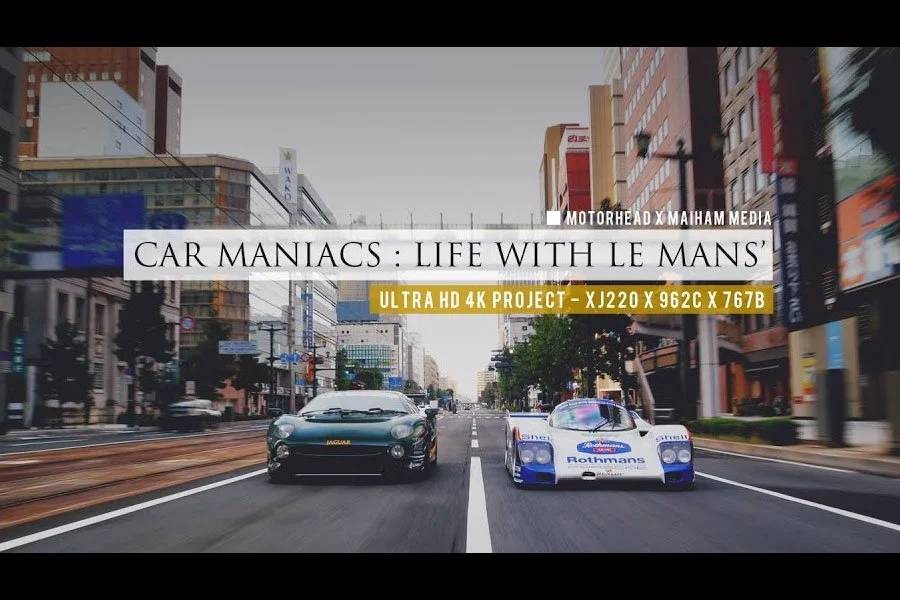
Motorhead magazine teams up with Luke Huxham to give you a glimpse into the life of three young, at-heart car enthusiasts who own three extremely unique Le Mans cars: the Mazda 767B, a Jaguar XJ220LM, and the already famous road-going Porsche 962C.
When XK120 production got underway in June 1949 (just eight months after the prototype had caused a sensation at the ‘48 London Motor Show), nothing could rival the new Jaguar’s combination of price…

Having been in with a shout of scoring an unlikely victory using an almost bog standard XK120 at the 1950 Le Mans 24 Hours, Jaguar went all-in with a purpose built machine for 1951: the XKC (better…

Chassis 029 started life as a Pastel Green C-type dispatched to Jaguar’s West Coast distributor, Charles Hornburg in Los Angeles, on November 24th 1952. It was subsequently sold to Francisco…

After seven years of unprecedented success with the XK120, C-type and D-type, in October 1956 Jaguar announced that it was to officially withdraw from all forms of motor racing. Having won the…

With nigh on 30 years having passed since Jaguar had decided to quit top flight Sports car racing, the British firm made a big splash with a high profile return mid-way through the 1985 season using…

Whatever order you put them in, it is commonly regarded that the BMC Mini, Porsche 911, Volkswagen Beetle and Jaguar E-type were the most iconic automotive designs of the 20th…

Towards the end of 1987, a small group of Jaguar engineers began work on a road-going successor to the C and D-types that had won the Le Mans 24 Hours five times between 1951 and…

Chassis 046 was one of two XJR-15 road cars supplied to the Brunei Royal Family. Total XJR-15 production was 53 units. The Sultan (Hassanal Bolkiah) and his brother Prince Jefri, who was…

Although Germany was rightly regarded as the centre for super tuner activity from the 1970s through to the 1990s, a handful of British firms also created some epic machinery, one of which was Lister.

With a little over 12,000 units built, Jaguar’s XK120 was the most commercially successful top flight sports car of the late 1940s / early 1950s. Six years after the XK120 prototype had made its debut…

Although Jaguar had supplied a handful of competition-prepared ‘ZP’ E-types to special customers for 1961, a more comprehensively uprated Lightweight version was developed for 1963…

Chassis 009 was one of two XJR-15s supplied to the Brunei Royal Family, both of which were completed in road as opposed to race specification. This first example was configured in the only…

The fire at Jaguar’s Browns Lane factory in Coventry on the evening of Tuesday 12th February 1957 affected around one quarter of the complex. Having started in the tyre store, it ripped through the…

On January 18th at Mecum’s Kissimmee auction in Florida, one of the most famous movie cars of the modern era will be going under the hammer: Austin Powers’ Jaguar E-type 4.2 OTS Roadster…

Of the myriad machines that have claimed status of “Le Mans racing car for the road”, arguably none have come closer to fulfilling that mantra than Jaguar’s XK SS of 1957. When the XK SS was…

With the XK120 having rewritten the rulebook in terms of what could be expected from a vaguely affordable sports car, Jaguar understandably opted for evolution rather than revolution when it came…

Launched at the Geneva Motor Show in March 1961, the Jaguar E-type redefined what could be expected from a car priced at such a lot less than an Aston Martin, Ferrari or Maserati. In addition…

The JaguarSport Intercontinental Challenge of 1991 remains arguably the most spectacular one-make racing series ever organised. It comprised three events, supporting the F1 races at Monaco…

When Jaguar unveiled the XK120 prototype at the London Motor Show in October 1948, company boss William Lyons expected the rakish machine to serve as little more than a useful publicity…