P-car Perfection: a Historical & Technical Appraisal of the Ferrari 330 P4 & 330 P3/4
/
BACKGROUND
Ever since Ferrari’s debut season as a manufacturer back in 1947, the Italian firm had largely dominated the scene for purpose-built Sports and Prototype racing cars. There had of course been the odd occasion when the likes of Mercedes-Benz, Jaguar and Aston Martin had de-throned the Maranello outfit, but these had been temporary blips, after which normal service was resumed.
What occurred in 1966 though felt somewhat different.
That season, Ford’s big budget programme with the GT40 had finally come good and, thanks to victories for the 7-litre Mk2 version at Daytona, Sebring and Le Mans, Ferrari was beaten to the ‘66 World Sportscar Championship by two points.
However, this slender gap didn’t really tell the whole story as Ferrari had only managed to beat Ford in a head-to-head on one occasion, at the Spa 1000km, where the Blue Oval-backed Alan Mann squad was purely on hand as a warm-up for Le Mans. Meanwhile, at the Daytona, Sebring and Le Mans races, the Ferraris were soundly beaten.
Although Ferrari was clearly unable to compete with Ford on a level financial playing field, over in Italy the green light was given for another significant evolution of the existing P-car theme. This latest machine would contest a 1967 season when the World Sports Car Championship would apply the same regulatory framework introduced for 1966 with qualifying machinery split into two principle classes.
Fastest of these two main categories was the unlimited Group 6 Prototype class that had no minimum production requirement and saw cars split into over and under 2-litre divisions. Group 6 vehicles would contest the eight-round International Championship for Sports Prototypes where a manufacturers’ best five results counted towards its final points tally.
Running alongside the Group 6 Prototypes at most races were the road-legal Group 4 Sports cars, at least 50 of which had to have been built before homologation was approved. Points accumulated by Group 4 machinery went towards the International Championship for Sports Cars and there were categories for vehicles with engines of under 1.3-litres, under 2-litres and over 2-litres.
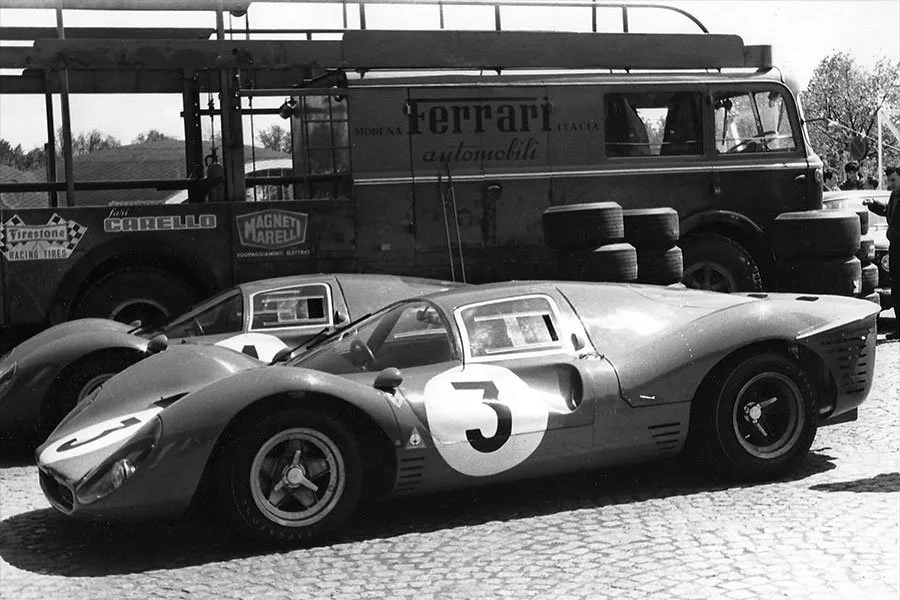
Ferrari’s new-for-1967 330 P4 broke cover at a Daytona test session in early December of 1966. The car then made its competition debut at the same circuit’s 24 Hour contest during the first week of February 1967. Reserved strictly for works use, two copies of the P4 were initially built. They were supported by a P3 which had been uprated to what Ferrari dubbed P3/4 trim. A third P4 was eventually completed in time for Le Mans.
As for Ferrari's distributor teams like NART, Maranello Concessionaires, Ecurie Francorchamps and Scuderia Filipinetti, these outfits were supplied with a visually similar model known as the 412 P which ran a simpler carb-fed 24 valve engine as opposed to the P4’s fuel-injected 36 valve power unit.
The cars from Italy would be pitched against a formidable opposition that included Ford’s all-new Mk4 GT40 backed up by a further uprated Mk2B version. Additional opposition came in the form of the state-of-the-art Chaparral 2F funded by General Motors, Lola’s new T70 Mk3 GT and the Gulf Oil-supported Mirage M1.
CHASSIS
The P4 chassis was designated Tipo 604. It adopted a semi-monocoque arrangement by featuring a tubular steel spaceframe extensively reinforced with riveted aluminium panelling and a fibreglass central tub. At 2400mm, the wheelbase was unchanged from the outgoing P3 as were the size of the 57-litre fuel tanks installed in each sill.
The fully adjustable suspension layout was also broadly similar to that of the P3. There were unequal length wishbones, coil springs, anti-roll bars and adjustable shocks, Modified pick-up points were necessary to accept wider wheels.
Ventilated Girling disc brakes were fitted at each corner. Unlike the P3 (which had used rear brakes mounted inboard of the differential), these were now outboard all round.
New 15-inch Campagnolo cast magnesium wheels were much wider than before: 10.15 and 12.15-inches wide front to back respectively (up from 8.5 and 9.5-inches on the P3). Track expanded by 26mm at the front and 19mm at the rear. For the second year, Ferrari ran with Firestone tyres.
ENGINE / TRANSMISSION
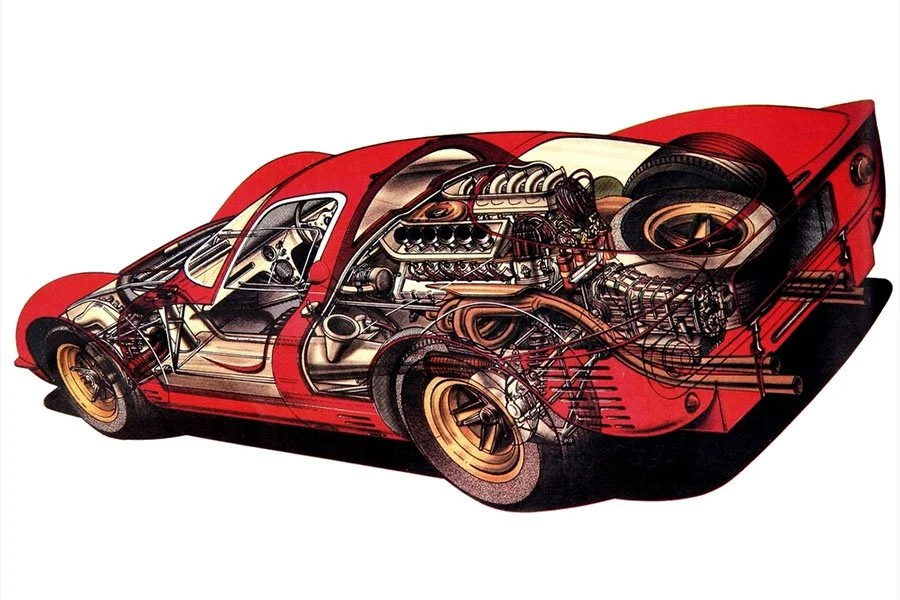
Considerable attention was paid to engine performance and, to that end, Franco Rocchi introduced a series of modifications for the P4’s heavily revised Tipo 241 60° V12.
Updates included a redesigned heavy-duty block with new mounting points, three valve cylinder heads (two intake and one exhaust) and Lucas direct fuel-injection with sliding throttle bodies instead of six Weber carbs. The compression ratio was increased from 10.5:1 to 11.0:1.
Like the P2s and P3s previously campaigned by Scuderia Ferrari, the all-alloy P4 motor used dual overhead camshafts for each bank of cylinders, a brace of Marelli distributors, twin plug ignition and dry-sump lubrication. Similarly, displacement was kept at the familiar 3967cc thanks to a bore and stroke at 77 and 71mm respectively.
Peak output rose from 420bhp to 450bhp at an unchanged 8000rpm.
No torque rating was originally published.
Having suffered a number of failures on its five-speed gearboxes during the ‘66 season, among Ferrari’s top priorities for 1967 was a much stronger unit. The resultant Tipo 603R ‘box was a considerable improvement thanks to its beefier internals and bigger casing that yielded greater oil capacity. Power was transmitted through a limited-slip differential, Borg & Beck triple-plate clutch and further improved half shafts.
BODYWORK
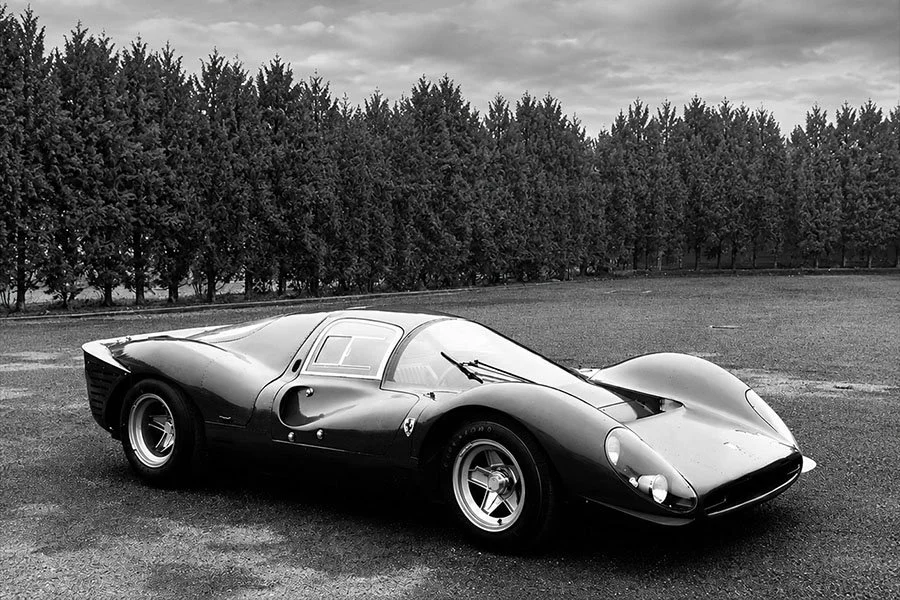
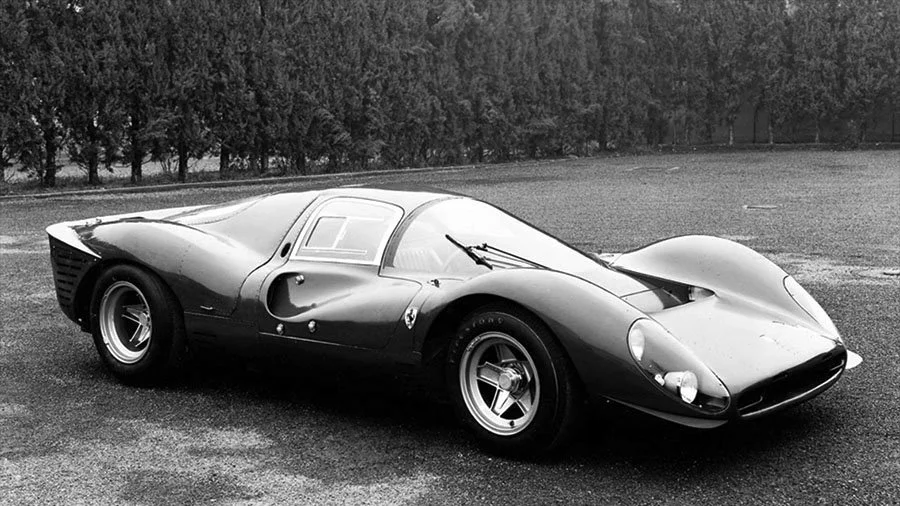
Body fabrication took place at Carrozzeria Sports Cars in Modena, the workshop run by Piero Drogo, where Ferrari's latest P car design was translated into breathtaking reality. A slightly longer, wider and lower refinement of the handsome P3, all three P4s were originally produced in Berlinetta trim.
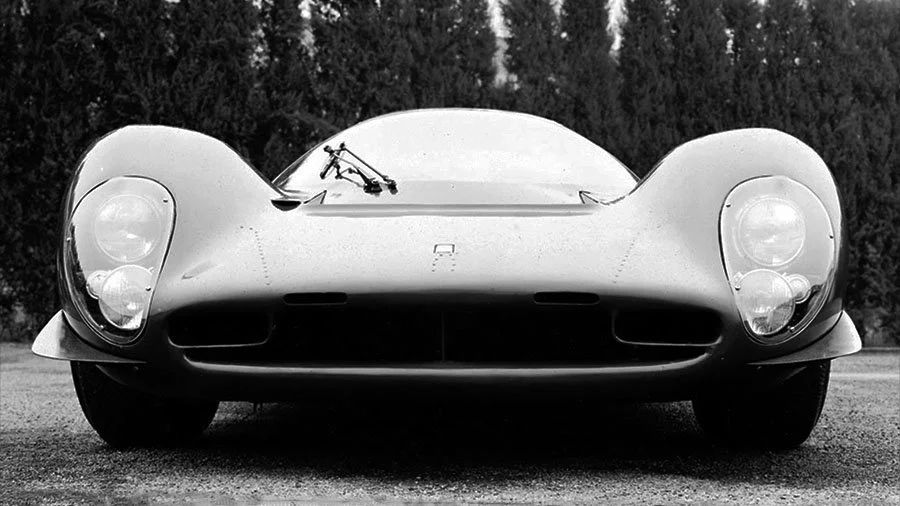
With its smaller frontal area, slimmer primary intake and more neatly integrated headlight cowls, the P4’s nose was designed to cut through the air with greater ease. In line with this approach, a lower profile windscreen / cockpit treatment was also incorporated.
Inboard of the front fenders and down each flank, the bodywork sank lower than ever before. Wheel wells were re-shaped as were the large engine cooling intakes carved out from each of the forward-hinging butterfly doors.
Whereas the P3 had used a rear clamshell with separate apron, a redesigned single piece unit was adopted on the P4. It included a more pronounced, fully integrated spoiler that swept round to the trailing edge of the rear wheelarches.
Aside from utilising the same type of rear light units as the P3, the P4’s tail fascia was completely redesigned. It featured a large rectangular cooling vent that also enabled access to the spare wheel which, as per the regulations, had to be fitted along with a full complement of lighting.

All told, the P4 was not only the most beautiful racing car of its era, but possibly all time.
INTERIOR
Space inside the cockpit had shrunk progressively over preceding years and the P4 followed this trend.
A redesigned black metal dash housed most read outs within a small blister directly ahead of the driver. The fuel gauge along with a large fresh air blower for the driver was located on an adjoining vertical central control panel.
Other than some vinyl upholstery to pad out the area reserved for driver and passenger, there was no upholstery to speak of. Two tiny seats were squeezed in between substantial sills and a tall central divider. The seat bolsters, the sills and the divider were trimmed in black vinyl and the seat centres were bright red. The remaining cockpit surfaces were left in bare metal.
All of the P4s were built in right-hand drive with a right-hand gear change.
WEIGHT / PERFORMANCE
Compared to the P3, which tipped the scales at 850kg, the P4 came in some 58kg lighter at 792kg.
With long Le Mans gear ratios, the P4 could hit a top speed of 198mph (5mph up on the P3).
0-62mph took less than 4 seconds.
P3/4
The one-off P3/4 differed to its P4 cousins in several ways.
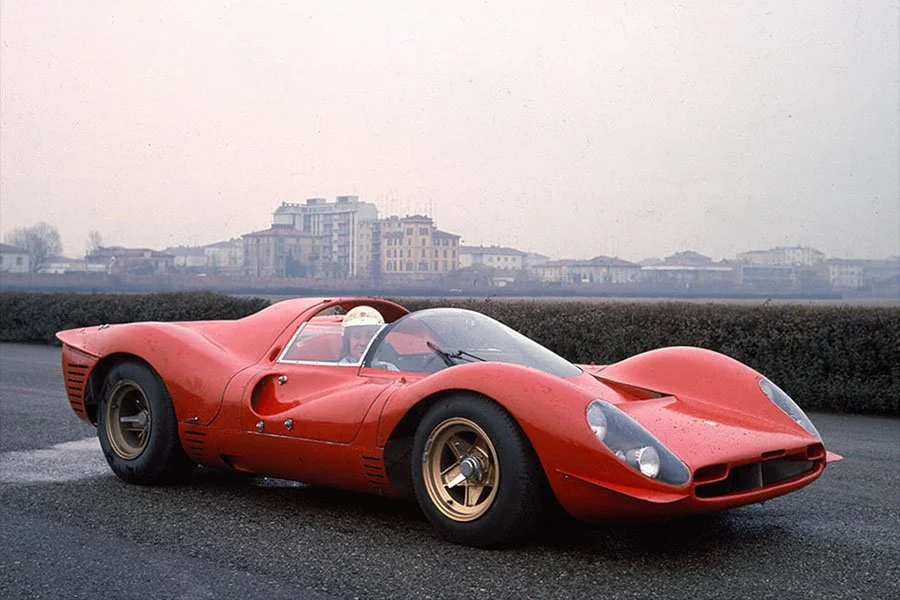
In addition to having worn a Spyder bodyshell that featured a Targa-style roof opening and a flat rear deck with vertical screen instead of the P4’s Fastback arrangement, the P3/4 most noticeably featured a slightly larger primary intake.
PRODUCTION CHANGES
Ferrari elected to run front canards at several events in 1967.
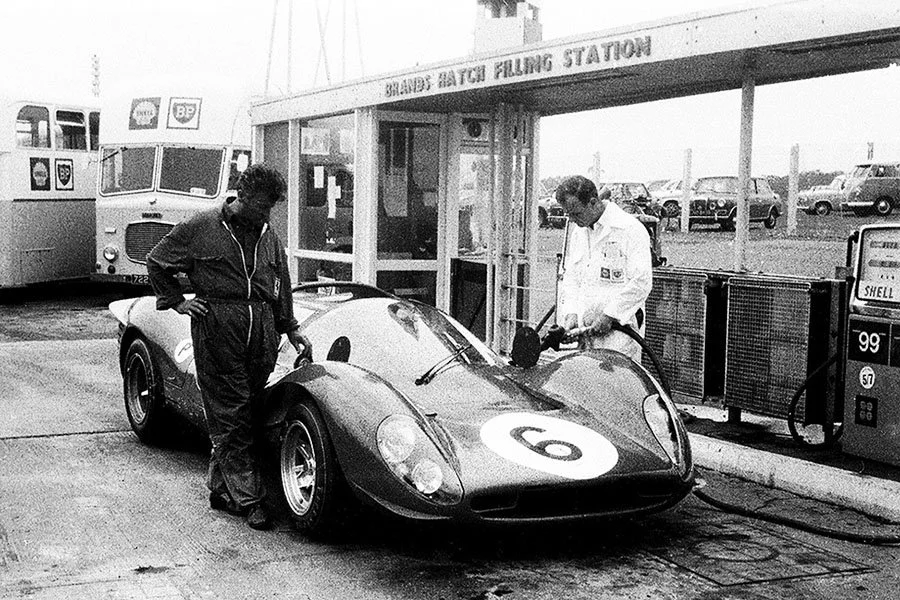
For the P4’s final outing that year (the Brands Hatch 6 Hours), all three P4 Berlinettas were transformed with the same Spyder-type roof / rear deck treatment as the P3/4.
PRODUCTION
Three copies of the P4 were built: chassis 0856, 0858 and 0860.
One P3 was transformed to P3/4 trim: chassis 0846.
1967 SEASON
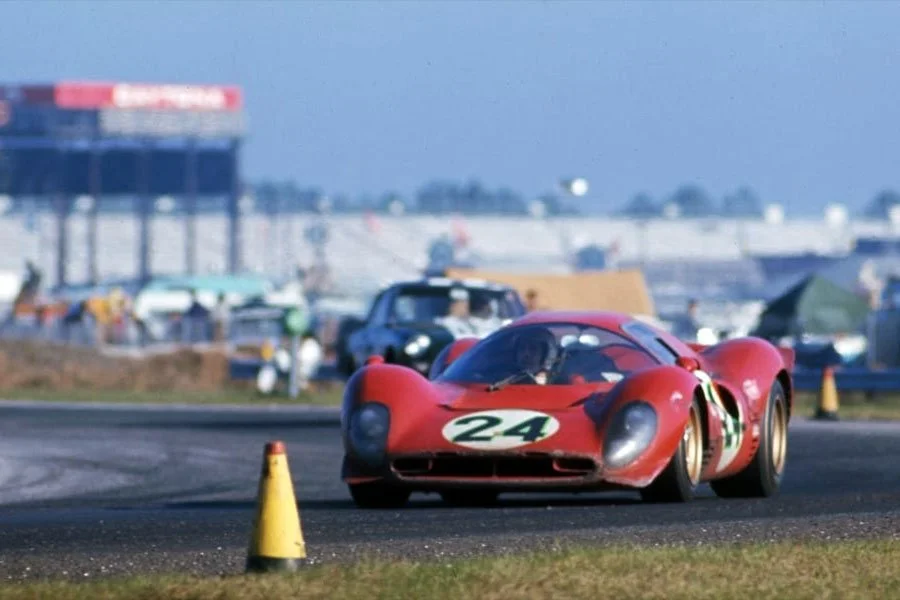
Ferrari’s 1967 season got off to a great start. The P3/4 Spyder of Lorenzo Bandini and Chris Amon headed a 1-2-3 finish for the Italian manufacturer at the season-opening Daytona 24 Hours as its American rivals fell by the wayside. Mike Parkes and Ludovico Scarfiotti bagged second place for the Scuderia and the final podium spot went to the NART 412 P of Pedro Rodriguez / Jean Guichet.
Ferrari then skipped round two, the Sebring 12 Hours, where Ford debuted its Mk4 and Mk2B GT40s which finished first and second. The works Fords would not be seen again until Le Mans.
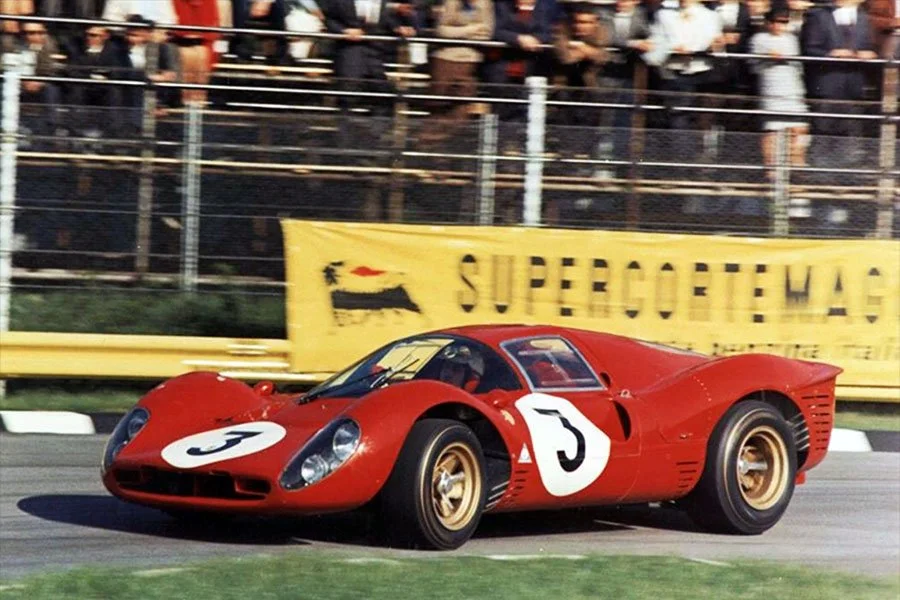
Ferrari’s home race, the Monza 1000km, saw the P4s came home first (Lorenzo Bandini / Chris Amon) and second (Mike Parkes / Ludovico Scarfiotti) after the challenge from Chaparral and Mirage faded.
At the Spa 1000km a week later, niggling issues and a brief off-track excursion saw the solitary P4 in attendance (entered for Parkes / Scarfiotti) finish a disappointing fifth. Wet weather maestro Jacky Ickx co-driven by Dick Thompson gave the Mirage M1 its maiden win. Best of the Ferraris in attendance was the Maranello Concessionaires 412 P of Richard Attwood / Lucien Bianchi which finished third.
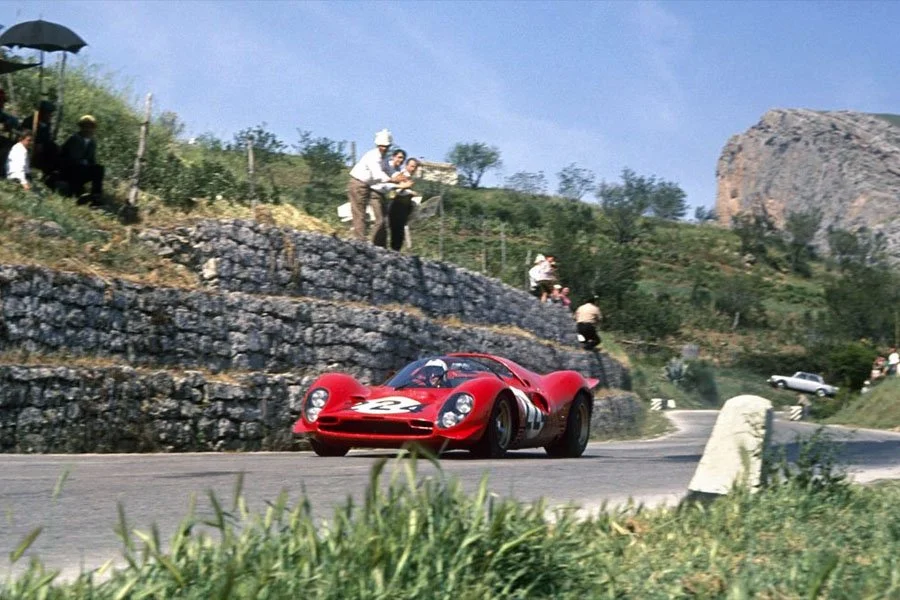
Ferrari ran the P3/4 at the Targa Florio (again for Vaccarella / Parkes), but Vaccarella crashed while holding a substantial lead on the second lap. Porsche took its first win of the year thanks to a Paul Hawkins / Rolf Stommelen who were driving a 2.2-litre works 910.
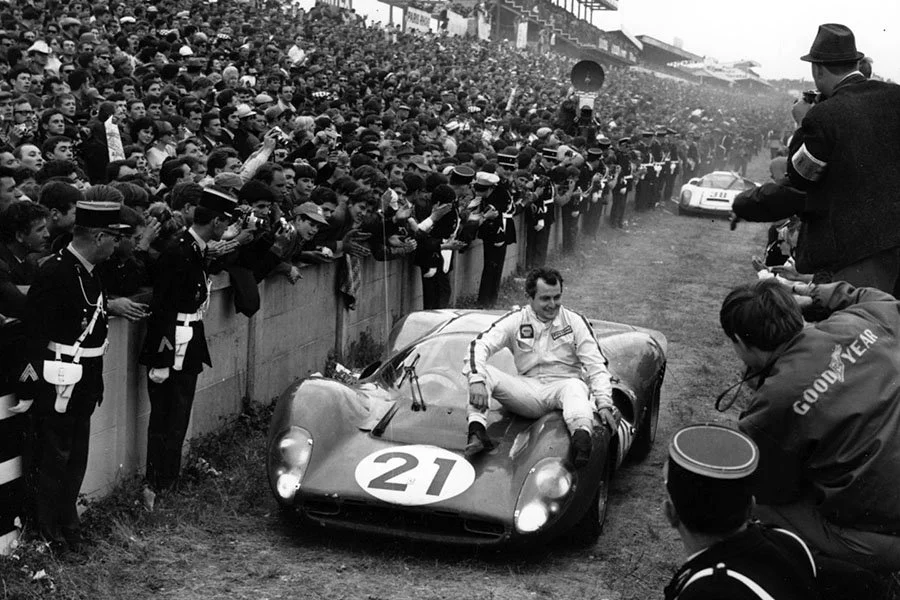
Despite appalling luck for some of its entries, Ford then managed to win the Le Mans 24 Hours in the middle of June. Dan Gurney and A.J. Foyt gave the Mk4 GT40 its second win of the year while the P4s of Ludovico Scarfiotti / Mike Parkes and Willy Mairesse / Jean Blaton took second and third spots respectively. The other P4 in attendance (that of Gunther Klass / Peter Sutcliffe) failed to finish owing to a fuel pump failure.
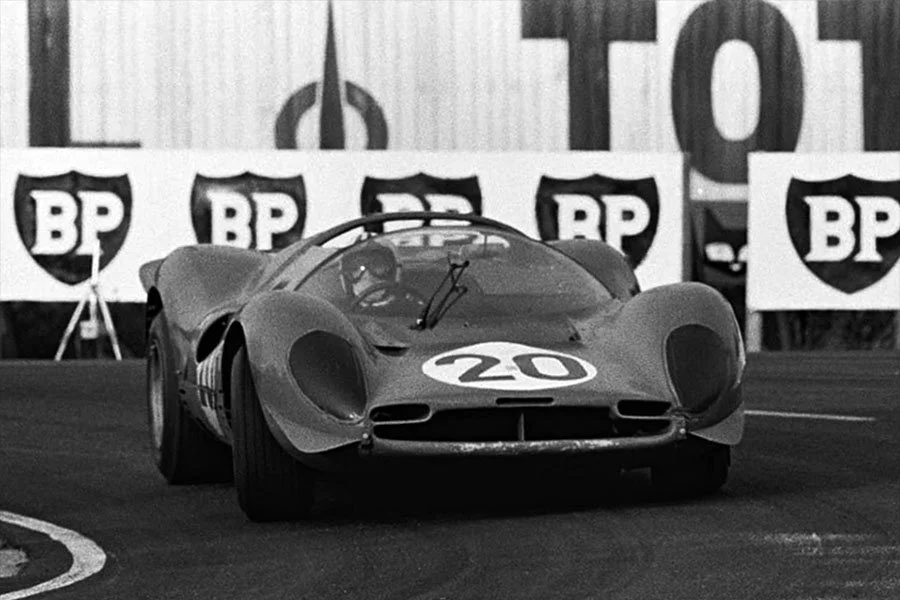
Unfortunately, the P3/4 (allocated to Chris Amon / Nino Vaccarella at Le Mans) was consumed by fire while heading back to the pits following a tyre blowout. Upon its return to Maranello, the P3/4 was scrapped.
With Porsche having won the Nurburgring 1000km and Mugello GP (neither of which the Scuderia had attended), the German firm had emerged as an unlikely challenger to Ferrari’s World Championship aspirations. As a consequence of only targeting the Daytona, Sebring and Le Mans contests (missing out on victory at Daytona), Ford were already out of the reckoning.
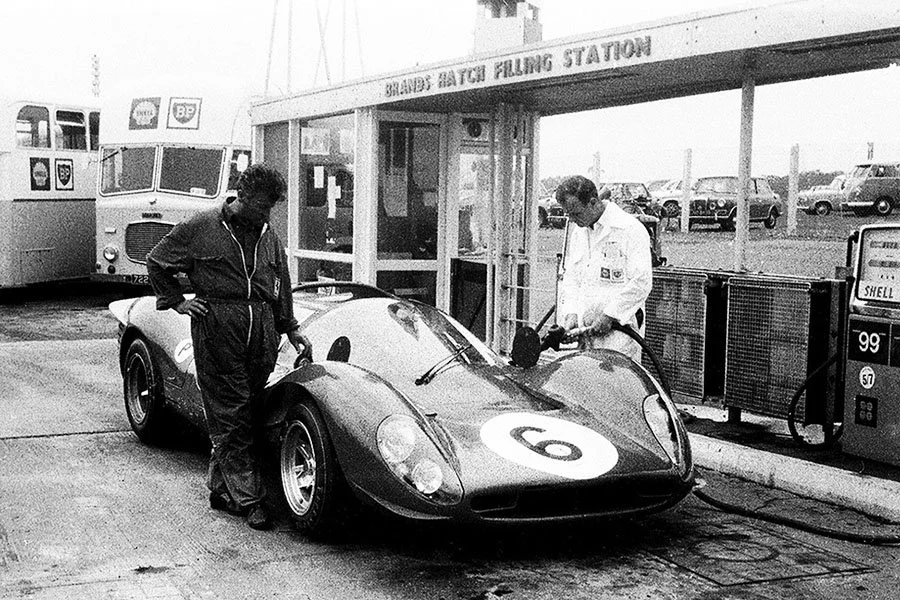
In order to stand the best chance of taking victory at the season-ending 6 Hour race around the tight and twisty Brands Hatch circuit where the Porsches were expected to be super competitive, Ferrari converted all three of the P4s to Spyder trim, saving a few kilos in the process.
Victory went to the Chaparral 2F of Phil Hill / Mike Spence which finally came good to take its first win of the year. Nevertheless, second place for the P4 of Chris Amon / Jackie Stewart was enough for Ferrari to win the championship by two points from Porsche. The other P4s (driven by Ludovico Scarfiotti / Peter Sutcliffe and Paul Hawkins / Jonathan Williams) finished fifth and sixth respectively.
SUBSEQUENT HISTORIES
Sadly, after the unprecedented speeds seen at Le Mans, the FIA elected to impose a three-litre engine limit on Group 6 Prototypes for 1968 which meant a P4 successor never materialised.
Ford and Chaparral quit while, considering the FIA’s decision to unfairly favour Porsche, Enzo Ferrari also decided to withdraw his team in protest. For 1968, Ferrari would concentrate on other forms of sports car racing to include the big money Can-Am Championship in North America.
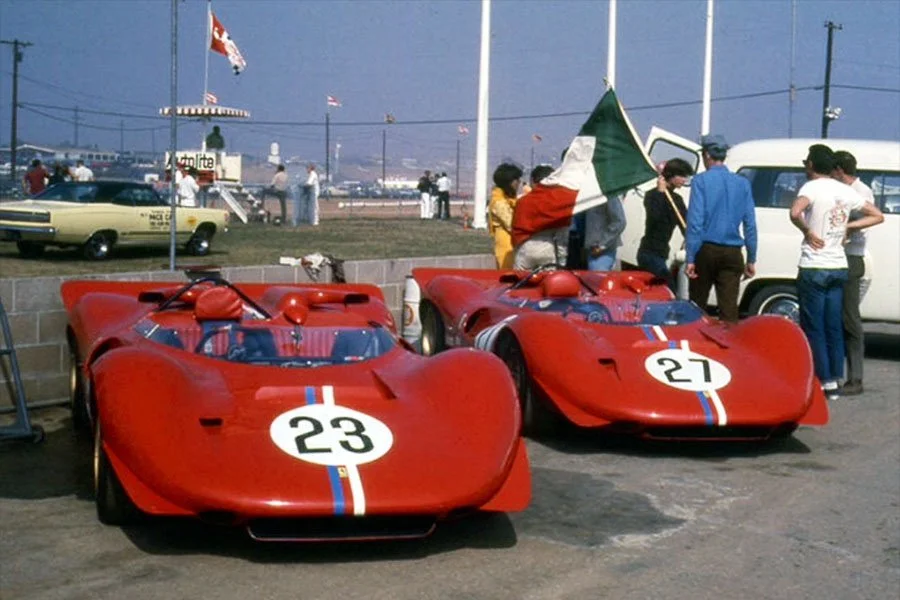
With this in mind, after the Brands Hatch 6 Hours, two P4s (chassis 0858 and 0860) were converted to 350 Can Am specification and exported to the USA where they were campaigned by factory drivers as unofficial works entries.
The sole P4 to remain in original specification (chassis 0856) was sold to British collector Richard Wilkins, who in turn passed the car on to fellow Brit, David Clarke.
The P3/4 that had been badly burnt at Le Mans (0846) was taken back to the factory and scrapped.
Text copyright: Supercar Nostalgia
Photo copyright: Ferrari - https://www.ferrari.com, The Henry Ford Museum - https://www.thehenryford.org/ & ACO - https://www.24h-lemans.com/en