One to Buy: ex-Vatanen / Reutemann 1984 Peugeot 205 T16 Evolution 1
/ Ben Tyer
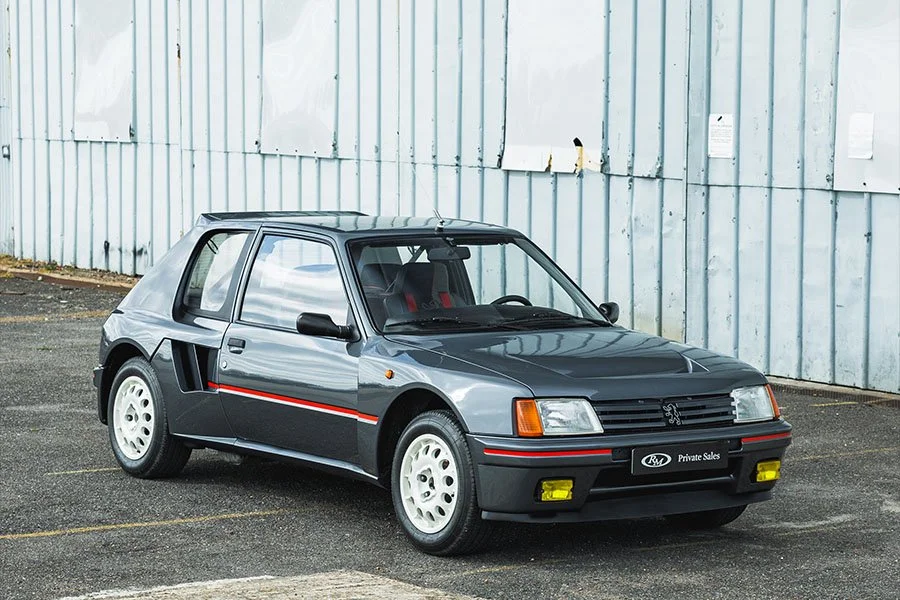
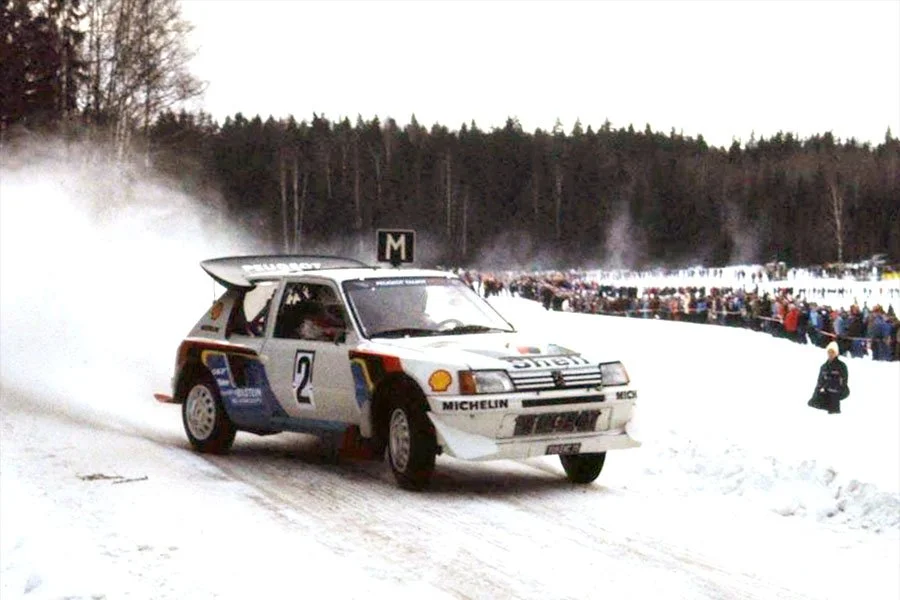
Although Audi had spearheaded rallying’s four-wheel drive revolution and Lancia were first out of the blocks with a purpose-built Group B car, Peugeot was the manufacturer that best combined the two practices. The result was back-to-back Driver and Manufacturer titles in the 1985 and ‘86 World Rally Championships with the 205 T16 after the little car had made its debut mid-way through 1984.
For manufacturers that had completed 200 road-going base cars, Group B regulations enabled said firm to complete an additional 20 units built to more extreme Evolution trim. Subsequent Evolution variants were permitted every twelve months so long as 20 more cars were produced each time.
Evolution 1 versions of the 205 T16 were initially reserved strictly for works use and by a handful of Peugeot’s distributor teams. As you would expect, every aspect of these cars was comprehensively uprated over the standard road-going T16.
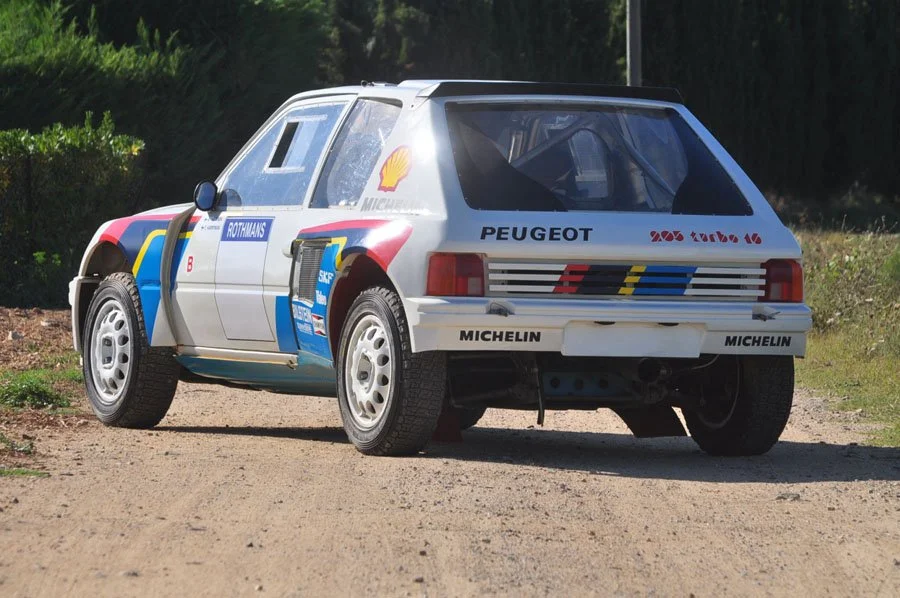
Set to go under the hammer at Artcurial’s Retrombile auction in Paris on February 7th is an Evolution 1 campaigned by the works Peugeot Talbot Sport squad on two occasions during the team’s 1985 campaign: chassis C17.
The car made its debut with Ari Vatanen and Terry Harryman on round six of the ‘85 season: the gruelling Acropolis Rally. Unfortunately, C17 retired on the second stage after broken suspension resulted in a smashed oil reservoir. The car then appeared at Rally Argentina (round eight) where it was allocated to F1 legend Carlos Reutemann and Jean-Francois Fauchille who had a steady run to third. The only delay (a two minute stop for a sodden plug lead) was the result of Reutemann splashing over-enthusiastically through the many water crossings to thrill his adoring home fans.
C17 was restored by Peugeot in 1986 and retained until 2008, since which time it has resided in the hands of two collectors.
For more information visit the Artcurial website at: https://www.artcurial.com/en
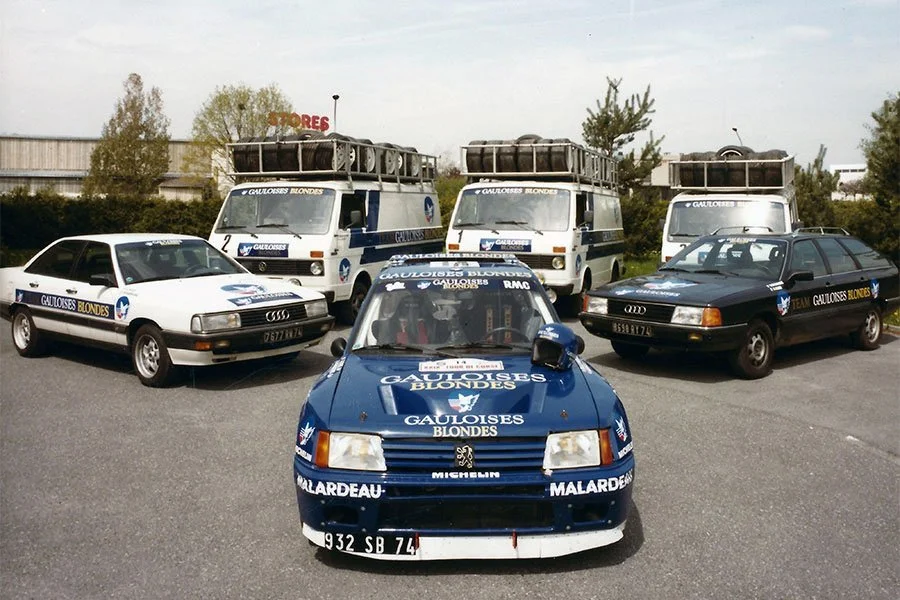
As he had helped Peugeot develop the 205 T16 Evolution 2, French rally legend Bernard Darniche was able to acquire an Evolution 1 for the 1985 Tour de Corse. At the time, Evolution variants were…
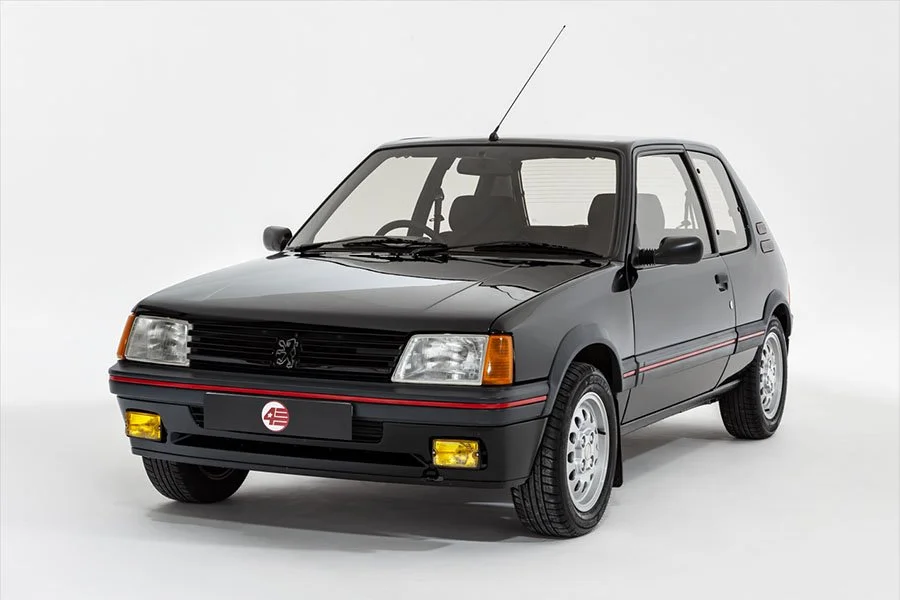
After Volkswagen pioneered the hot hatch genre with its iconic Mk1 Golf GTi, Peugeot went on to perfect the formula eight years later. Launched at the Geneva Motor Show in March 1984, the 205 GTi…
While Audi temporarily gained an edge in top flight rallying thanks to the Quattro’s state-of-art four-wheel drive system, Lancia became the first manufacturer to exploit the sport’s new Group B…
When the 205 arrived in 1983, it quickly turned Peugeot’s fortunes around. Although the firm was not in a perilous financial state, it had acquired a somewhat stuffy image thanks to a back catalogue of…
The works Peugeot Talbot Sport squad took a pair of new T16 Evolution 2s to the 1986 Swedish Rally which was held over a 1670km route that comprised 557km of snowy special stages between…
Following its return to the World Rally Championship for the 1999 season, Peugeot quickly went on to break the stranglehold that Japanese manufacturers had imposed on the competition which…
Unlike the majority of T16 Evolution 2s that generally only saw action in a couple of events, chassis C207 was campaigned in half a dozen rallies during the 1986 season. It debuted as part of a three…
Chassis C205 was one of the 20 T16s built to Evolution 2 trim for use by the works Peugeot Talbot Sport operation. It debuted as part of an all-new two-car entry for Evolution 2’s third competitive…
Like every example of the 20 Evolution 2 T16s built, chassis C213 was reserved strictly for use by the works Peugeot Talbot Sport operation headed by Jean Todt. C213 made its competitive debut as part…
Like every T16 Evolution 2, chassis C203 was reserved for use by the works Peugeot Talbot Sport squad based on the outskirts of Paris. It appeared on the registration 709 EXC 75 which had…
Peugeot produced the 205 T16 with the sole intention of delivering Driver and Manufacturer titles in the World Rally Championship. At the time, rallying was even more popular than Formula 1 with huge…
When the FIA decided to ban the participation of Group B cars in the World Rally Championship from 1987 following one too many fatal accidents, Peugeot decided to withdraw from any further…
Chassis C211 was a 205 T16 Evolution 2 used by Peugeot’s works team at four rallies during the course of 1986. It was one of two new Evolution 2s that appeared for round four of the ‘86 season: the…
The original 106 Rallye Group A homologation special built between 1993 and 1995 proved such a hit that Peugeot decided to offer a Phase 2 version from March 1996. Based on the facelifted second…
Having achieved back-to-back Driver and Constructor titles at the height of the Group B era during 1985 and ‘86, Peugeot quit the World Rally Championship following the FIA’s decision to ban Group…
In terms of distance covered during competitive events, chassis C212 was probably the most extensively rallied 205 T16 Evolution 2 campaigned by the Peugeot Talbot Sport operation. C212…
In addition to the official works cars, Peugeot Talbot Sport also supplied a quintet of T16 Evolution 1s to trusted satellite operations for 1985. The Peugeot importers for Germany, Italy, Spain and the UK…
Although Lancia were first out of the blocks with a purpose-built Group B rally car, the Italian company’s failure to equip their Abarth-designed 037 with all-wheel drive for reasons of complexity…
Chassis C204 made its debut at the third event in which Peugeot campaigned the T16 Evolution 2: the 1985 Rallye Sanremo. It was one of 20 Evolution 2s built – the minimum number required by…
Following three wins from its final three WRC outings of 1984, Peugeot’s 205 T16 look the car to beat heading into the 1985 season; Lancia’s replacement for the ageing rear-drive 037 was not expected…
Peugeot’s Group B rally programme of 1984 to 1986 along with the firm’s class-leading 205 GTi hot hatch transformed the firm from maker of rather stuffy unexciting machinery to market leader. While…
Unlike the T16 Evolution 1 which was campaigned in a quasi-works capacity by some of Peugeot’s distributor teams, all 20 Evolution 2s were retained for the exclusive use of the works operation…
Peugeot’s 1984 World Rally Championship programme kicked off at the French manufacturer’s home event: the Tour de Corse in early May. Although the T16 had been homologated a month earlier (on…
A little over two-and-a-half years after Peugeot had launched arguably the greatest hot hatch of all time, a new 1.9-litre version was added to the range. Compared to the existing 1.6-litre model, the 1.9…
Chassis C201 was the first T16 Evolution 2 that Peugeot used in competition. 20 of these cars were built as per the Evolution regulations that permitted a host of upgrades every twelve months so long…
Although Bruno Saby had debuted the T16 Evolution 2 on the Tour de Corse back in May 1985, championship contenders Timo Salonen and Ari Vatanen stuck with the tried and tested Evolution 1…
Peugeot built 20 examples of the 205 T16 Evolution 2, all of which were reserved for works use. Chassis C206 was used in two events during the 1986 season. It debuted in that years’s opening…
Chassis C208 was one of 20 T16s built to Evolution 2 specification, all of which were reserved for use by the works team: Peugeot Talbot Sport (PTS). C208 made its debut in the opening round of the…
Although Peugeot decided to quit top flight rallying at the end of 1986 as a result of the FIA’s unilateral decision to ban Group B cars from 1987, the French company did subsequently introduce a…
Of the 20 T16 Evolution 1s built, Peugeot Talbot Sport (PTS) allocated four for domestic rally programmes: C13 ran under the PTS Deutschland banner, C14 PTS Espana, C15 PTS Italia and C20…