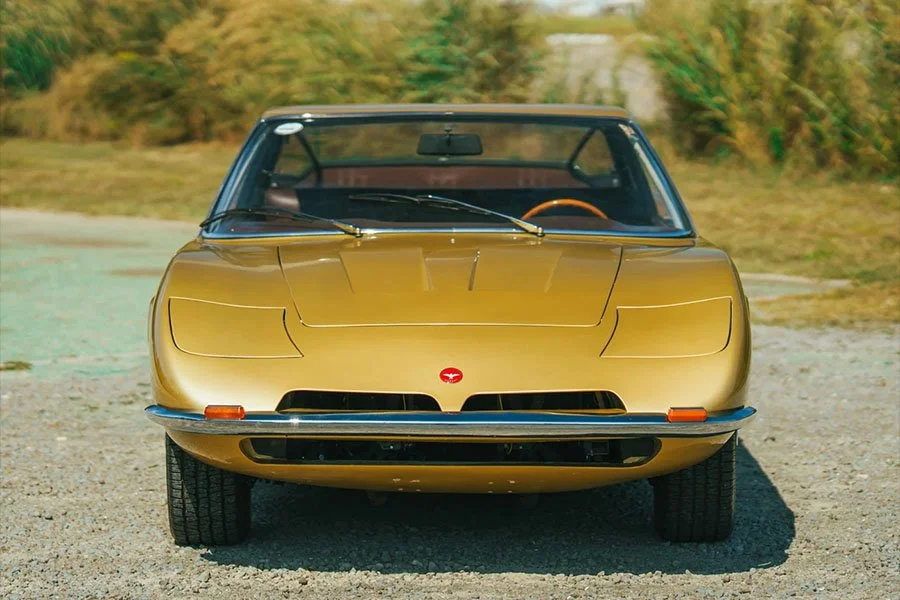
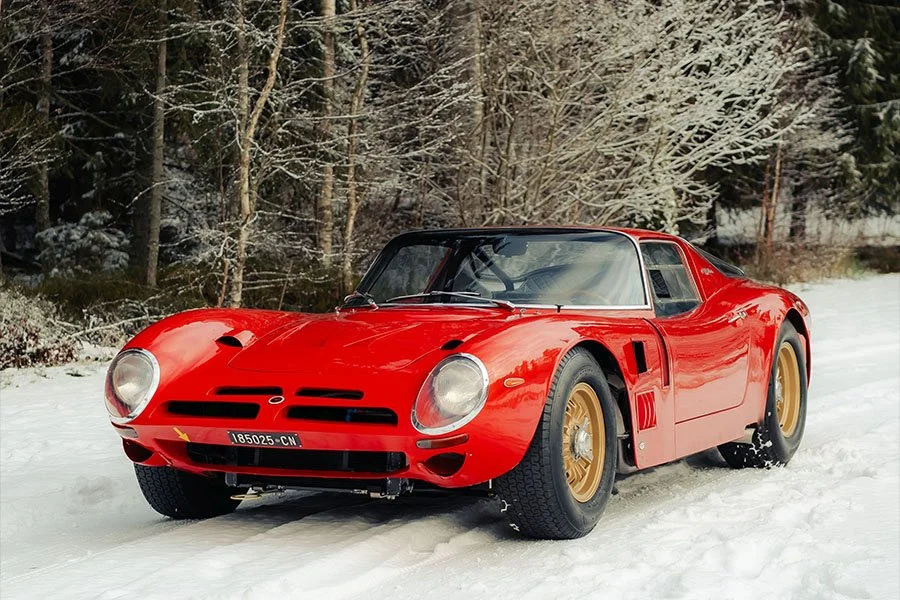
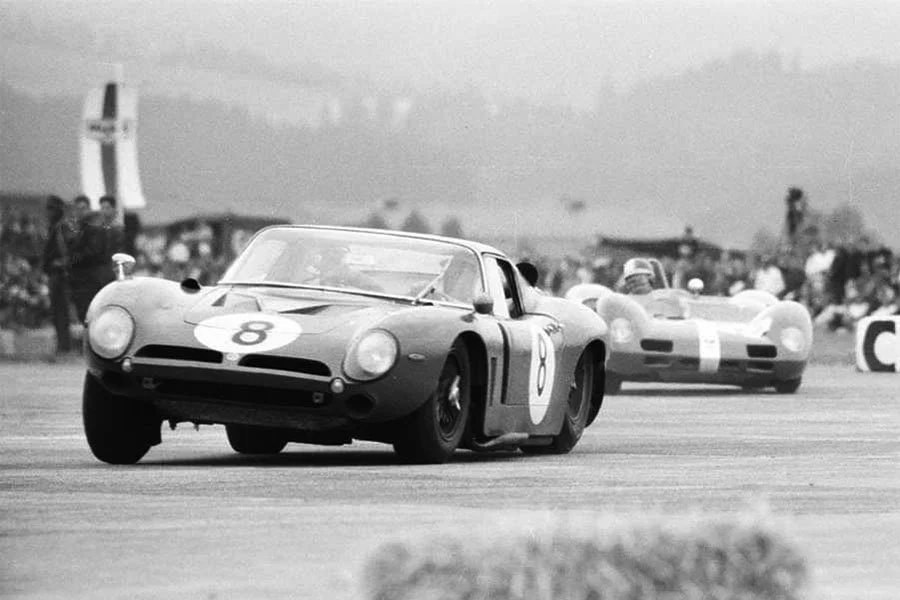
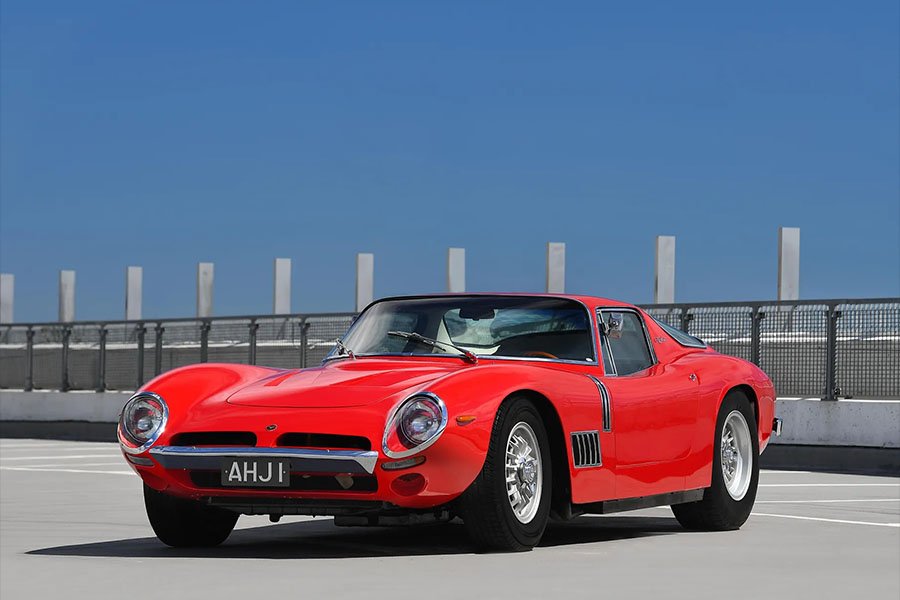
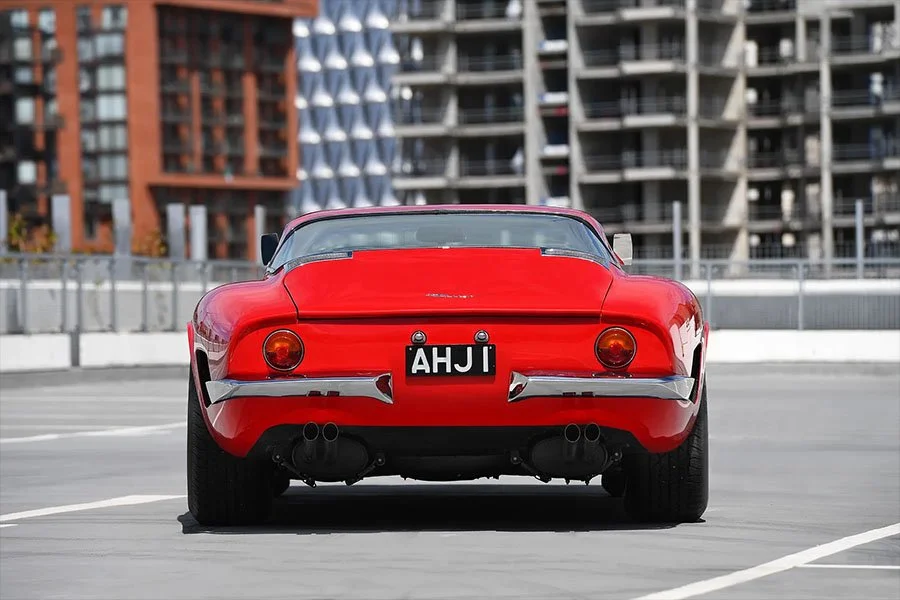
One to Buy: ex-Luis Roussy / Briggs Cunningham 1968 Bizzarrini 5300 GT
/ Ben Tyer
Despite having been a gifted engineer, Giotto Bizzarrini’s curious decision making and desire to compete at the top level of sports car racing ultimately played a key role in the downfall of his auto making company.
Having fallen out with Enzo Ferrari in late 1961 after four years at the Maranello firm, Bizzarrini later burnt his bridges with Renzo Rivolta who had commissioned the Tuscan maestro to design cars for Iso. The generous severance package negotiated by Rivolta in the summer of 1965 enabled Bizzarrini to become an independent car builder, but as the racey Iso Grifo A3/C became the Bizzarrini 5300 GT, plans were already afoot at the Livorno works to create a costly machine that could win Le Mans.
Somewhat inevitably, Bizzarrini’s company found itself in financial trouble less than three years later and, by 1969, the Livorno firm had closed its doors after only around 130 examples of the 5300 GT had been completed.
Today, these handsome Coupes from the golden age of the Italian Gran Turismo have come to be regarded as among the most sought after vehicles of their era and currently on offer at the Fiskens showroom in London is a particularly fine example: chassis IA3 0305.
Supplied new in 1968 to the President of Nestle, Luis Roussy, chassis IA3 0305 was dispatched from the Bizzarrini works in the elegant and rarely seen combination of Azzuro with Nero upholstery. A year later, the car was acquired by noted sportsman Briggs Cunningham who exported it to the United States where it joined his renowned collection in San Diego.
The car’s most recent custodian acquired it in 1988 and brought it over to the UK where it was beautifully restored around the turn of the century. IA3 0305 is being offered in superb condition throughout with a more tractable 300bhp engine currently installed and the original 365bhp motor included.
For more information visit the Fiskens website at: https://www.fiskens.com/
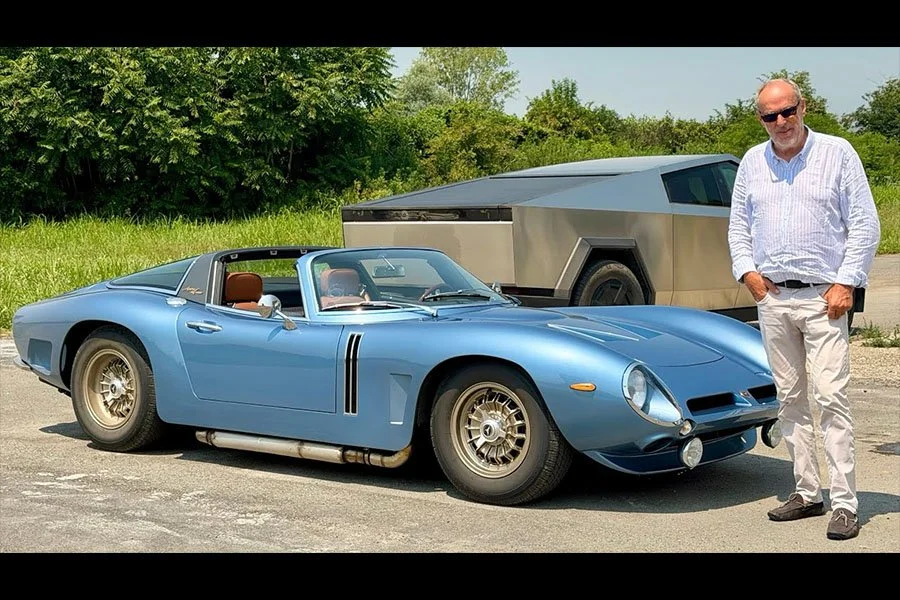
Bizzarrini 5300 Aperta Lusso review. Carbon body, targa roof, 400bhp V8, 175mph, modern air conditioning & CarPlay. La Dolce Vita…
Having lost the pair of brand new Grifo A3/C Corsas assembled for 1965 in a pair of horrifying crashes at the season-opening Sebring 12 Hours, the works Iso outfit run by Giotto Bizzarrini was…
For around 18 months, Giotto Bizzarrini raced the A3/C Grifo thanks to the largesse of Iso boss Renzo Rivolta who had commissioned the car. However, in August 1965, Rivolta terminated the agreement…
B-0226 was a fibreglass-bodied works Grifo A3/C Corsa with independent rear suspension, the second of two such cars completed midway through the 1965 season. The new Grifos were much…
Chassis B-0206/D was a right-hand drive Iso Grifo A3/C as reflected by its ‘D’ suffix VIN which denoted Destra (right in Italian). Configured in Rosso with a Nero interior, the car was supplied to…
Having graduated with a degree in engineering from the University of Pisa in 1953, Giotto Bizzarrini briefly took up a teaching position before joining Alfa Romeo where he was quickly assigned a role…
Chassis B-0208 was the last of three Grifo A3/C Corsas that appeared in a works capacity during the model’s debut season: 1964. Its first outing didn’t come until October 11th when the Paris…
Although perhaps best known for the beautiful Bertone-bodied Grifo A3/L, arguably the pièce de résistance of Renzo Rivolta’s car building operation was the spectacular A3/C version which Iso…
In mid 1965, Iso boss Renzo Rivolta decided to end his collaboration with Giotto Bizzarrini who, from his facility in Livorno, had designed, built and raced he A3/C Grifo on Iso’s behalf. As part of…
Chassis B-0222 was the first A3/C built with independent as opposed to de Dion rear suspension and a fibreglass instead of aluminium body. The new car was much-needed after two freshly…
Chassis B-0214 was one of two brand new Iso A3/C Corsas built by Giotto Bizzarrini to contest the 1964 racing season. Along with its sister car (chassis B-0210), B-0214 was dispatched to the USA…
Chassis B-0210 was one of two brand new Grifo A3/C Corsas built by Giotto Bizzarrini’s outfit ahead of the 1965 racing season. The ‘65 campaign started in Florida with the annual Sebring 12…
Chassis B-0203 was a Grifo A3/C Strada built in early March of 1964. It is believed to have been configured in metallic green with beige upholstery. A few days after completion, B-0203 was…
When Milanese industrialist Renzo Rivolta decided to expand his empire into the lucrative market for high end motor cars, he recruited two of the most respected names in the business: renowned…
Chassis B-0202 was the first true A3/C built to Corsa trim. It was ordered by East Coast dealer and racing driver, Ed Hugus, who had placed an option on the car after the Grifo’s debut at Turin in late…
Chassis B-0201 was the prototype Grifo A3/C displayed on the Iso stand at the Turin Motor Show between October 30th and November 11th 1963. The unpainted car (which had a bright red interior)…
Chassis B-0207 was the first bona fide works A3/C Corsa. Prior to its arrival, Iso had campaigned chassis B-0201, but this car (the original 1963 Turin Motor Show prototype) was not a fully fledged…
When Renzo Rivolta decided to end his association with Giotto Bizzarrini in August 1965, the Iso boss got his hands on the Grifo trademark that should rightfully have belonged to him from the outset.
Chassis B-0215/D was a right-hand drive Iso Grifo A3/C produced to Strada specification in Rosso with Nero upholstery. Its steering configuration was reflected by the ‘D’ suffix VIN which denoted…
Despite having been a gifted engineer, Giotto Bizzarrini’s curious decision making and desire to compete at the top level of sports car racing ultimately played a key role in the downfall of his auto…
After successful stints at Fiat, Bertone and Ghia, Giorgetto Giugiaro set up his own studio, Ital Design. Established in February 1968, Ital Design made its salon debut later that year at Italy’s most important…
During the 1964 and ‘65 seasons, the Bizzarrini-built Iso Grifo A3/C had proven itself as arguably the fastest GT racing car around even if it had not been produced in sufficient quantity to actually be…