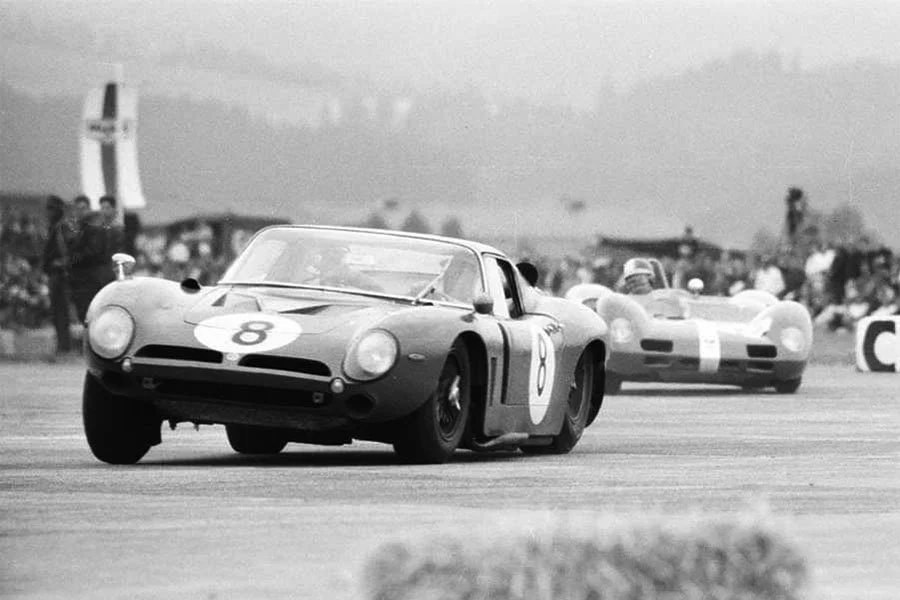
Bad Blood - a Historical & Technical Appraisal of the Bizzarrini 5300 GT
/
BACKGROUND
Having graduated with a degree in engineering from the University of Pisa in 1953, Giotto Bizzarrini briefly took up a teaching position before joining Alfa Romeo where he was quickly assigned a role as a test driver and engineer within the firm’s experimental department.
After three-years at Alfa Romeo, 1957 saw Bizzarrini join Ferrari where, as a high ranking development engineer, he played a key role in creating the firm’s latest road and racing cars. Most famously, Bizzarrini’s time at Ferrari was defined by his work on the 250 GTO which incorporated the latest aerodynamic and mechanical understanding to become the most effective GT racing car of its era.
Shortly before the GTO programme reached fruition, however, Bizzarrini was one of several engineers to leave Ferrari in the famous ‘Palace Revolt’ of October 1961 which began when Enzo Ferrari dismissed commercial director Girolami Gardini after he had suggested that Enzo’s wife, Laura, should cease interfering in the company’s operations. Bizzarrini, along with chief engineer Carlo Chiti and sporting director Romolo Tavoni, staged a walk-out in support of Gardini and were promptly fired.
Together, and with financial backing from Count Giovanni Volpi, 1962 saw Chiti and Bizzarrini form Automobili Turismo e Sport (ATS). Having created the mid-engined ATS 2500 GT road car and the ATS 100 F1 car, Automobili Turismo e Sport soon found itself in financial difficulty though. Chiti went to work for Alfa Romeo while Bizzarini established Societa Autostar in his home town of Livorno and began work as a freelance engineer.
One of Societa Autostar’s first commissions came from the newly formed Automobili Lamborghini operation in Bologna. Bizzarrini was tasked with creating an engine to power the fledgling company’s forthcoming line of high end models and delivered a spectacular dual overhead cam 3.5-litre V12 that went on to power Lamborghini’s flagship line for nearly 50 years.
The next big job arrived from another Italian industrialist who, like Ferruccio Lamborghini, was making a move into high end car production.
Having made a fortune from refrigeration units, home appliances, motorcycles and micro cars, Renzo Rivolta tasked Bizzarrini with the job of creating an elegant 2+2 Grand Tourer that would feature coachwork by Bertone. The resultant Iso IR300 and more powerful IR340 were followed by a pair of two-seater Grifo-badged models: the A3/L (a luxuriously appointed GT that would come with a Bertone body) and the hardcore A3/C (a predominantly Bizzarrini design that would spearhead Iso’s move into the world of motor racing).
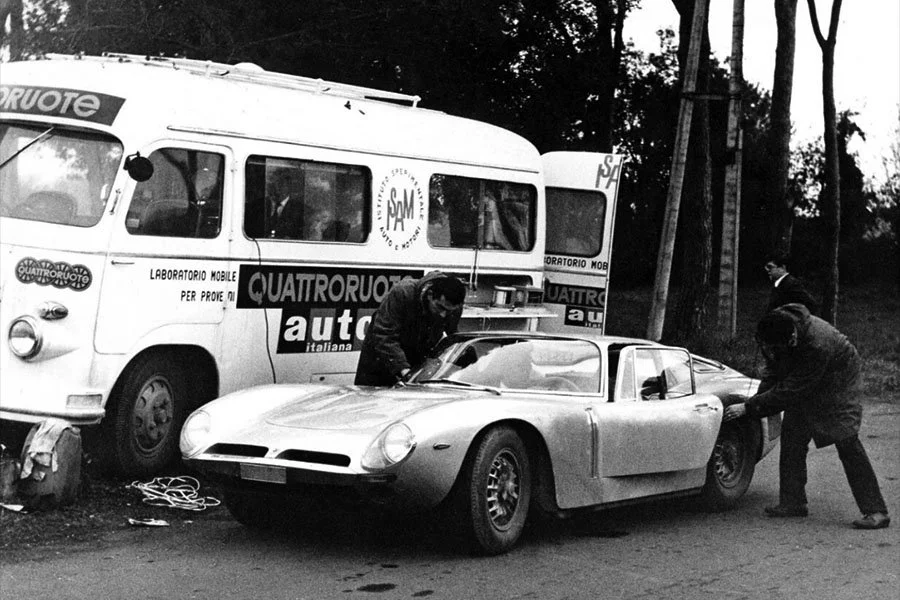
Both the A3/C and A3/L Grifos made their debut in prototype form at the Turin Motor Show during October 1963 and, while the A3/L was subsequently put through the kind of intensive development programme one would expect of an expensive luxury Gran Turismo, the newly re-named Bizzarrini Prototipo operation began to build and race copies of the competition-oriented A3/C almost immediately.
Unfortunately, after a promising 18 months that saw the Grifo A3/C record a number of impressive on-track performances to include a class win at the Le Mans 24 Hours, Renzo Rivolta and Giotto Bizzarrini severed their business relationship after a falling out.
While the A3/C had been developed, marketed and raced entirely at Renzo Rivolta’s expense, Giotto Bizzarrini had supplied nearly every A3/C with a Bizzarrini badge and most of the car’s competition outings had been made under Bizzarrini Prototipo entries. Inexplicably, it also transpired the Giotto Bizzarrini had registered the Grifo trademark for himself.
At the end of August 1965, Renzo Rivolta ended his association with Bizzarrini.
The termination agreement saw Bizzarrini hand over the Grifo trademark in exchange for the sole production rights to the A3/C and enough component parts to construct 50 cars under whatever name was desired.
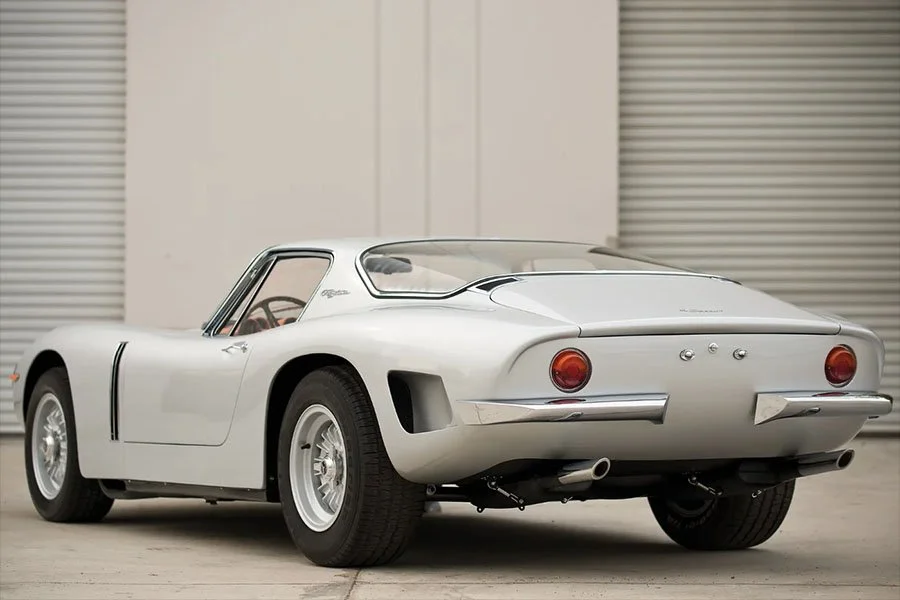
The resultant Bizzarrini 5300 GT made its salon debut at the Turin Motor Show in November 1965, by which time the first couple of cars had already rolled off the production line. As per the A3/C, Bizzarrini ostensibly offered the 5300 GT in Strada and Corsa trim with customers able to commission their car with any combination of parts.
CHASSIS
Under the skin, the Bizzarrini 5300 GT and Iso Grifo A3/C were identical.
The two cars were based around a tubular steel chassis to which light alloy centre sections and the bodywork were riveted to form a semi-monocoque arrangement. The wheelbase measured 2450mm.
To optimise weight distribution, the engine was mounted so far back in the chassis that access to the ignition and distributor was via a trap door located on top of the dashboard.
Independent front suspension was via double wishbones. At the back was a de Dion axle with twin radius arms and a lateral Watt’s linkage. Coil sprung telescopic Koni dampers were fitted all round and there was also a front anti-roll bar.
Brakes were Dunlop Mk9 discs with magnesium two-piston Campagnolo calipers. The outboard front discs had a 296mm diameter. The rears measured 305mm and were located inboard of the differential.
Campagnolo also supplied Bizzarrini with 15-inch diameter centre-lock cast alloy wheels (6-inches wide front and 7-inches wide rear). Up to 9-inch wide rear wheels were available for competition use.
In his pursuit for perfect weight distribution, Giotto Bizzarrini had devised a 145-litre fuel system that comprised two side-mounted saddle tanks joined by a third located directly behind the seats. The effect was a less than 1% transfer in weight distribution as the tanks emptied.
ENGINE / TRANSMISSION
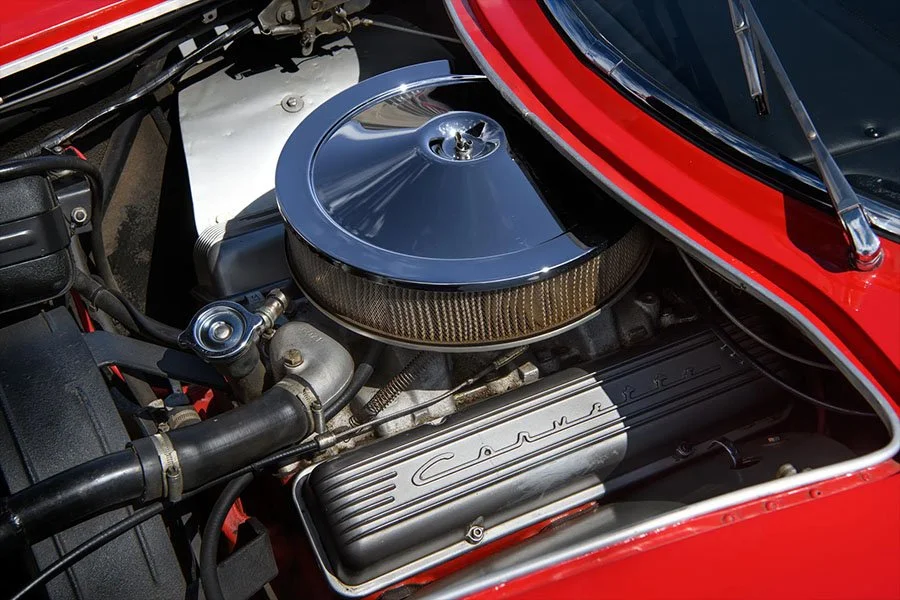
Like the Grifo A3/C, Bizzarrini’s 5300 GT was powered by a cast-iron 327 cubic-inch Chevrolet V8 sourced from General Motors.
These simple, normally bulletproof pushrod-operated overhead valve motors displaced 5354cc thanks to a bore and stoke of 101.6mm and 82.6mm respectively.
Initially, Bizzarrini used up the inventory of engines leftover from the Iso days; these motors had been dismantled, blueprinted and fitted with a host of special parts to include a ribbed alloy sump.
Fuel-feed was via through a Carter four-barrel carburettor and an 11.0:1 compression ratio was employed as per GM’s specification.
In this configuration, peak output was quoted as 365bhp at 6000rpm and 376lb-ft at 3500rpm.
Transmission was through a four-speed Borg Warner T10 gearbox with a single dry-plate clutch and Salisbury 4HU final drive with limited-slip differential.
BODYWORK
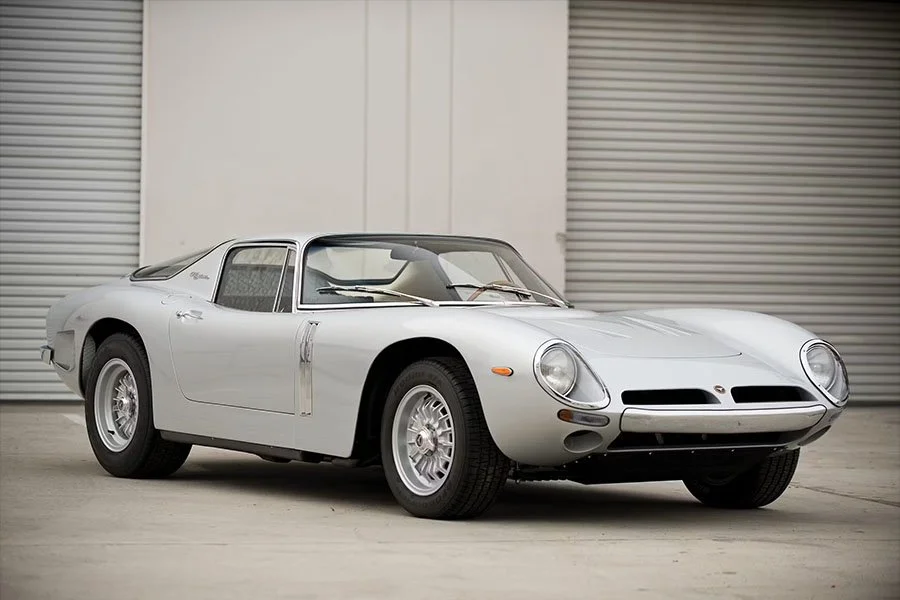
Having used up the last handful of bodies from the Iso era, Bizzarrini quickly switched the 5300 GT to a revised shell that, although outwardly almost identical to the outgoing Grifo A3/C, incorporated an array of subtle new details.
As per the last dozen-or-so A3/C bodies, these all-aluminium shells were fabricated at Carrozzeria BBM in Modena.
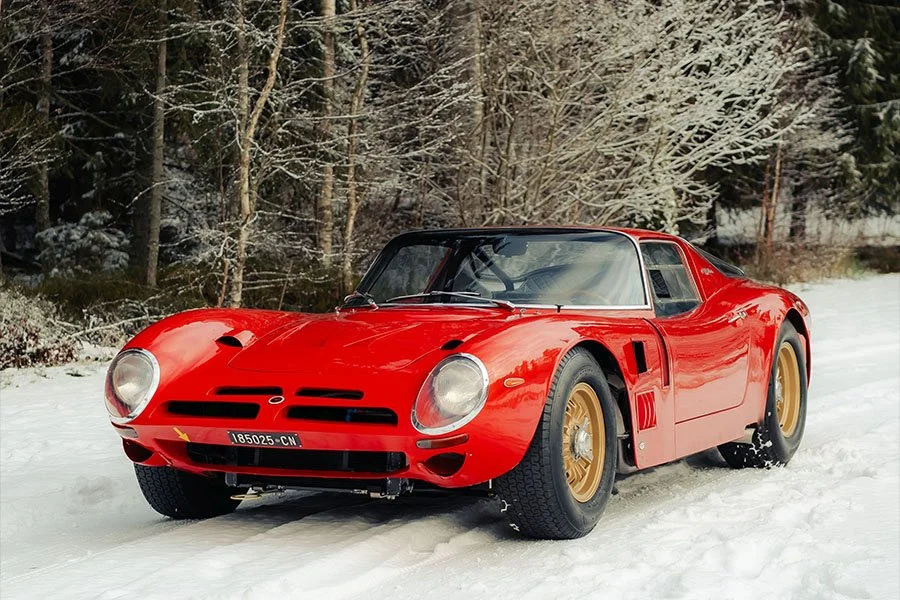
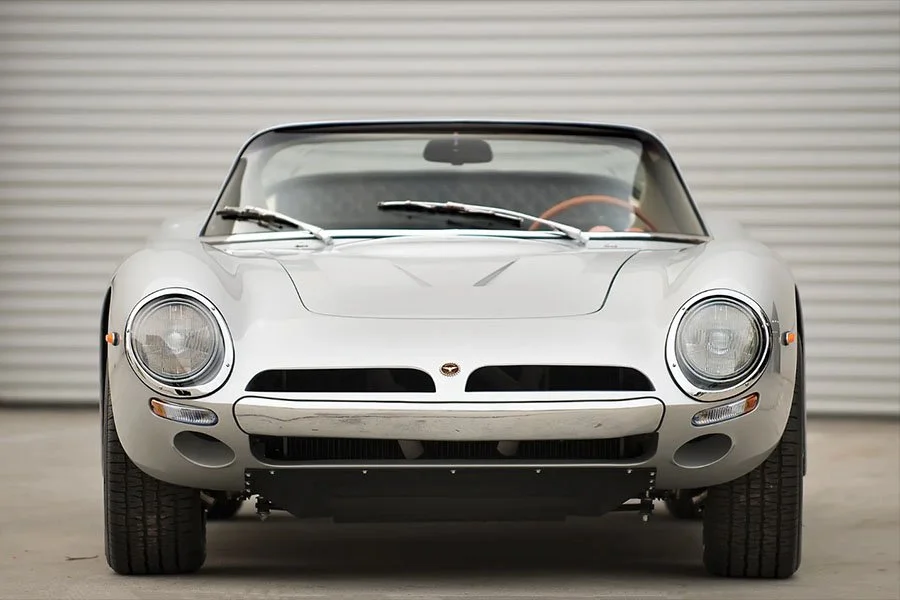
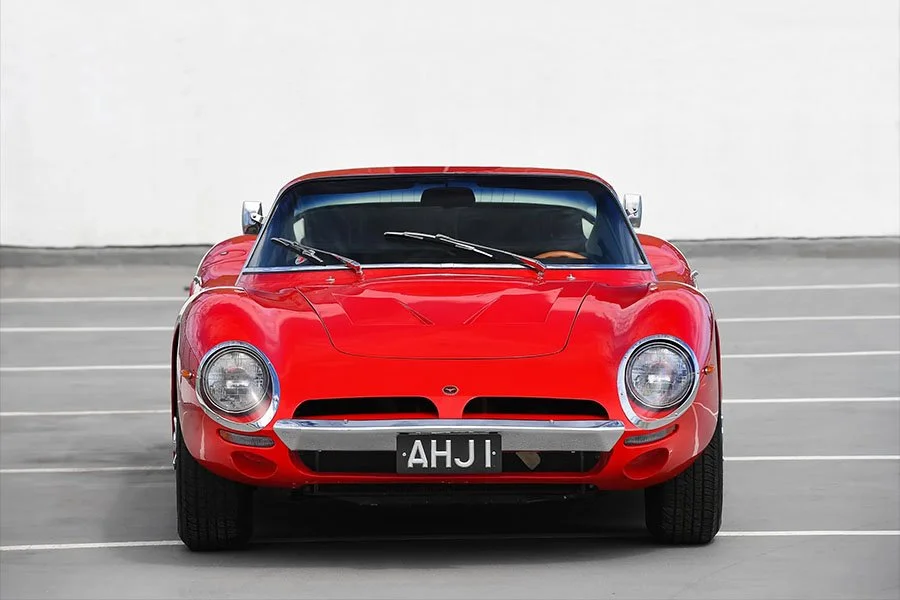
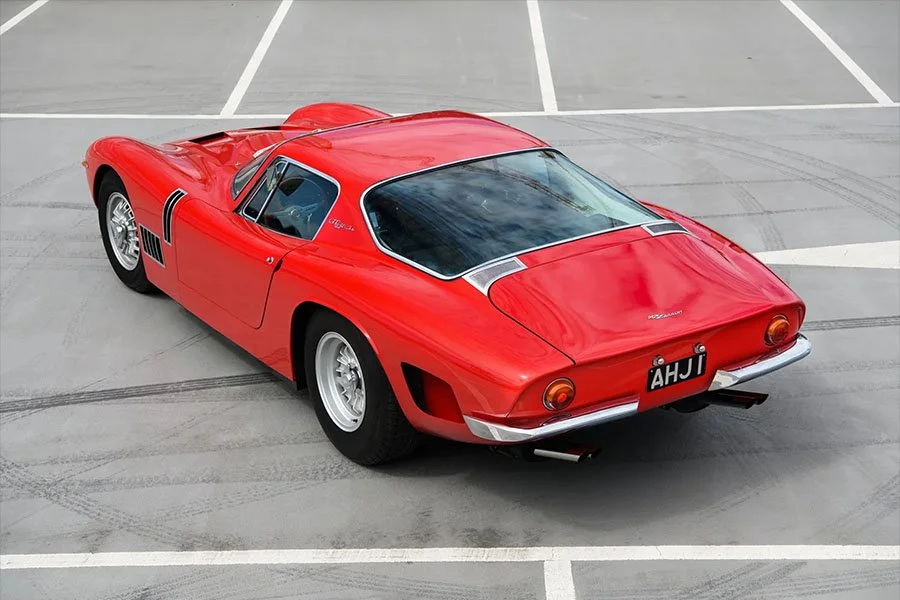
Up front, the recessed circular indicators used on the A3/C were deleted in favour of a slim combined cluster relocated to directly under the headlights. Further down, the lipped edges of the brake cooling intakes were made smooth.
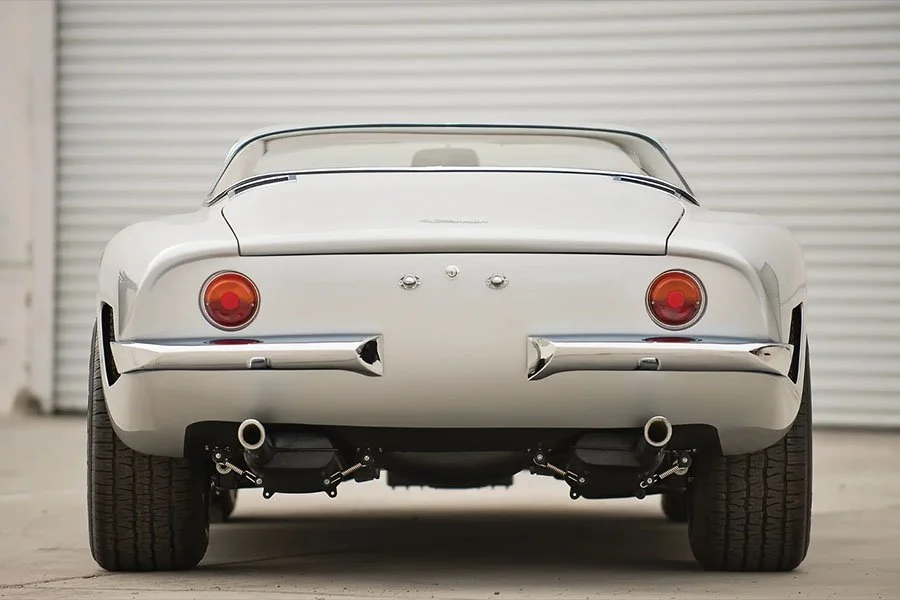
Down each flank, the tall rectangular engine cooling vent carved out from the front fender was given a simplified chrome trim panel.
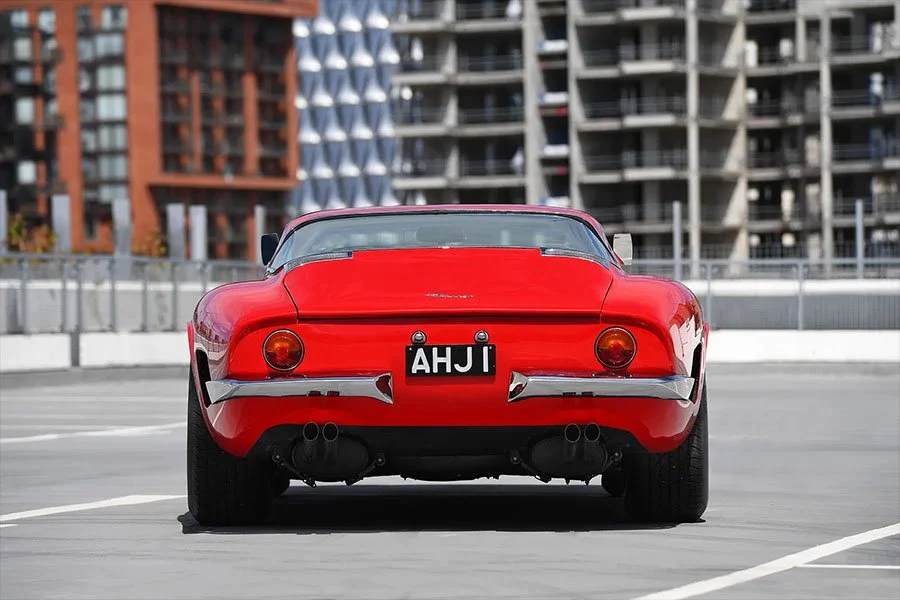
At the rear, the 5300 GT came with single tail light clusters per side instead of the original two per side arrangement.
To complete the updates, a Bizzarrini script was added to the trunk lid along with 5300 GT Strada script to each sail panel.
Styling for the original A3/C Grifo had been the result of a collaboration between Giotto Bizzarrini and Bertone’s Giorgetto Giugiaro. The rakish, low slung design incorporated all the latest aerodynamic understanding such as a drooping nose with covered headlights, flat sides and a Fastback cabin with truncated Kamm tail.
Aside from the aforementioned changes, the 5300 GT retained all of the A3/C’s elegant cooling solutions such as its twin front nostrils and artistically vented fenders. Engine cooling was further aided by massive cut outs on the hood and a shallow intake carved from the front apron (inboard of the brake cooling ducts).
Wind-down glass windows with opening quarterlights and glass headlight covers shrouded by attractive chrome bezels were fitted as standard.
INTERIOR
Inside, apart from Bizzarrini as opposed to Iso-branded gauges, nothing was changed.
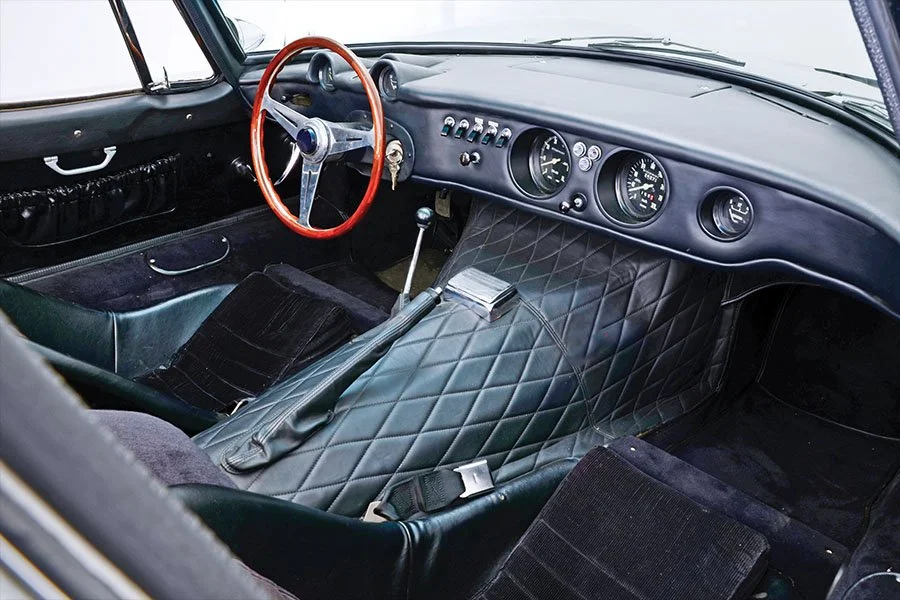
Once over the wide sills, occupants were greeted by single-piece bucket seats divided by an enormous transmission tunnel.
Behind the wood-rimmed steering wheel with its three highly polished-and-vented spokes was a simple leather-rimmed dash that, aside from three discreet cowls for the small oil temperature, oil pressure and water temperature gauges (all located directly ahead of the driver) was completely flat. Larger read outs for road and engine speed were positioned centrally.
The seats were upholstered with plain bolsters and fluted centres, sometimes in full leather, sometimes with fabric inlays. The transmission tunnel, rear bulkhead and parcel shelf were trimmed in diamond-pattern leather or leatherette.
OPTIONS
In addition to spot lights and a choice of rear axle ratios, Bizzarrini could enhance a 5300 GT with any combination of competition-derived parts.
The list of hot engine parts available included four twin choke Weber 45 DCOE sidedraught carburettors with a cross-over ram induction system, polished ports and combustion chambers, an uprated intake manifold of Bizzarrini’s own design, high carbon connecting rods, high-lift camshafts and a free flow exhaust system. To reduce detonation symptoms on full-fat race engines, compression was dropped to 10.5:1. Peak output in this configuration was was 405bhp at 6000rpm and 370lb-ft at 3600rpm.
Other competition upgrades offered comprised Plexiglas side and rear windows, Plexiglas headlight covers, a long-range fuel tank, wider rear wheels with flared fenders, competition brake pads, a lightweight fibreglass body with race-grade cooling scoops / ductwork and a stripped-out cockpit.
WEIGHT / PERFORMANCE
In Strada trim, the 5300 GT weighed in at an identical 1270kg to the outgoing A3/C.
With a 2.88:1 rear axle ratio, 0-62mph took 6 seconds and top speed was 162mph.
SWITCH TO BIZZARRINI’S NUMBERING SYSTEM
On November 5th 1965, the Italian Ministry of Transportation approved Bizzarrini’s homologation application to produce the 5300 GT.
At this point, Iso’s original numbering system which had begun at B-0201 was switched to a new IA3 prefix with the first car completed as such having been IA3 0234.
5300 GT SPYDER SI

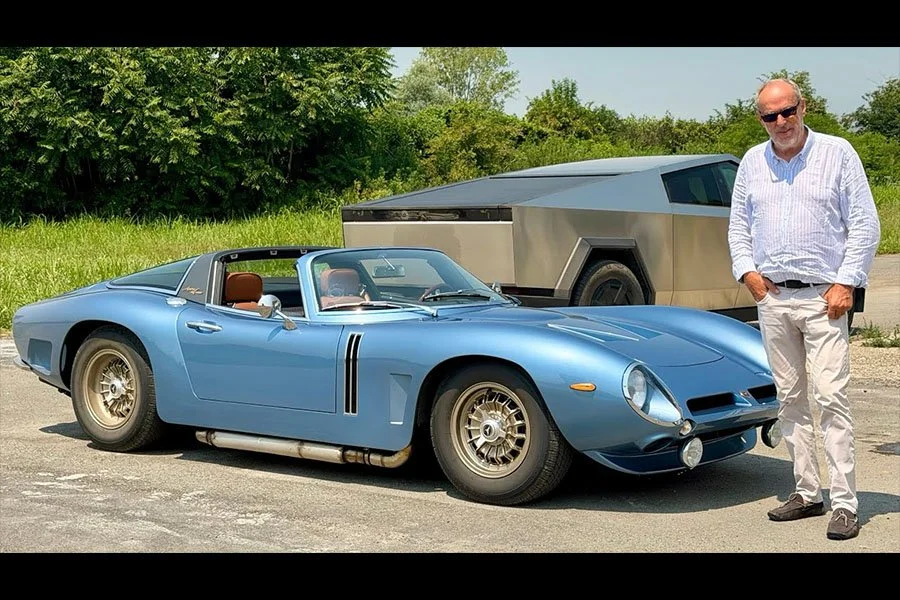
At the Geneva Motor Show in March 1966, Bizzarrini presented the first of three substantially modified Spyder versions (covered separately). These cars were produced in collaboration with Stile Italia and the Sibona & Basano coachworks, both of which were based in Turin.
PRODUCTION CHANGES
In early 1966, the tall engine cooling vent carved out from the side of each front fender was replaced with a shorter version and a bank of four additional cooling louvres were added lower down. This secondary bank were sometimes body coloured and sometimes chromed.
Soon afterwards, Bizzarrini began to offer a revised model that used independent rear suspension with double wishbones, coil springs and tubular shocks as opposed to the original de Dion back end. To save money, fibreglass bodywork was offered produced by shipbuilder Catini of Livorno. Cars completed as such were often referred to as the 5300 GT America and had a BA4 VIN prefix. The prototype was constructed for Bizzarrini’s US distributor, John Fitch, and delivered in time to appear at the New York Motor Show in April 1966.
Around this time, engine output was downgraded to 350bhp at 5800rpm and 360lb-ft at 3600rpm as Bizzarrini began to install unmodified GM engines that used a hydraulic Holley lifter in place of the mechanical four-barrel Carter set up.
1966 also saw the original exterior door handle arrangement changed to a simplified single piece unit.

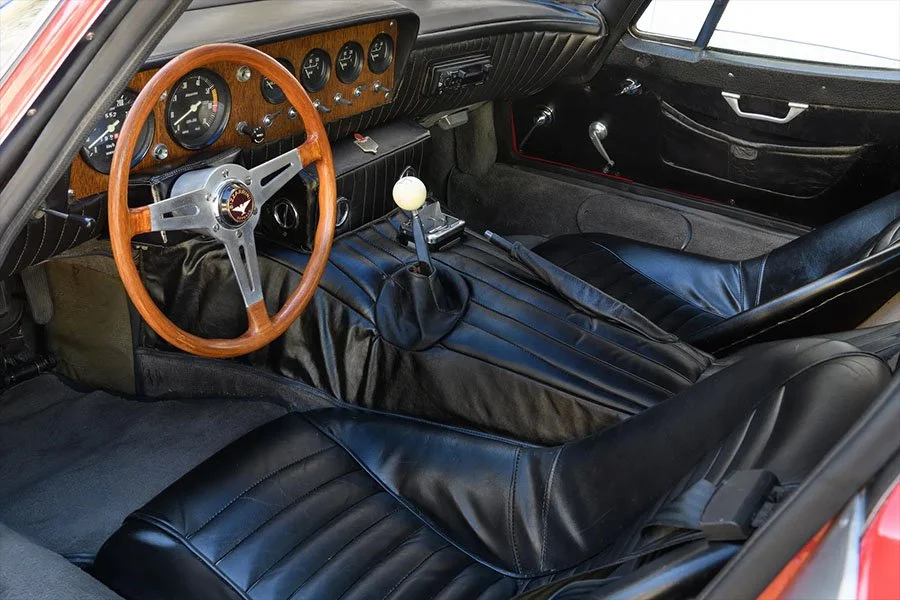
In 1967, the original cockpit architecture was changed to incorporate a new dash with rectangular instrument binnacle complete with veneered walnut fascia. A smaller diameter wood-rimmed steering wheel was also fitted and the seats were given additional padding for increased comfort.
FINANCIAL TROUBLES
Although production of the 5300 GT had provided Bizzarrini with a steady income, by the end of 1966 his company was in financial trouble. The ambitious plan to produce the P538 Sports Prototype had cost 20m Lira alone while much work had also been undertaken on creating a stillborn 5300 GT 2+2, the 5300 GT Spider and the entry level 1900 GT.
To provide some much-needed liquidity, Giotto Bizzarrini took out a bridging loan and recruited fibreglass expert Salvatore Diomante to bring body fabrication in-house.
Unfortunately, Bizzarrini’s credit line was cut off in July of 1968 and a last ditch attempt to sell the company to the American Motors Corporation (who had commissioned the mid-engined AMX III concept) fell through. Bizzarrini was declared bankrupt in the final quarter of 1968 and the company closed its doors.
The court-appointed administrator recruited Salvatore Diomante to finish the cars that were already under construction. Diomante carried out this work under the banner of a new organisation, Auto-Officina SD.
END OF PRODUCTION
By the time production was discontinued in 1969, around 85 aluminium-bodied examples of the 5300 GT had been completed along with about 50 fibreglass-bodied derivatives.
LATER COPIES
In February 1970, Diomante left Livorno and established a new firm, Autocostruzioni SD in Moncalieri, Turin. Here he worked in collaboration with Bizzarrini’s consultation firm (Z2) and over the next few years the two men continued to build new examples of both the P538 and 5300 GT.
COMPETITION HISTORY
Compared to the Iso-funded era of Grifo A3/C racing, Bizzarrini ran a much-reduced programme with the 5300 GT owing to a restricted budget and the move to produce the fully fledged P538 Sports Prototype for the 1966 season.
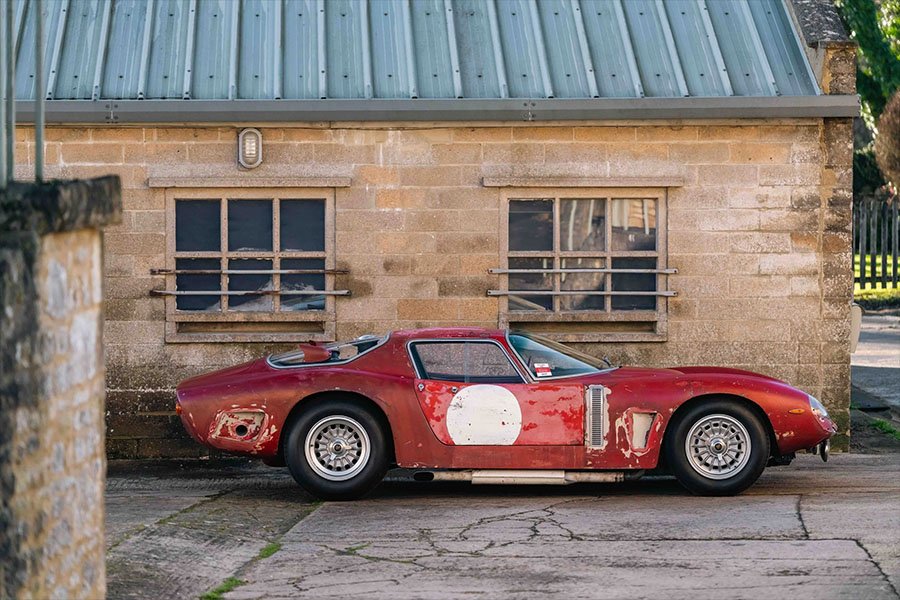
Just one 5300 GT was built up to bona fide Corsa trim for racing use, a right-hand drive fibreglass-bodied car with independent rear suspension numbered BA4 0106.
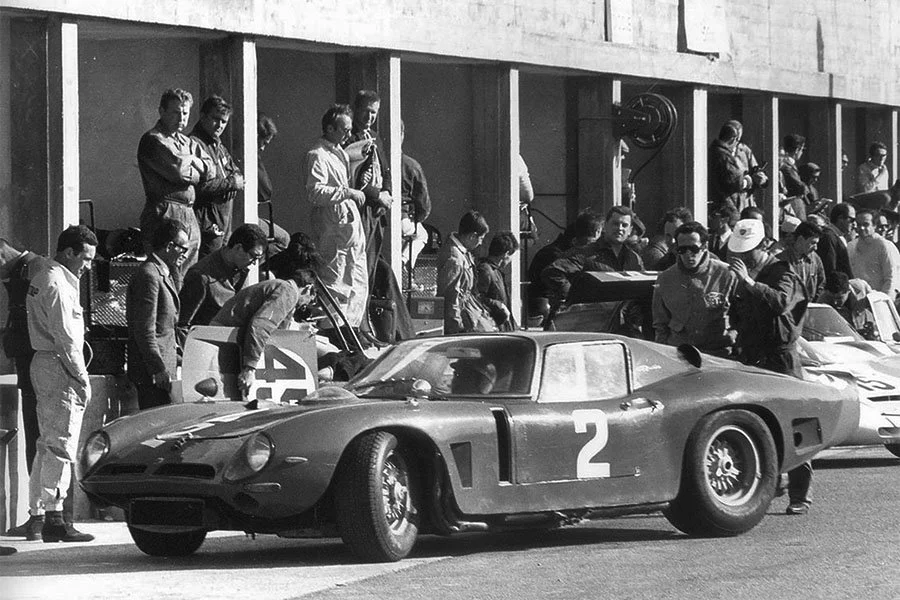
Unfortunately, like the P538, this car achieved little in its handful of 1966 outings.
After a troubled run at the Monza 1000km where the team ran out of wet weather tyres, BA4 0106 was an un-classified finisher. It then failed to made the chequered flag at the Targa Florio owing to a blown head gasket and was disqualified from the Le Mans 24 Hours having crossed the pit line twice.
For 1967, Bizzarrini equipped BA4 0106 with a seven-litre engine, but the car’s fortunes did not improve. Having posted 30th quickest time at the Le Mans Test, BA4 0106 did not start either the Monza 1000km or Le Mans 24 Hours, the latter as a consequence of a failed scrutineers inspection.
By this time, Bizzarrini had also campaigned a left-hand drive aluminium-bodied 5300 GT with de Dion rear susension in a couple of low key 1966 hillclimbs where Franco Failli took the wheel. The car, chassis IA3 0242, had started life as a works-owned development machine and, having been uprated with an array of Corsa parts, went on to contest the 1967 Mugello GP where Giancarlo Naddeo was classified 46th overall and fifth in the over two-litre Prototype class.
The 1967 outing at Mugello marked the end for Bizzarrini’s competition involvement with the 5300 GT.
Text copyright: Supercar Nostalgia
Photo copyright: Quattroruote - https://www.quattroruote.it/, RM Sotheby’s - https://rmsothebys.com/ & Fiskens - https://www.fiskens.com/