VIN: the 1952 Le Mans 24 Hours & German GP-winning Mercedes-Benz W194 300 SL chassis 00007/52
/ Ben Tyer
HISTORY OF CHASSIS 00007/52
Chassis 00007/52 was one of three brand new W194 300 SL Coupes raced by Mercedes-Benz at the 1952 Le Mans 24 Hours which took place over the weekend of June 14th and 15th.
Ahead of the trip to la Sarthe, this trio were consecutively registered W83 3784 (chassis 07, silver with blue noseband), W83 3785 (chassis 08, silver with green noseband) and W83 3786 (chassis 09, silver with red noseband). All three cars featured newly extended doors that cut into the sides of the bodywork.
Chassis 07 was allocated to Hermann Lang / Fritz Riess and, during the week-long build up to the race, Lang set the fastest unofficial speed down the Mulsanne Straight (150mph) along with the fastest practice lap. However, grid positions were dictated by engine size which meant the Mercedes lined up ninth (Helfrich / Niedermayr), tenth (Lang / Riess) and eleventh (Kling / Klenk).
The race got underway with the Mercedes initially running at a steadier early pace than their rivals, but after a couple of hours they began to close the gap and, in the fourth hour, Lang moved chassis 07 up to second spot. Thereafter, he and Riess circulated in either second or third (exchanging positions with the sister car of Helfrich / Niedermayr) while out in front was the Talbot-Lago of Pierre Levegh / Rene Marchand.
With one hour to go, it seemed that Levegh was set for a famous victory. The Frenchman had driven single-handedly for 23 hours, but a fairytale win was not to be as his Talbot-Lago broke a con-rod near Maison Blanche and was eliminated.
This left the two Mercedes firmly in the lead. They were circumspectly driven to the finish and crossed the line almost together with chassis 07 of Lang / Riess taking a fortuitous win a lap clear of team-mates Helfrich / Niedermayr.
Having secured Mercedes’ first victory at Le Mans, chassis 07 was converted to the latest Spyder trim, fitted with side exiting exhaust and entered as part of a four-car team in the ten lap German Grand Prix support race for Sports cars at the Nurburgring (August 3rd).

Now painted silver with blue wing flashes, chassis 07 was allocated to Hermann Lang who qualified second behind team-mate Kling.
After nearly two hours of racing around the giant 22.8km circuit, Lang took chassis 07’s second victory and also set fastest lap.
Following its wins at Le Mans and the Nurburgring, chassis 07 served as a service car during Mercedes’ victorious attack on the Carrera Panamericana where it was driven by German journalist, Gunther Molter. The car was then displayed a variety of German shows, converted back to Coupe trim and fitted with an experimental fuel-injected engine.
1959 saw chassis 07 pass into the hands of renowned American motorsport photographer, Jesse Alexander. The following year, it was reputedly damaged in an accident and sent back to the factory for repair.
In 1963, the by now green car found its way to an owner in San Francisco, after which it disappeared from view until August 1999 when its rolling chassis was jointly auctioned off along with the fire damaged remains of chassis 06.
Notable History
Daimler-Benz
300 SL Coupe
Registered W83 3784
Silver with Blue noseband
15/06/1952 IND Le Mans 24 Hours (H. Lang / F. Riess) 1st oa, 1st S3.0 class (#21)
Converted to Spyder
Silver with Blue flashes
03/08/1952 IND German GP Support Race, Nurburgring (H. Lang) 1st oa, 1st S3.0 class (#21)
23/11/1952 IND Carrera Panamericana (-) T-car (#-)
Converted to Coupe and fitted with fuel-injected engineer1959 sold to Jesse Alexander, USA
1963 sold again
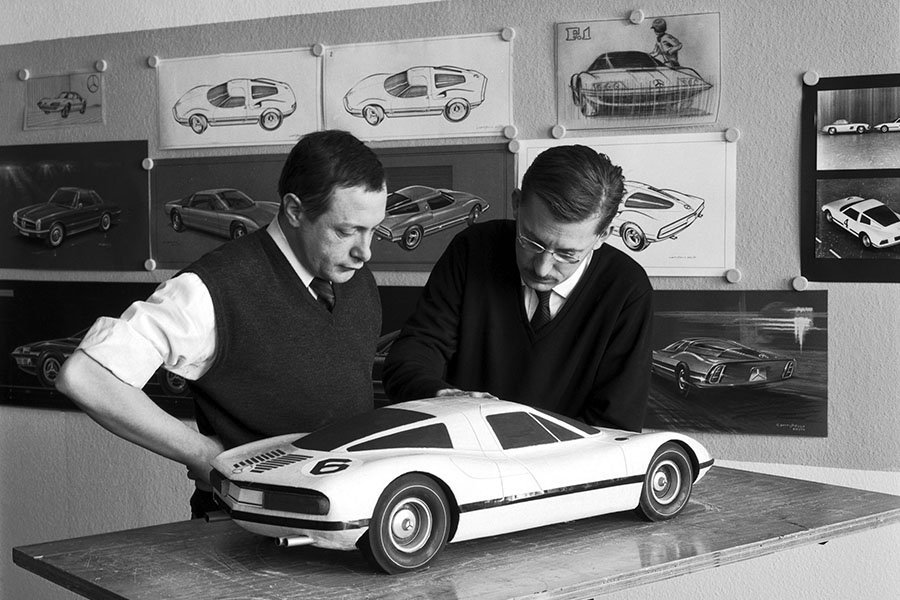
Unfortunately, the return of Mercedes-Benz to top flight motor racing was cut short by the infamous events at Le Mans in 1955 when the 300 SLR of Pierre Levegh barrel rolled into a crowd. Levegh and…
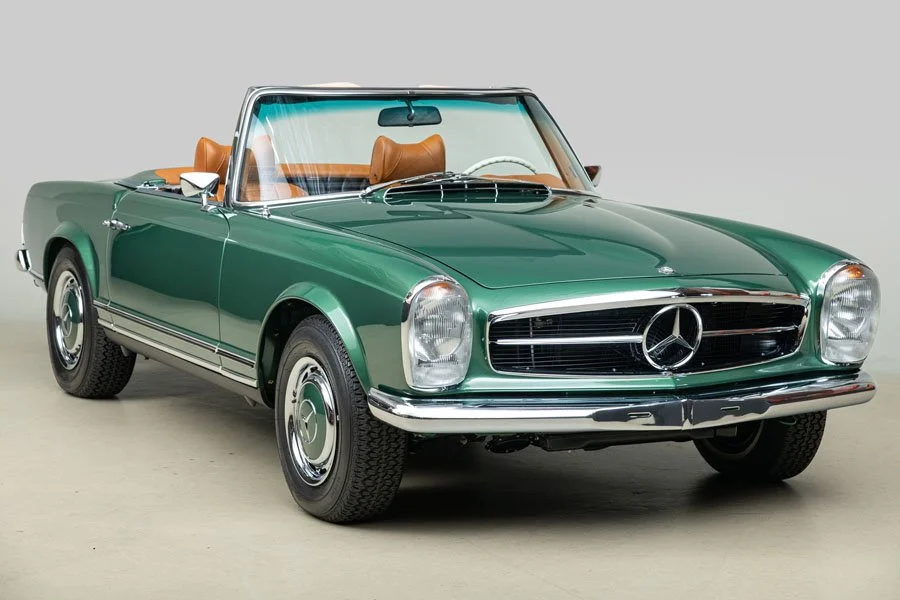
Although Mercedes’ second generation SL was not a direct replacement for the W198, the new W113 began a line of supremely elegant open top boulevard cruisers that offered unmatched…
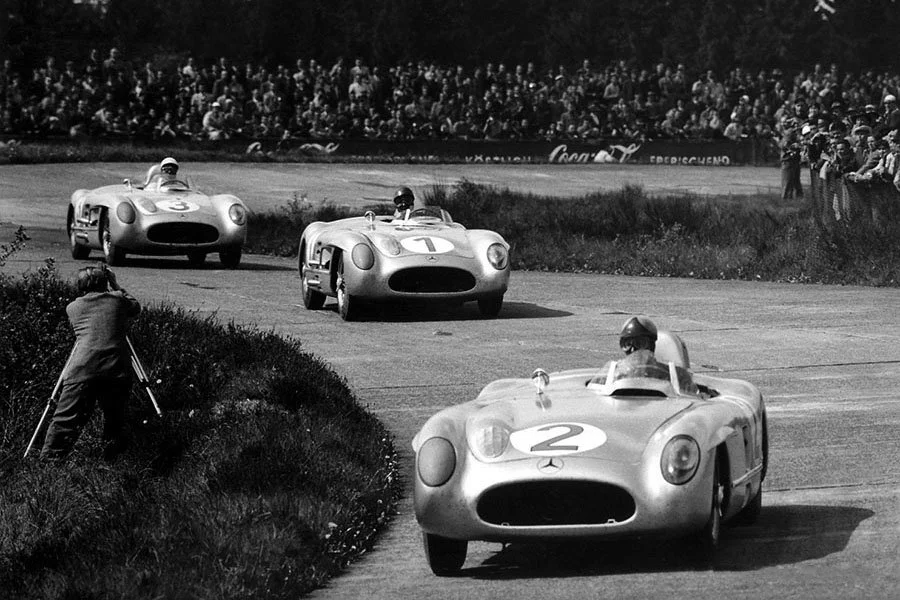
The six-round 1955 World Sportscar Championship comprised endurance events in Argentina, the USA, France, Great Britain and a brace of Italian road races. Mercedes were to participate from…
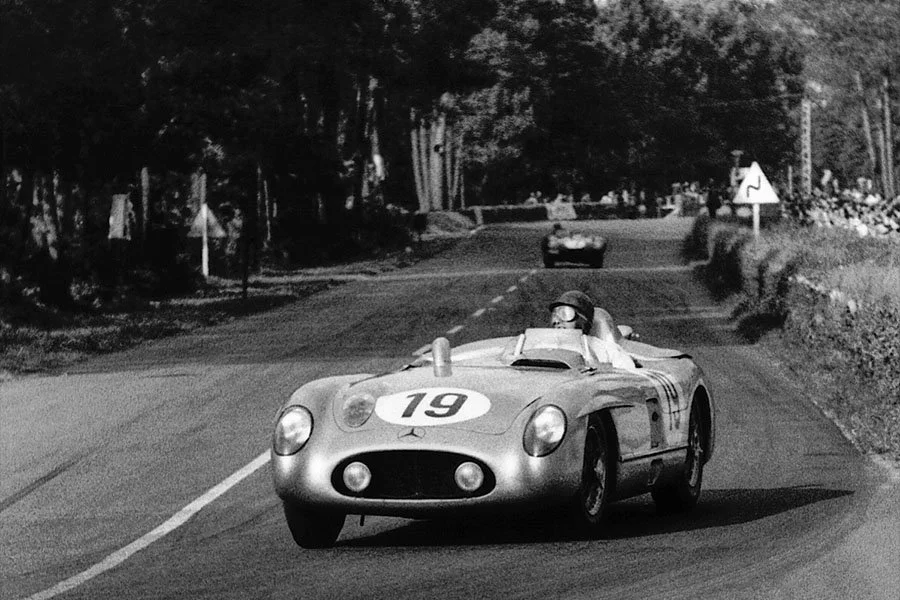
Following a 13 year absence, Mercedes-Benz returned to motor racing in 1952 with the W194 300 SL. A three-litre straight six-powered Sports Prototype, the W194 proved an enormous success…
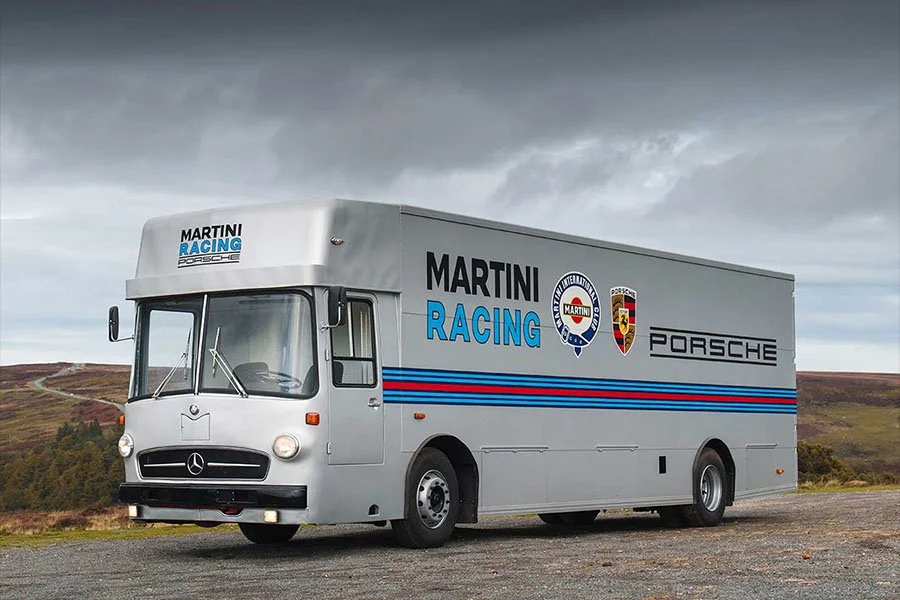
Between 1967 and 1969, Porsche commissioned three transporters from Mercedes-Benz based on the O317 platform. During the years that followed, this handsome trio traversed Europe, initially…
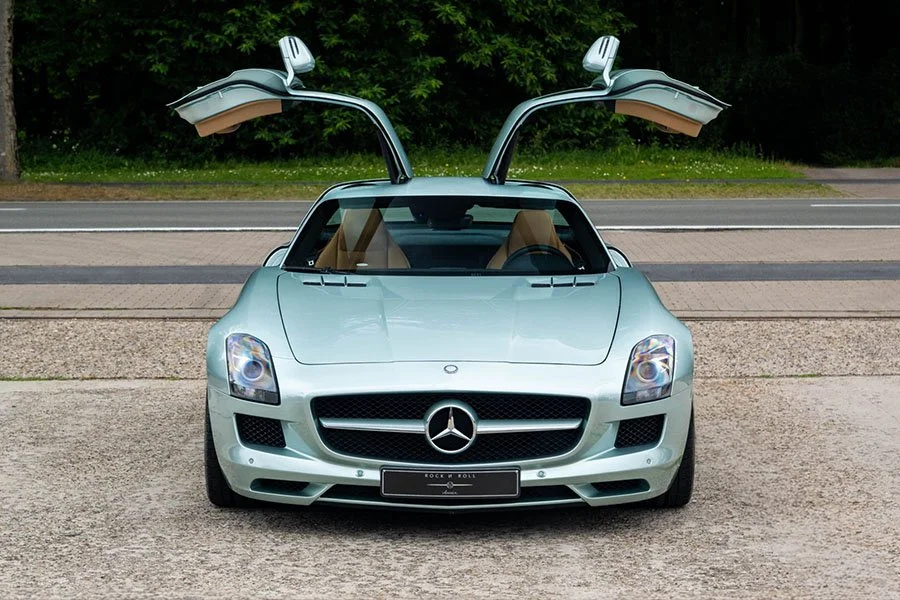
After Mercedes’ collaboration with its F1 engine partner McLaren yielded the commercially disappointing SLR, the German firm elected to produce its next flagship sports car entirely in-house.
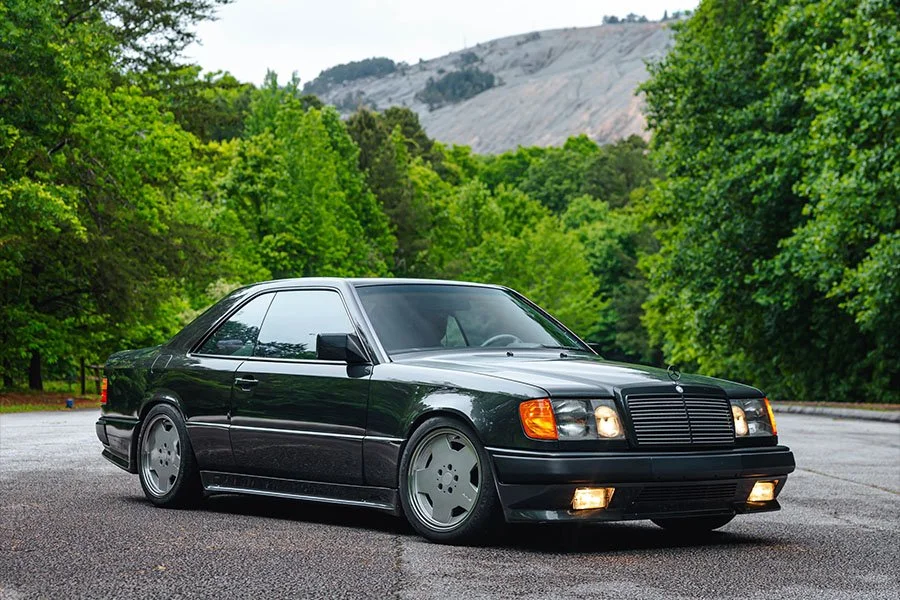
Having plumbed a 5.6-litre dual overhead cam 32 valve V8 into the W124 E-class in 1986, AMG went on to offer an even more epic 6-litre 385bhp version from 1987. Thanks to their status as the fastest…
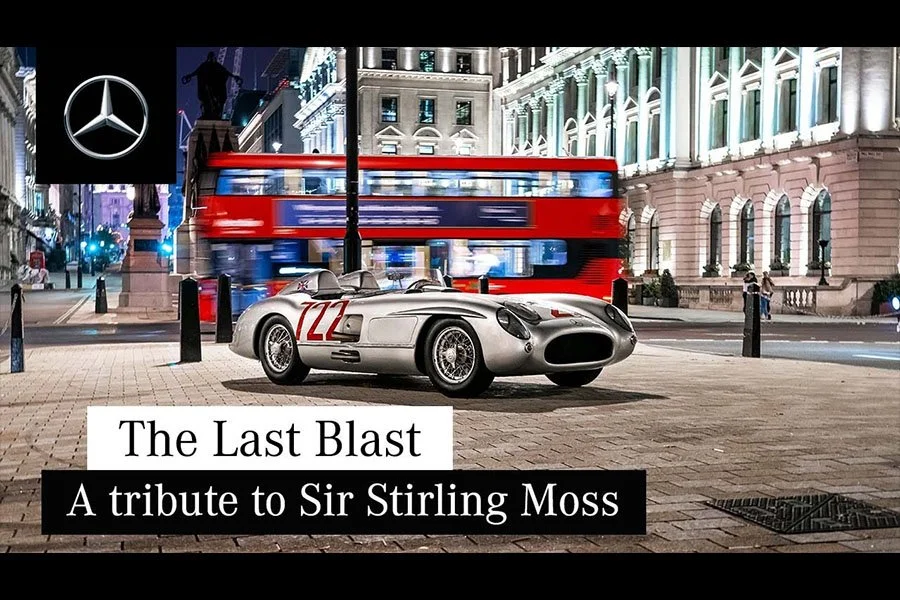
Farewell to a legend: “The Last Blast” follows the unparalleled drive of the famous Mercedes-Benz 300 SLR “722” in a London tribute to Sir Stirling Moss.

Chassis 040.5500758 was the 300 SL Gullwing famously entered by Mercedes-Benz for the 1955 Mille Miglia which took place over the weekend of April 30th and May 1st. Although an aluminium…
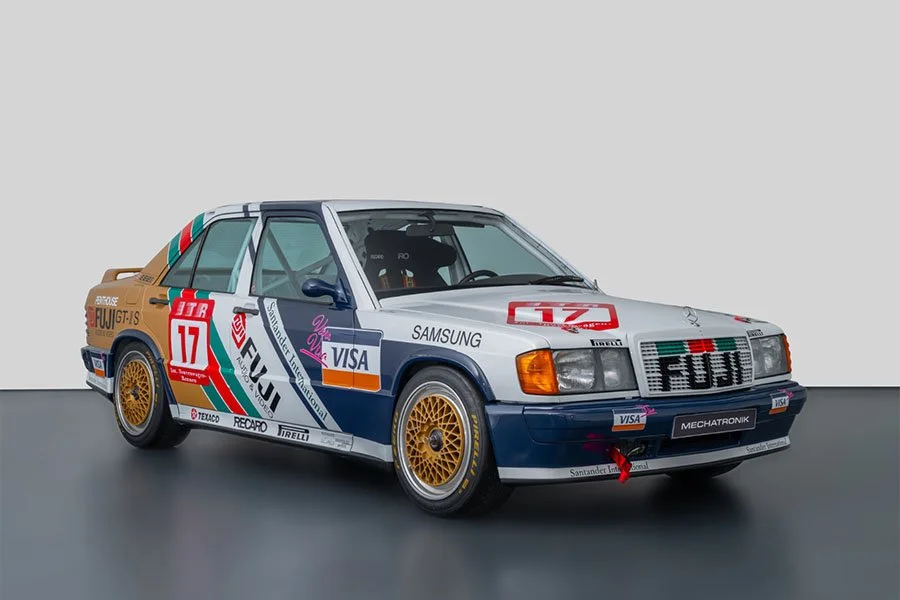
Although by the time Mercedes decided to support a DTM programme the 190 E 2.3-16 was up against much newer machinery (chiefly BMW’s E30 M3), the firm’s compact class W201 ultimately…
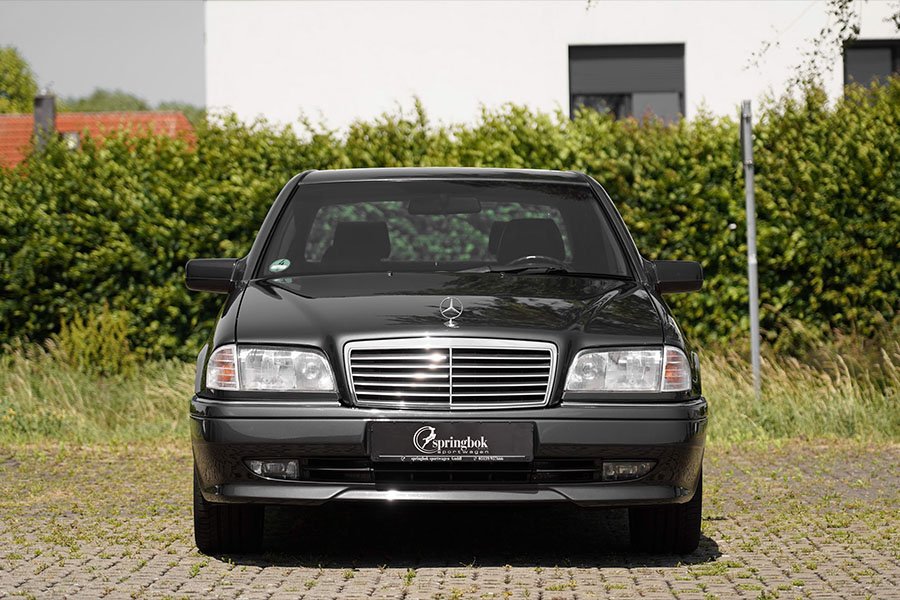
Having already collaborated on a small series of existing models, the first Mercedes-Benz conceived at the pre-production stage with AMG emerged at the Frankfurt Motor Show in September 1993.
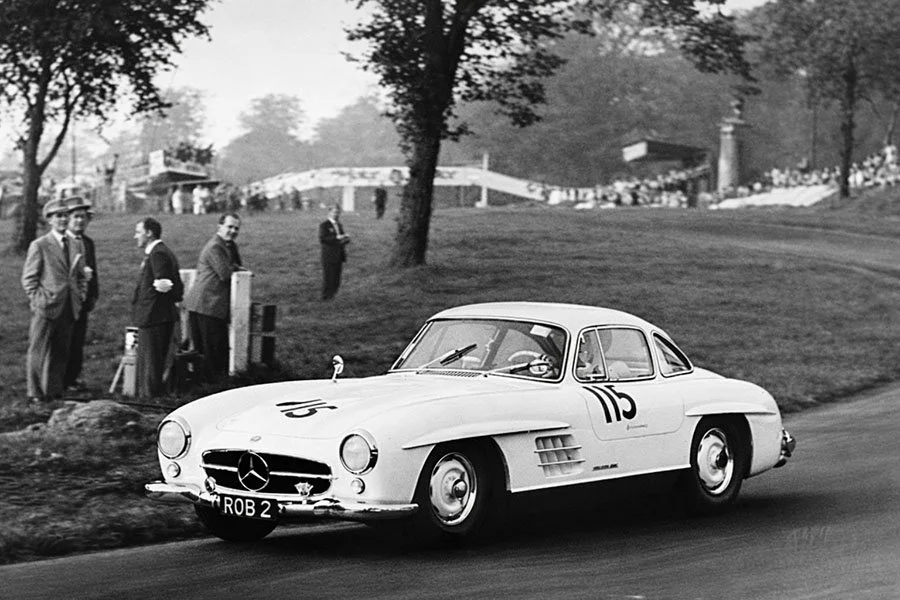
Chassis 198.040.5500840 was the second of four W198 300 SLs purchased by renowned race team owner, Rob Walker. A White aluminium-bodied example riding on Rudge wheels, this latest machine…
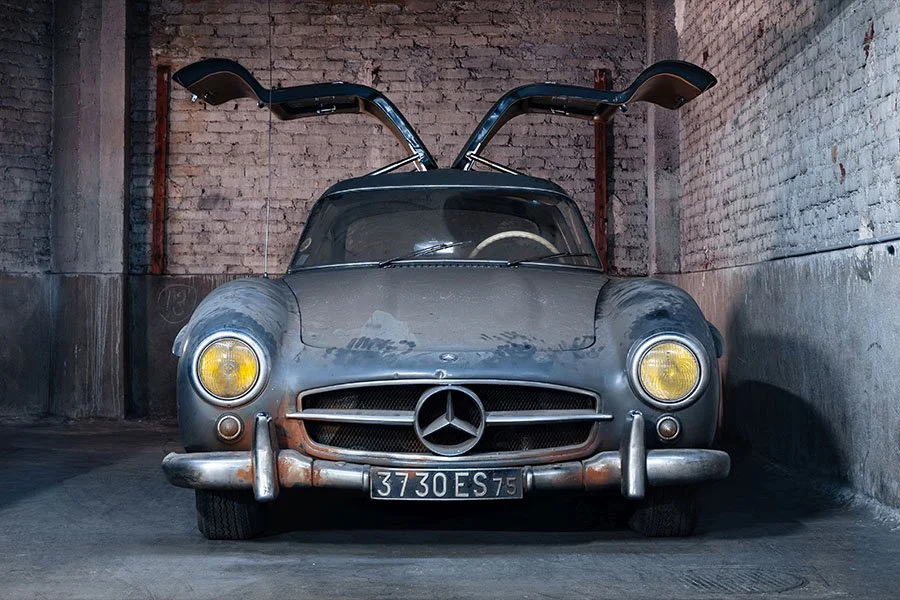
At Artcurial’s sale in Paris on January 27th, one of the most fascinating 300 SL Gullwings we have encountered will be going under the hammer: chassis 198.040.6500019. Ordered through the…
After World War 2, Mercedes-Benz initially got itself back on a sound financial footing with a range of superbly crafted but largely unexciting models. Initially, a re-entry to the world of motor racing was…
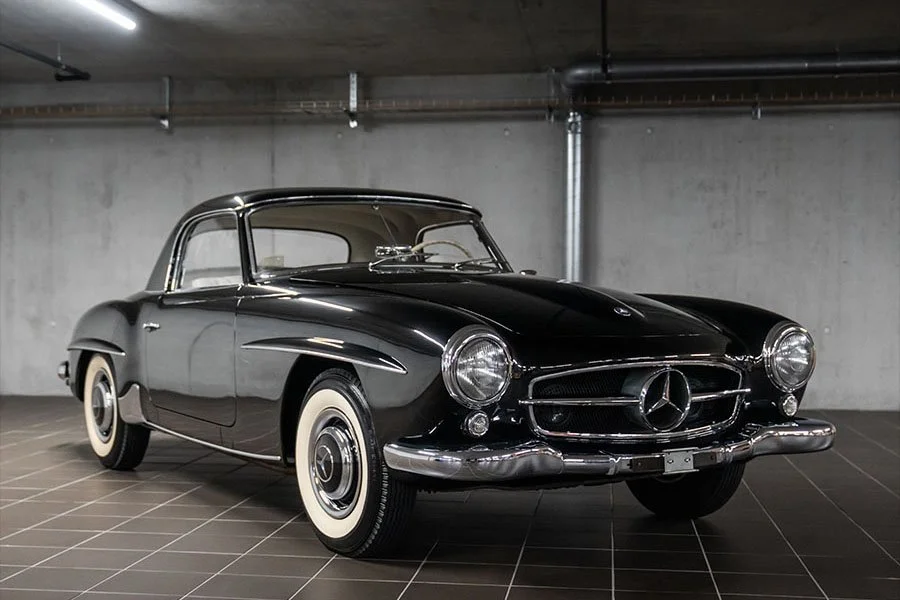
In addition to a productionised version of the 300 SL raced to victory at the 1952 Le Mans 24 Hours and Carrera Panamericana, Mercedes’ recently appointed distributor for the United States, Max…
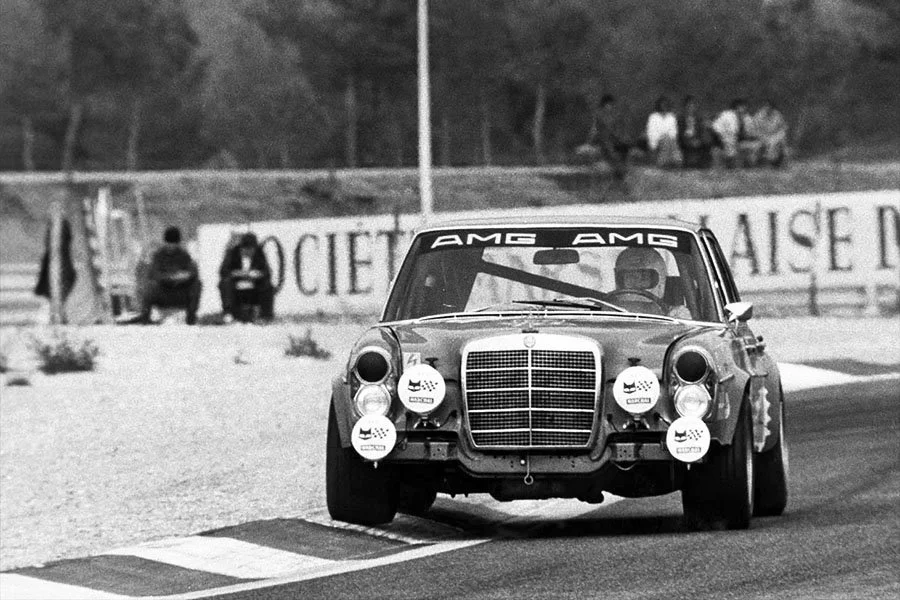
At the Frankfurt Motor Show in September 1963, Mercedes-Benz launched its new super high end 600. Conceived to rival anything Rolls-Royce or Bentley had to offer, the 600 (model code W100)…

Considering its substantial price and seemingly limited market, the fact that Mercedes managed to sell 1400 examples of the W198 300 SL Gullwing between 1954 and ‘57 remains truly remarkable.

Had sales of the base SLR met expectations, it’s doubtful whether Mercedes would have produced the wild Stirling Moss edition which, with its lack of roof, windscreen and other basic amenities, was…

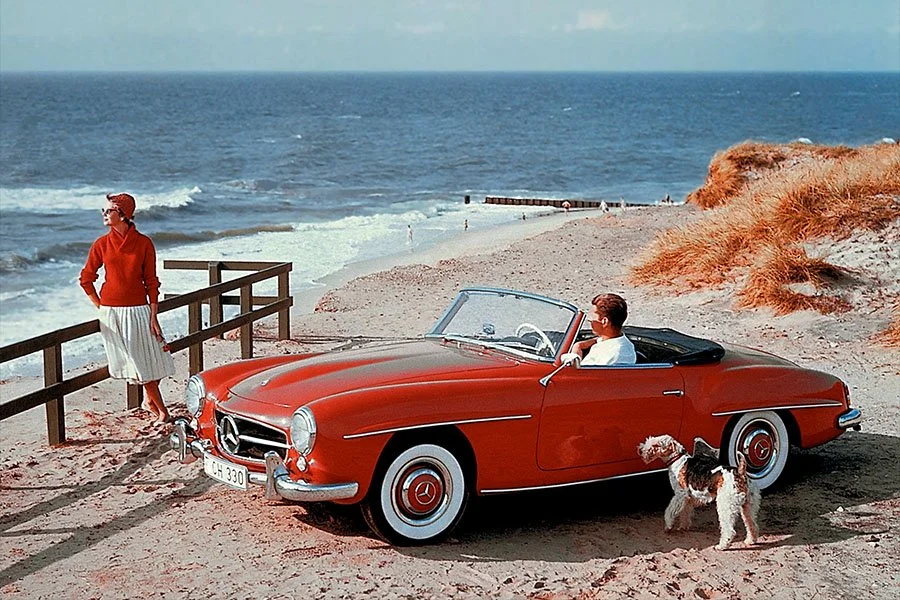
Having created arguably the greatest super sports car of its day with the W198 300 SL Gullwing, Mercedes-Benz went on to sweat the Sport Leicht moniker with a line of luxurious boulevard cruisers…

In terms of the hottest brand new car available in the final months of the 1987-1990 collector car boom, it’s hard to argue against the wild Mercedes-Benz 190 E 2.5-16 in Evolution 2 trim. Built right at…

Having quit circuit racing in 1955 following the infamous tragedy at that year’s Le Mans 24 Hours, the late 1980s saw Mercedes-Benz return with a top flight Sports car programme and an attack on…

Although the Mercedes-Benz 190 E went on to achieve great things in DTM during its twilight years, perhaps the most famous event contested by the model was a one-off twelve lap race…

When Mercedes unveiled their Gullwing-doored 300 SL at the New York Motor Show in February 1954, wealthy buyers from all four corners of the globe were suddenly able to go and order a…

Completed on September 24th 1954, chassis 4500012 was ordered by Mercedes-Benz to serve as a ‘Standwagen’ or show car. Accordingly, it was configured in trademark Silver Grey Metallic paint…

Unveiled at the New York Motor Show in April 2007, the CLK63 AMG Black Series was Mercedes’ second iteration of its Black Series line. Conceived as a street legal version of the official Safety Car…

After an agonising 55 year wait during which various prototypes of potential successors emerged that never made it into production, Mercedes-Benz finally unveiled an heir to its legendary W198 300…

In addition to the outrageous V8-powered Hammer, AMG also offered a slightly toned down version of the timeless Mercedes-Benz W124 E-class using the company’s renowned straight six. At its heart…

Chassis 00009/52 was one of ten W194 300 SLs built for the 1952 racing season. Of these, eight saw competitive action. An eleventh W194 was subsequently assembled to serve as a development mule…

Arguably the most famous win of Mercedes’ dominant 1955 World Sportscar Championship campaign with the 300 SLR came at the 1955 Mille Miglia where Stirling Moss and Denis Jenkinson…

Introduced at the New York Motor Show in February 1954, Mercedes’ Gullwing-doored W198 300 SL re-wrote the rulebook in terms of what could be expected from a series production super sports car.