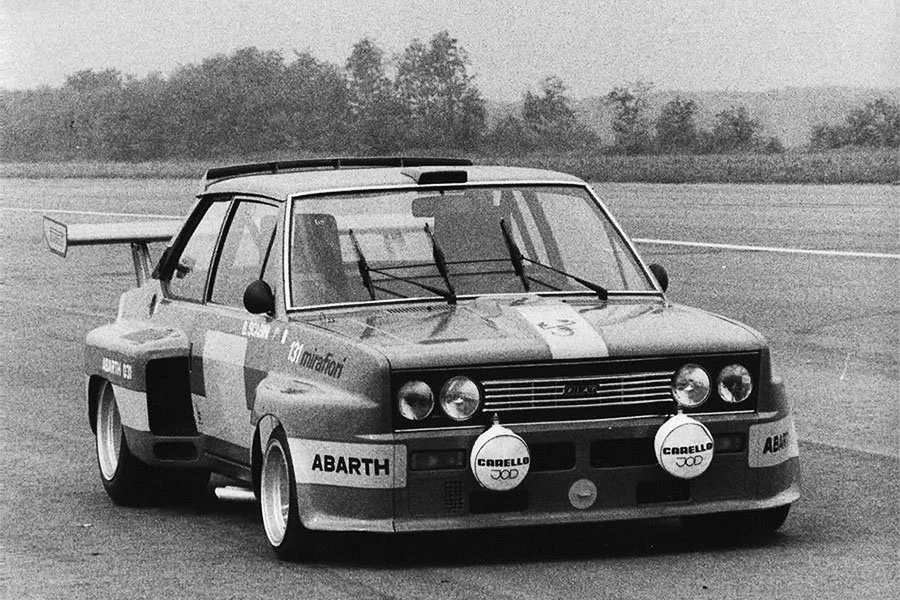
Scorpione Speciale - a Historical & Technical Appraisal of the Fiat Abarth 124 Rally
/
BACKGROUND
The 124 was launched by Fiat in 1966 as its mid-range offering and replacement for the outgoing 1300 / 1500 line which had been in production since 1961.
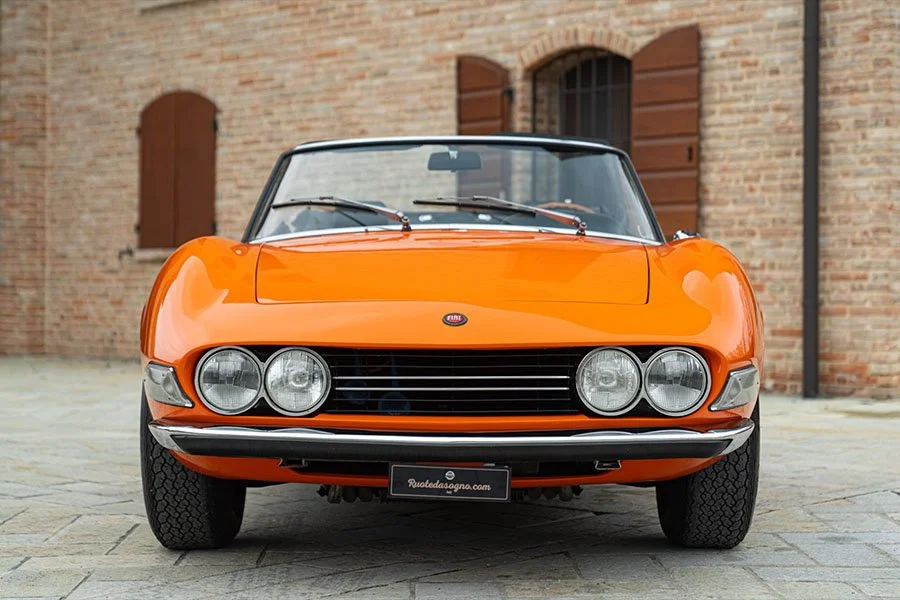
Originally unveiled as a four-door Sedan at the Geneva Motor Show in March 1966, a five-door Station Wagon dubbed the 124 Familiare then arrived at the Turin Salon the following November. Also on hand at the Turin expo was a short wheelbase two-seat Convertible known as the 124 Sport Spider which, unlike the aforementioned derivatives, was designed by Pininfarina as opposed to Fiat Centro Stile.
When a four-seat 124 Sport Coupe (also designed in-house) debuted at the Geneva Motor Show in March 1967, the range was complete.
Initially, the 124 Sport Spider was powered by a dual overhead cam 1438cc inline ‘four’ designed by Aurelio Lampredi. For 1970, this made way for a long stroke 1608cc with twin instead of single carburettors which delivered 107bhp as opposed to 90bhp and also yielded a useful torque gain.
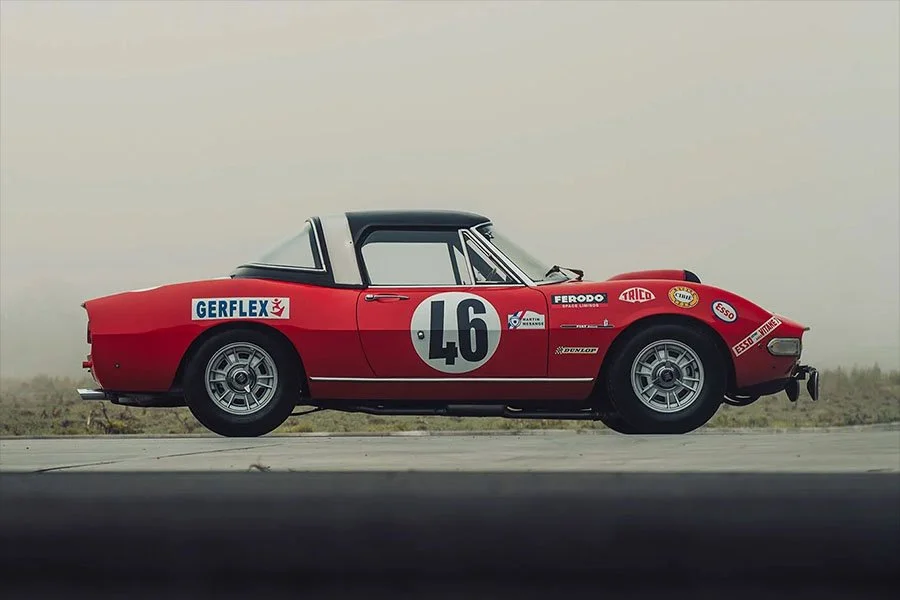
1971 saw Fiat embark on a works rally programme using the 124 Sport Spider for tarmac and less arduous gravel contests while the 125S Saloon was favoured for rougher, tougher events. Remarkably, despite having been up against much more specialised machinery, the 124 Sport Spider went on to claim the 1972 European Rally Championship thanks to the efforts of factory driver Raffaele Pinto and his navigator, Gino Macaluso.
Heading into the 1973 season (when the inaugural World Rally Championship would take place), Fiat wanted to take things up a notch and commissioned its recently acquired Abarth subsidiary to develop a Group 4 homologation special based on the 124 Sport Spider.
Fiat had taken control of the House of the Scorpion in August 1971 after founder Carlo Abarth’s decision to retire reasoning the Turin operation, which had done so much to improve Fiat’s high performance credentials over the years, would serve as a useful addition to the ever expanding group of companies under Fiat’s control.
With its ability for rapid prototyping, an army of experienced engineers led by the renowned Mario Colucci and considerable competition expertise, Abarth was the ideal candidate to take Fiat’s competition aspirations to the next level.
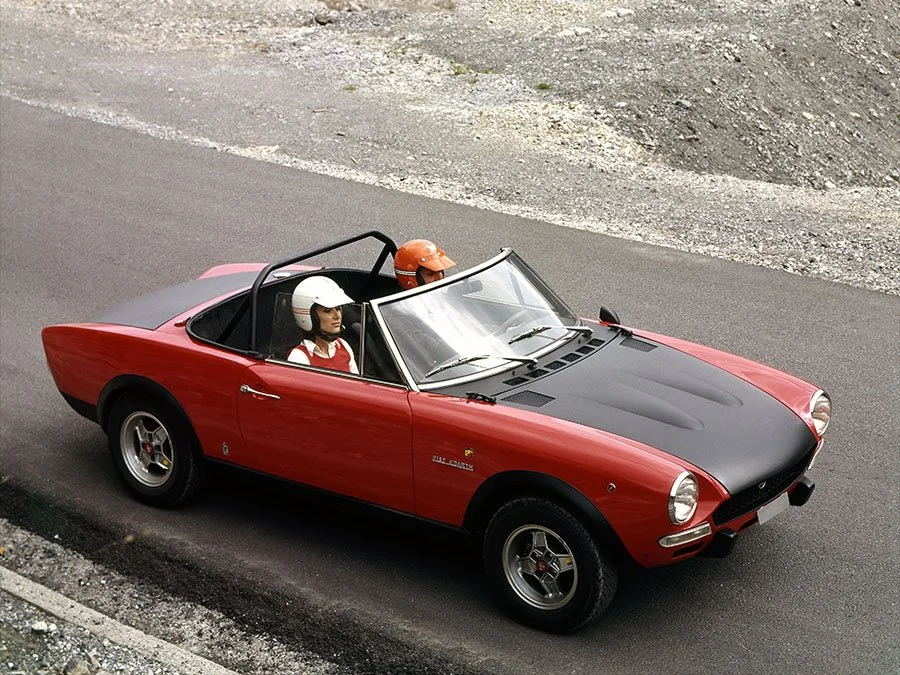
A prototype of the resultant Fiat Abarth 124 Rally appeared at the Geneva Motor Show in March 1972. This was in turn followed by the production version which arrived at the Turin Motor Show the following November. At its heart was a suitably uprated iteration of the latest big bore engine which in standard trim had been enlarged to 1756cc for a peak output of 118bhp. Perhaps even more significant though was the addition of an independent rear suspension arrangement as the original Sport Spider used a solid back axle. Elsewhere, myriad lightweight and high performance components were added to ensure the Abarth 124 Rally was a cut above its more prosaic siblings.
The assembly process saw batches of standard 124 Sport Spider bodyshells sent to Abarth for conversion; the first 500 cars (as required by Group 4) had been completed within a few weeks of the model appearing at the Turin Salon. Homologation was duly approved on January 2nd 1973.
CHASSIS
Each Fiat Abarth 124 Rally was based around a steel monocoque bodyshell which was specially modified at the Abarth works to incorporate the aforementioned independent rear suspension upgrade and a four-point roll bar. At 2280mm, the wheelbase of both the Sport Spider and this heavily revised homologation special were 140mm shorter than the other models in the 124 range.
Suspension enhancements for the Abarth 124 Rally were not limited to the back end – up front a radius rod on each side was added to the existing double wishbone arrangement. Meanwhile, instead of the existing solid rear axle, lower wishbones and an upper strut were incorporated along with the original trailing arms. An anti-roll bar was fitted at either end (the one at the rear having been an Abarth 124 Rally-specific upgrade) along with hydraulic dampers.
The brake system was imported from the regular 124 Sport Spider and comprised 227mm unvented discs all round with single-piston calipers.
Instead of the 5 x 13-inch wide steel wheels fitted to the standard car, Abarth equipped the 124 Rally with its four-spoke CD30 alloys shod with 185/70 VR 13 Pirelli tyres. Accordingly, track was 67mm wider at the front and 84mm wider at the rear.
Like all 124 Sport Spiders, the Rally version came with a 45-litre fuel tank mounted in the trunk floor.
ENGINE / TRANSMISSION
In the engine bay was the most potent iteration of Aurelio Lampredi’s twin cam four cylinder engine which had been designed specifically for the 124 range.
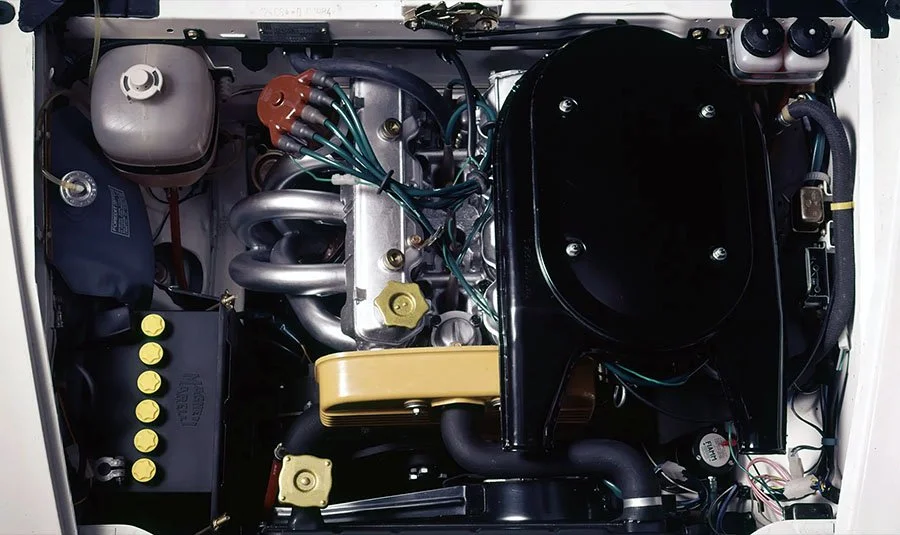
Like all these engines, the block was fashioned from iron while the twin cam eight valve head was formed in aluminium alloy. Wet-sump lubrication was employed and displacement came in at 1756cc thanks to a bore and stroke of 84mm and 79.2mm respectively.
Whereas the Tipo 132 AC1.000 motor used by the regular Sport Spider ran a single Weber 34 DMS carburettor, the Tipo 132 AC4.000 used in the Abarth version used a pair of Weber 44 IDF units.
Also new was Abarth’s free-flow twin pipe exhaust system which replaced the heavier and more restrictive single outlet original.
The combined effect of these changes was that, even running an unchanged 9.8:1 compression ratio, peak output went from 188bhp to 128bhp at an unchanged 6000rpm. There was also a little more torque on offer albeit further up the rev range: 117lb-ft at 5200rpm compared to 113lb-ft at 4000rpm for the regular model.
Transmission was through the same five-speed all-synchromesh gearbox and single-plate clutch that was normally offered as an option on the Sport Spider range.
BODYWORK
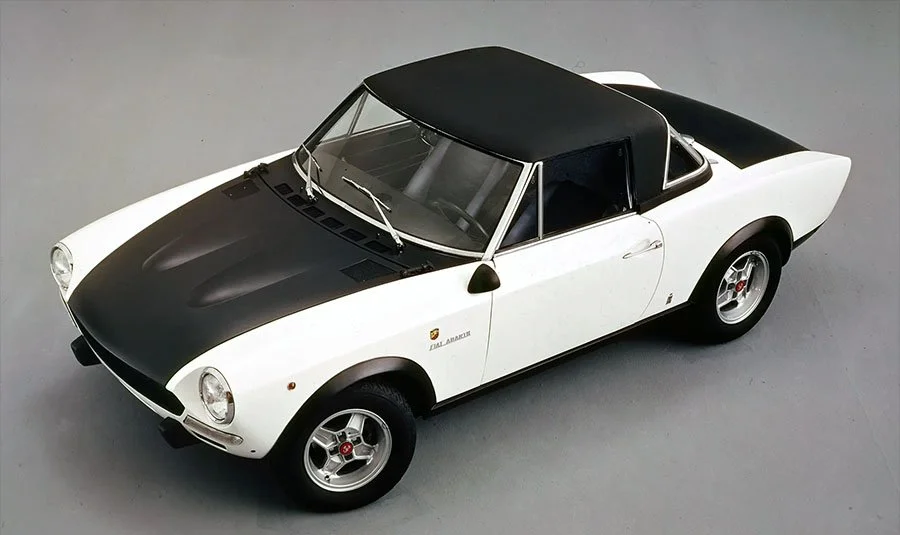
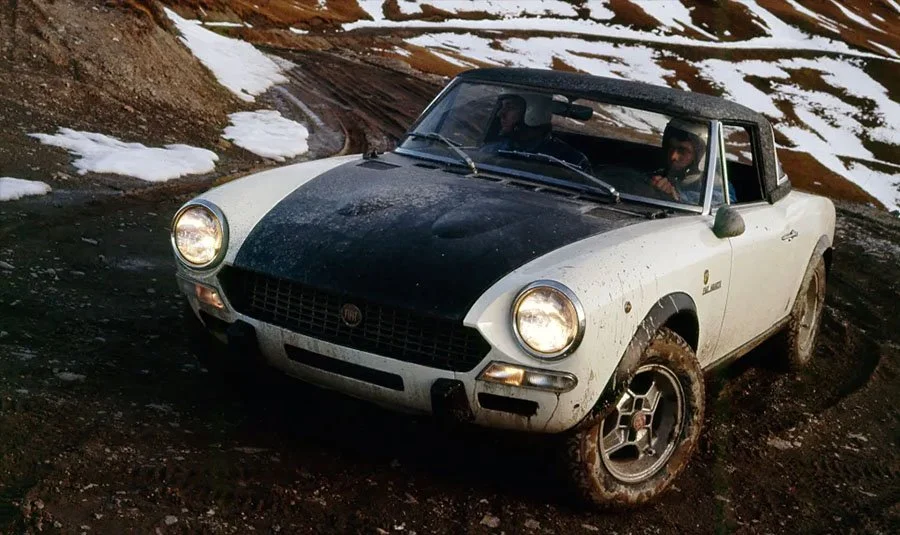
For the Pininfarina styled bodywork, weight-saving was the order of the day. Accordingly, the opening panels, all of which were normally fashioned from steel, got replaced.
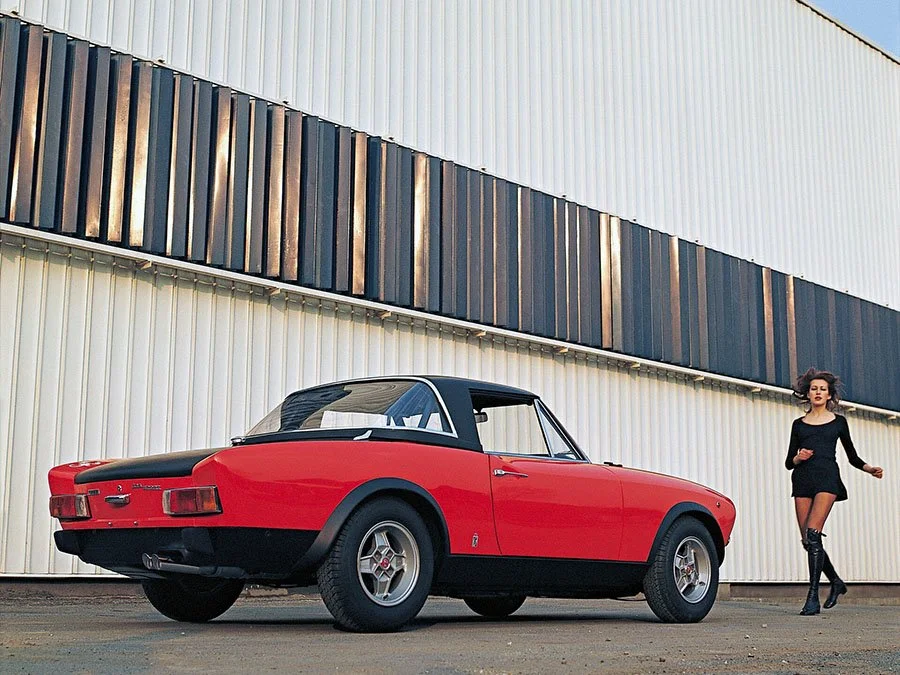
The hood and trunk lid were now formed in fibreglass as was the casing for the normally chrome-plated driver side exterior mirror. Fibreglass was also used for the enlarged wheelarch extensions and the new hardtop which featured a Plexiglas rear screen.

All the fibreglass additions were finished in matt black along with the front scuttle, side sills and rear valance.
The doors were aluminium.
Instead of the chrome-plated full width front and matching rear quarter bumpers, small rubber bumperettes were fitted at either end. Because the rear quarter bumpers fitted to the normal Sport Spider also housed lighting for the rear licence plate, new gloss black and chrome installations had to be fitted to the Abarth version.
For faster fuel stops, the filler cap usually concealed under a flap atop trailing edge of the left side rear fender was replaced with an exposed item mounted just behind the rear bulkhead.
To improve cooling, three openings were carved out from the front apron and a less restrictive grille was fitted to the primary nose intake.
To complete the exterior specification, Abarth badges were added to the front fenders and tail fascia.
INTERIOR
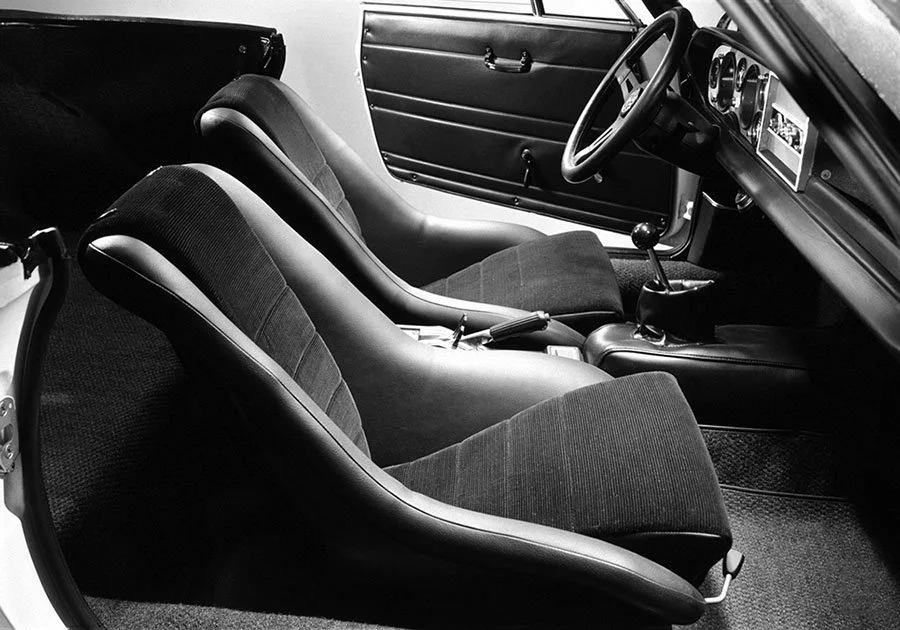
Inside, Abarth managed to shed a few more kilos by deleting the rear seats and the glovebox door. Simplified door panels and a more basic centre console were also fitted.
The normally wooden dash trim was switched to anodised aluminium.
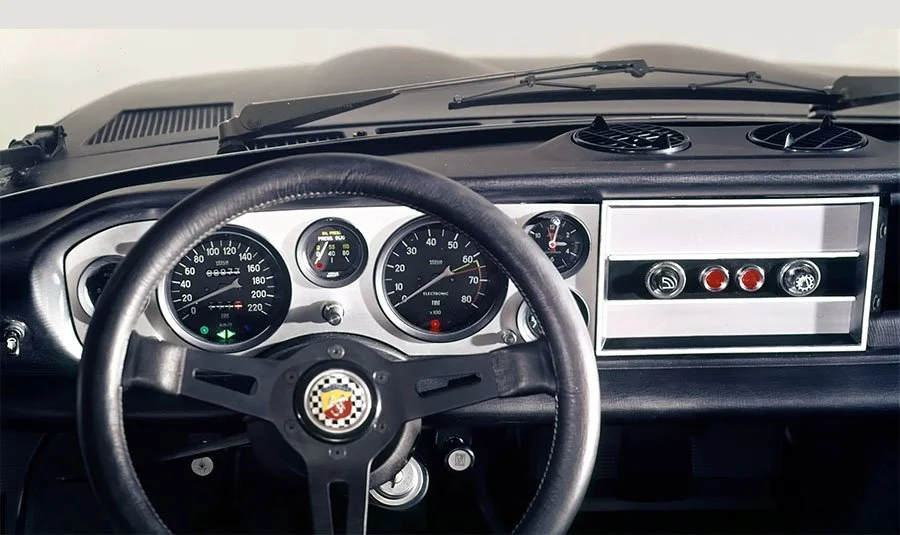
Likewise, the large diameter wood-rimmed Fiat-branded two-spoke steering wheel made way for a small-diameter leather-rimmed Abarth-badged item.
Instead of plush two-piece seats, Abarth fitted light weight single-piece Recaro buckets upholstered with leatherette bolsters and fabric corduroy centres.
As usual, instrumentation comprised a large speedometer and rev counter in between which was a small oil pressure read out. Off to the left was a small fuel gauge while stacked one above the other to the right was the clock and water temperature read out.
No provision was made for an audio system.
OPTIONS
Fiat offered the Abarth 124 Rally in a choice of three exterior colours: Red, White and Light Blue.
Beyond that, customers could have their car sent to Abarth for varying degrees of competition preparation to include an engine tuning package that took output to around 170bhp.
WEIGHT / PERFORMANCE
As a consequence of its lightened specification, the Abarth 124 Rally tipped the scales at 22kg less than a regular 1.8-litre 124 Sport Spider (938kg compared to 960kg).
Top speed went from 115mph to 118mph while the 0-62mph time was cut from 7.8 to 7.2 seconds.
While on the face of its these figures represented fairly modest improvements, where the Abarth version rally came into its own was its much improved handling.
PRODUCTION & GROUP 3 HOMOLOGATION
Production ran from late 1972 until early 1974.
Although only 500 cars had been required to qualify for Group 4, demand was sufficient that Fiat and Abarth eventually produced a little over 1000 units which meant the 124 Rally eventually qualified for the Group 3 class (homologation for which was approved on January 2nd 1974).
The entire production run was manufactured exclusively in left-hand drive.
COMPETITION HISTORY
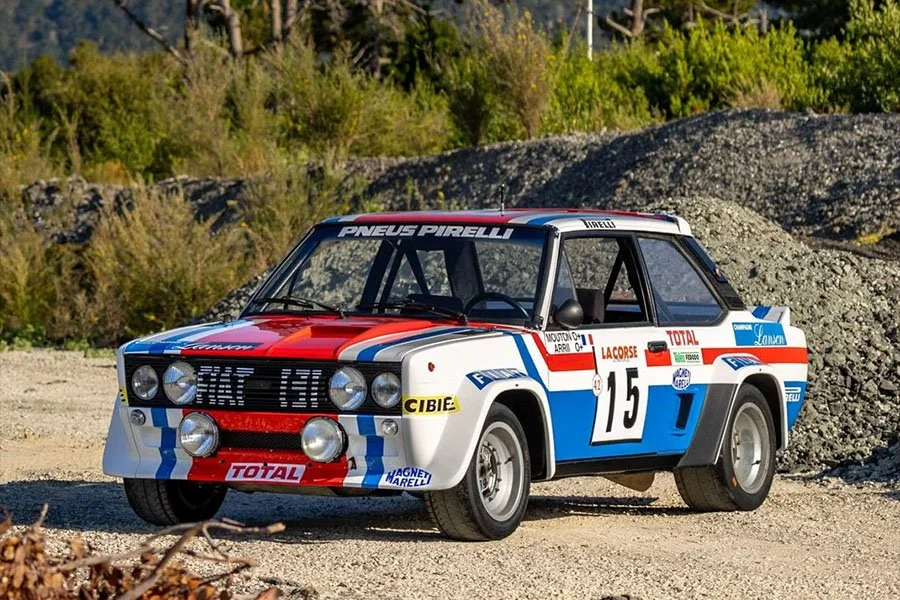
During the course of the inaugural 13 round World Rally Championship, the Fiat Abarth squad’s best results were victory at the Polish Rally (Achim Warmbold) and second plae finishes on the Acropolis and Sanremo rallies (Rauno Aaltonen and Maurizio Verini respectively). That year, no less than seven different manufacturers won a WRC event with Ford winning twice and Alpine on six occasions which meant the French outfit secured the title relatively easily with its featherweight A110 by 147 points to second place Fiat’s 84.
Fiat went on to finish second again in 1974 and ‘75, but by this time an even more specialised contender had emerged, the Lancia Stratos, which ironically was another Fiat Group product. With its mid-engined layout and purpose built nature, the 124 was unable to compete with the Stratos despite an array of suspension, engine, brake and weight reduction upgrades.
Text copyright: Supercar Nostalgia
Photo copyright: Fiat - https://www.fiat.com