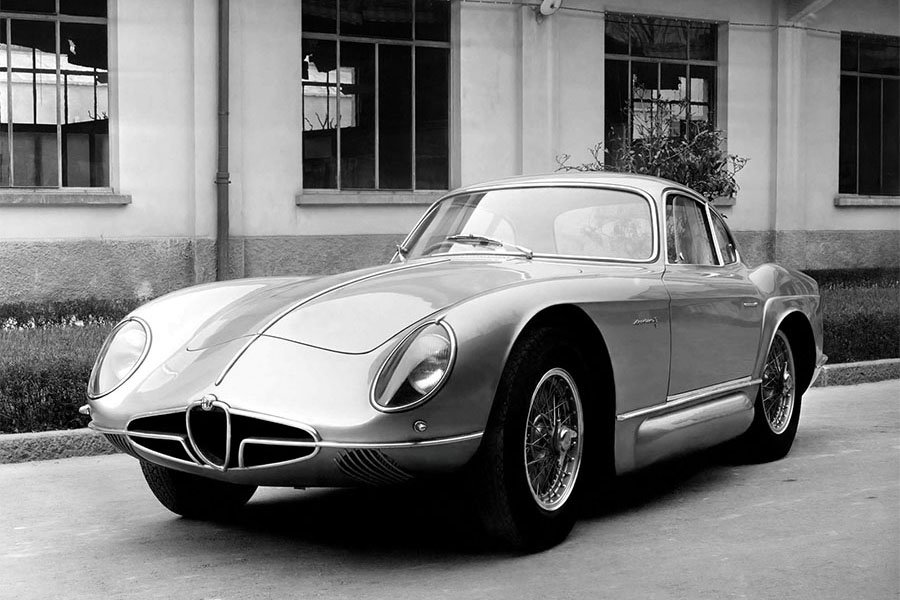
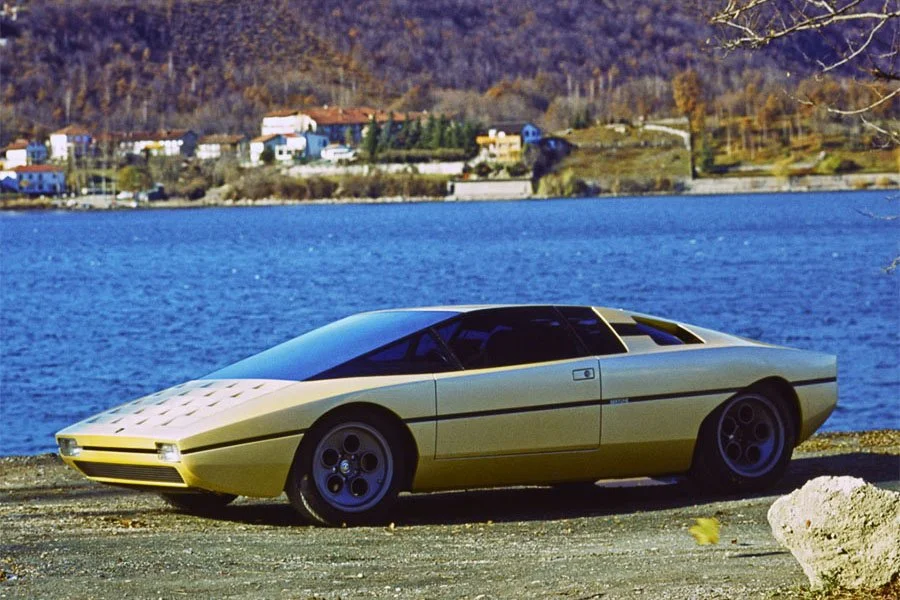
Guide: Bertone - Wedge Evolution
/ Ben Tyer
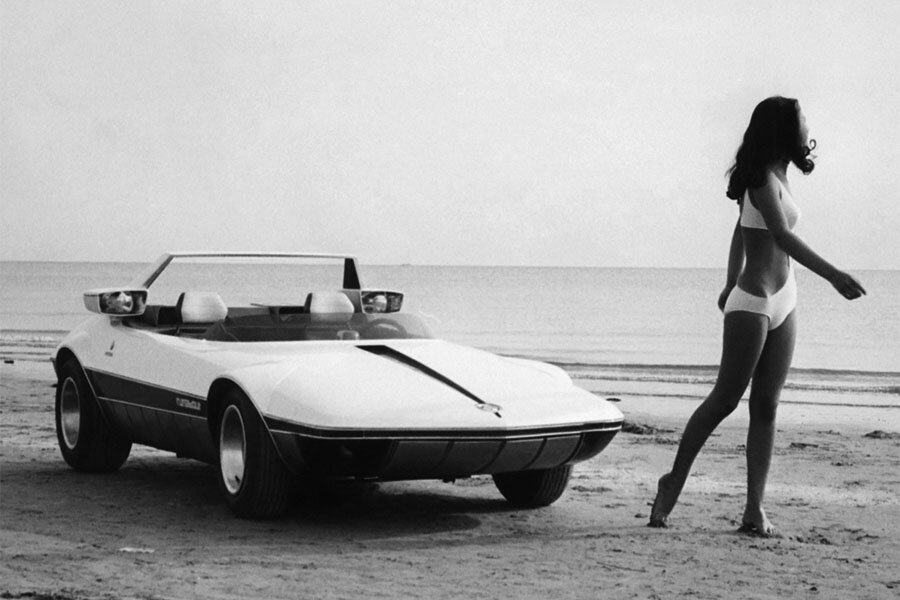
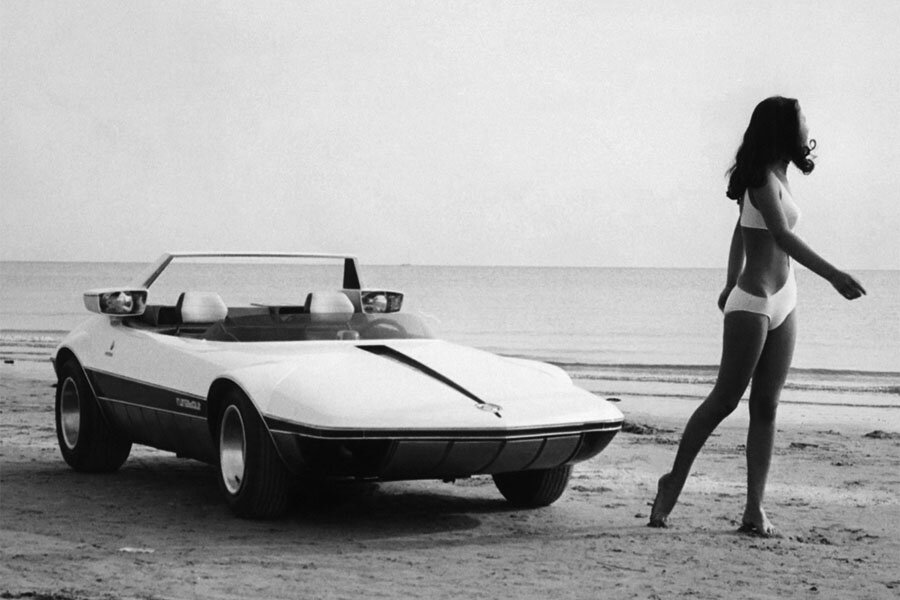
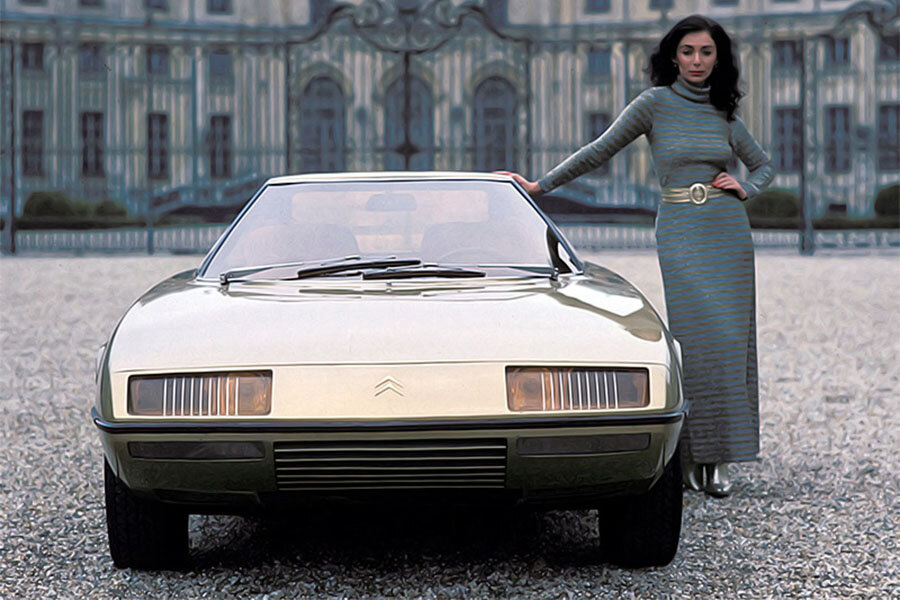
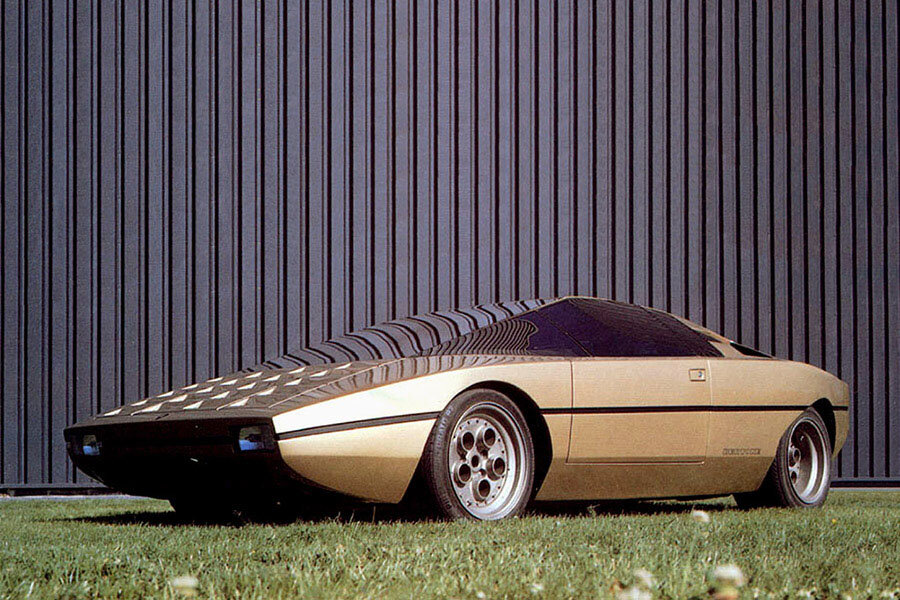
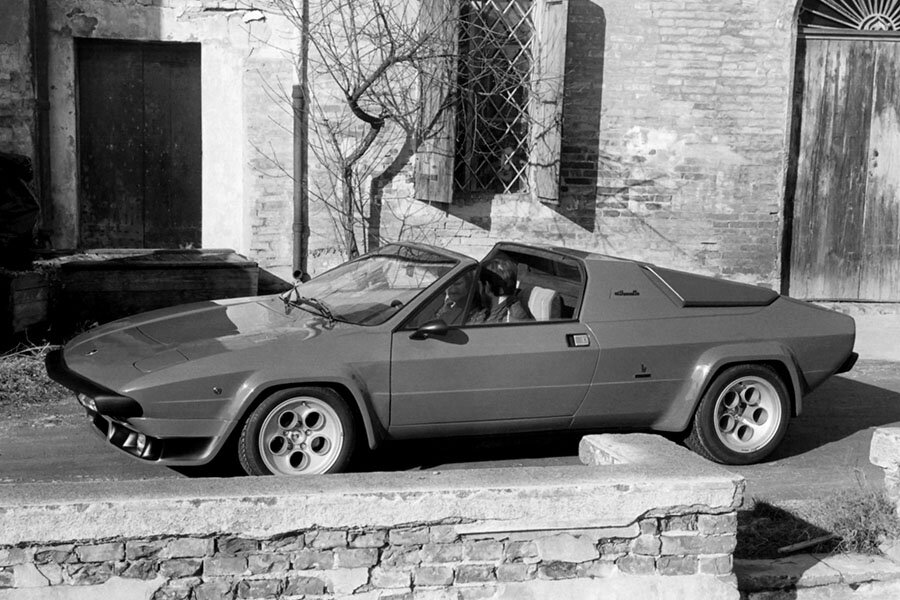
Bertone were the undisputed kings of wedge design. With creations like the Alfa Romeo Carabo and Lancia Stratos Zero, the Turin firm came to represent a new point of reference in modern art as well as on the international car design scene.
However, as the 1980s dawned, fashions changed and Bertone struggled to retain their influence.
Moreover, car manufacturers increasingly kept design work and manufacturing in-house.
Bertone began an inexorable decline that ended with bankruptcy in 2014.
Featured cars:
1968 Bertone Panther
1968 Alfa Romeo Carabo
1969 Autobianchi A112 Runabout
1970 Lancia Stratos Zero
1971 Lamborghini Countach
1972 Lancia Stratos HF
1972 Citroen Camargue
1972 Fiat X1/9
1972 Lamborghini Urraco
1974 Lamborghini Countach
1974 Maserati Khamsin
1974 Ferrari 308 GT4
1974 Lamborghini Bravo
1976 Ferrari 308 GT Rainbow
1976 Lamborghini Silhouette
1976 Alfa Romeo Navajo
1977 Jaguar Ascot
1978 Lancia Sibilo
1980 Lamborghini Athon
1978 Lamborghini Countach S
1981 Lamborghini Jalpa
Text copyright: Supercar Nostalgia
Photo copyright: Bertone - https://www.bertone.it
During 1970, Lamborghini development engineer and chief test driver, Bob Wallace, was given the go ahead by general manager, Paolo Stanzani, to construct a mid-engined hot rod more or less from scratch.
During the early 1950s, Lancia embarked on an ambitious sports car racing programme that most notably yielded victories at the Mille Miglia, Targa Florio and Carrera Panamericana. The privately…
Having graduated with a degree in engineering from the University of Pisa in 1953, Giotto Bizzarrini briefly took up a teaching position before joining Alfa Romeo where he was quickly assigned a role…
During the spring of 1974, what would today almost certainly be regarded as the most valuable Lamborghini in existence was deliberately destroyed. That car was the one-off Countach LP500…
Outside the world of politics, the Shah of Iran, Mohammad Pahlavi, was renowned as a lover of fine automobiles to include both those with a luxury and high performance nature. Having received a…
Although Fiat had not offered a particularly sporting model since the commercially unsuccessful 8V back in the early 1950s, the FIA’s decision to implement new Formula 2 racing regulations for the…
Chassis 1739 GT was numerically the third 250 GT SWB and the first to receive special order coachwork. It was commissioned by Dr. Enrico Wax in Genoa, a personal friend of Enzo Ferrari and…
Despite its handsome Bertone-designed body and a mechanical specification on a par with anything its rivals had to offer, sales of the Lamborghini Jarama proved disappointingly slow…
At the Geneva Motor Show in March 1971, Lamborghini unveiled a third iteration of the groundbreaking Miura. Dubbed SV or Spinto Veloce, it initially garnered little attention owing to…
When Chrysler took control of Automobili Lamborghini in April 1987, the Italian firm’s replacement for the legendary Countach was already at an advanced stage of development with production slated to…
Having amassed a fortune from refrigeration units and other home appliances, Milanese industrialist Renzo Rivolta began to construct motorcycles following the conclusion of World War 2. 1952 saw…
Although Ferruccio Lamborghini had originally planned to build the kind of conservatively-styled front-engined Grand Tourers that he and many other Italian industrialists liked to own, his talented…
Having initially produced rather conservatively styled machinery of the type favoured by many low key industrialists, Automobili Lamborghini dramatically changed tack when the firm started its…
By the late 1960s, Automobili Lamboghini had become most famous for its extraordinary looking models like the Miura and Espada. However, these wild Bertone designs were starkly at odds with…
On October 17th 1973, Arab members of OPEC (the Organisation of the Petroleum Exporting Countries) announced an embargo on oil sales to the USA, the UK, Canada, Japan and the…
Although Ferruccio Lamborghini established his auto maker to build the kind of exquisitely engineered but conservatively styled Grand Tourers that appealed to him, within a short space of…
In the period between late 1972 and spring 1978, the Lancia Stratos established itself as the most successful rally car in history. In Group 4 trim it racked up three World Rally Championship titles, took…
Renzo Rivolta was an industrialist from Milan who made his first fortune manufacturing refrigeration units. Isothermos was established in 1939 and Rivolta soon expanded to home appliances. After…
By 1974, Ferrari dealers in the USA were struggling. The market for gas guzzlers was in the midst of being ravaged by the OPEC oil crisis while garage inventories typically comprised ageing Dinos and…
By the winter of 1964-1965, production at Ferruccio Lamborghini’s state-of-the-art automotive factory in Sant’Agata was in full swing. The critically acclaimed 350 GT (launched at the Geneva Motor Show…
Although other eras have produced their fair share of spectacular automotive designs, the early 1950s was a particularly renowned period for amazing four-wheeled creations. The rapid…
When Porsche started production of the 911 in August 1964, it was significantly more expensive than the 356 and initially only came as a Coupe. An early prototype had been dispatched to Karmann for…
Stanley Arnolt was a millionaire Chicago industrialist who owned a wide range of manufacturing businesses. During the early 1950s, Arnolt also became a distributor for a variety of British motor cars…
Automobili Lamborghini’s well-documented problems throughout the 1970s culminated with the firm going into liquidation in February 1980. However, five months later, the marque began a…
For much of 1972, Alfa Romeo’s motor racing division, Autodelta, was hard at work developing a new Flat 12 engine for use in the long-running Tipo 33 line of three-litre Group 6 Prototypes.
After years of mismanagement and a period of time spent in administration, Automobili Lamborghini’s fortunes rapidly began to improve when the Mimran brothers took control in July…
Alfa Romeo had abandoned Formula 1 racing at the end of 1951 after back-to-back championships for Giuseppe Farina and Juan-Manuel Fangio. New regulations for 1952 meant the supercharged 158…
Lamborghini developed the Urraco as a practical Italian rival for the Porsche 911, hence its 2+2 seating configuration. At the time, Porsche were selling comfortably in excess of 10,000 911s every…
For Scuderia Ferrari to compete in Grand Prix and top flight sports car racing, a sizeable competition budget was required. To generate this money, from late 1948, Enzo Ferrari offered a line of road…
At the Geneva Motor Show in March 1967, a space-age four seat Lamborghini supercar stole the show. The Bertone-designed Marzal seemed so far removed from convention that production…